
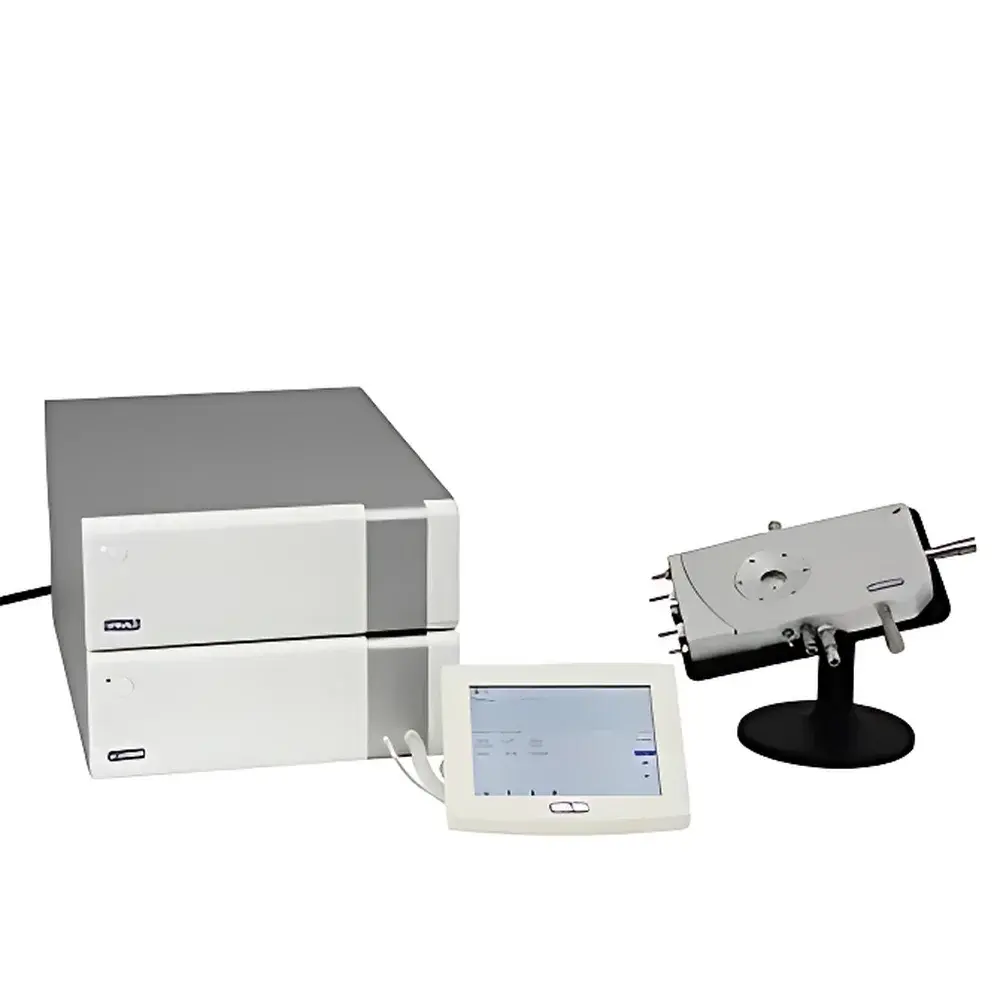
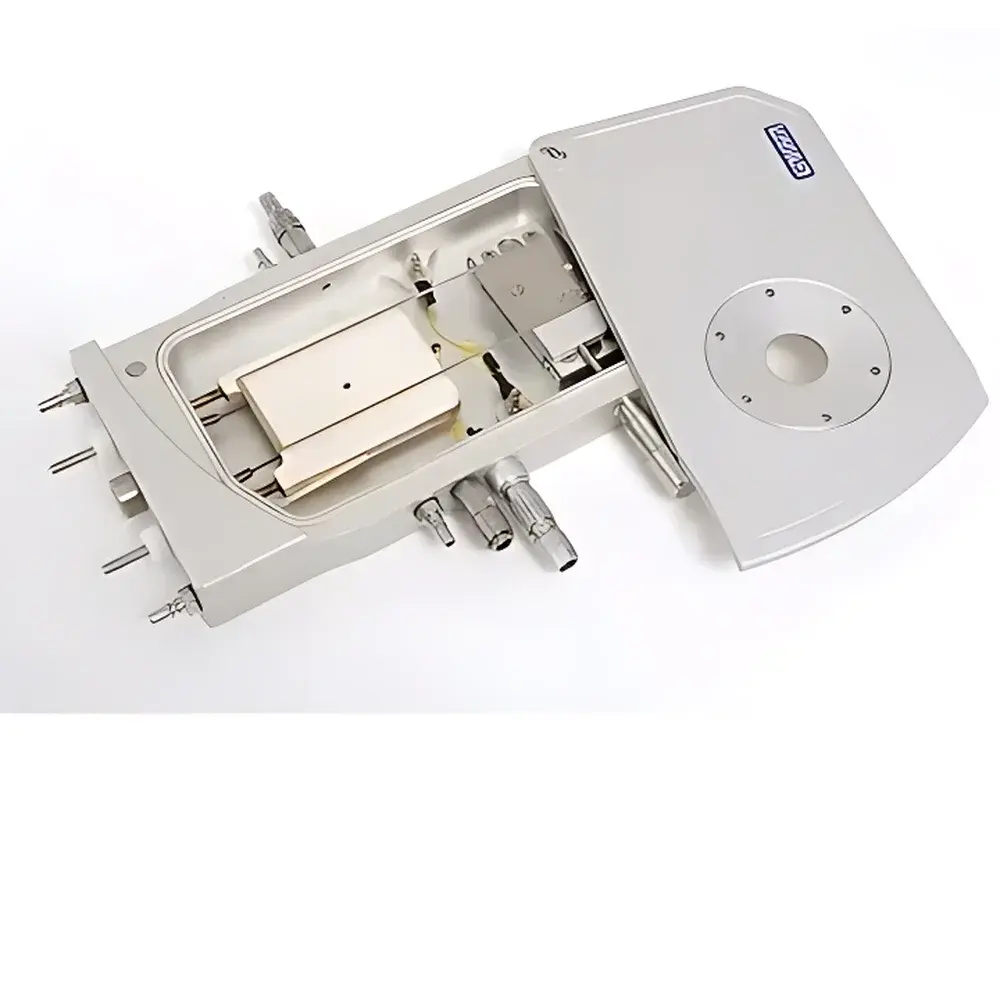
Linkam LTS420 Heating and Cooling Stage
| Brand | Linkam |
|---|---|
| Origin | United Kingdom |
| Model | LTS420 |
| Temperature Range | −196 °C to 420 °C (liquid nitrogen cooling optional) |
| Temperature Stability | < 0.1 °C |
| Max Ramp Rate | 0.1–50 °C/min |
| Sample Area | 53.5 × 43 mm |
| XY Translation | 15 × 15 mm |
| Optical Aperture | 2.5 mm |
| Minimum Objective Working Distance | 6 mm |
| Minimum Condenser Working Distance | 13.2 mm |
| Dimensions (Stage Only) | 160 × 80 × 24 mm |
Overview
The Linkam LTS420 Heating and Cooling Stage is a precision-engineered thermal stage designed for integration with optical microscopes in materials science, polymer physics, pharmaceutical crystallization studies, and geoscience applications. It operates on resistive heating and cryogenic cooling principles—capable of achieving temperatures from −196 °C (when coupled with an external liquid nitrogen cooling system) to +420 °C—enabling controlled thermal ramping, isothermal holds, and dynamic phase transition observation under direct optical visualization. Unlike high-speed thermal stages, the LTS420 prioritizes thermal uniformity and stability over rapid cycling: its polished heater surface, minimized central aperture (2.5 mm), and thermally optimized internal lid design collectively suppress radial and axial temperature gradients across the sample region. This architecture ensures reproducible thermal history for quantitative analysis of melting, recrystallization, polymorphic transitions, and liquid crystal behavior. The stage is fully compatible with both transmitted-light and reflected-light microscopy configurations, supporting Köhler illumination alignment without optical interference.
Key Features
- Wide operational temperature range: −196 °C to +420 °C, with optional LN₂ cooling module for sub-ambient operation
- High thermal stability: < 0.1 °C at isothermal conditions, verified using integrated 100 Ω platinum resistance thermometer (RTD)
- Programmable ramp rates from 0.1 to 50 °C/min via external T95 or TC122 temperature controller (sold separately)
- Gas-tight sample chamber with dual gas ports—enables inert atmosphere (N₂, Ar), controlled humidity (with optional humidity module), or vacuum-compatible operation
- Top-hinged, low-profile lid for unobstructed sample loading and rapid exchange without stage repositioning
- Manual X–Y translation stage (15 × 15 mm travel) with fine-adjustment micrometers for precise region-of-interest navigation
- Optimized optical path: 2.5 mm central aperture minimizes thermal lensing and maintains NA integrity for high-magnification objectives
- Compatible with standard microscope slides (76 × 26 mm) and coverslips; accommodates custom sample holders up to 53.5 × 43 mm active area
- Minimal working distance compliance: supports objectives with ≥6 mm WD and condensers with ≥13.2 mm WD
Sample Compatibility & Compliance
The LTS420 accommodates solid, semi-crystalline, and viscous samples—including thin films, powders, gels, and molten polymers—mounted on standard glass or silicon substrates. Its sealed chamber meets ISO 17025-relevant environmental control requirements for thermal testing laboratories and supports GLP-compliant documentation when paired with Linkam’s TMS94 software and validated controller firmware. While not intrinsically certified for hazardous environments, the stage complies with IEC 61010-1 safety standards for laboratory electrical equipment. For regulated industries (e.g., pharmaceutical QC per USP or ASTM E1942), the LTS420 may be integrated into validated workflows with full audit trail capability when used with FDA 21 CFR Part 11–compliant data acquisition systems.
Software & Data Management
The LTS420 operates in conjunction with Linkam’s proprietary TMS94 control and analysis software, which provides real-time temperature–time profiling, synchronized video capture (via USB or HDMI interface), and export of calibrated thermal datasets in CSV and HDF5 formats. Software features include multi-step temperature program definition, automatic hold-point triggering, and overlay of thermal events onto time-lapse image sequences. All temperature readings are traceably referenced to the embedded Pt100 sensor and logged with timestamped metadata (including ramp rate, setpoint deviation, and chamber pressure if external sensors are connected). Raw data files support post-acquisition analysis in MATLAB, Python (NumPy/Pandas), or commercial image analysis platforms such as ImageJ/Fiji with thermal annotation plugins.
Applications
- Polymorph screening and solid-form identification in preformulation studies
- In situ observation of eutectic melting, glass transitions (Tg), and cold crystallization kinetics
- Thermal stability assessment of battery electrode materials and electrolyte decomposition pathways
- Mineral dehydration reactions and phase transformations in geological thin sections
- Characterization of liquid crystal director alignment and switching dynamics
- Controlled humidity-induced deliquescence and hydrate formation kinetics
- Calibration verification of DSC and TGA instruments using reference standards (e.g., indium, zinc)
FAQ
Does the LTS420 require an external cooling system to reach −196 °C?
Yes. The base LTS420 stage achieves temperatures down to −100 °C using Peltier elements; reaching −196 °C requires integration with an optional liquid nitrogen cooling accessory (LNP95 or equivalent) and associated dewar and transfer line.
Can the LTS420 be used under vacuum?
The standard gas-tight chamber supports pressures down to ~10 mbar with appropriate sealing; for high-vacuum applications (<10⁻³ mbar), a vacuum-rated variant (LTS420V) with metal-sealed feedthroughs is available.
Is the XY translation stage motorized?
No—the standard LTS420 includes manual micrometer-driven translation; motorized XY options (e.g., MGS600 series) are available as configurable upgrades.
What microscope brands and models is the LTS420 compatible with?
It is mechanically and optically compatible with all major upright and inverted research-grade microscopes (Olympus BX/IX, Nikon Eclipse, Zeiss Axio, Leica DMi8) when installed using standard nosepiece or stage adapter plates.
How is temperature calibration performed?
Linkam recommends annual recalibration using NIST-traceable reference standards (e.g., melting point standards kits); field verification can be performed via simultaneous measurement with an independent calibrated probe inserted through the side port.




