
English Product Name
| Brand | SINOTEST |
|---|---|
| Origin | Jilin, China |
| Manufacturer Type | Direct Manufacturer |
| Country of Origin | China |
| Model Series | ML Series |
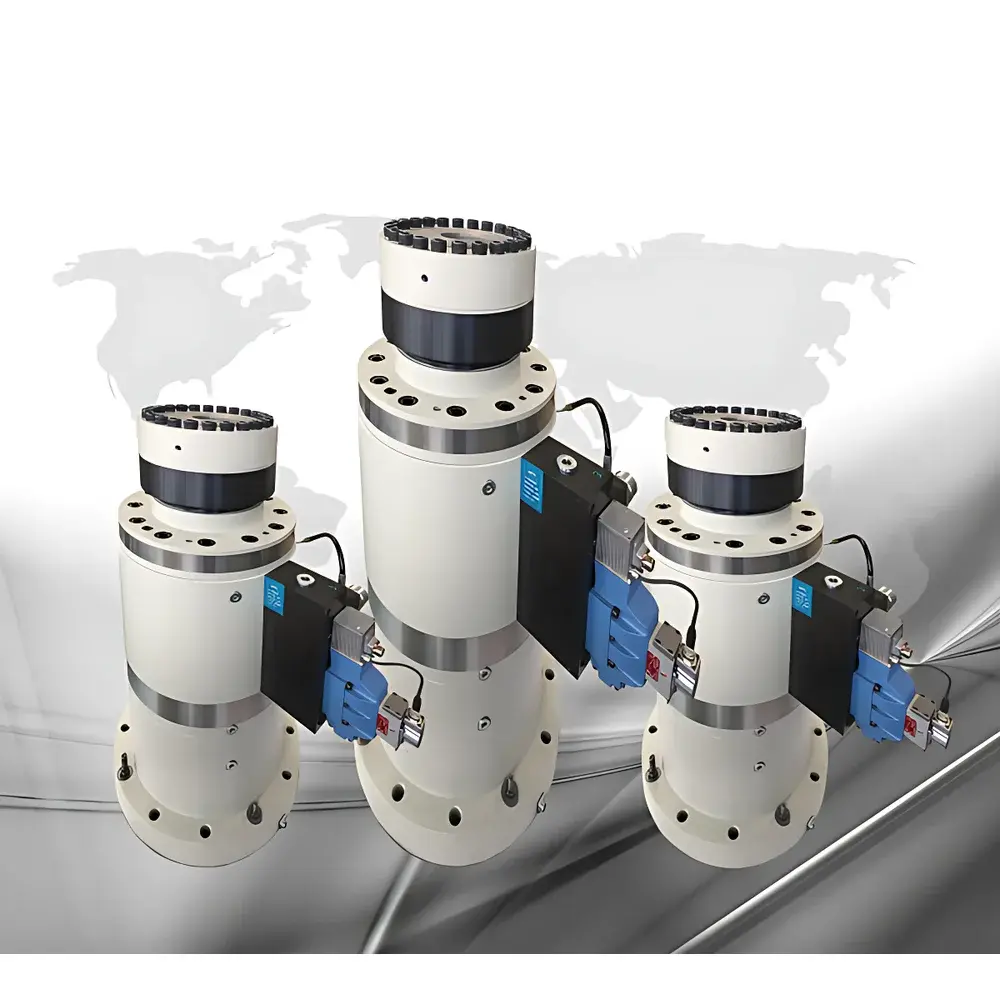
| Actuation Type | Electro-Hydraulic Servo Fatigue Actuator |
| Maximum Test Force | 10–1000 kN |
| Frequency Range | 0.01–400 Hz |
| Host Weight | 35–1380 kg |
| Operating Pressure | 21–28 MPa |
| Peak Velocity (Standard) | 20 m/s |
| Bearing Type | Hydrostatic Journal Bearing (Sealless) |
| Compliance | ISO 6892-1, ASTM E4, ASTM E606, ASTM E2207 |
Overview
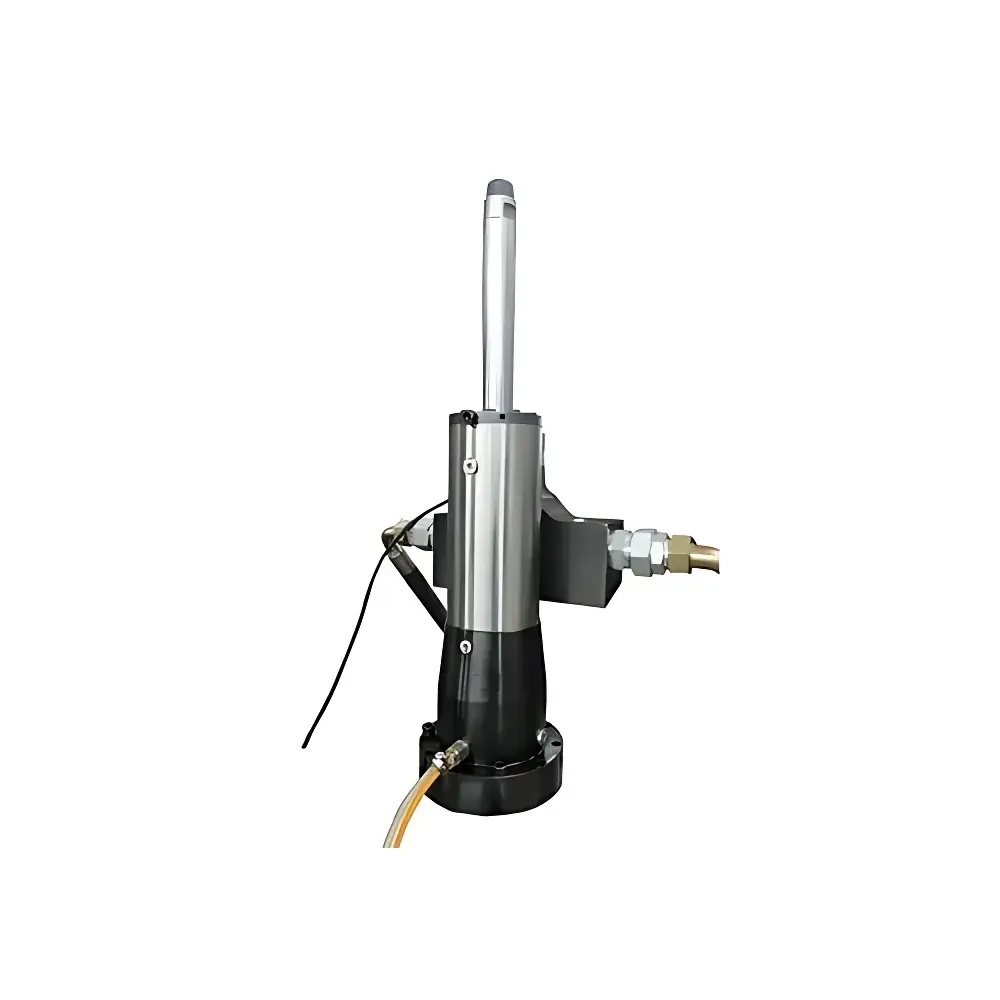
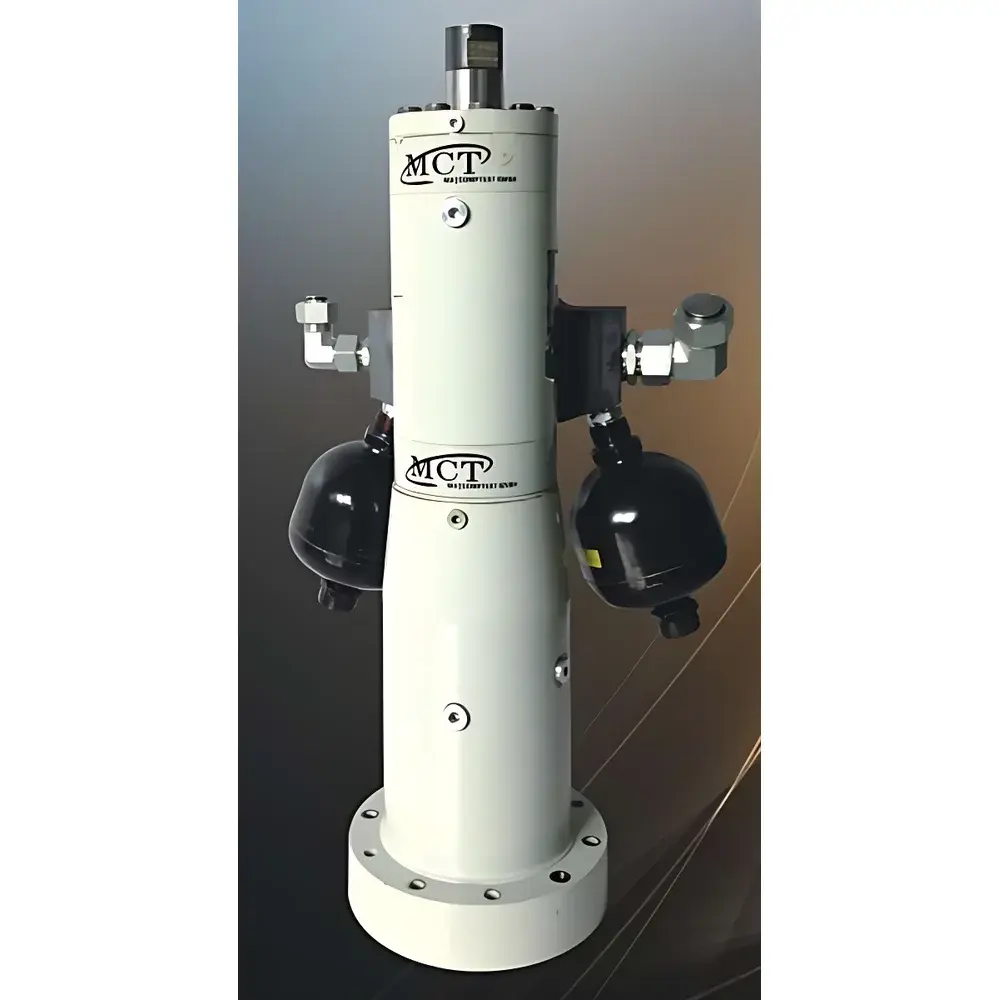
The SINOTEST MCT Hydrostatically Supported Axial Servo Actuator is an ultra-high-precision electro-hydraulic actuation system engineered for demanding dynamic and static mechanical testing applications—particularly high-cycle fatigue, low-cycle fatigue, creep-fatigue interaction, and real-time closed-loop control of force, displacement, or strain. Unlike conventional servo-hydraulic cylinders relying on elastomeric or metal seals, the MCT series eliminates all contact-based sealing interfaces. Instead, it employs a hydrostatic journal bearing principle: pressurized hydraulic oil is actively supplied to annular recesses in the cylinder bore, generating a continuous, load-bearing fluid film between the piston rod and housing. This film fully separates mating surfaces under both static and dynamic conditions—ensuring zero mechanical contact, negligible stiction, and near-frictionless motion across the full operational envelope. The result is exceptional trajectory fidelity, sub-micron positioning repeatability, and long-term calibration stability—critical for R&D-grade materials characterization and regulatory-compliant fatigue validation per ISO 12107 and ASTM E466.
Key Features
- Sealless hydrostatic bearing architecture: No elastomeric or lip seals—eliminates wear, stick-slip, hysteresis, and seal-induced nonlinearity
- True liquid-lubricated operation: Full-fluid-film support at standstill and up to 400 Hz dynamic excitation—enabling ultra-low friction coefficient (<0.0005) and minimal heat generation
- Symmetric dual-chamber design (ML Series): Equal effective piston areas on both sides ensure balanced force response and inherent centering capability during axial loading
- High bandwidth performance: Closed-loop frequency response exceeding 400 Hz (−3 dB point), supporting high-fidelity simulation of complex waveforms including random vibration spectra and transient shock profiles
- Robust lateral load tolerance: Integrated hydrostatic radial support provides automatic self-alignment and resists misalignment-induced side-loading up to ±0.5° without performance degradation
- Self-repairing surface treatment: Hard-anodized or DLC-coated rod surfaces maintain lubricant retention and recover minor surface irregularities under sustained operation
- Modular integration: Designed for seamless coupling with SINOTEST universal test frames (e.g., PLD, PWS series) and third-party controllers compliant with IEEE 1451.4 transducer electronic data sheets (TEDS)
Sample Compatibility & Compliance
The MCT actuator is compatible with standardized test specimens per ISO 6892-1 (tensile), ASTM E8/E21 (metallic materials), ASTM D3479 (polymer tensile fatigue), and ISO 13584-42 (digital product definition). Its force accuracy meets Class 0.5 per ISO 7500-1, and displacement resolution achieves ≤0.1 µm with optional LVDT or optical encoder feedback. The system supports GLP/GMP audit trails when paired with SINOTEST’s certified control software (v5.2+), which complies with FDA 21 CFR Part 11 requirements for electronic records and signatures—including user access controls, immutable event logs, and full parameter change history. All hydraulic components conform to ISO 4406:2017 cleanliness class 16/14/11, ensuring long-term reliability in contamination-sensitive environments.
Software & Data Management
The actuator operates natively with SINOTEST’s WinTest Pro™ control platform—a deterministic real-time OS (VxWorks-based) delivering sub-millisecond loop timing. Software features include multi-channel synchronized acquisition (force, displacement, strain, temperature), FFT-based spectral analysis, rainflow cycle counting, and automated S–N curve generation. Raw data is stored in HDF5 format with embedded metadata (test standard, operator ID, environmental conditions), enabling traceability and post-processing interoperability with MATLAB, Python (h5py), or commercial FEA tools. Optional cloud synchronization allows secure remote monitoring via encrypted TLS 1.3 channels, with role-based dashboards for QA managers and lab directors.
Applications
- Fatigue life assessment of aerospace titanium alloys (Ti-6Al-4V), nickel-based superalloys (Inconel 718), and additively manufactured lattice structures
- Ball-joint and spherical bearing durability testing per SAE J2570 and ISO 12127-2
- High-frequency vibration qualification of automotive suspension components and EV battery module mounts
- Creep-fatigue interaction studies under combined thermal-mechanical loading (with integrated furnace or cryo chamber)
- Calibration reference actuator for national metrology institutes requiring <±0.25% force linearity over 107 cycles
FAQ
What distinguishes hydrostatic support from traditional servo-hydraulic actuation?
Hydrostatic support replaces mechanical seals with a controlled oil film, eliminating static friction, seal wear, and pressure-dependent leakage—yielding superior low-speed control, extended service intervals, and metrological-grade repeatability.
Can the ML-series actuator be retrofitted into existing test frames?
Yes—standardized mounting interfaces (ISO 6983-1 flanges) and CANopen/EtherCAT communication protocols enable integration with legacy frames provided mechanical alignment and hydraulic power unit (HPU) capacity meet minimum flow (≥120 L/min) and pressure (≥35 MPa) specifications.
Is the actuator suitable for vacuum or cleanroom environments?
Not inherently—external hydraulic oil reservoirs and cooling circuits require isolation. However, sealed variants with dry nitrogen purge and stainless-steel wetted parts are available under custom engineering (MIL-STD-810G compliant).
What maintenance schedule is recommended for optimal long-term performance?
Oil analysis every 500 operating hours; full bearing clearance verification and filter replacement every 2,000 hours; no scheduled seal replacement required due to sealless design.



