
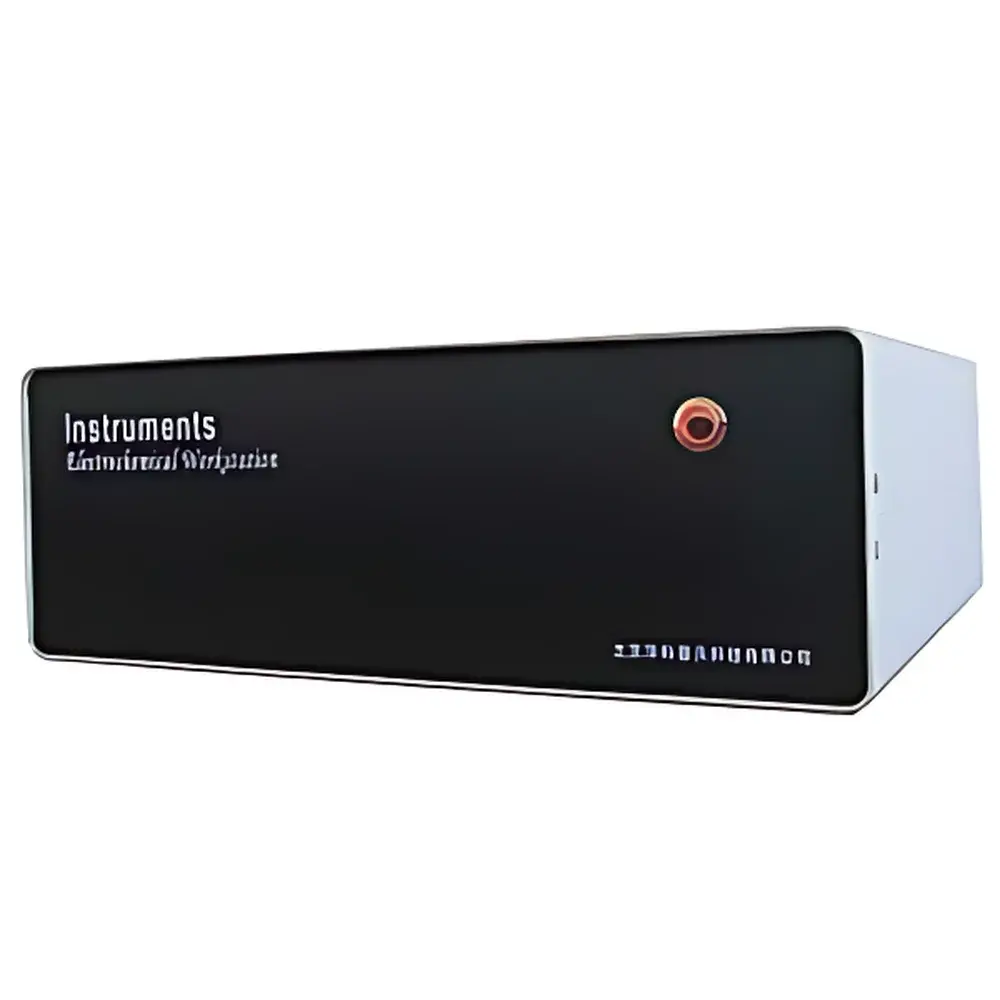
CHI660E Electrochemical Workstation
| Brand | CH Instruments |
|---|---|
| Model | CHI660E |
| Type | Single-Channel Potentiostat/Galvanostat with EIS Capability |
| Origin | Beijing, China |
| Current Range | ±10 pA to ±0.25 A |
| Current Accuracy | ±0.2% of reading |
| Potential Accuracy | ±1 mV or ±0.01% of full scale |
| Potentiostatic Range | ±10 V |
| AC Impedance Frequency Range | 10 µHz to 1 MHz |
| Warranty | 12 months (excludes PC) |
Overview
The CHI660E Electrochemical Workstation is a high-performance, single-channel potentiostat/galvanostat engineered for precision electrochemical characterization in academic research laboratories, quality control environments, and materials development facilities. Built upon a robust analog front-end architecture and digitally controlled feedback loops, the instrument implements classic three-electrode electrochemical cell configurations to deliver stable potential control, accurate current measurement, and high-fidelity electrochemical impedance spectroscopy (EIS). Its design adheres to fundamental electrochemical measurement principles—including Ohmic drop compensation, capacitive current correction, and real-time signal averaging—enabling reliable acquisition of cyclic voltammetry (CV), linear sweep voltammetry (LSV), chronoamperometry (CA), chronopotentiometry (CP), and multi-step pulse techniques. The workstation supports both DC and AC excitation modes, with its wide dynamic current range (±10 pA to ±0.25 A) accommodating ultra-trace sensor studies as well as high-current battery electrode evaluations.
Key Features
- Single-channel architecture optimized for reproducible, low-noise electrochemical measurements under ambient and controlled-environment conditions
- High-resolution potential control with accuracy of ±1 mV or ±0.01% of full scale across a ±10 V operating window
- Current measurement capability spanning 13 decades—from femtoampere-level detection (±10 pA) to macro-scale electrochemical processes (±0.25 A)
- Electrochemical Impedance Spectroscopy (EIS) functionality covering a frequency range from 10 µHz to 1 MHz, supporting both potentiostatic and galvanostatic EIS modes
- Integrated analog filtering and digital signal processing to minimize noise and enhance signal-to-noise ratio in low-current applications
- Comprehensive safety features including over-current protection, voltage clamping, and automatic shutdown on hardware fault detection
Sample Compatibility & Compliance
The CHI660E is compatible with standard three-electrode electrochemical cells (working, reference, and counter electrodes) using common electrode materials such as glassy carbon, platinum, gold, silver/silver chloride, and mercury-based systems. It supports aqueous, non-aqueous, and ionic liquid electrolytes within standard laboratory temperature ranges (15–35 °C). While not certified for regulated GMP manufacturing environments, the system meets foundational requirements for GLP-compliant data acquisition when operated with appropriate documentation practices. Its analog and digital subsystems conform to IEC 61000-4 electromagnetic compatibility standards. Data output formats are compatible with ASTM E2977 (Standard Guide for Electrochemical Measurements in Corrosion Studies) and ISO 16773 (Electrochemical impedance spectroscopy for corrosion testing).
Software & Data Management
The workstation operates via CHI’s proprietary Windows-based software suite (v13.x or later), which provides intuitive experiment setup, real-time data visualization, and post-acquisition analysis tools—including equivalent circuit modeling for EIS, peak integration for voltammetric scans, and Tafel slope extraction. All raw data are saved in binary .DTA format with embedded metadata (timestamp, instrument ID, parameter settings, user notes). Export options include ASCII (.txt), CSV, and Excel-compatible formats. The software supports audit trail logging for critical parameters and allows configuration of user-defined report templates. While not natively compliant with FDA 21 CFR Part 11, the system can be integrated into validated workflows through external electronic lab notebook (ELN) platforms that provide electronic signature and version control capabilities.
Applications
- Corrosion science: polarization resistance, pitting susceptibility, and coating degradation assessment
- Battery and fuel cell R&D: electrode kinetics, SEI layer formation, and charge-transfer resistance quantification
- Biosensor development: amperometric detection of glucose, dopamine, H2O2, and DNA hybridization events
- Electrocatalysis: evaluation of HER, OER, and ORR activity on novel catalyst surfaces
- Conducting polymer characterization: redox switching behavior, doping level estimation, and ion transport kinetics
- Environmental electroanalysis: trace heavy metal detection (e.g., Pb2+, Cd2+) via anodic stripping voltammetry
FAQ
Is the CHI660E suitable for battery cycling tests?
Yes—it supports galvanostatic charge/discharge protocols with programmable current limits and voltage cutoffs, though long-term cycling requires external thermal management and cell housing.
Does the system support four-electrode (Kelvin) measurements?
No—the CHI660E is configured exclusively for three-electrode operation; four-terminal sensing is not implemented.
Can the instrument be used with microelectrodes?
Yes—its sub-picoampere current resolution and low input bias current (<1 pA) make it appropriate for steady-state and transient measurements with microdisk and nanoelectrodes.
Is third-party software integration possible?
Limited integration is available via DLL-based API for custom LabVIEW or Python applications; however, full protocol control and real-time data streaming require CHI’s native software environment.
What computer specifications are required?
A Windows 10/11 PC (64-bit) with USB 2.0 port, ≥8 GB RAM, and ≥256 GB SSD storage is recommended for optimal performance and data throughput.
Related Products





