
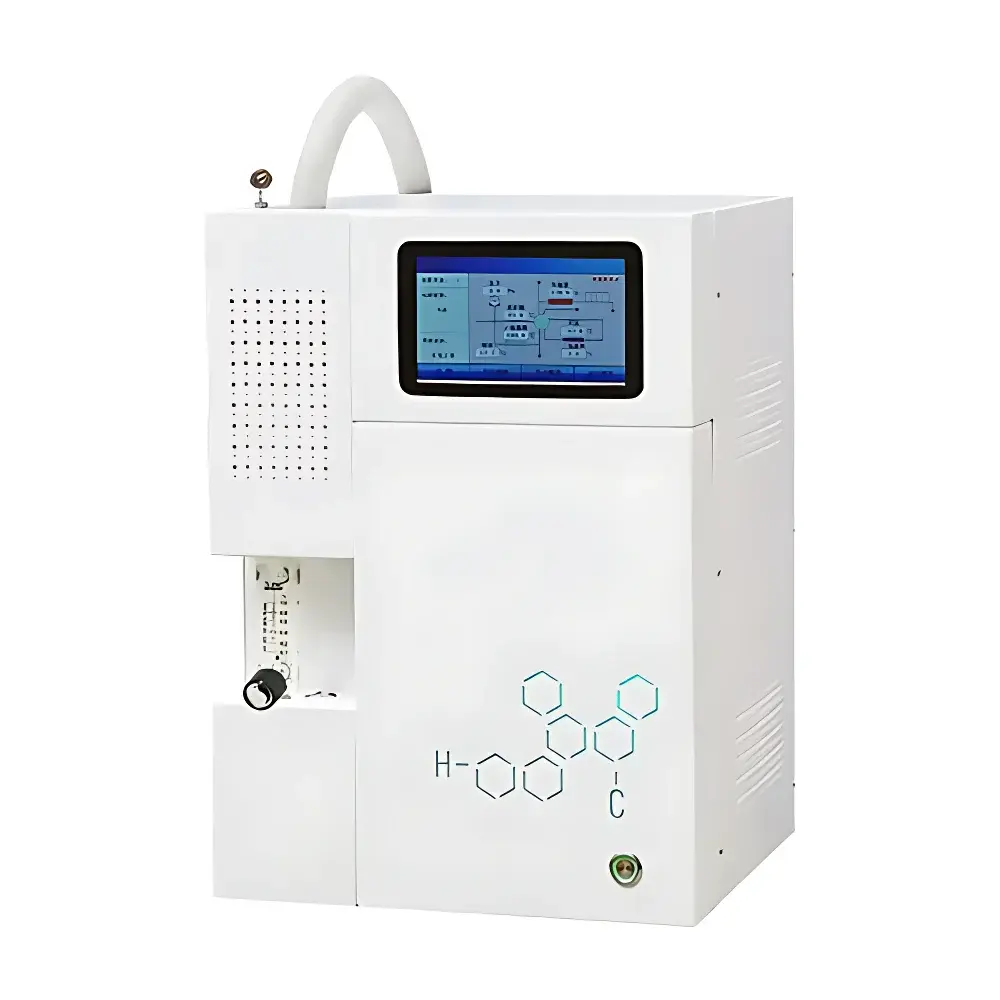
Sida GTD-1 Atmospheric Pre-concentrator for Gas Analysis
| Brand | Sida |
|---|---|
| Origin | Shanghai, China |
| Manufacturer Type | OEM Manufacturer |
| Country of Origin | China |
| Model | GTD-1 |
| Pricing | Upon Request |
Overview
The Sida GTD-1 Atmospheric Pre-concentrator is a fully integrated, laboratory-grade gas pre-concentration system engineered for trace-level volatile organic compound (VOC) and inorganic sulfur compound analysis in ambient air and stack emission samples. It operates on the principle of cryogenic trapping—using thermoelectric (Peltier) cooling to condense target analytes onto a focused cold trap at sub-ambient temperatures (typically −30 °C to −40 °C), followed by rapid thermal desorption into a gas chromatograph (GC) or GC–MS system. Unlike liquid nitrogen–dependent concentrators, the GTD-1 eliminates cryogen handling hazards and logistical constraints while maintaining high trapping efficiency for low-boiling-point compounds such as hydrogen sulfide (H₂S), methanethiol (CH₃SH), dimethyl sulfide (CH₃SCH₃), and dimethyl disulfide (CH₃SSCH₃). Its design conforms to the methodological requirements of ISO 16017-1, ASTM D5504, and Chinese national standard GB/T 14678–1993 for odorant and reduced sulfur compound determination in atmospheric samples.
Key Features
- Integrated five-function architecture: automated sampling, cryo-trapping, thermal desorption, GC injection, and system self-cleaning—all executed within a single instrument cycle.
- Electronically cooled focusing trap with precise temperature control (±0.5 °C stability), eliminating reliance on liquid nitrogen or dry ice.
- Independent thermal regulation of critical zones: six-port switching valve, transfer line (up to 200 °C), and concentrator trap—each with dedicated PID-controlled heating/cooling modules.
- Motor-driven, high-cycle-life six-way valve ensuring reproducible switching timing and minimal carryover (<0.1% typical for H₂S).
- Entire sample pathway constructed from ultra-low-bleed, silanized fused-silica or deactivated stainless-steel tubing (OD 1/16″), certified for inertness per ASTM E260 and USP .
- No cold spots: valve-to-transfer-line junctions housed inside an actively heated保温 enclosure (maintained at ≥120 °C) to prevent analyte condensation or wall adsorption.
- 7-inch capacitive color touchscreen interface with embedded microcontroller; supports method storage (>100 protocols), real-time status monitoring, and password-protected user access levels.
- Dual TTL/relay trigger outputs synchronized with GC start and data acquisition; dual external ready-input channels enable handshake coordination with third-party autosamplers or environmental monitoring stations.
Sample Compatibility & Compliance
The GTD-1 accepts gaseous samples delivered via Tedlar® bags, SUMMA® canisters, or direct ambient draw-through configurations (flow range: 10–1000 mL/min). It is validated for quantitative recovery of C₁–C₈ VOCs, halogenated hydrocarbons, carbonyls, and reactive sulfur species—including those specified in GB/T 14678–1993. Instrument compliance includes full alignment with GLP documentation requirements: audit trail logging (user actions, method changes, calibration events), electronic signature support, and time-stamped run records exportable in CSV or XML. Optional 21 CFR Part 11–compliant software upgrade enables role-based access control, electronic signatures, and secure data archiving—meeting FDA-regulated environmental testing workflows.
Software & Data Management
The GTD-1 operates natively via its onboard firmware but supports optional PC-based remote control through RS-232/USB or Ethernet (TCP/IP). The companion software provides method editor functionality, real-time temperature/pressure trending, sequence scheduling, and automated report generation compliant with ISO/IEC 17025 reporting templates. All raw instrument parameters—including trap temperature ramp profiles, valve actuation timestamps, and desorption hold times—are embedded in exported .csv files for traceability. Data integrity safeguards include cyclic redundancy checksums (CRC-32) for stored methods and encrypted local database backups.
Applications
Primary applications include regulatory air quality monitoring (EPA TO-15, EU EN 13649-2), industrial hygiene assessments (NIOSH 1501, OSHA 1013), landfill and wastewater treatment odor profiling, and semiconductor cleanroom ambient surveillance. The system demonstrates robust performance in measuring ppq–ppt level sulfur volatiles in municipal odor complaints investigations and verifying compliance with WHO air quality guidelines for H₂S (10 µg/m³, 8-hr avg). It is routinely deployed in accredited environmental laboratories performing routine stack testing under China’s HJ 732–2014 and HJ 759–2015 standards.
FAQ
Does the GTD-1 require liquid nitrogen or other cryogens?
No—it uses solid-state Peltier cooling exclusively, reducing operational cost and safety risks.
Can it interface with Agilent, Thermo Fisher, or Shimadzu GC systems?
Yes—via standardized TTL triggers and configurable relay outputs; hardware compatibility confirmed with all major GC and GC–MS platforms.
Is method validation support available?
Yes—Sida provides IQ/OQ documentation templates, system suitability test protocols, and application notes aligned with GB/T 14678–1993 and ASTM D5504.
What maintenance intervals are recommended?
Trap cartridge replacement every 500 runs; valve seal inspection every 1,000 cycles; annual calibration verification using certified gas standards.
Can the GTD-1 be integrated into an unattended multi-sample workflow?
Yes—when paired with optional gas autosampler (e.g., Sida GSA-8), it supports fully automated batch processing with programmable standby and error-recovery logic.



