
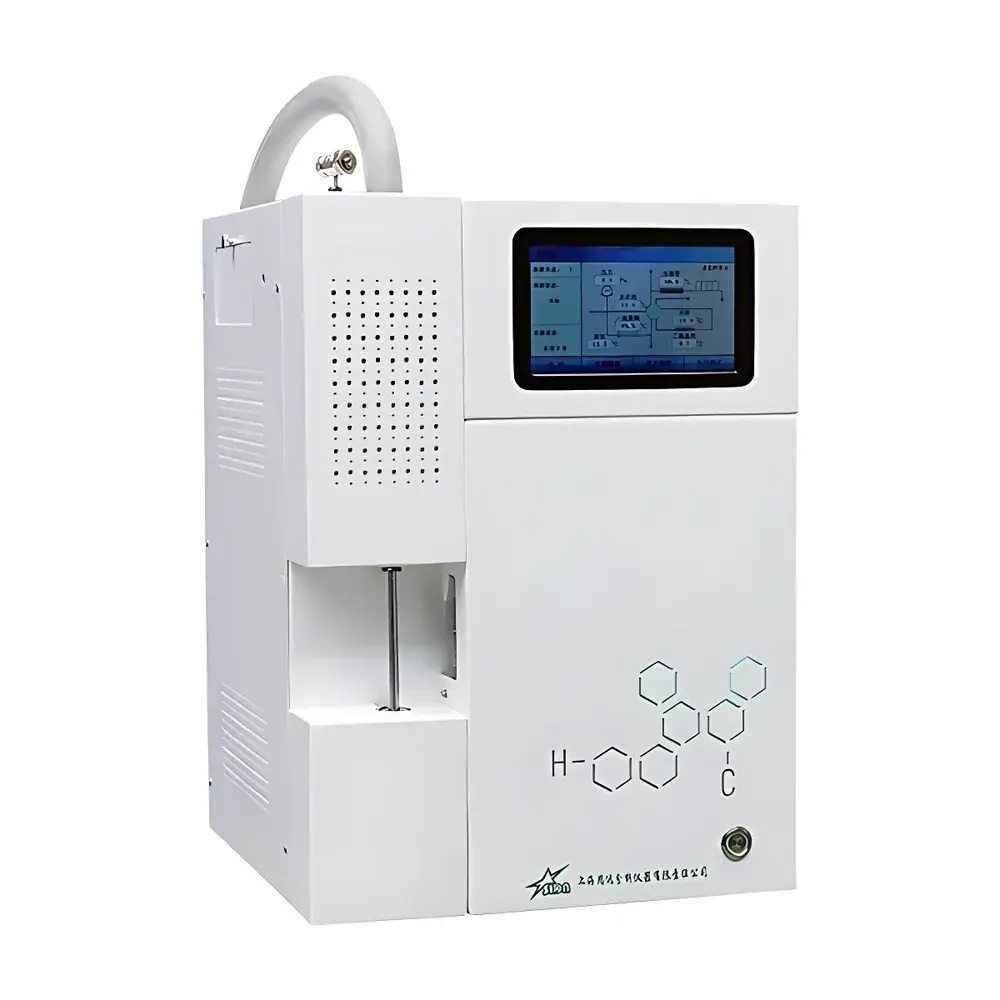
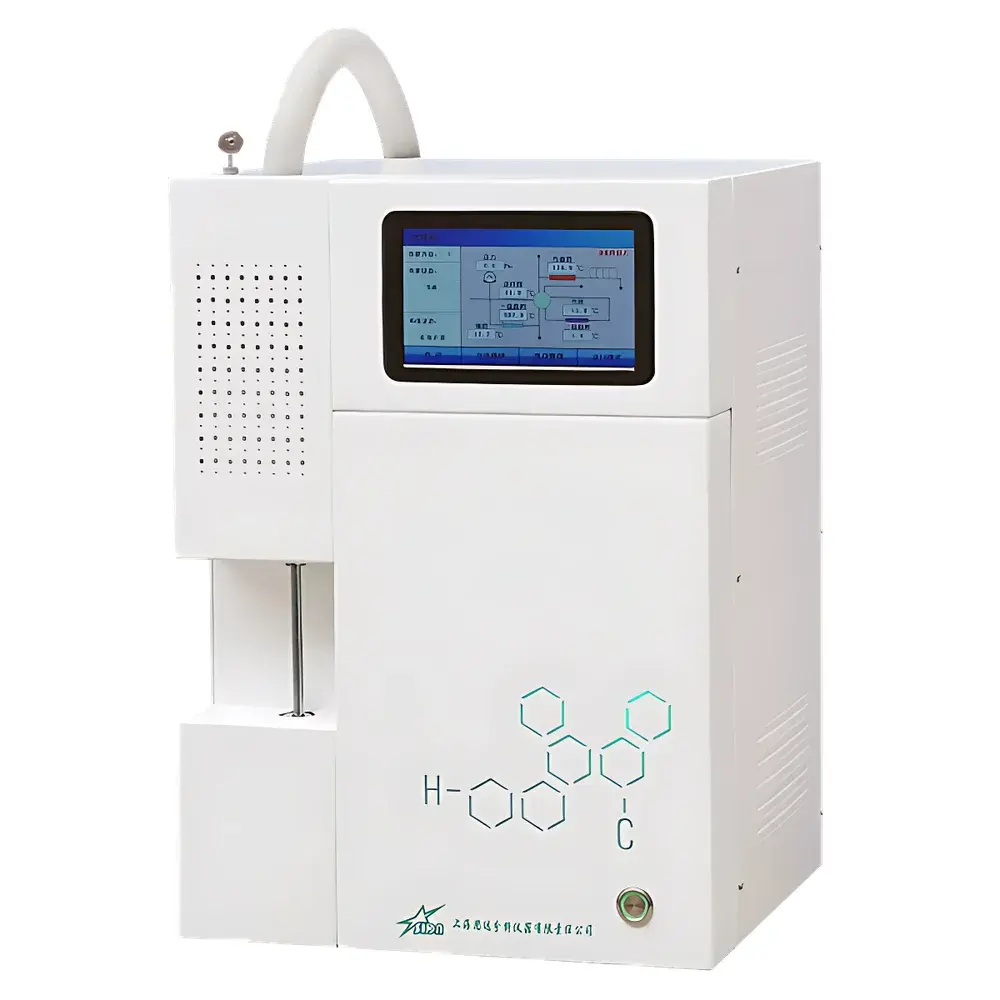
Sida ATD-1 Dual-Stage Thermal Desorber
| Brand | Sida |
|---|---|
| Origin | Shanghai, China |
| Manufacturer Type | Direct Manufacturer |
| Country of Origin | China |
| Model | ATD-1 |
| Price Range | USD 14,000 – 42,500 (FOB) |
| Instrument Type | Dual-Stage Thermal Desorber / Thermal Desorption Unit |
| Automation Level | Fully Automatic |
| Sample Position Capacity | 1 tube |
Overview
The Sida ATD-1 Dual-Stage Thermal Desorber is a fully automated, benchtop thermal desorption system engineered for high-fidelity recovery and transfer of volatile organic compounds (VOCs) and semi-volatile organic compounds (SVOCs) from sorbent tubes to gas chromatography–mass spectrometry (GC–MS) or gas chromatography–flame ionization detection (GC–FID) systems. It operates on the principle of two-stage thermal desorption: first, analytes are thermally desorbed from the primary sorbent tube under controlled inert gas flow; second, they are cryogenically focused in a dedicated cold trap (–30 °C to –40 °C via Peltier cooling), followed by rapid flash-heating (>30 °C/s ramp rate) and quantitative transfer to the GC inlet. This dual-stage architecture significantly enhances sensitivity (detection limits down to low-pg levels), improves peak shape resolution, and eliminates breakthrough and re-adsorption artifacts common in single-stage systems. Designed for compliance with international ambient air, indoor air, and occupational health monitoring protocols, the ATD-1 delivers reproducible, trace-level VOC analysis without liquid cryogens.
Key Features
- Fully integrated workflow: automated sampling tube loading, primary desorption, cryogenic focusing, secondary desorption, GC interface triggering, and system bake-out—all executed in a single sequence
- Peltier-based cryofocusing: eliminates dependence on liquid nitrogen or dry ice; achieves stable cold trap temperatures from –30 °C to –40 °C with ±0.5 °C stability
- Five-zone independent temperature control: sample tube oven, cold trap, transfer line, six-port valve housing, and GC interface zone—each digitally regulated with PID feedback
- High-inertness fluid path: all internal tubing and valves constructed from Siltek®-deactivated fused silica or electropolished stainless steel; zero carryover verified per ASTM D7975
- Motor-driven, heated six-port valve: operating temperature up to 260 °C; valve and transfer line junction housed within insulated thermal enclosure to prevent cold spots
- 7-inch capacitive touchscreen HMI: intuitive method editor with password-protected user profiles, method library storage (≥100 methods), real-time status monitoring, and audit-trail-enabled operation logs
- GC synchronization interface: two TTL-compatible trigger outputs and one ready-input signal for seamless coordination with Agilent, Shimadzu, Thermo Fisher, PerkinElmer, and other major GC/GC–MS platforms
Sample Compatibility & Compliance
The ATD-1 supports standard 6 mm OD × 89 mm length sorbent tubes (e.g., Tenax TA, Carbopack B/C, Carboxen 1000, or multi-bed configurations) and accommodates both single- and multi-bed tube formats. It complies with method requirements specified in key regulatory standards including: EPA TO-17 (Determination of Volatile Organic Compounds in Ambient Air Using Active Sampling Onto Sorbent Tubes), HJ 644–2013 (Ambient Air – Determination of VOCs by Sorbent Tube Sampling–Thermal Desorption–GC–MS), HJ 583–2010 (BTEX Analysis in Ambient Air), HJ 734–2014 (VOCs in Stationary Source Emissions), GB/T 18883–2002 (Indoor Air Quality Standard), and GB 50325–2020 (Control Standard for Indoor Environmental Pollution in Civil Building Engineering). Its firmware supports 21 CFR Part 11–compliant electronic signatures and audit trail generation when paired with validated PC software.
Software & Data Management
The ATD-1 operates autonomously via its embedded microcontroller but supports optional PC-based remote control and method management through Sida TDControl v3.x software (Windows 10/11 compatible). The software enables full bidirectional communication—including method upload/download, real-time parameter adjustment, event logging with timestamped operator ID, and export of CSV-formatted run reports. All method changes and instrument events are recorded in an immutable audit trail compliant with GLP and ISO/IEC 17025 documentation requirements. System diagnostics—including heater status, valve actuation cycles, cold trap performance, and pressure transducer calibration history—are accessible via secure web interface or local USB export.
Applications
- Occupational exposure assessment per OSHA and NIOSH criteria (e.g., benzene, formaldehyde, styrene, xylene)
- Indoor air quality (IAQ) surveys in residential, commercial, and healthcare facilities
- Automotive cabin air testing per HJ/T 400–2007 and ISO 12219-3
- Rapid source identification during chemical release incidents or hazmat response
- Flavor and fragrance profiling in food, cosmetic, and pharmaceutical R&D
- Environmental monitoring of landfill emissions, wastewater treatment off-gases, and urban ambient air networks
- Method development and validation for accredited environmental testing laboratories (CNAS, UKAS, A2LA)
FAQ
Does the ATD-1 require liquid nitrogen or other cryogenic coolants?
No. It uses solid-state Peltier cooling for the cold trap, eliminating logistical and safety constraints associated with cryogens.
Can the ATD-1 be integrated with non-Sida gas chromatographs?
Yes. It features universal TTL-level hardware triggers and configurable delay timers compatible with all major GC and GC–MS systems.
Is the system compliant with 21 CFR Part 11 for regulated laboratories?
Yes—when operated with validated TDControl software and appropriate administrative controls (e.g., role-based access, electronic signatures, audit trail review).
What maintenance intervals are recommended for long-term reliability?
Cold trap cleaning every 200 runs; valve seal inspection every 500 runs; annual calibration verification using certified permeation tubes per ISO 17025 guidelines.
Can the ATD-1 perform sequential analysis of multiple tubes?
The base configuration supports one tube per run; optional autosampler integration (ATD-1-AS module) enables unattended 20-tube sequences.





