
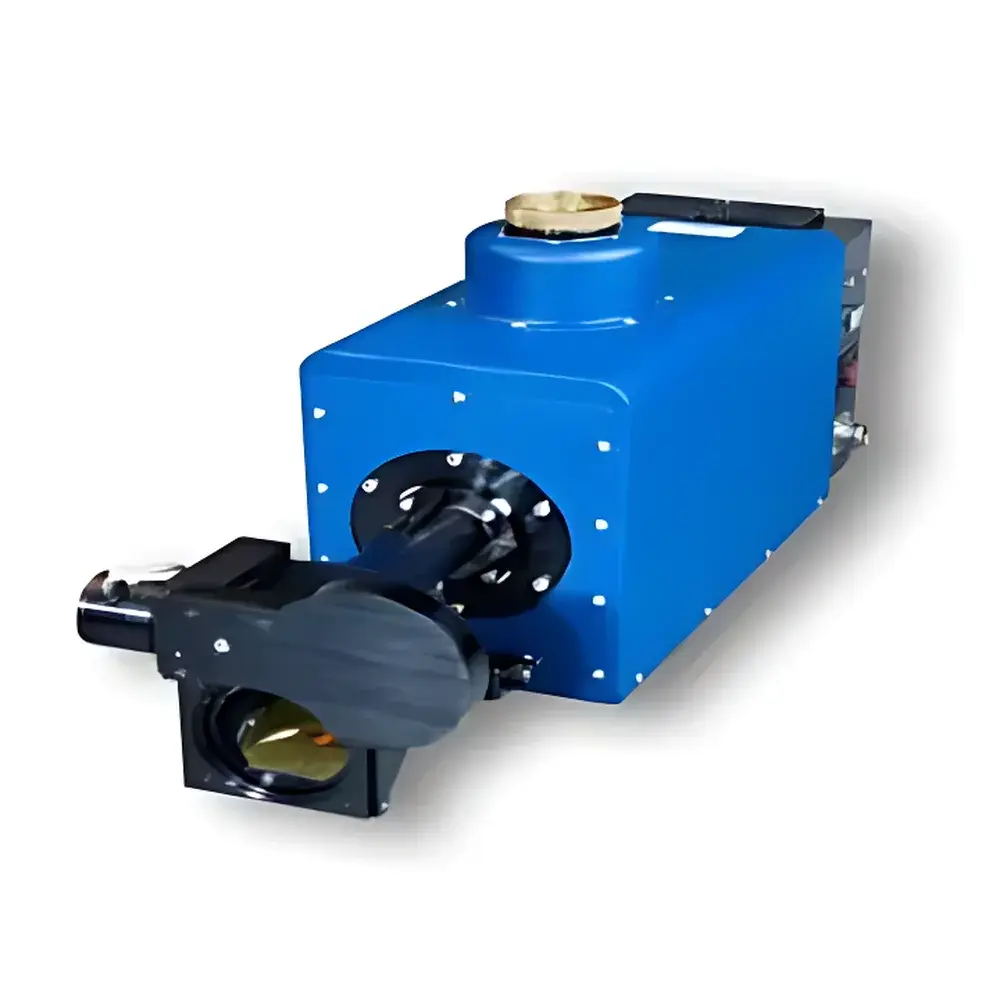
SurfaceOptics SOC 750MW Mid-Wave Infrared Hyperspectral Imaging Spectrometer
| Brand | SurfaceOptics |
|---|---|
| Origin | USA |
| Model | SOC 750MW |
| Spectral Range | 2–5 µm |
| Detector Type | InSb Focal Plane Array (FPA) |
| Spatial Resolution | 256 × 240 or 512 × 512 pixels |
| Spectral Channels | 42 or 64 |
| Spectral Bandwidth | 48–73 nm |
| Frame Rate | up to 27 cubes/s |
| Instantaneous Field of View (IFOV) | 0.4–0.6 mrad @ 50 mm lens |
| Detector Pixel Pitch | 20–30 µm |
| Full-Well Capacity | 5–20 Me⁻ |
| Operating Temperature Range (for target emission) | up to 1250 °C |
| Software | HSAnalysis3 with real-time processing engine |
| Data Output Format | Standard ENVI-compatible .hdr/.dat, supports third-party analysis (MATLAB, Python, IDL) |
Overview
The SurfaceOptics SOC 750MW is a high-performance, real-time mid-wave infrared (MWIR) hyperspectral imaging spectrometer engineered for quantitative spectral-spatial characterization in demanding field and laboratory environments. Operating across the 2–5 µm atmospheric transmission window, the system leverages cooled indium antimonide (InSb) focal plane array detectors—optimized for thermal emission detection—and integrates a precision Czerny-Turner imaging spectrometer with a high-speed scanning mechanism. Unlike dispersive or filter-wheel-based approaches, the SOC 750MW employs push-broom or snapshot-capable acquisition architectures (depending on configuration), enabling full-cube capture at rates up to 27 hyperspectral data cubes per second. Its optical design ensures minimal smile and keystone distortion, critical for radiometric fidelity and pixel-level spectral alignment. The instrument is fundamentally designed for passive remote sensing of self-emitting or reflected MWIR signatures—making it suitable for applications where thermal contrast, molecular vibrational absorption features (e.g., C–H, N–H, O–H stretches), and material emissivity differences are diagnostic.
Key Features
- Real-time hyperspectral data acquisition: Up to 27 spectral cubes per second at native spatial-spectral resolution configurations.
- Dual-resolution detector options: 256 × 240 (high-brightness mode) or 512 × 512 (high-resolution mode), both operating within the 2–5 µm band.
- Narrow spectral bandwidth: 48 nm (HR model) to 73 nm (HB model), supporting discrimination of closely spaced absorption features in gases, polymers, and biological tissues.
- Calibration-integrated architecture: Factory radiometric, spectral, and geometric calibration embedded in firmware; NIST-traceable blackbody reference support available.
- Onboard real-time processor: Dedicated FPGA- and GPU-accelerated hardware for onboard cube generation, bad-pixel correction, non-uniformity correction (NUC), and basic spectral unmixing.
- Modular optical interface: Compatible with standard C-mount and F-mount lenses; optional motorized filter wheels and external trigger I/O for synchronization with external events.
Sample Compatibility & Compliance
The SOC 750MW is optimized for ground-based, close-range to medium-range (up to several hundred meters) passive imaging of thermally active or reflective targets. It accommodates heterogeneous samples including industrial hot surfaces (e.g., turbine blades, weld seams), agricultural canopies, pharmaceutical tablet coatings, and defense-related signature targets. All factory calibrations adhere to ASTM E1933-19 (Standard Test Methods for Measuring and Compensating for Emissivity Using Infrared Imaging Radiometers) and ISO 18434-1:2008 (Condition monitoring and diagnostics of machines — Thermography — Part 1: General procedures). Data provenance and processing integrity comply with GLP principles; HSAnalysis3 supports audit-trail logging and user-access controls aligned with FDA 21 CFR Part 11 requirements when deployed in regulated QC/QA workflows.
Software & Data Management
HSAnalysis3 is a Windows-based, GUI-driven software suite developed exclusively for SurfaceOptics hyperspectral platforms. It provides real-time visualization of spectral cubes, interactive ROI selection, spectral library matching (using dot-product, SID, or MAF algorithms), and export of calibrated radiance or reflectance data in ENVI, HDF5, or MATLAB-native formats. Batch processing pipelines support automated atmospheric correction (via MODTRAN-informed models), spectral normalization (e.g., min-max, vector normalization), and PCA-based dimensionality reduction. All raw and processed datasets include embedded metadata compliant with the ISO/IEC 11179 standard for data element naming and definition. Third-party integration is enabled through documented C/C++ and Python APIs (PySOC), facilitating incorporation into custom AI/ML training pipelines or enterprise LIMS environments.
Applications
- Industrial Process Monitoring: Real-time thermal and compositional mapping of high-temperature manufacturing processes (e.g., additive manufacturing melt pools, glass annealing, semiconductor wafer heating profiles).
- Precision Agriculture: Discrimination of crop water stress, nitrogen status, and fungal infection via MWIR spectral indices sensitive to cellulose, lignin, and leaf water content.
- Biomedical Research: Label-free tissue characterization in ex vivo histopathology, burn-depth assessment, and pharmaceutical solid-state form identification (e.g., polymorph differentiation in API tablets).
- Defense & Security: Concealed object detection under camouflage, vehicle exhaust plume analysis, and standoff identification of energetic materials based on characteristic vibrational bands.
- Environmental Remote Sensing: Volcanic gas (SO₂, CO) quantification, methane leak detection from infrastructure, and wildfire front thermal dynamics modeling.
FAQ
What cooling method does the InSb detector use?
The detector is integrated with a closed-cycle Stirling cooler, maintaining stable operation at 77 K without liquid cryogens.
Is the system compatible with UAV or airborne platforms?
While designed primarily for ground-based tripod or fixed-mount deployment, the SOC 750MW’s mass (<12 kg) and power draw (<180 W) permit integration into stabilized airborne gimbals—subject to vibration damping and thermal management validation.
Can spectral libraries be customized and imported?
Yes. Users may import proprietary or public-domain spectral libraries (e.g., USGS, ECOSTRESS, NIST) in ASCII or ENVI format and perform supervised classification or spectral angle mapping.
Does the system support radiometric calibration traceable to NIST standards?
Yes—each unit ships with a calibration certificate referencing NIST-traceable blackbody sources; annual recalibration services are offered by SurfaceOptics’ ISO/IEC 17025-accredited facility.
What data security protocols are implemented in HSAnalysis3?
Role-based user authentication, encrypted project files, immutable audit logs for all processing steps, and configurable export restrictions align with ISO 27001 information security management guidelines.




