
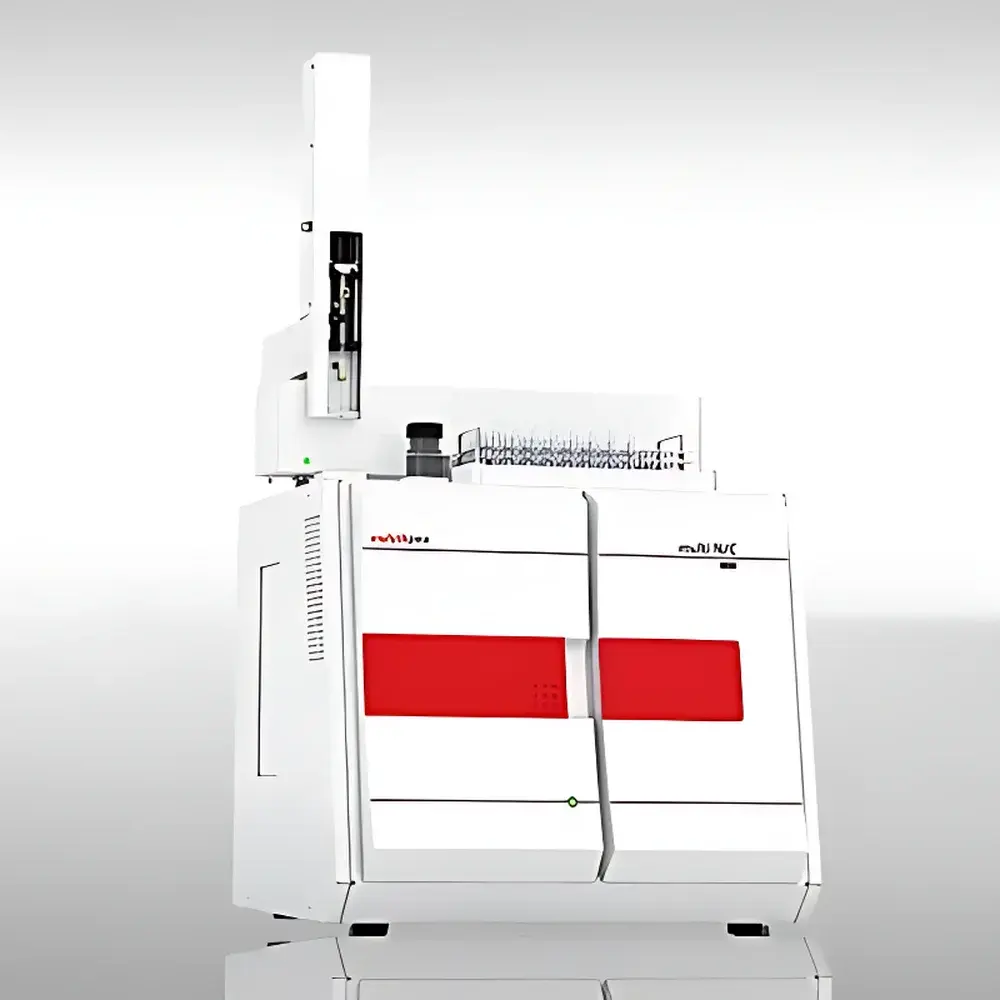
Analytik Jena multi N/C 2100 Total Organic Carbon and Total Nitrogen Analyzer
| Brand | Analytik Jena |
|---|---|
| Origin | Germany |
| Manufacturer | Analytik Jena GmbH |
| Product Type | Laboratory TOC/TN Analyzer |
| Model | multi N/C 2100 |
| Detection Principle | Non-Dispersive Infrared (NDIR) Absorption |
| Oxidation Method | High-Temperature Catalytic Combustion (up to 1000 °C) |
| Measurement Range | 0–60,000 ppm C or N |
| Accuracy | ≤ 3.0% RSD @ 100 mg/L TOC |
| Detection Limit | 50 ppb TOC |
| Resolution | 0.001 ppb |
| Repeatability | ≤ 2.0% RSD @ 100 mg/L TOC |
| Compliance | ASTM D7573, ISO 8245, USP <643>, EN 1484, EPA Method 415.3 & 9060A |
| Software | ASpect® TOC/TN Control & Data Management Suite (21 CFR Part 11 compliant) |
Overview
The Analytik Jena multi N/C 2100 is a dual-channel laboratory analyzer engineered for the simultaneous, high-precision quantification of Total Organic Carbon (TOC), Total Nitrogen (TN), and related carbon/nitrogen species—including TC, TIC, NPOC, POC, and TNb—in aqueous matrices. It operates on two complementary detection principles: Non-Dispersive Infrared (NDIR) absorption for carbon dioxide measurement following high-temperature catalytic oxidation (up to 1000 °C), and chemiluminescence detection (CLD) or photochemical detection (ChD) for nitrogen oxides generated during parallel high-temperature combustion. This dual-detector architecture enables trace-level sensitivity, broad dynamic range, and rigorous speciation without manual reconfiguration. Designed for regulatory compliance in environmental monitoring, pharmaceutical water testing, and wastewater treatment validation, the system adheres to key international standards including ASTM D7573, ISO 8245, USP , EN 1484, and EPA Methods 415.3 and 9060A.
Key Features
- Patented VITA Flow Control Technology: A proprietary signal-processing algorithm that dynamically regulates carrier gas flow and detector response timing, minimizing baseline drift and enhancing long-term stability across wide concentration ranges.
- Easy Cal Calibration Protocol: Single-point calibration using one certified standard solution (e.g., potassium hydrogen phthalate for TOC, potassium nitrate for TN), validated over extended operational periods without recalibration—reducing method setup time and operator dependency.
- Dual Oxidation Pathways: Integrated high-temperature catalytic furnace (1000 °C) for complete combustion of refractory organics and nitrogen compounds, plus optional UV/persulfate wet oxidation module for low-temperature, acid-resistant sample types.
- SCS Safety Control System: Real-time hardware-based monitoring of furnace temperature, gas pressure, CO2 trap saturation, and ozone generation; automatically initiates shutdown and alerts upon parameter deviation beyond defined thresholds.
- Self-Cleaning Combustion Chamber: Automated post-run thermal purge cycle and catalyst regeneration protocol minimizes carryover and extends catalyst lifetime (>2 years under routine use).
- Modular Architecture: Configurable inlet modules (liquid autosampler, solid sample adapter, gas sparging unit), optional TIC removal via acidification/sparging, and field-upgradable software licenses for expanded compliance reporting.
Sample Compatibility & Compliance
The multi N/C 2100 accepts liquid samples with conductivity up to 20 mS/cm and suspended solids content ≤ 50 mg/L. It accommodates ultrapure water (UPW), drinking water, surface water, wastewater effluents, pharmaceutical process water (PW, WFI, PW), and digested sludge extracts. All analytical workflows support full audit trail generation, electronic signatures, and data integrity controls aligned with FDA 21 CFR Part 11 and EU Annex 11 requirements. Instrument qualification documentation (IQ/OQ/PQ protocols), calibration verification records, and raw spectral data export (CSV, XML) are natively supported. Routine operation meets GLP and GMP environmental monitoring expectations for regulated facilities.
Software & Data Management
ASpect® TOC/TN Control Software provides intuitive method editor, real-time chromatogram visualization, automated peak integration, and customizable report templates (PDF/Excel). The platform supports multi-user role-based access control, versioned method storage, and automatic backup to network drives or cloud repositories. All data entries—including calibration logs, maintenance events, and QC failures—are timestamped, user-identified, and immutable. Audit trail review functionality allows traceability from raw signal to final result, satisfying regulatory inspection requirements for environmental laboratories accredited to ISO/IEC 17025.
Applications
- Regulatory compliance testing of municipal and industrial wastewater discharge (EPA NPDES permits)
- Pharmaceutical water system validation per USP and EP 2.2.44
- Monitoring of semiconductor ultrapure water (UPW) TOC excursions at sub-ppb levels
- Research into carbon/nitrogen cycling in aquatic ecosystems and soil leachates
- Verification of cleaning efficacy in biopharmaceutical manufacturing equipment (CIP validation)
- Long-term trend analysis of eutrophication indicators in lake and reservoir management programs
FAQ
What sample volume is required for a single TOC/TN analysis?
Typical injection volume is 20–100 µL, adjustable via method settings; autosampler vial capacity supports up to 120 positions.
Can the instrument measure TOC and TN simultaneously in one run?
Yes—the dual-channel design acquires CO2 (NDIR) and NOx (CLD/ChD) signals concurrently during each combustion event, enabling true co-quantification.
Is acidification required for TIC removal prior to TOC analysis?
An integrated acidification/sparging module is available as an option; it automates in-line HCl addition and inert gas purging to quantify TIC separately before TOC determination.
How often does the catalyst require replacement?
Under typical use (≤ 50 injections/day), the platinum-based catalyst maintains performance for ≥ 24 months; ASpect® software tracks cumulative furnace cycles and recommends replacement based on activity decay modeling.
Does the system support remote diagnostics and firmware updates?
Yes—via secure TLS-encrypted connection, service engineers can perform health checks, log analysis, and controlled firmware deployment without on-site intervention.
Related Products







