
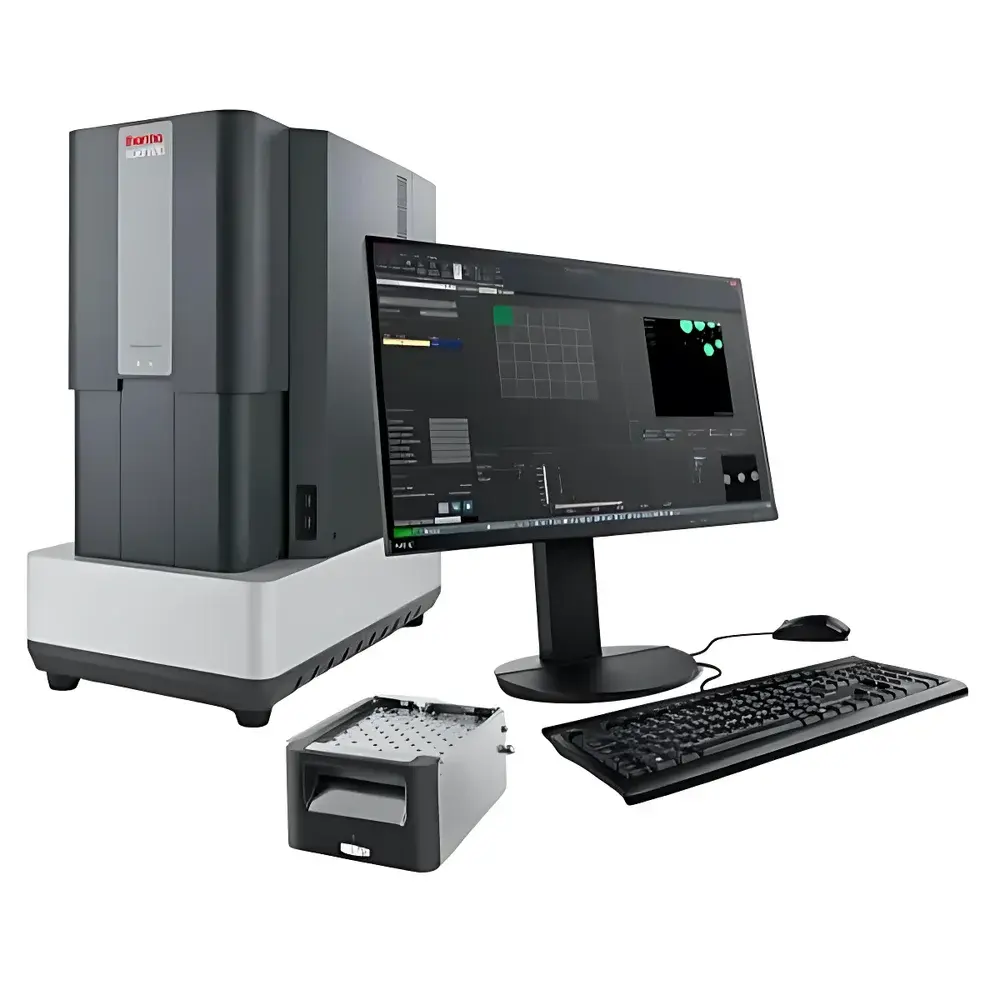
Phenom GSR Desktop Scanning Electron Microscope for Automated Gunshot Residue Analysis
| Brand | Phenom |
|---|---|
| Origin | Netherlands |
| Manufacturer Type | Manufacturer |
| Origin Category | Imported |
| Model | Phenom GSR |
| Instrument Type | Benchtop SEM |
| Electron Source | Cerium Hexaboride (CeB6) |
| Secondary Electron Resolution | 8 nm |
| Maximum Magnification | 200,000× |
| Accelerating Voltage Range | 4.8–20.5 kV |
| Backscattered Electron Resolution | 8 nm |
| Maximum Sample Dimensions | 100 mm × 100 mm × 65 mm |
| Sample Capacity | Up to 36 × 12.7 mm (0.5″) stubs |
| Optical Navigation Camera | Integrated color CCD |
| Lamp Lifetime | ≥1500 h |
| Load Time | <60 s |
| Vacuum Modes | High Vacuum / Low-Voltage Mode (reduced charging) |
| Detectors | Integrated BSED, Optional SE Detector |
| EDS Integration | Fully embedded energy-dispersive X-ray spectrometer |
Overview
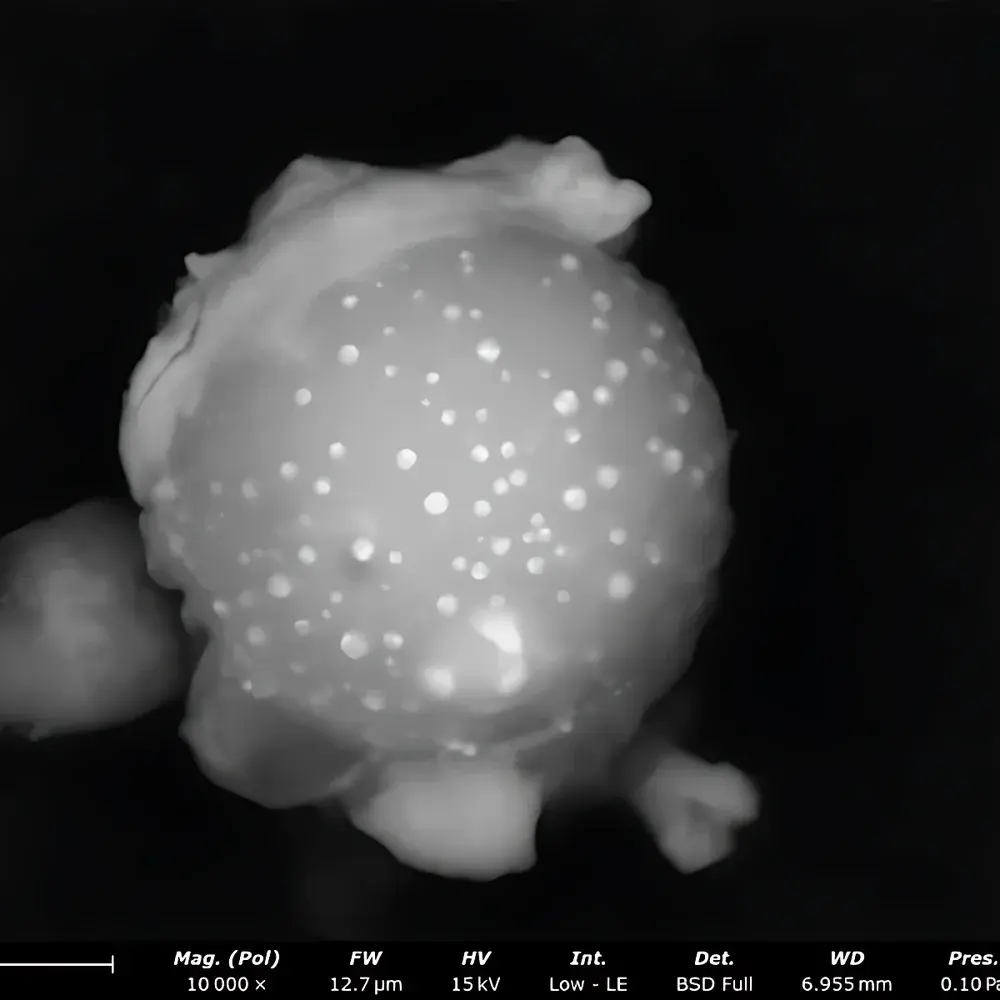
The Phenom GSR is a purpose-engineered benchtop scanning electron microscope (SEM) designed exclusively for automated forensic gunshot residue (GSR) analysis in crime laboratories, ballistics units, and accredited forensic facilities. Unlike general-purpose SEMs, the Phenom GSR implements a dedicated workflow rooted in backscattered electron (BSE) imaging combined with real-time energy-dispersive X-ray spectroscopy (EDS) — a methodology aligned with ASTM E1588-20 and SWGMAT guidelines for GSR particle identification. The system leverages CeB6 thermionic emission to deliver stable, high-brightness electron beams at accelerating voltages between 4.8 kV and 20.5 kV, enabling reliable contrast differentiation of heavy-metal-rich particles (e.g., Pb, Sb, Ba) against organic or inorganic substrates without excessive beam damage. Its large-chamber architecture — derived from the Phenom XL platform — accommodates oversized evidence items (up to 100 mm × 100 mm × 65 mm), while maintaining sub-8 nm BSE and SE resolution under high-vacuum conditions. This configuration satisfies critical forensic requirements for morphological fidelity, elemental specificity, and analytical repeatability.
Key Features
- Fully integrated GSR-specific software suite enabling automated particle detection, classification, and spectral acquisition per ASTM E1588-20 criteria
- Dedicated CeB6 electron source with ≥1500 h operational lifetime and rapid thermal stabilization (<60 s chamber load-to-imaging)
- Motorized XYZ stage supporting unattended batch analysis of up to 36 standard 12.7 mm (0.5″) pin stubs
- Embedded BSE detector and optional secondary electron (SE) detector for correlative topographic and atomic-number contrast
- Onboard color optical navigation camera with 3–19× magnification for precise region-of-interest selection prior to SEM imaging
- Three vacuum modes: high-vacuum (optimal resolution), low-kV mode (minimized charging on non-conductive samples), and charge-compensation mode for challenging substrates
- Factory-calibrated reference standard included for daily EDS performance verification and drift correction
Sample Compatibility & Compliance
The Phenom GSR accepts a broad range of forensic sample formats, including adhesive lifts, clothing swabs, skin wipes, cartridge casings, and bullet fragments — all mounted on standard 12.7 mm aluminum stubs or placed directly on the stage within dimensional limits (100 mm × 100 mm footprint, ≤65 mm height). Its modular stage design supports both flat and irregular topographies via automatic Z-height adjustment. From a regulatory standpoint, the system supports audit-ready workflows compliant with ISO/IEC 17025:2017 (General requirements for the competence of testing and calibration laboratories), and its EDS data export structure aligns with NIST SRM traceability protocols. While not FDA 21 CFR Part 11-certified out-of-the-box, raw EDS spectra and metadata are stored in open-format files (.emsa, .csv) suitable for integration into LIMS environments with validated electronic signature modules.
Software & Data Management
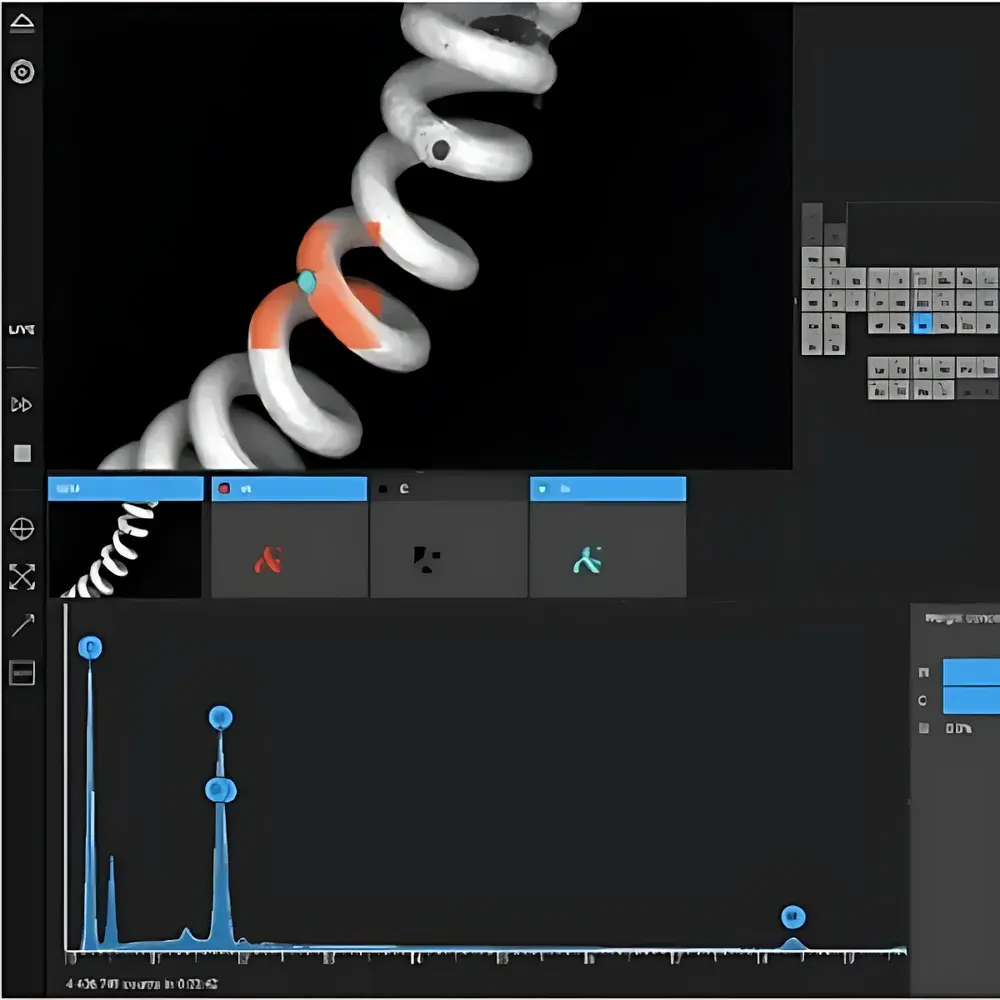
The GSR Analysis Software operates as a standalone Windows application tightly coupled with the microscope’s hardware layer. It performs real-time BSE image segmentation using adaptive thresholding and particle morphology filters optimized for spherical/irregular GSR morphology. Detected candidates trigger automatic EDS acquisition (preset dwell time, live spectrum preview, peak deconvolution via Phi-Rho-Z quantification). All spectral libraries — including Pb-Sb-Ba, Ti-Zn, and Sn-Sb variants — are preloaded and editable. Data output includes annotated particle maps, tabulated elemental ratios, confidence scores, and PDF reports conforming to ENFSI GSR Guideline v3.0. Raw datasets are stored with full metadata (operator ID, timestamp, instrument parameters, calibration status), enabling retrospective reprocessing and version-controlled method validation.
Applications
- Automated screening and confirmation of classic GSR particles (Pb, Sb, Ba) on hands, clothing, and surfaces
- Detection of lead-free primer residues (e.g., Ti/Zn, Sn/Sb, Bi/Sr systems) in modern ammunition
- Discrimination of GSR from environmental particulates (e.g., brake dust, paint flakes, welding fumes) via multi-element correlation
- Quantitative spatial distribution mapping of residue patterns for distance estimation and firing angle reconstruction
- Compatibility with post-collection treatments such as carbon coating or low-dose beam protocols for fragile evidence
- Training and proficiency testing in forensic science programs requiring standardized, repeatable GSR workflows
FAQ
Does the Phenom GSR meet ASTM E1588-20 requirements for GSR analysis?
Yes — the system implements BSE-based particle detection followed by EDS verification per the morphology-and-composition criteria defined in ASTM E1588-20, including minimum particle size (0.5–10 µm), spherical morphology, and elemental combinations.
Can the instrument analyze non-conductive samples without sputter coating?
Yes — the low-kV mode (4.8–8 kV) and charge compensation algorithms enable direct imaging of untreated textiles, paper, or skin lifts with minimal charging artifacts.
Is EDS spectral quantification traceable to certified reference materials?
All EDS calibrations are performed using NIST-traceable standards (e.g., NIST SRM 2100, 2101); daily verification uses an onboard Fe-Cu-Ni alloy standard supplied with the system.
What level of operator training is required to achieve accredited results?
A 2-day certified training program covers method validation, QC procedures, report generation, and troubleshooting; competency assessment aligns with ENFSI Quality Assurance Manual Section 6.2.
How is data integrity maintained during multi-user laboratory deployment?
Each session logs user credentials, instrument state, and acquisition parameters; raw EDS spectra are immutable binary files, and analysis history is preserved in SQLite databases with SHA-256 checksums.




