
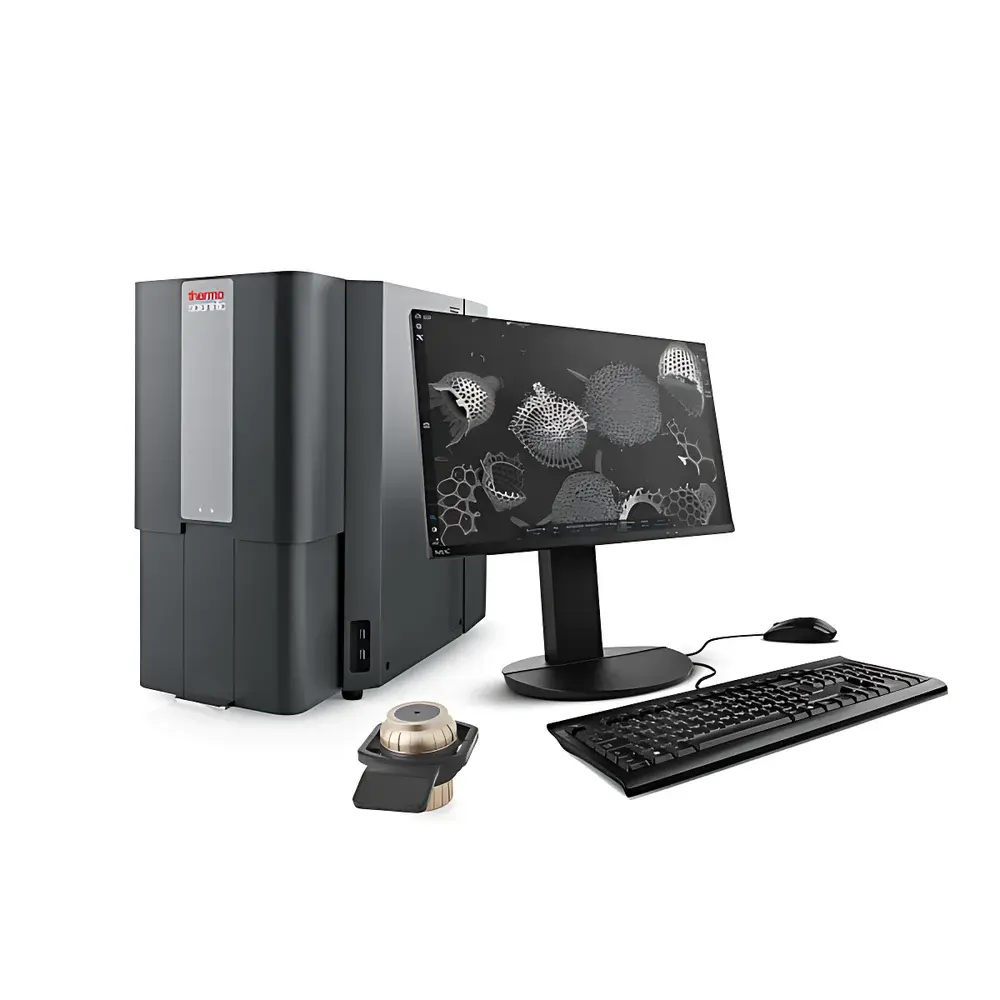
Phenom Pure Desktop Scanning Electron Microscope
| Brand | Phenom |
|---|---|
| Origin | Netherlands |
| Model | Phenom Pure |
| Instrument Type | Desktop SEM |
| Electron Source | Cerium Hexaboride (CeB6) |
| Secondary Electron Resolution | ≤10 nm |
| Backscattered Electron Resolution | ≤10 nm |
| Maximum Magnification | 175,000× |
| Accelerating Voltages | 5 kV, 10 kV |
| Vacuum Pump-Down Time | <15 s |
| CE-B6 Filament Lifetime | >1500 h |
| Detectors | Integrated BSE Detector, Optional SE Detector |
| Sample Chamber Dimensions | Ø 100 mm × 80 mm (H) |
Overview
The Phenom Pure Desktop Scanning Electron Microscope is an engineered solution for laboratories requiring high-resolution surface imaging without the infrastructure demands of floor-standing SEM systems. Based on thermionic emission from a cerium hexaboride (CeB6) electron source, the Phenom Pure delivers stable beam current and superior signal-to-noise ratio at accelerating voltages of 5 kV and 10 kV—optimized for both topographic contrast (via secondary electrons) and compositional contrast (via backscattered electrons). Its compact, integrated vacuum architecture achieves full operational pressure (<10⁻⁴ mbar) in under 15 seconds, eliminating the need for external turbomolecular pumps or dedicated vibration-isolated floors. Designed for routine characterization in materials science, failure analysis, geoscience, and life science sample screening, the system operates reliably in standard lab environments with ambient temperature stability and minimal electromagnetic interference requirements.
Key Features
- High-stability CeB6 electron source with >1500-hour operational lifetime—providing consistent brightness and reduced filament replacement frequency compared to tungsten filaments.
- Integrated dual-detector architecture: a solid-state backscattered electron (BSE) detector for atomic number contrast and optional secondary electron (SE) detector for enhanced surface topography resolution.
- Automated beam alignment and focus routines executed via real-time image feedback—eliminating manual stigmation and reducing operator dependency.
- Sample chamber with Ø100 mm × 80 mm height accommodates standard 32 mm pin stubs, 100 mm wafers (with optional stage), and irregularly shaped specimens up to 40 mm in height.
- Intuitive touch-screen interface with guided workflows—including one-click imaging, automated drift correction, and multi-point navigation—designed for users with minimal SEM training.
- Robust mechanical design compliant with IEC 61000-6-3 (EMC emissions) and IEC 61000-6-2 (immunity), certified to CE and UL/CSA safety standards.
Sample Compatibility & Compliance
The Phenom Pure accepts conductive and non-conductive samples up to 40 mm tall and 100 mm in diameter. Non-conductive specimens require standard carbon or gold sputter coating (compatible with common benchtop coaters). The system supports routine inspection of metals, ceramics, polymers, biological tissues (after critical point drying or freeze-fracture), geological thin sections, and electronic components. All hardware and software comply with ISO/IEC 17025:2017 general requirements for competence of testing and calibration laboratories. Data acquisition and storage adhere to ALCOA+ principles (Attributable, Legible, Contemporaneous, Original, Accurate, Complete, Consistent, Enduring, Available) for GLP/GMP-aligned workflows. Optional audit trail logging satisfies FDA 21 CFR Part 11 requirements when deployed with validated networked configurations.
Software & Data Management
Acquisition and analysis are performed using Phenom Desktop Software v5.x, a Windows-based platform supporting live image streaming, real-time EDS integration (when paired with compatible silicon drift detectors), particle analysis, roughness quantification, and EDS mapping synchronization. All images include embedded metadata (accelerating voltage, working distance, dwell time, detector mode, stage coordinates, timestamp) compliant with TIFF 6.0 and DICOM-SR standards. Export formats include TIFF, PNG, JPEG, BMP, and CSV for morphometric data. Local storage uses encrypted SQLite databases; network deployment supports centralized backup via SMB/CIFS or SFTP protocols. Software updates follow a documented change control process aligned with ISO 9001:2015 clause 8.5.5.
Applications
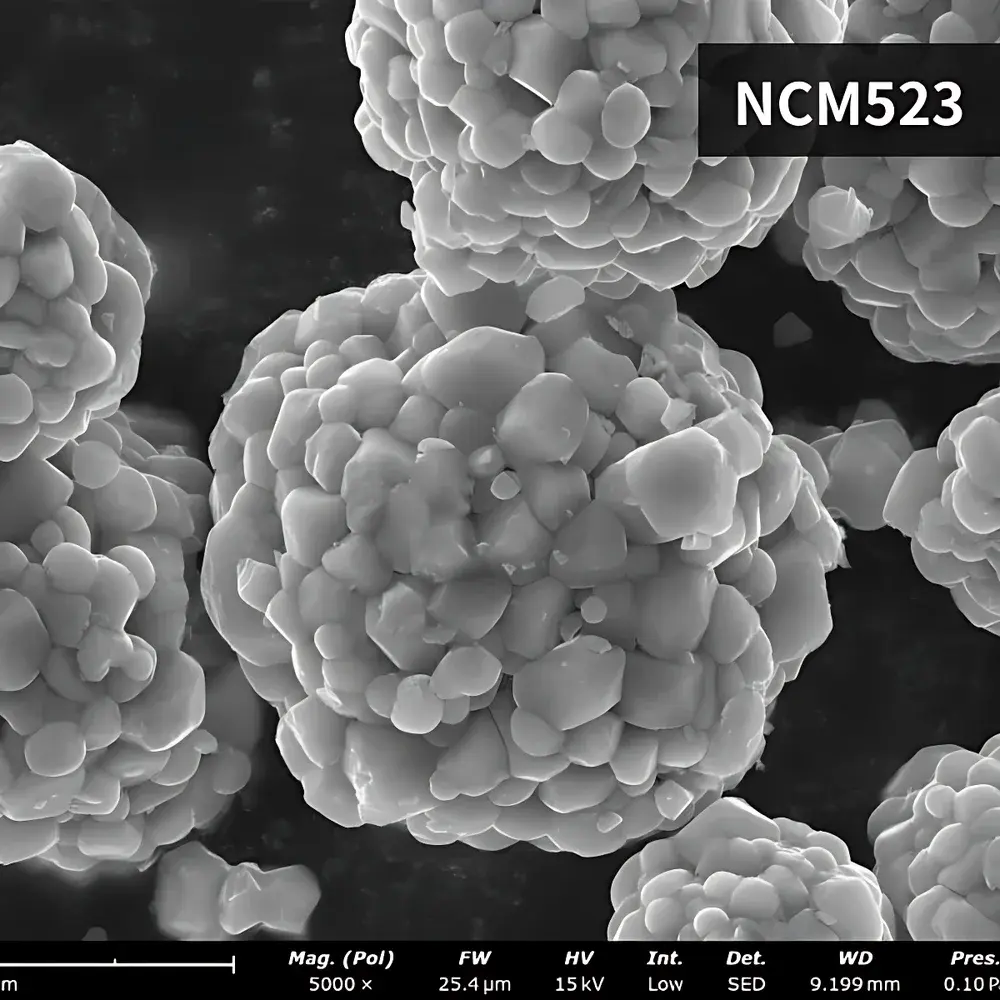
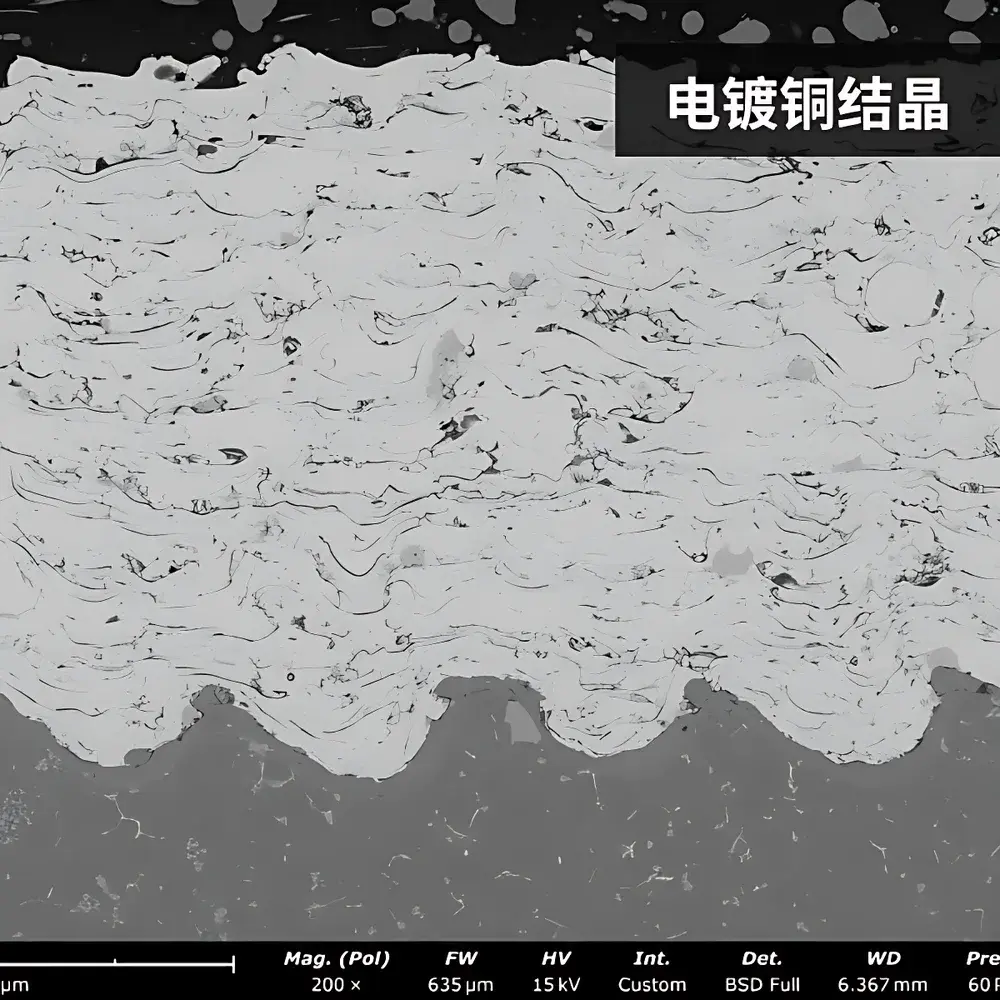
- Materials science: Grain boundary analysis, fracture surface evaluation, inclusion identification in alloys and composites.
- Electronics manufacturing: Solder joint integrity assessment, PCB trace inspection, contamination localization on semiconductor packages.
- Geosciences: Mineral phase discrimination, porosity quantification in core samples, microfossil morphology studies.
- Life sciences: Morphological characterization of dried cells, pollen grains, diatoms, and biomaterial scaffolds.
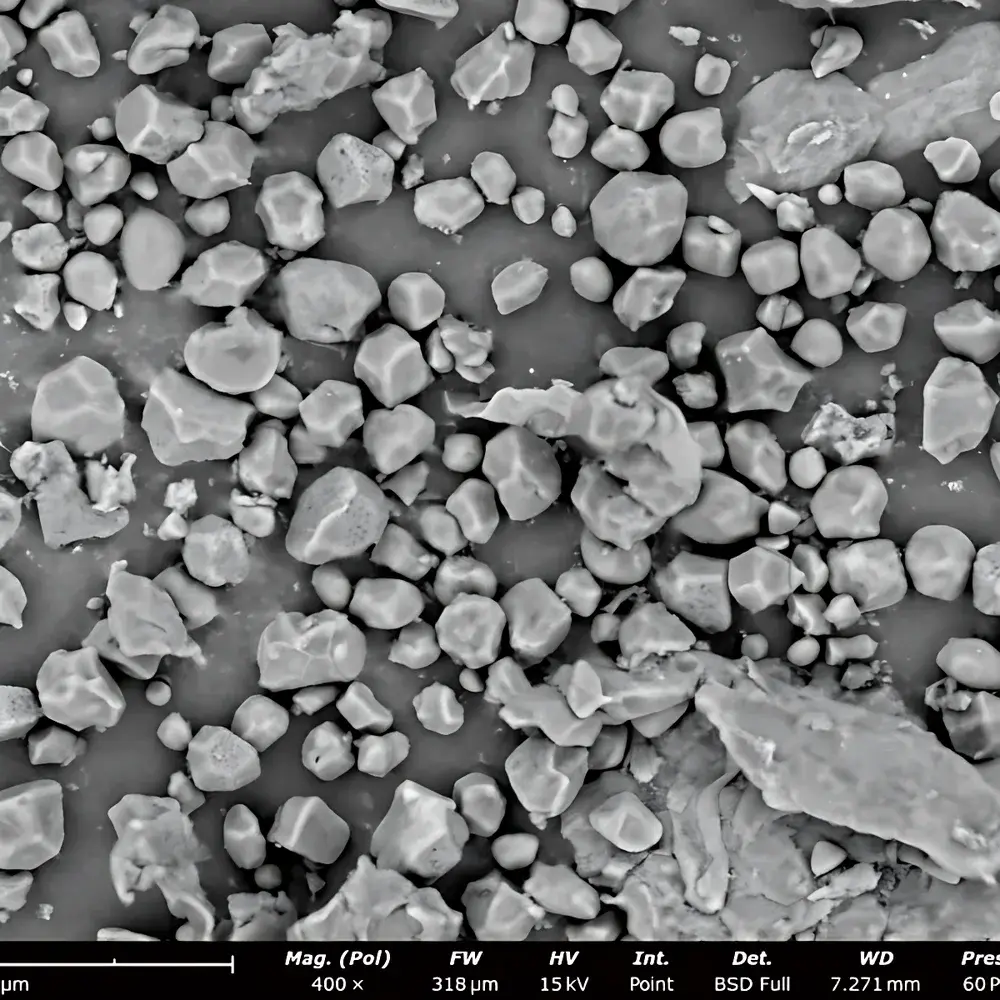
- Quality control labs: Rapid verification of coating uniformity, fiber diameter distribution, and particulate contamination per ASTM E1245 and ISO 13322-1.
FAQ
What vacuum level does the Phenom Pure achieve, and how is it maintained?
The system reaches an operating vacuum of <10⁻⁴ mbar within 15 seconds using a hybrid pumping system consisting of a scroll pump and a non-evaporable getter (NEG) element—requiring no oil changes or periodic regeneration.
Can the Phenom Pure be used for energy-dispersive X-ray spectroscopy (EDS)?
Yes—when equipped with an optional compatible silicon drift detector (SDD), the Phenom Pure supports EDS elemental mapping and point analysis; full integration requires firmware version 5.3 or higher and calibrated geometry alignment.
Is training required to operate the instrument independently?
No formal certification is required; typical users achieve proficiency within two hours of guided orientation due to the system’s workflow-driven interface and context-sensitive help modules.
How is image resolution verified and maintained over time?
Resolution validation follows ISO 16177:2014 Annex A using certified gold-on-carbon resolution test gratings; automatic astigmatism correction and beam alignment routines ensure repeatability across daily operation cycles.
Does the system support remote diagnostics or service access?
Yes—secure remote maintenance is enabled via TLS-encrypted VNC sessions initiated only upon technician authorization; all remote connections generate immutable log entries traceable to user credentials and timestamps.




