
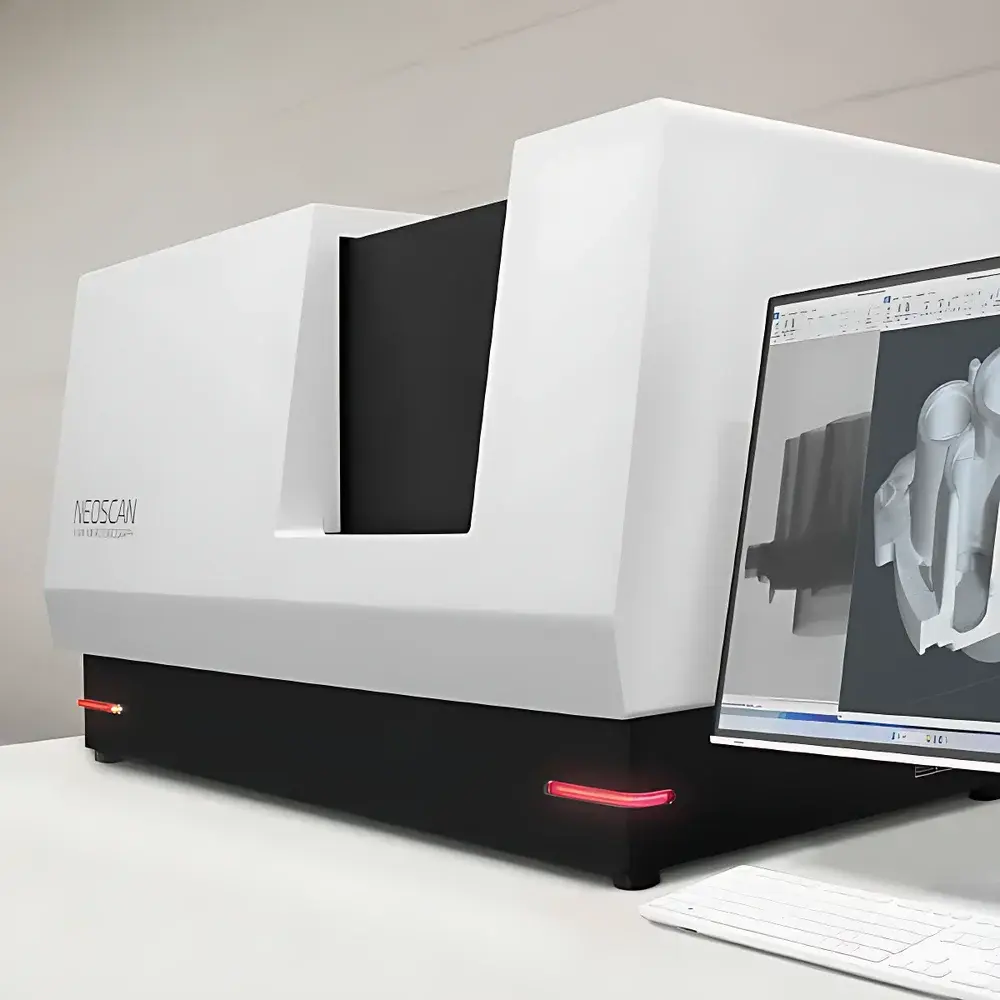
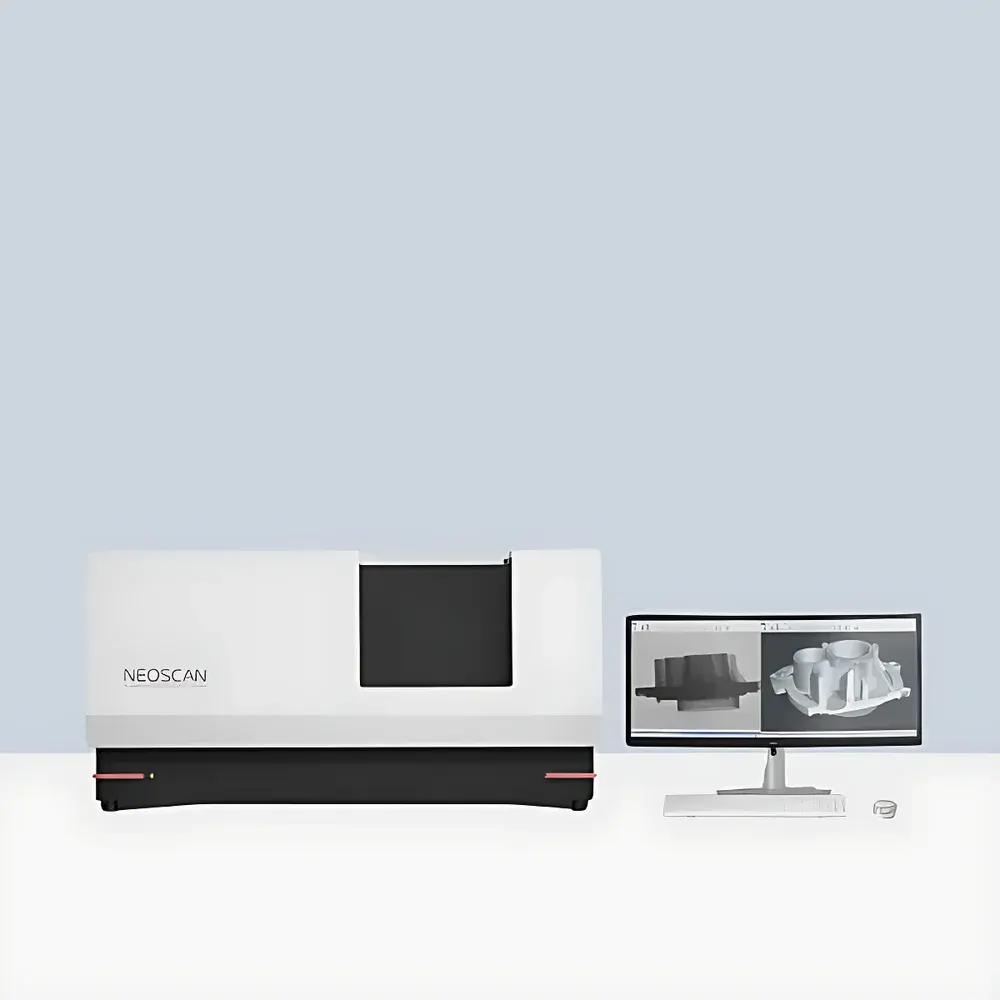
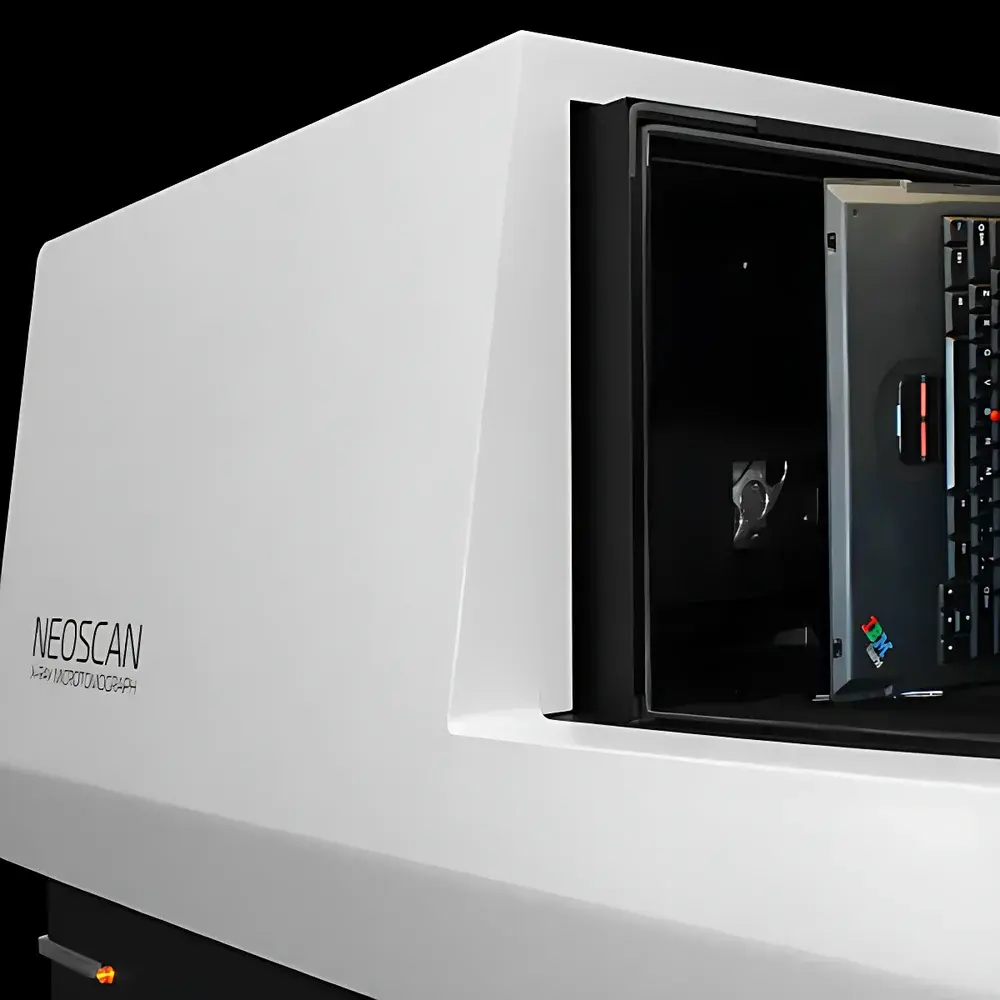
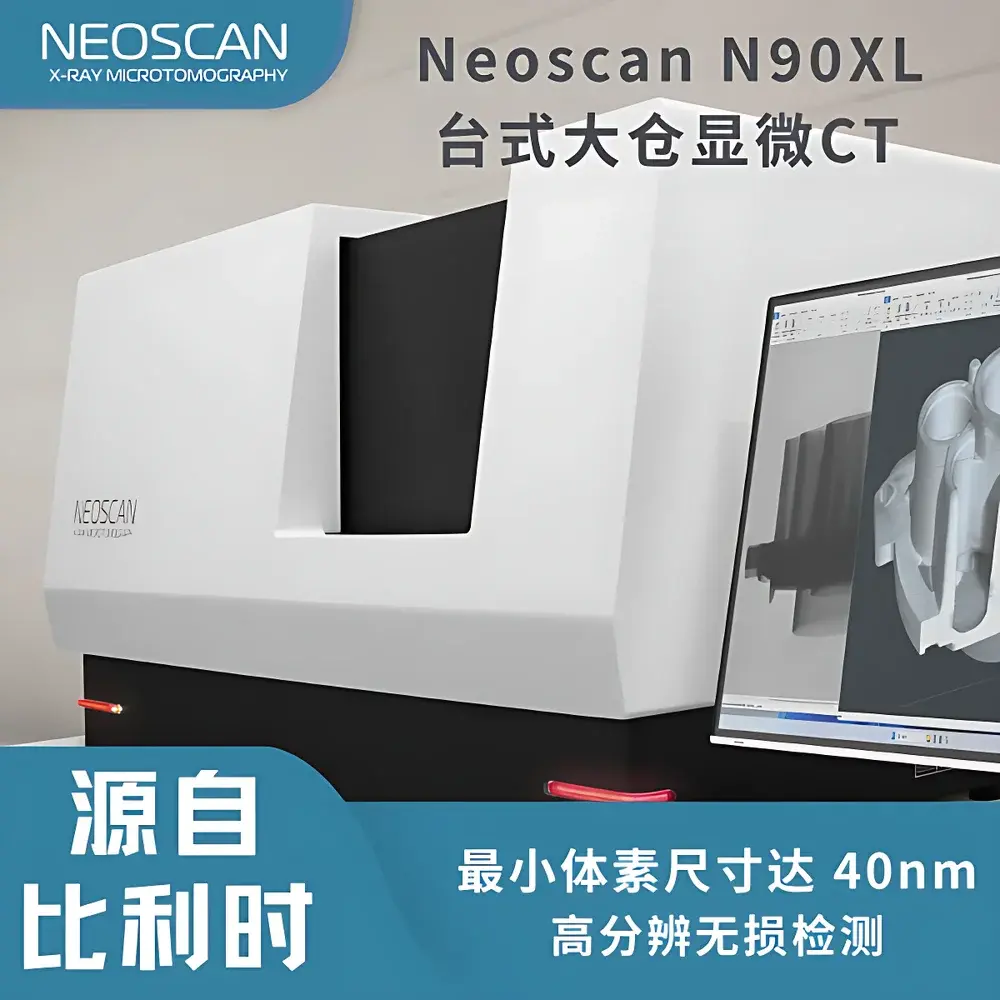
Neoscan NXL Desktop Large-Cavity Micro-CT System
| Brand | Neoscan |
|---|---|
| Origin | Belgium |
| Manufacturer Type | Authorized Distributor |
| Origin Category | Imported |
| Model | NXL Desktop Large-Cavity Micro-CT |
| Detector Type | Flat-Panel Detector |
| Scanning Method | Translation-Rotation (TR) |
| Accuracy | Micron-Level |
| X-ray Energy | 150 kV |
| Spatial Resolution | 5 µm |
| Maximum Sample Dimensions | 320 mm × 540 mm |
| Dimensional Measurement Accuracy | 2.5 µm |
| Maximum Sample Weight | 40 kg |
| Equipment Dimensions | 1500 × 791 × 720 mm |
| X-ray Source | 150 kV / 75 W Microfocus |
| Detector Resolution | 13.5 MP, 14-bit Dynamic Range |
| Scan Modes | Circular Scan, Automated Stitching, Helical Scan |
Overview
The Neoscan NXL Desktop Large-Cavity Micro-CT System is a high-performance, benchtop X-ray computed tomography platform engineered for non-destructive 3D internal inspection of large-volume and high-density industrial samples. Unlike conventional micro-CT systems constrained by limited field-of-view or insufficient photon penetration, the NXL integrates a high-power 150 kV / 75 W microfocus X-ray source with an ultra-large-area flat-panel detector to deliver robust volumetric imaging capability—without requiring sample sectioning or compromising spatial fidelity. Its design adheres to the physical principles of cone-beam CT reconstruction, leveraging filtered back-projection and iterative algorithms to generate isotropic voxel datasets with sub-5 µm spatial resolution and quantitative dimensional accuracy of ±2.5 µm. The system operates within a fully shielded cabinet compliant with IEC 61331-1 and EU Directive 2013/59/Euratom, ensuring safe operation in standard laboratory environments.
Key Features
- Large-cavity geometry accommodating samples up to 320 mm (diameter) × 540 mm (height), enabling full-field scanning of automotive castings, battery modules, and aerospace structural components without segmentation.
- High-energy 150 kV microfocus X-ray source with stable focal spot size < 5 µm, optimized for penetrating dense materials including aluminum alloys, titanium, ceramics, and multi-layer electronic assemblies.
- 13.5-megapixel flat-panel detector with 14-bit dynamic range and low-noise readout architecture, supporting high-contrast visualization of fine porosity, microcracks, and interfacial delamination.
- Translation-rotation (TR) scanning mechanism with precision air-bearing rotation stage and motorized linear translation, enabling automated helical and stitched acquisition protocols for extended axial coverage.
- Rigid mechanical architecture with vibration-damped granite base and thermal-stable enclosure, minimizing drift during long-duration scans (up to 8+ hours) required for high-SNR reconstructions.
- Integrated radiation shielding meeting EN 62463 and local regulatory requirements for Class II X-ray equipment; certified for unattended operation under supervised conditions.
Sample Compatibility & Compliance
The NXL supports a broad spectrum of industrially relevant specimens—including metal castings, composite laminates, lithium-ion battery cells, PCB assemblies, additively manufactured parts, and geological core samples—without surface preparation or conductive coating. Sample handling is facilitated via a motorized, load-rated (40 kg) turntable with programmable tilt and height adjustment. All scan protocols are traceable and auditable per ISO/IEC 17025:2017 requirements for testing laboratories. Data integrity complies with FDA 21 CFR Part 11 when used with optional secure software licensing, supporting electronic signatures, audit trails, and role-based access control. The system is compatible with ASTM E1441 (Standard Guide for Computed Tomography), ISO 15732 (Non-destructive testing — Industrial X-ray computed tomography), and EN 16018 (CT-based dimensional metrology).
Software & Data Management
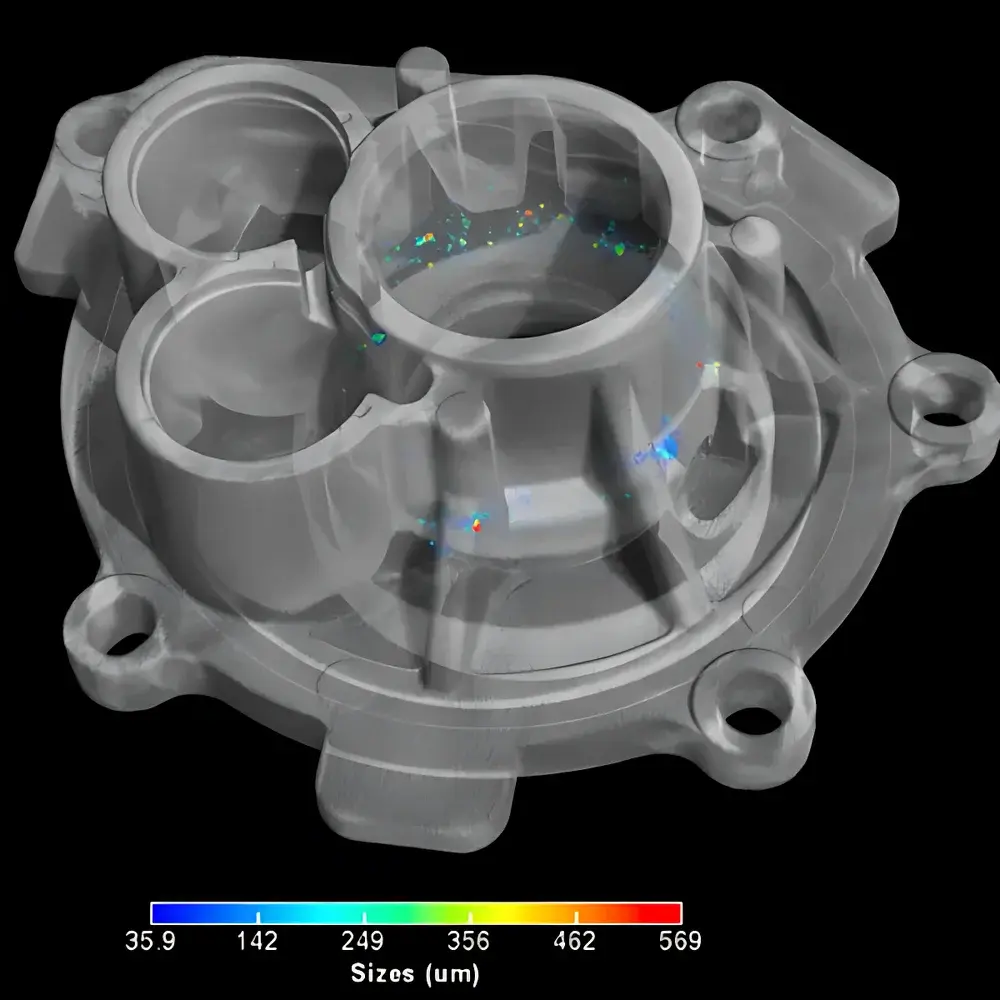
The NXL is operated via Neoscan’s proprietary CT Suite v4.x software suite, a Windows-based application supporting full workflow integration from acquisition to quantification. Key modules include real-time projection preview, automatic beam hardening correction, ring artifact suppression, GPU-accelerated FDK and SART reconstruction, and batch processing pipelines. Volume rendering, segmentation, pore analysis (per ASTM E2834), wall thickness mapping, and GD&T-compliant metrology (including ISO 1101 geometric tolerancing) are natively supported. Export formats include DICOM, TIFF stack, STL, PLY, and HDF5 for interoperability with third-party platforms such as Avizo, VGStudio MAX, and MATLAB. All raw projections and reconstructed volumes are stored with embedded metadata (scan parameters, calibration logs, timestamp, operator ID), enabling full GLP/GMP traceability.
Applications
- Aerospace: Inspection of turbine blades, honeycomb sandwich panels, and carbon-fiber-reinforced polymer (CFRP) joints for void content, fiber misalignment, and impact damage.
- Automotive: In-process QA of aluminum die-cast engine blocks, transmission housings, and EV battery enclosures—quantifying shrinkage porosity, cold shuts, and weld integrity.
- Energy Storage: 3D characterization of electrode tortuosity, separator compression, dendrite growth, and dry-out regions in pouch and cylindrical Li-ion cells.
- Electronics: Failure analysis of solder joint voiding, wire bond lift-off, encapsulant delamination, and BGA interconnect integrity in consumer and automotive-grade ECUs.
- Academic Research: In situ mechanical testing correlation (e.g., tensile/compression stages), corrosion propagation studies, and multiscale modeling validation using ground-truth 3D microstructure data.
FAQ
What is the maximum sample weight the NXL can accommodate?
The system supports samples up to 40 kg on its motorized, precision-aligned rotation stage.
Does the NXL support helical scanning for tall objects?
Yes—helical acquisition mode is implemented with synchronized translation and rotation, enabling continuous volume capture beyond the detector’s native field of view.
Is the system suitable for quantitative dimensional metrology?
Yes—the NXL achieves dimensional measurement uncertainty of ±2.5 µm (k=2) under ISO 15732-compliant calibration procedures using certified reference artifacts.
Can the NXL be integrated into an automated production line?
While designed as a benchtop lab instrument, it supports Ethernet/IP and OPC UA interfaces for external PLC coordination and scheduled scan triggering.
What safety certifications does the NXL hold?
It conforms to IEC 61331-1 (radiation protection), EN 62463 (EMC), and CE marking requirements for Class II X-ray equipment; local registration may be required depending on national regulations.



