
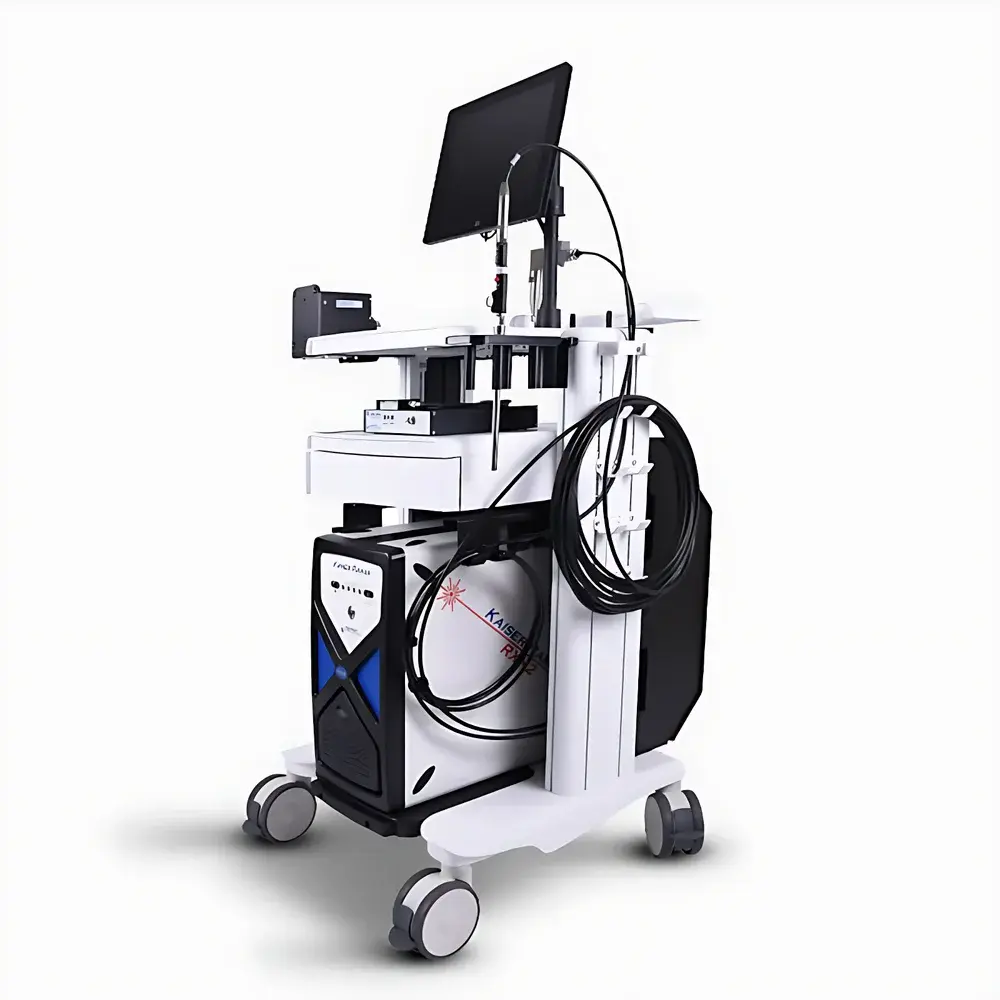
Endress+Hauser RAMAN RXN HYBRID Raman Spectrometer
| Brand | Endress+Hauser |
|---|---|
| Origin | USA |
| Manufacturer Type | Authorized Distributor |
| Origin Category | Imported |
| Model | RAMAN RXN HYBRID |
| Instrument Type | Grating-Based Raman Spectrometer |
| Excitation Wavelength | 785 nm |
| Probe Compatibility | Rxn-20 Solid-Phase Probe + Secondary E+H Raman Probe |
| Hazardous Area Certifications | ATEX, IECEx, North America (Class I Div 1/2, Class II Div 1) |
| Installation Options | Benchtop, Mobile Cart, or In-Line Process Skid Mounting |
| Sample Phase Support | Simultaneous Solid & Liquid Analysis Channels |
| Spatial Sampling Flexibility | Micron- to Millimeter-Scale Spot Sizes (up to 6 mm diameter) |
| Compliance | Designed for GLP/GMP environments |
Overview
The Endress+Hauser RAMAN RXN HYBRID is a dual-channel, grating-based Raman spectrometer engineered for robust, real-time molecular characterization of heterogeneous and phase-diverse samples in regulated industrial environments. Operating at a stable 785 nm laser excitation wavelength, the system minimizes fluorescence interference while maintaining sufficient photon flux for high signal-to-noise ratio spectral acquisition across solid, semi-solid, and liquid matrices. Its hybrid architecture integrates two independent optical paths—one dedicated to high-fidelity solid-phase analysis via the Rxn-20 probe, and a second configurable channel optimized for liquid-phase interrogation—enabling concurrent or sequential measurement of distinct sample phases without hardware reconfiguration. This design eliminates cross-contamination risk, reduces method development time, and supports seamless transition from lab-scale method validation to pilot-plant or full-scale process deployment. The instrument adheres to fundamental principles of vibrational spectroscopy: incident monochromatic light induces inelastic scattering from molecular bonds, and the resulting Stokes/anti-Stokes shifts are dispersed by a precision holographic grating and resolved by a thermoelectrically cooled CCD detector array. Spectral data reflect intrinsic molecular fingerprints—enabling identification, quantification, polymorph discrimination, and reaction progress tracking with chemical specificity.
Key Features
- Dual optical path architecture supporting simultaneous solid and liquid analysis—no mechanical switching or recalibration required
- Rxn-20 solid-phase probe with non-contact, focus-free operation; enables reproducible measurements across irregular, granular, or coated surfaces
- Adjustable spot size from micron-scale (for localized crystallinity mapping) up to 6 mm diameter (for bulk representative sampling), mitigating heterogeneity bias
- Hazardous area certifications including ATEX Zone 1/21, IECEx Zone 1/21, and North American Class I Div 1/2, Group A–D, T4; suitable for direct installation in chemical processing, pharmaceutical manufacturing, and refinery environments
- Modular mounting options: benchtop configuration for R&D and QC labs; mobile cart integration for raw material verification; skid-mounted variants for permanent in-line process monitoring
- Cross-instrument model transfer capability—calibration models developed on one RXN HYBRID unit can be deployed on others with minimal revalidation, ensuring method consistency across global facilities
Sample Compatibility & Compliance
The RXN HYBRID accommodates diverse physical forms—including powders, tablets, pellets, films, slurries, emulsions, and clear or turbid liquids—without requiring sample preparation such as dissolution, dilution, or pressing into pellets. Its non-destructive nature preserves sample integrity for downstream testing or archival. The system complies with regulatory expectations for analytical instrumentation used in GxP environments: hardware design includes secure user authentication, electronic signature support, and full audit trail logging for all critical events (e.g., calibration, method execution, result export). Software architecture aligns with FDA 21 CFR Part 11 requirements for electronic records and signatures. Documentation packages support IQ/OQ/PQ validation protocols and are structured to meet ISO/IEC 17025, USP , and ASTM E1847 guidelines for spectroscopic method transfer and verification.
Software & Data Management
Controlled via Endress+Hauser’s proprietary RamanSoft platform, the RXN HYBRID provides intuitive workflow-driven operation—from automated baseline correction and cosmic ray removal to multivariate chemometric modeling (PLS, PCA, SIMCA). All spectra are stored in vendor-neutral HDF5 format with embedded metadata (timestamp, operator ID, instrument serial number, probe type, acquisition parameters). Data export supports CSV, JCAMP-DX, and ASCII formats for third-party chemometrics tools. Role-based access control enforces separation of duties; audit logs record every parameter change, spectrum acquisition, and report generation event with immutable timestamps. Optional integration with MES/DCS systems via OPC UA or Modbus TCP enables closed-loop process analytics and SPC charting directly within existing automation infrastructure.
Applications
- Pharmaceuticals: Real-time monitoring of API crystallization kinetics, polymorphic form transitions during drying or milling, blend uniformity assessment in powder mixers, tablet coating thickness verification, and capsule fill weight correlation via Raman intensity ratios
- Chemical Manufacturing: In-situ tracking of reaction endpoints in batch and continuous reactors; catalyst deactivation profiling; polymerization degree estimation; identification of impurity formation pathways
- Food & Beverage: Quantitative determination of fat/protein/water content in dairy powders; detection of adulteration in meat/fish products; starch gelatinization monitoring during extrusion; authenticity verification of botanical extracts
- Materials Science: Carbon allotrope identification (graphene, nanotubes), stress/strain mapping in composite laminates, phase distribution analysis in battery electrode slurries
FAQ
Does the RXN HYBRID require routine optical alignment or wavelength calibration?
No. The system employs a permanently aligned monolithic optical bench with internal reference laser lock, eliminating manual recalibration under normal operating conditions. A built-in NIST-traceable polystyrene standard enables automated performance verification before each analytical sequence.
Can the same chemometric model be deployed across multiple RXN HYBRID units?
Yes. The instrument’s standardized optical response and probe interchangeability enable validated model transfer between units with ≤5% prediction error increase—significantly reducing revalidation burden in multi-site operations.
Is fiber optic probe replacement possible without factory service?
Rxn-20 and compatible E+H probes are field-swappable using tool-less connectors. Each probe carries embedded calibration coefficients readable by the host software, ensuring measurement continuity post-replacement.
What level of cybersecurity is implemented in the RamanSoft platform?
RamanSoft conforms to IEC 62443-3-3 SL2 requirements: TLS 1.2+ encryption for network communication, secure boot, firmware signature verification, and configurable password policies with lockout thresholds.
How is temperature stability maintained during extended process monitoring?
The spectrometer core features active thermoelectric cooling (−15 °C detector setpoint) and internal thermal mass buffering; ambient operating range is 5–40 °C with ≤1.5 °C internal drift over 8 hours, preserving spectral fidelity during 24/7 operation.
Related Products







