
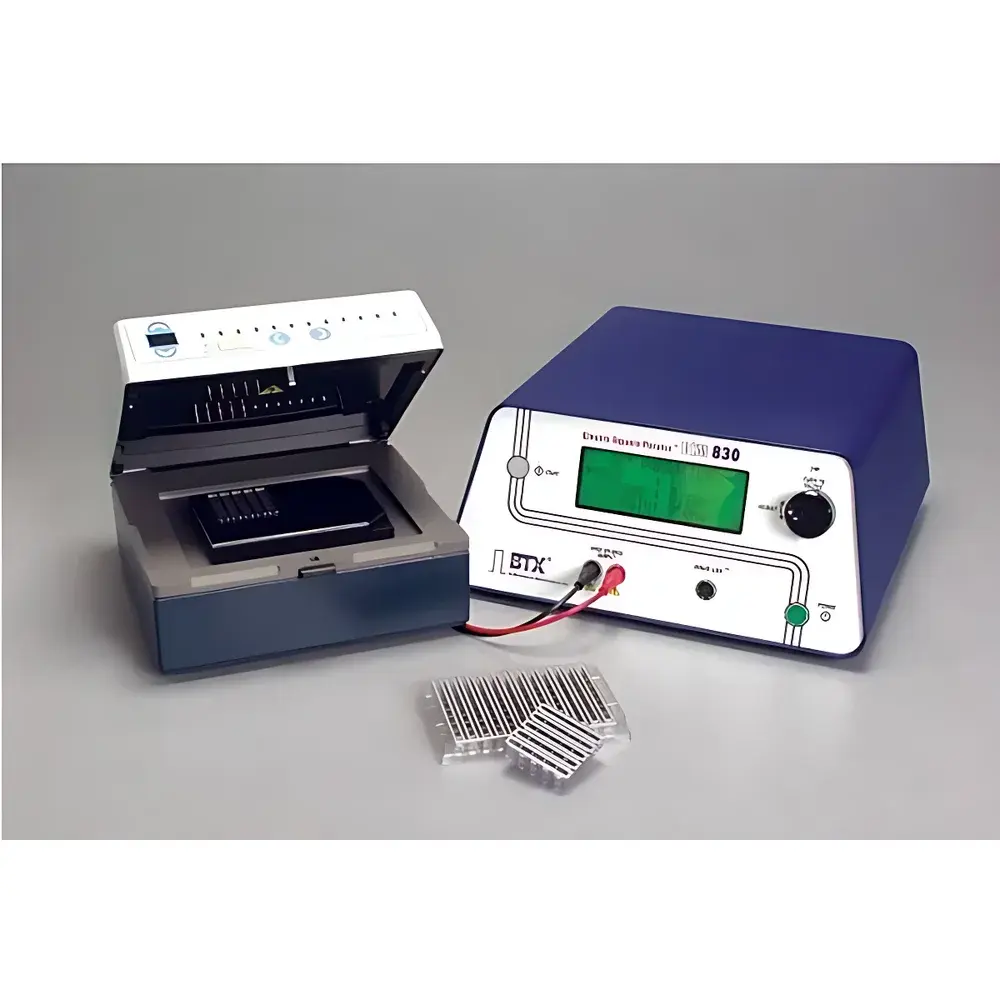
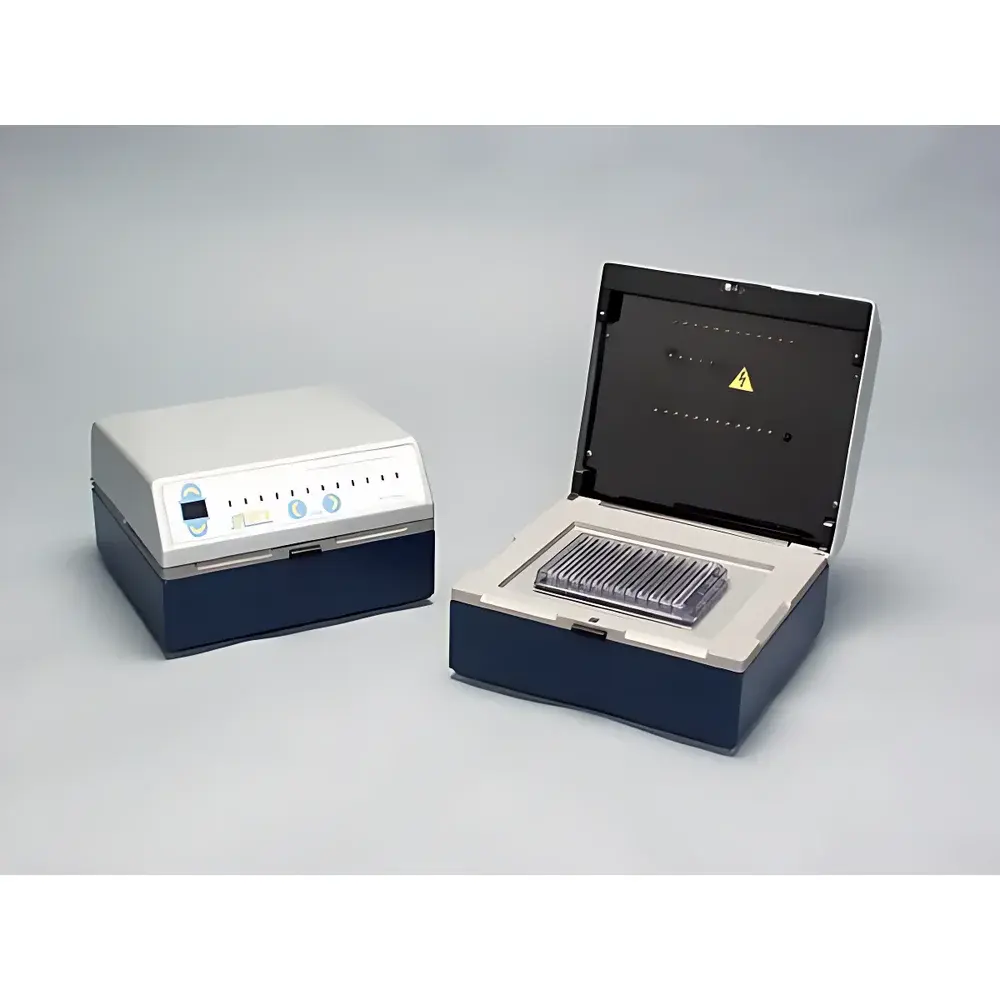
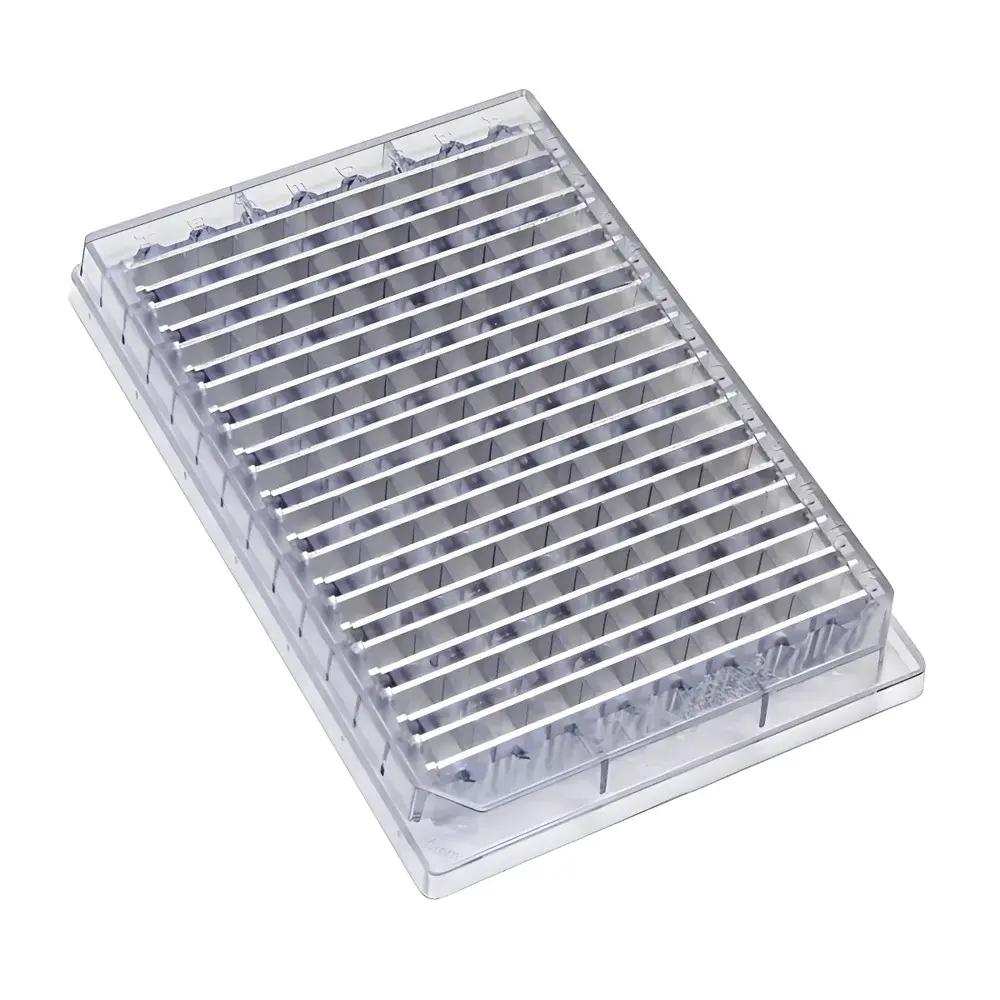
BTX High Throughput Electroporation System
| Brand | BTX |
|---|---|
| Origin | USA |
| Manufacturer Type | Authorized Distributor |
| Origin Category | Imported |
| Model | BTX High Throughput |
| Pricing | Upon Request |
| Pulse Generator Compatibility | ECM630, ECM830, Gemini X2 |
| Electrode Plate Types | 25-well and 96-well HT Microelectrode Plates |
| Pulse Voltage Range | 0–3000 V DC |
| Pulse Duration | 10 µs – 10 s |
| Number of Pulses | 1–99 |
| Electrode Plate Processor Models | HT-100 (manual column-by-column pulsing), HT-200 (automated sequential column pulsing) |
Overview
The BTX High Throughput Electroporation System is an engineered platform for parallelized, parameter-optimized electroporation across multiple biological samples—designed specifically for laboratories engaged in functional genomics, RNAi screening, stem cell reprogramming, and high-content transfection workflows. Unlike conventional cuvette-based electroporators that process one sample per pulse cycle, this system leverages microelectrode plate architecture to deliver precisely controlled electric fields across discrete wells simultaneously or in rapid sequence. Its operational principle relies on transient membrane permeabilization induced by controlled DC pulses, enabling efficient intracellular delivery of nucleic acids (e.g., plasmid DNA, siRNA, CRISPR RNP complexes), proteins, or small molecules into prokaryotic and eukaryotic cells—including bacteria, yeast, plant protoplasts, and primary or immortalized mammalian cell lines. The system’s modular design separates pulse generation, electrode plate handling, and parameter programming into interoperable components, ensuring compatibility with BTX’s legacy high-voltage platforms while supporting scalable experimental design under GLP-aligned documentation practices.
Key Features
- Patented composite electrode array architecture minimizes cross-contamination between adjacent wells through physical isolation and non-contact current path design.
- Two microelectrode plate formats available: 25-well and 96-well configurations—enabling flexible throughput scaling from pilot condition screening to large-scale library transfections.
- Dual-mode electrode plate processors: HT-100 supports manual column-wise pulsing for fine-grained user control; HT-200 enables fully automated, programmable sequential column activation—reducing operator variability and improving inter-run reproducibility.
- Wide pulse parameter range: adjustable voltage (0–3000 V DC), duration (10 µs–10 s), and pulse count (1–99) allow empirical optimization of electroporation efficiency versus viability across diverse cell types and payloads.
- Backward compatibility with BTX ECM630, ECM830, and Gemini X2 pulse generators ensures integration into existing laboratory infrastructure without hardware obsolescence.
- Included sterile plate covers maintain aseptic integrity during handling and reduce evaporation-related concentration drift during multi-step protocols.
Sample Compatibility & Compliance
The system demonstrates validated performance across Gram-positive and Gram-negative bacterial strains (e.g., E. coli, Bacillus subtilis), yeast species (Saccharomyces cerevisiae, Schizosaccharomyces pombe), plant protoplasts, and suspension or adherent mammalian lines (HEK293, CHO-K1, Jurkat, iPSCs). It supports both single-pulse and multi-pulse protocols compliant with ASTM F2947-14 (Standard Guide for Electroporation of Mammalian Cells) and ISO/IEC 17025–aligned calibration traceability when used with certified BTX pulse generators. While not inherently 21 CFR Part 11–compliant, the system supports audit-ready data capture when integrated with validated LIMS or ELN software via analog/digital trigger I/O interfaces.
Software & Data Management
The BTX High Throughput Electroporation System operates without proprietary software—parameters are configured directly on compatible pulse generators (ECM630/830/Gemini X2) using front-panel controls or optional RS-232/USB communication modules. All pulse settings—including voltage, duration, interval, and number—are logged internally with timestamp and user ID (where supported). For GxP environments, raw generator logs can be exported in CSV format for integration into electronic lab notebooks (ELNs) or quality management systems (QMS), satisfying basic ALCOA+ data integrity requirements for transfection protocol execution records.
Applications
- High-throughput siRNA/shRNA screening for target validation and pathway analysis.
- CRISPR-Cas9 and base editor delivery in primary T cells and hematopoietic stem cells.
- Library-scale plasmid transfection for promoter activity mapping or ORF expression profiling.
- Optimization of electroporation conditions for difficult-to-transfect cell types (e.g., neurons, dendritic cells, organoid-derived cultures).
- Comparative assessment of buffer formulations, carrier molecules, or adjuvants in non-viral gene delivery development.
FAQ
Is the BTX High Throughput System suitable for in vivo electroporation?
No—this system is designed exclusively for in vitro use with suspended or monolayer-cultured cells. In vivo applications require specialized needle-type electrodes and impedance-matched generators not supported by the HT microelectrode plate architecture.
Can I use standard 96-well plates with this system?
No—only BTX-certified HT microelectrode plates (25-well or 96-well) are electrically and mechanically compatible. Standard polystyrene or glass-bottom plates lack integrated electrodes and will not conduct pulses safely or reproducibly.
Does the system support exponential decay pulses?
No—this platform delivers square-wave DC pulses only. Exponential decay waveforms require dedicated capacitive discharge generators (e.g., BTX ECM830 in capacitor mode), which are not interfaced with the HT plate processor.
What maintenance is required for long-term reliability?
Annual verification of pulse amplitude accuracy and timing fidelity against NIST-traceable oscilloscope calibration is recommended. Electrode plates are consumables and should be replaced after 20–50 uses depending on sample composition and cleaning protocol adherence.





