
BSP Tissue-Tearor Handheld Homogenizer Model 985370EUR Series
| Brand | BSP |
|---|---|
| Origin | USA |
| Manufacturer Type | Authorized Distributor |
| Import Status | Imported |
| Model Numbers | 985370EUR-04, 985370EUR-07, 985370EUR-14 |
| Instrument Category | Tissue Homogenizer |
| Instrument Type | Handheld Rotational Homogenizer |
| Sample Volume Range | 0.2–1000 mL (model-dependent) |
| Speed Range | 5,000–35,000 rpm (adjustable in 5,000 rpm increments) |
| Motor Supply | 230 VAC, 50/60 Hz |
| Probe Material | ASTM F138-certified 316 stainless steel |
| Probe Replaceability | Fully interchangeable and tool-free removal |
| Weight | 0.5 kg |
| Compliance | CE-marked, RoHS-compliant, GLP-ready design |
Overview
The BSP Tissue-Tearor Handheld Homogenizer is an engineered solution for rapid, reproducible mechanical homogenization of biological and chemical samples in laboratory settings. Based on high-shear rotor-stator principle, it delivers controlled disruption through precise rotational energy transfer—ideal for cell lysis, tissue dissociation, emulsification, and suspension homogenization. Designed for benchtop flexibility, the unit operates as a handheld instrument or mounts securely to standard laboratory clamps and ring stands. Its compact architecture and lightweight construction (0.5 kg) enable ergonomic single-hand operation without fatigue, while maintaining structural integrity during extended use. The system’s core performance derives from a brushless universal motor delivering stable torque across the full 5,000–35,000 rpm range, with speed calibrated to ±3% full-scale accuracy under load. All models comply with IEC 61000-6-3 (EMC emissions) and IEC 61000-6-2 (immunity), ensuring compatibility in regulated lab environments.
Key Features
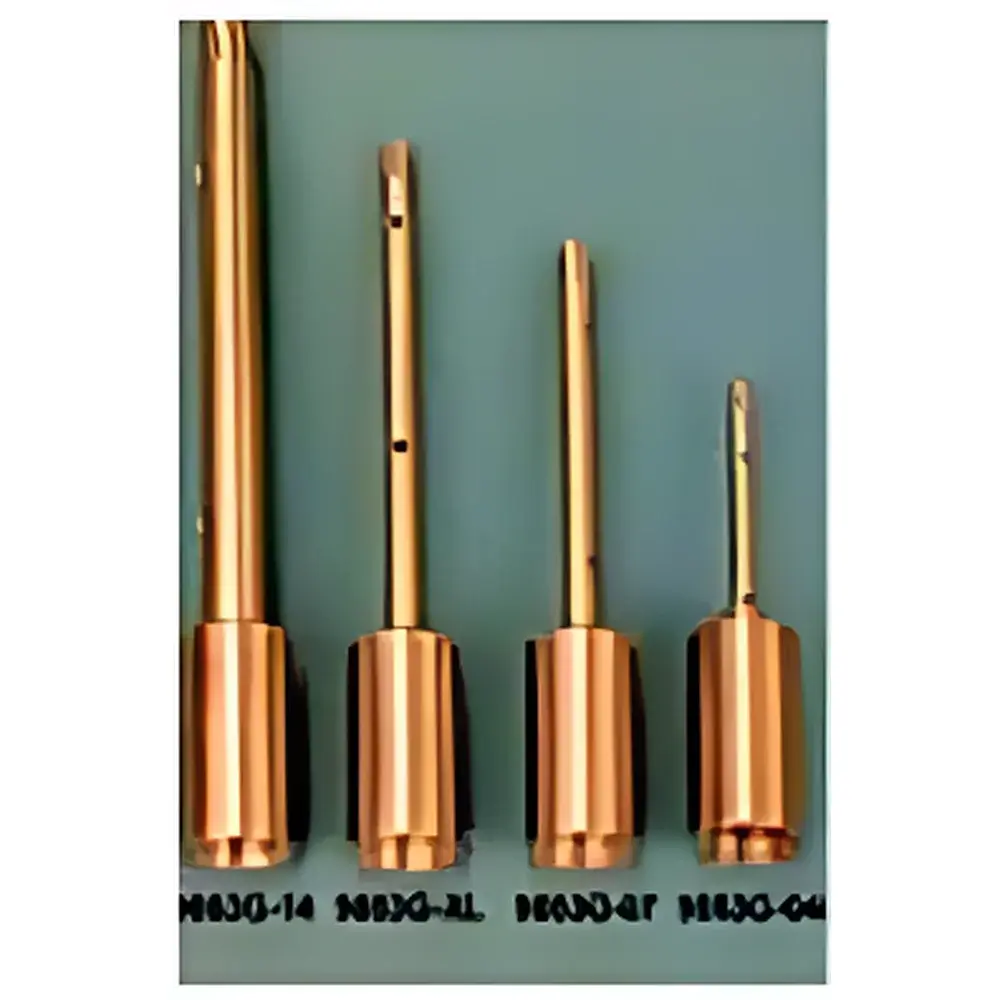
- Three interchangeable probe configurations (985370EUR-04, -07, -14) optimized for low-volume precision (0.5–5 mL), mid-range processing (1–50 mL), and high-capacity homogenization (5–1000 mL)
- 316 stainless steel probes conforming to ASTM F138 for biomedical-grade corrosion resistance and autoclavability (up to 134°C, 2 bar steam sterilization)
- Tool-free probe attachment/detachment mechanism enabling rapid cleaning, validation, and cross-contamination prevention
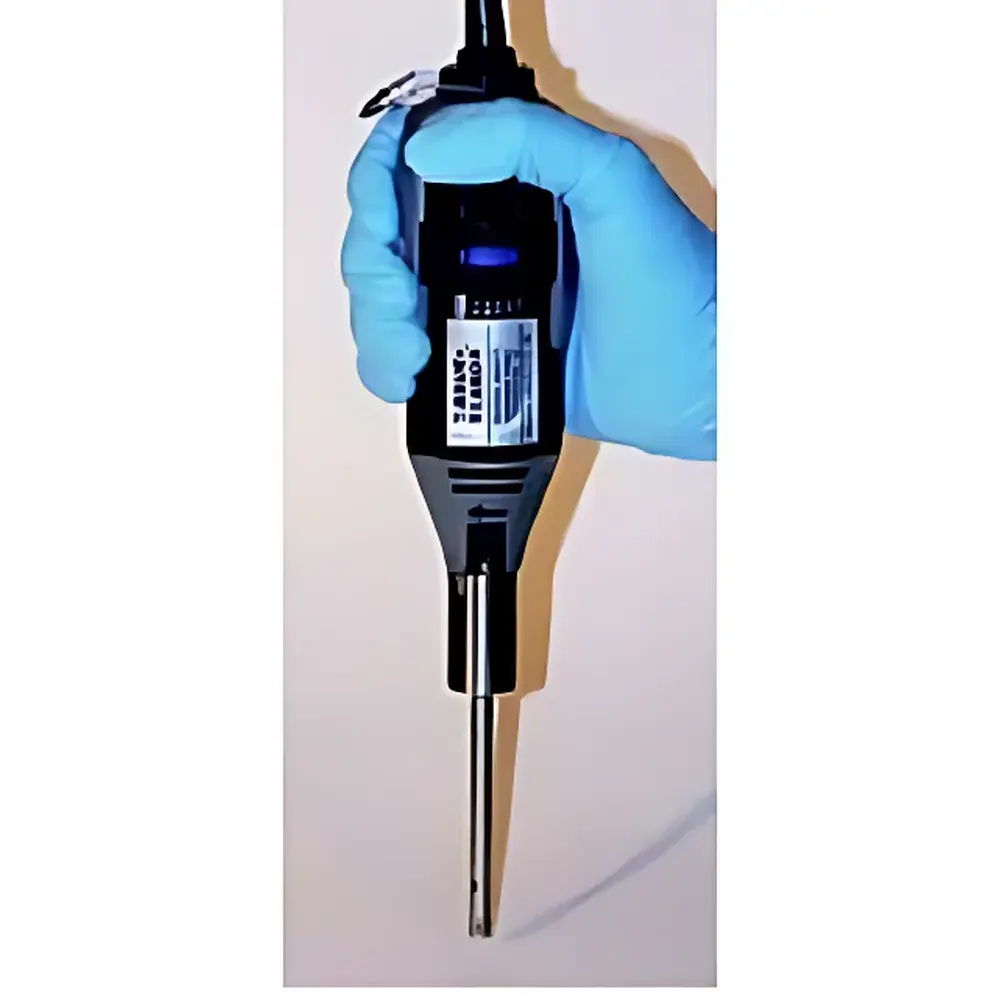
- Dual-mode operational design: handheld for dynamic sample control or fixed-mount for hands-free, repeatable protocols
- Thermally stable motor housing rated for continuous duty at ambient temperatures up to 40°C; internal thermal cutoff prevents coil overheating
- Speed control dial with tactile detents at 5,000 rpm intervals ensures repeatable setting recall across shifts and operators
Sample Compatibility & Compliance
The Tissue-Tearor accommodates viscous, fibrous, and particulate-laden matrices—including mammalian tissues (liver, muscle, mammary gland), plant material, microbial pellets, and polymer emulsions. Probe geometry minimizes foaming and heat generation during short-cycle operation (typical homogenization: 10–30 s). All components meet USP Class VI biocompatibility requirements for indirect contact with pharmaceutical intermediates. The device supports GLP documentation workflows via operator-logged speed/time parameters and is compatible with FDA 21 CFR Part 11–compliant electronic lab notebooks when paired with timestamped digital loggers. It fulfills ISO 17025 clause 6.4.3 (equipment suitability verification) when validated per manufacturer-recommended PQ protocols using NIST-traceable tachometers and viscosity standards.
Software & Data Management
This analog-controlled homogenizer does not incorporate embedded firmware or digital interfaces. However, its deterministic mechanical behavior enables seamless integration into automated data capture systems: analog voltage output (0–10 V DC proportional to RPM) is available via optional signal adapter (BSP SA-100) for connection to PLCs, SCADA systems, or LIMS platforms. For audit-trail compliance, users may record operational parameters (probe ID, speed setting, duration, sample ID) manually in bound logbooks or electronically using validated SOP templates aligned with Annex 11 principles. Calibration certificates for speed verification are issued annually per ISO/IEC 17025-accredited service providers.
Applications
- Routine tissue homogenization for RNA/DNA extraction, protein solubilization, and metabolite recovery
- Preparation of uniform suspensions for particle size analysis (e.g., laser diffraction or DLS)
- Emulsification of oil-in-water and water-in-oil formulations in formulation development labs
- Disintegration of biofilm-coated surfaces for microbiological assay preparation
- Homogenization of frozen tissue sections prior to LC-MS or ELISA workflows
- Dispersion of nanomaterials and ceramic precursors in R&D solvent systems
FAQ
What probe should I select for homogenizing 50 mL of liver tissue in TRIzol?
For this application, the 985370EUR-07 probe (7 mm diameter, 8.3 cm length) provides optimal shear gradient and vortex containment.
Can the homogenizer be used in cold rooms or refrigerated centrifuge rooms?
Yes—operational temperature range is 5–40°C; condensation-resistant housing prevents electrical hazards at 85% RH.
Is probe sterilization validated for ISO 13485 medical device manufacturing?
316 SS probes support validated steam sterilization cycles per ISO 17665-1; full validation requires user-specific cycle mapping per EN 285.
Does the motor require periodic carbon brush replacement?
No—the unit employs a maintenance-free brushless DC motor with 10,000-hour MTBF rating.
How is speed accuracy verified during IQ/OQ qualification?
Using a NIST-traceable optical tachometer (e.g., Extech 461923) at three setpoints (10k, 20k, 30k rpm) under 20% glycerol load, per ASTM E2500-13 Annex A2.



