
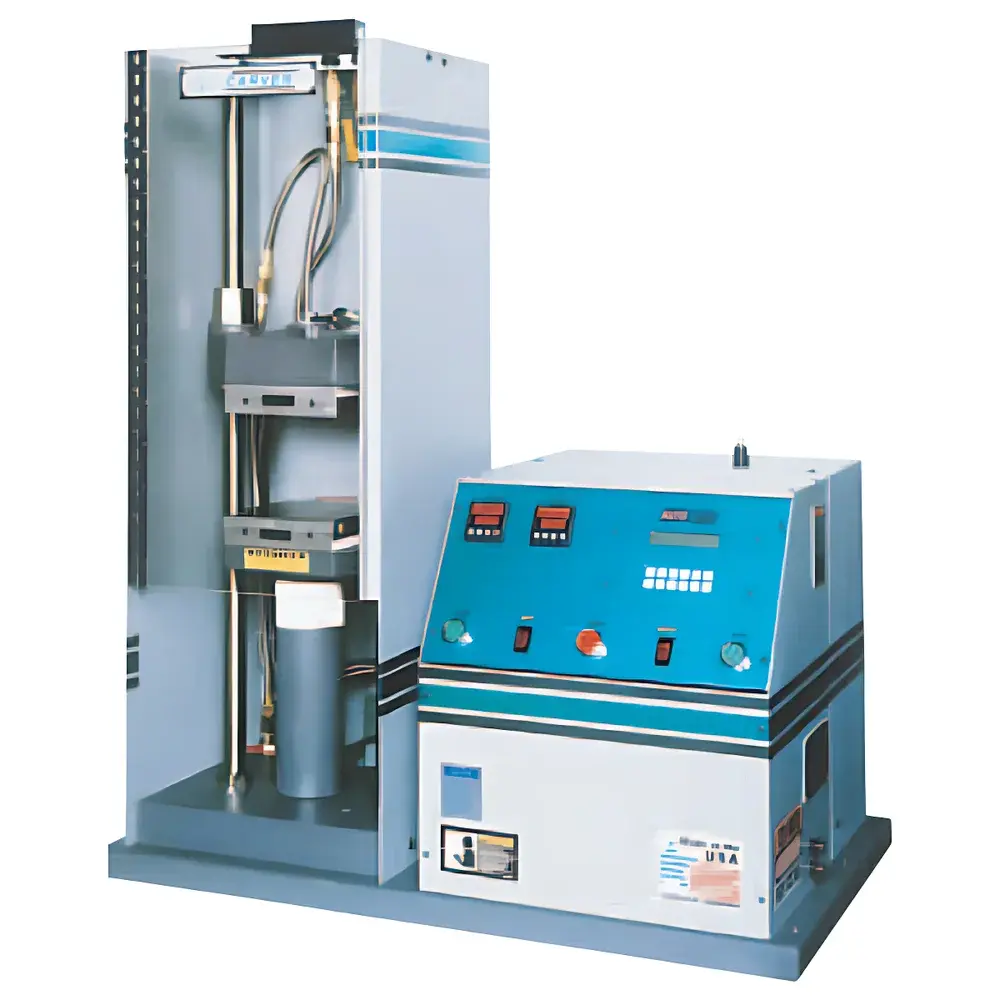
Carver AutoPellet 3887 Hydraulic Pellet Press
| Origin | USA |
|---|---|
| Manufacturer Type | Authorized Distributor |
| Origin Category | Imported |
| Model | 3887 |
| Instrument Type | Fully Automatic Hydraulic Pellet Press |
| Maximum Force | 25,000 lbf (11.3 kN) |
| Platen Diameter | 5 in (127 mm) |
| Ram Stroke | 11.5–7.25 in (292–184 mm) |
| Daylight Range | 7.25–11.5 in (184–292 mm) |
| Base Dimensions | 32 × 20 in (813 × 508 mm) |
| Height | 22 in (559 mm) |
| Weight | 400 lb (181 kg) |
| Pressure Units | kgf, lbf, ton (US) |
| Control Mode | Digital Programmable with 10 Preset Programs |
| Optional Cooling | Manual/Air/Water-Cooled Platen Configurations Available |
Overview
The Carver AutoPellet 3887 is a fully automatic, digitally controlled hydraulic pellet press engineered for precision sample preparation in analytical laboratories, materials science research, and quality control environments. Designed and manufactured in the United States, this press operates on a robust dual-cylinder hydraulic architecture delivering up to 25,000 lbf (11.3 kN) of reproducible compressive force. Its core function is the consolidation of powdered or granular specimens—including pharmaceutical excipients, geological samples, catalysts, ceramics, polymers, and metal oxides—into mechanically stable, dimensionally uniform pellets suitable for X-ray fluorescence (XRF), Fourier-transform infrared (FTIR), near-infrared (NIR), and elemental analysis by wavelength-dispersive spectroscopy (WDS). The system employs closed-loop pressure feedback and real-time digital monitoring to ensure consistent compaction profiles across batches, meeting critical requirements for method transfer and regulatory compliance.
Key Features
- Fully automatic operation with programmable pressure, dwell time, and ram speed—each adjustable via intuitive front-panel digital interface
- 10 user-definable preset programs for rapid method recall; supports repeatable execution of SOP-defined compression protocols
- Digital pressure regulation with ±0.5% full-scale accuracy and selectable units (kgf, lbf, US ton)
- Variable ram speed control (0.05–0.5 in/s typical range) enabling optimization for brittle, cohesive, or temperature-sensitive materials
- Automatic platen separation post-compression to prevent sample adhesion and reduce operator intervention
- Thermally isolated, interchangeable platens (5-inch diameter standard) compatible with optional heating or cooling modules
- Structural frame constructed from high-tensile steel with four-point alignment system ensuring parallel platen geometry within ±0.002 in/ft
- Integrated safety interlocks compliant with ANSI B11.1 and ISO 13857 standards, including light curtain compatibility and emergency stop circuitry
Sample Compatibility & Compliance
The AutoPellet 3887 accommodates a broad spectrum of powder-based matrices, including but not limited to: alkali metal carbonates (e.g., Li₂CO₃, Na₂CO₃), borate fluxes, pressed boric acid discs, polymer blends, soil digests, and rare-earth oxide mixtures. Its design supports ASTM E1621 (XRF pellet preparation), ISO 20053 (cement analysis), and USP guidelines for analytical instrument qualification. When equipped with optional water-cooled platens, it maintains thermal stability during high-throughput runs—critical for moisture-sensitive or low-melting-point compounds. All mechanical and control subsystems are designed for GLP/GMP-aligned workflows, supporting audit-ready documentation when integrated with validated LIMS or ELN platforms.
Software & Data Management
While the 3887 operates as a standalone instrument with embedded firmware, its digital control architecture enables seamless integration into laboratory informatics ecosystems. Process parameters—including applied pressure, dwell duration, ram displacement, and cycle timestamp—are logged internally and exportable via RS-232 or USB-to-serial interface in CSV format. Optional CarverLink software (v3.2+) provides remote configuration, real-time graphical monitoring, and electronic signature-enabled report generation compliant with FDA 21 CFR Part 11 requirements. Audit trails record all parameter modifications, user logins, and calibration events—ensuring traceability for internal QA audits and external regulatory inspections.
Applications
- XRF sample preparation: production of homogeneous, binder-free pellets for major/minor element quantification in mining, metallurgy, and environmental testing
- Pharmaceutical solid dosage form development: compaction behavior studies of API-excipient blends under controlled load profiles
- Catalyst characterization: fabrication of standardized catalyst discs for BET surface area and pore volume analysis
- Geochemical reference material certification: reproducible pressing of certified rock powders for inter-laboratory comparison
- Academic research in powder metallurgy: investigation of green strength, density-pressure relationships, and ejection force modeling
- Quality assurance in ceramic manufacturing: validation of batch-to-batch consistency in raw material compaction response
FAQ
What is the maximum rated force of the AutoPellet 3887, and how is force calibrated?
The system is rated at 25,000 lbf (11.3 kN) with factory calibration traceable to NIST standards. Annual recalibration is recommended using certified load cells per ISO/IEC 17025 procedures.
Can the 3887 be used for heated pressing applications?
Standard configuration does not include heating; however, Carver offers compatible heated platens (up to 300 °C) as optional accessories—requiring separate electrical feedthrough and temperature controller integration.
Is the AutoPellet 3887 compatible with automated sample handling systems?
Yes—via optional I/O expansion module supporting dry-contact triggers and analog feedback signals for synchronization with robotic arms or auto-sampler conveyors.
Does the system support GMP-compliant electronic records?
When paired with CarverLink software and configured with role-based access control, electronic signatures, and immutable audit logs, it meets core 21 CFR Part 11 requirements for regulated environments.
What maintenance intervals are recommended for hydraulic fluid and seals?
Hydraulic oil should be replaced every 2,000 operating hours or biannually, whichever occurs first; O-ring inspection and replacement are advised during each oil change per Carver Maintenance Bulletin MB-3887-REV4.
Related Products



