
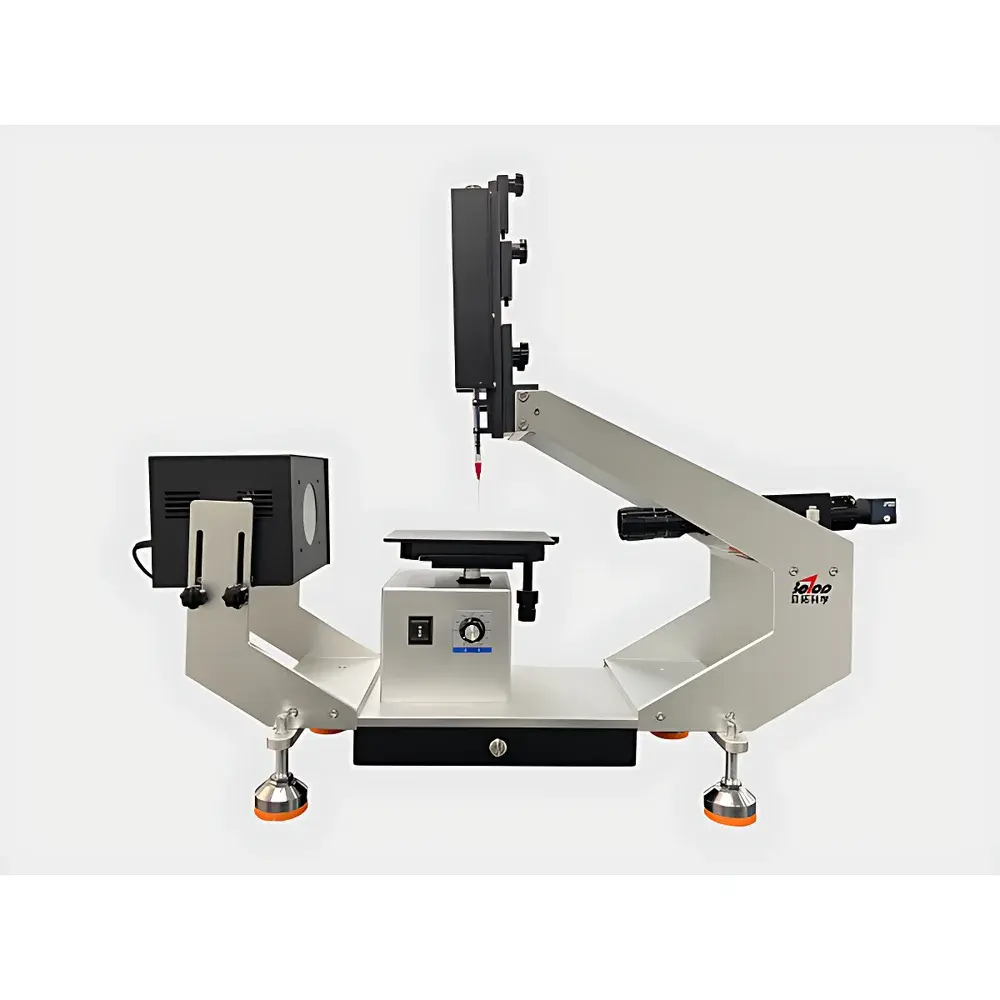
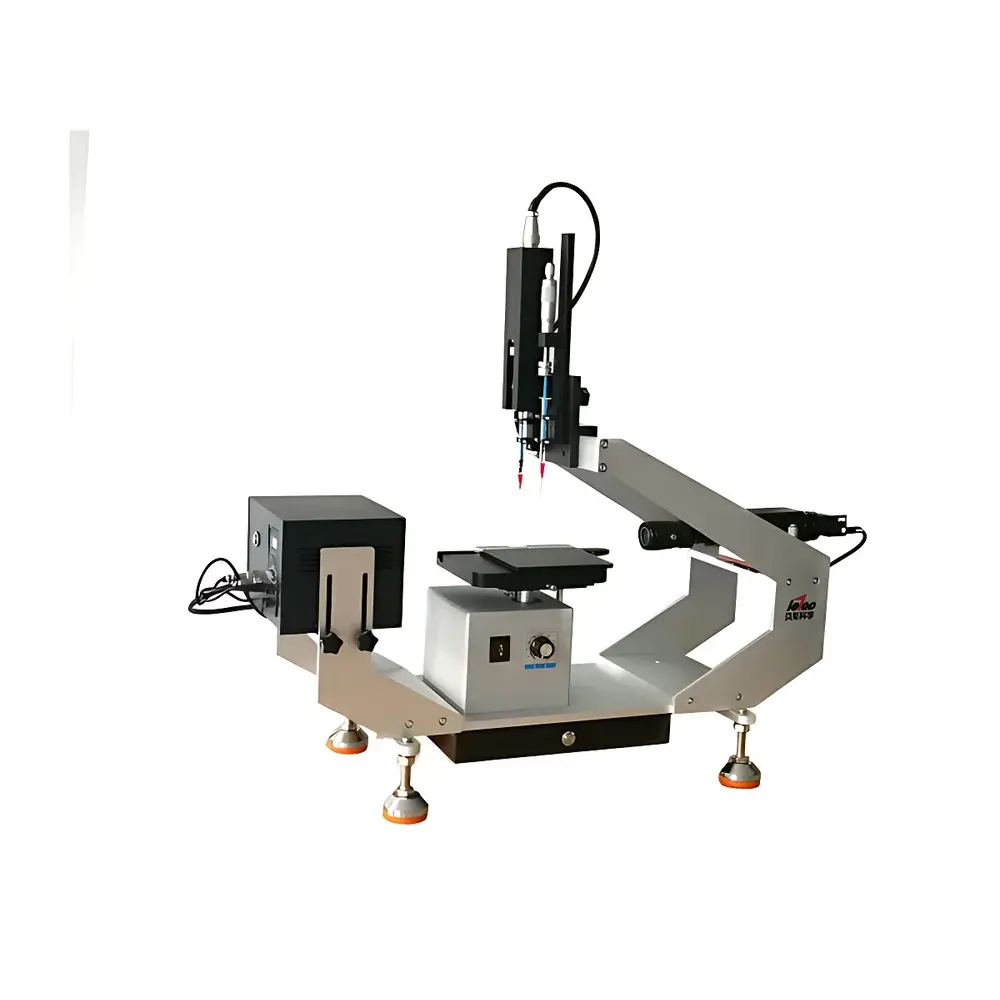
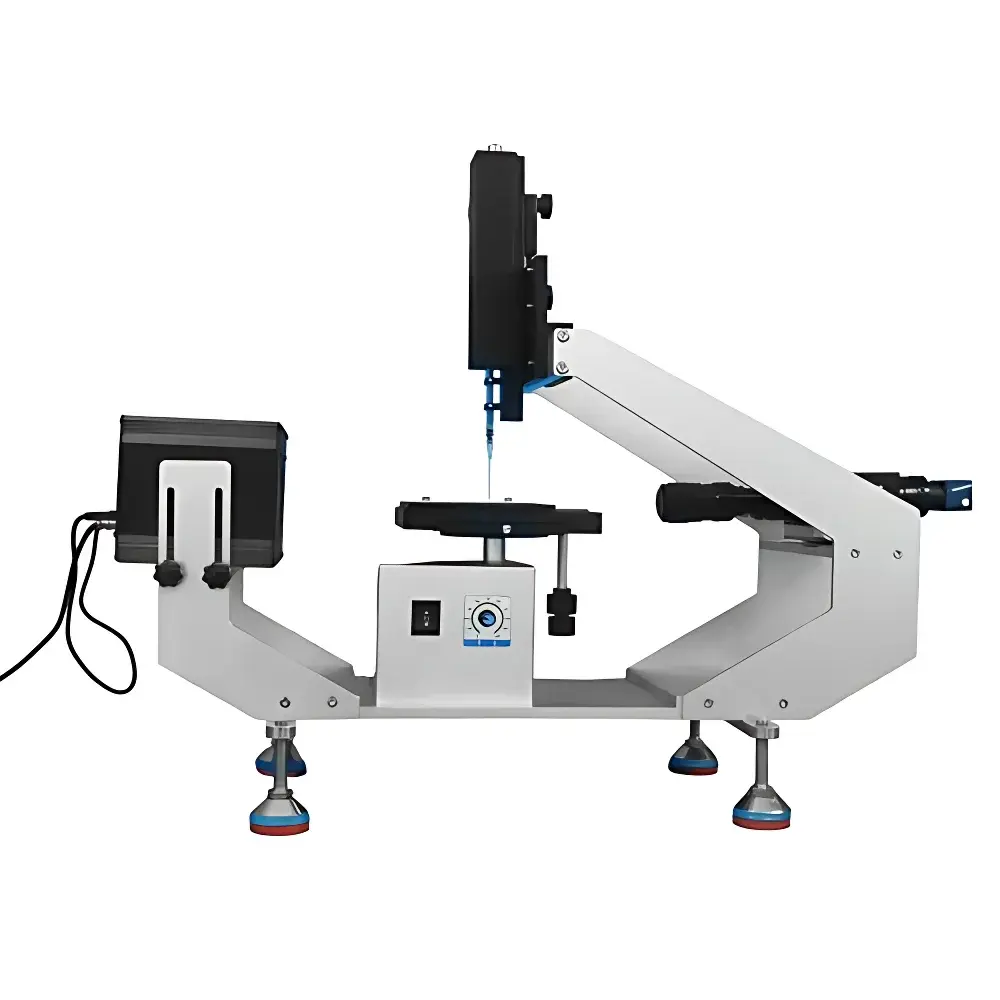
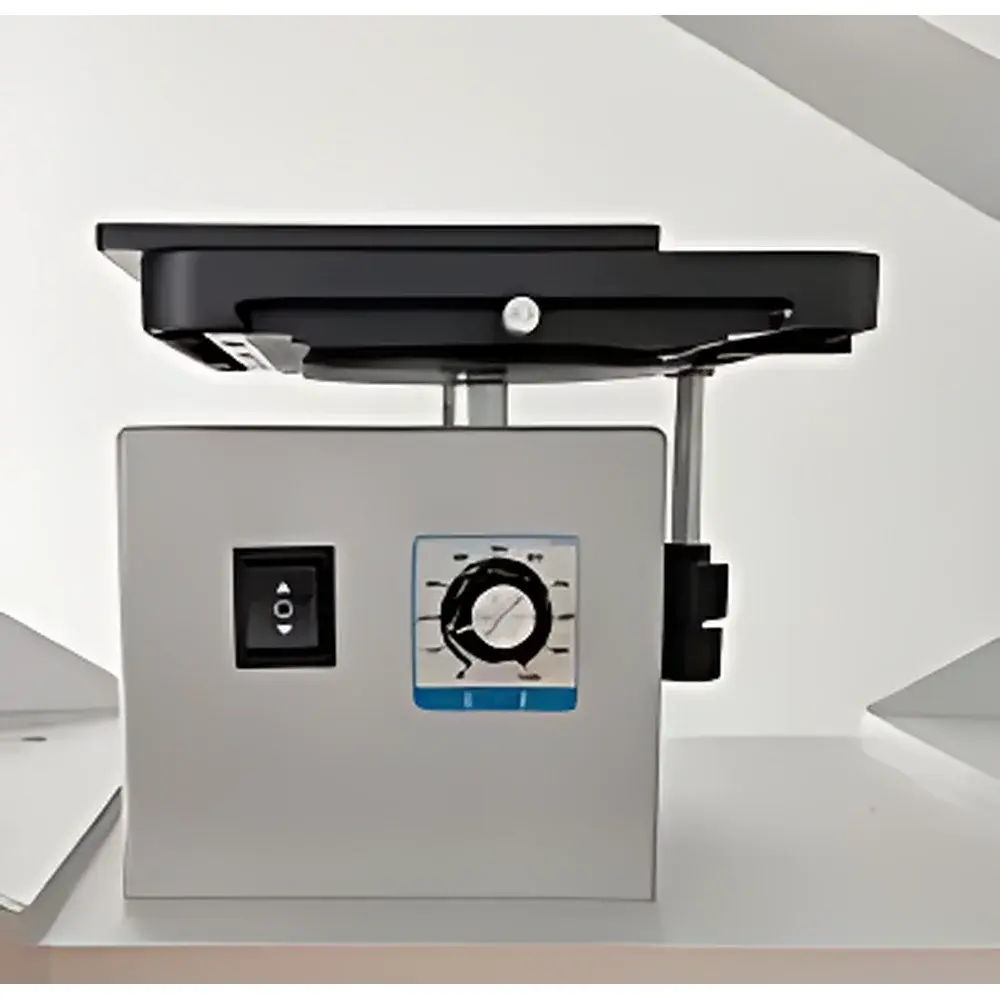
Betop Scientific DSA-X Plus Automated Contact Angle Analyzer
| Brand | Betop Scientific |
|---|---|
| Origin | Guangdong, China |
| Manufacturer Type | Original Equipment Manufacturer (OEM) |
| Product Category | Domestic |
| Model | DSA-X Plus Automated Contact Angle Analyzer |
| Instrument Type | Benchtop Laboratory System |
| Contact Angle Measurement Range | 0–180° |
| Contact Angle Measurement Accuracy | ±0.1° |
| Sample Stage Dimensions | 100 mm × 100 mm |
| Optical Magnification | 0.7×–4.5× (adjustable focus) |
| Surface/Interfacial Tension Measurement Range | 0–1000 mN/m |
| Surface/Interfacial Tension Measurement Accuracy | ±0.01 mN/m |
| High-Speed Imaging | Up to 210 fps at 130-pixel resolution |
| Camera Tilt Adjustment | ±4° |
| Dispensing Precision | 0.01 µL |
| Dispenser Travel Range | Z-axis ±100 mm, X/Y ±100 mm |
| Contact Angle Methods | Static, Dynamic (advancing/receding), Roll-off Angle |
| Fitting Algorithms | Six standard methods (e.g., Circle, Ellipse, Young–Laplace, Spline, Tangent, Baseline-Independent) |
| Surface Energy Models | OWRK, Fowkes, Wu, van Oss Chaudhury Good |
| Stage Translation Range (optional) | X/Y/Z = 100 mm × 100 mm × 50 mm |
| Maximum Sample Dimensions (W × D × H) | 300 mm × ∞ × 160 mm |
| Optional Accessories | Vacuum Sample Holder (for thin films), Motorized Tilt Stage (for roll-off angle), Top-View Imaging Module (for concave or recessed surfaces), Custom Syringe Pumps & Environmental Chambers |
Overview
The Betop Scientific DSA-X Plus Automated Contact Angle Analyzer is a precision benchtop optical system engineered for quantitative characterization of solid–liquid interfacial behavior. It operates on the principle of sessile drop analysis—capturing high-resolution side-view and optional top-view images of liquid droplets deposited on solid substrates—and applying rigorous geometric and physical models (including Young–Laplace equation-based fitting) to determine contact angle, surface free energy, and interfacial tension. Designed for reproducible, operator-independent measurements in regulated R&D and QC environments, the DSA-X Plus integrates a high-speed industrial camera (210 fps), thermally stable LED cold illumination, and motorized XYZ sample positioning to ensure consistent droplet placement and optical alignment across repeated trials. Its modular architecture supports both static and dynamic contact angle protocols—including advancing/receding angle measurement via automated dispensing and roll-off angle determination with optional tilt stages—making it suitable for evaluating time-dependent wetting kinetics, hysteresis, and surface heterogeneity.
Key Features
- Automated XYZ stage with 100 mm × 100 mm × 50 mm travel range (optional), enabling precise positioning of irregular or large-area samples without manual re-alignment.
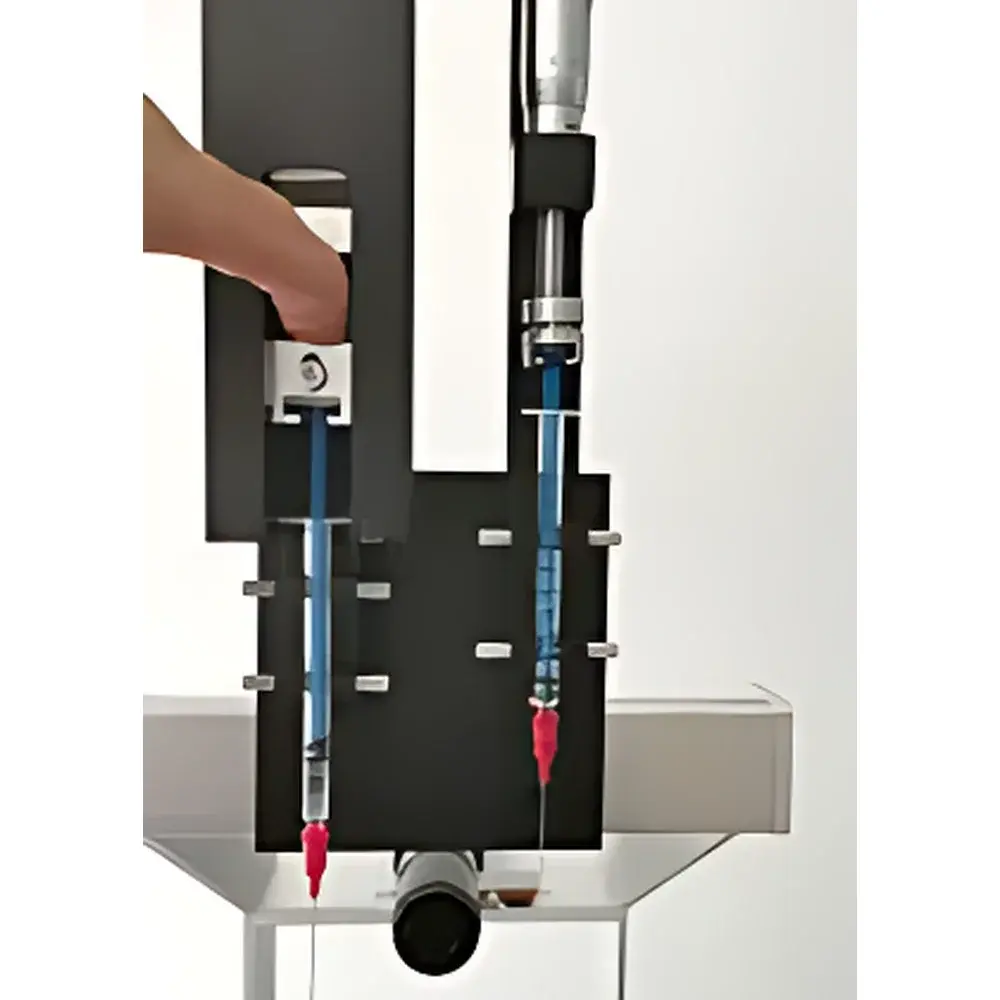
- Motorized microdispensing unit with 0.01 µL resolution and programmable dosing sequences for repeatable droplet deposition during dynamic contact angle or absorption studies.
- Adjustable optical path: 0.7×–4.5× zoom lens with fine-focus mechanism and ±4° camera tilt capability, optimized for both flat and moderately curved surfaces.
- Real-time image acquisition at up to 210 frames per second, synchronized with dispensing and stage motion, supporting kinetic analysis of spreading, evaporation, and dewetting phenomena.
- Six built-in contact angle fitting algorithms—including Circle, Ellipse, Young–Laplace, Spline, Tangent, and baseline-independent methods—each validated against NIST-traceable reference standards.
- Comprehensive surface energy module implementing OWRK, Fowkes, Wu, and van Oss Chaudhury Good models, with user-defined liquid libraries and automatic dispersion/polar component decomposition.
- Integrated video capture and frame-by-frame playback functionality, allowing retrospective selection of optimal frames for analysis and audit-compliant data traceability.
Sample Compatibility & Compliance
The DSA-X Plus accommodates rigid and flexible substrates up to 300 mm wide and 160 mm tall, including silicon wafers, polymer films, coated glass, ceramics, textiles, and porous membranes. Optional vacuum sample holders secure low-stiffness films; motorized tilt stages support ISO 27448-compliant roll-off angle testing; and top-view imaging modules extend applicability to concave surfaces such as microfluidic channels or molded lenses. The system meets mechanical and electrical safety requirements per IEC 61010-1 and supports GLP/GMP workflows through timestamped metadata logging, user access control, and exportable audit trails compliant with FDA 21 CFR Part 11 when deployed with validated software configurations.
Software & Data Management
The proprietary Betop Analysis Suite provides an intuitive GUI for instrument control, real-time visualization, and post-acquisition processing. All measurement parameters—including dispensing volume, stage coordinates, lighting intensity, and environmental conditions (when integrated with optional humidity/temperature chambers)—are embedded in image metadata. Data export options include CSV, Excel, PDF (with customizable report templates), and XML for LIMS integration. Batch processing mode enables unattended analysis of multi-sample datasets, while version-controlled method files ensure protocol consistency across laboratories and operators. Software validation documentation and IQ/OQ protocols are available upon request for regulated environments.
Applications
- Quantitative assessment of plasma, corona, flame, or chemical surface treatments on polymers and metals.
- Adhesion performance evaluation in inkjet printing, conformal coating, and adhesive bonding processes.
- Wettability mapping of heterogeneous surfaces such as patterned hydrophobic/hydrophilic arrays or gradient coatings.
- Surface cleanliness verification in semiconductor packaging, medical device manufacturing, and aerospace component cleaning validation.
- Determination of critical surface tension and polar/dispersive surface energy components for formulation development in paints, inks, and pharmaceutical suspensions.
- Interfacial tension measurement of surfactant solutions, emulsions, and biofluids using pendant drop and constrained drop methodologies.
FAQ
What contact angle measurement methods does the DSA-X Plus support?
Static, advancing/receding (dynamic), and roll-off (tilt) angle measurements—all configurable via software-defined dispensing and stage motion sequences.
Can the system measure surface energy of low-energy surfaces like PTFE?
Yes—using multi-liquid OWRK or van Oss models with appropriate probe liquids (e.g., diiodomethane, formamide, water), the system calculates total surface energy and its polar/dispersive components with uncertainty < ±0.5 mJ/m².
Is the software compatible with networked lab environments and LIMS integration?
Yes—data exports support CSV, Excel, and XML formats; audit logs and method files are structured for seamless ingestion into enterprise laboratory informatics systems.
Does the DSA-X Plus comply with international standards for contact angle testing?
It implements methodologies aligned with ASTM D7334 (surface energy of polymer coatings), ISO 19403 (contact angle measurement), and ISO 27448 (roll-off angle), with traceable calibration procedures available.
What accessories are required for measuring contact angles on curved or recessed surfaces?
The optional top-view imaging module, combined with adjustable LED illumination and high-magnification lens configuration, enables reliable analysis of concave geometries and microstructured surfaces.



