
Saprete GS-16 Positive Pressure Solid Phase Extraction Instrument
| Brand | Saprete |
|---|---|
| Origin | Beijing, China |
| Manufacturer Type | Manufacturer |
| Product Origin | Domestic (China) |
| Model | GS-16 |
| Price Range | USD 2,800 – 7,000 |
| Automation Level | Semi-Automatic |
| Channel Count | 16-Channel |
| Extraction Mode | Column-Based SPE |
| Flow Rate Control | 6–60 mL/min |
| Solvent Types Supported | 5 independent solvent reservoirs |
| Sample Capacity | 16 samples per run |
| Sample Loading Volume | 1–10 mL |
| Wetted Materials | PTFE (Polytetrafluoroethylene) |
Overview
The Saprete GS-16 Positive Pressure Solid Phase Extraction Instrument is an engineered solution for high-throughput, reproducible sample preparation in analytical laboratories. Unlike traditional vacuum-assisted SPE systems, the GS-16 employs regulated positive pressure—delivered via nitrogen or oil-free compressed air—to drive elution through SPE cartridges with precise, programmable flow control. This design eliminates channel-to-channel flow variability caused by vacuum decay, membrane clogging, or inconsistent manifold sealing, thereby improving inter-run precision and method robustness. The instrument is optimized for routine use in regulated environments where method transferability, operator independence, and trace-level analyte recovery are critical. Its architecture supports both method development and validated routine workflows across environmental, food safety, pharmaceutical, and clinical research applications.
Key Features
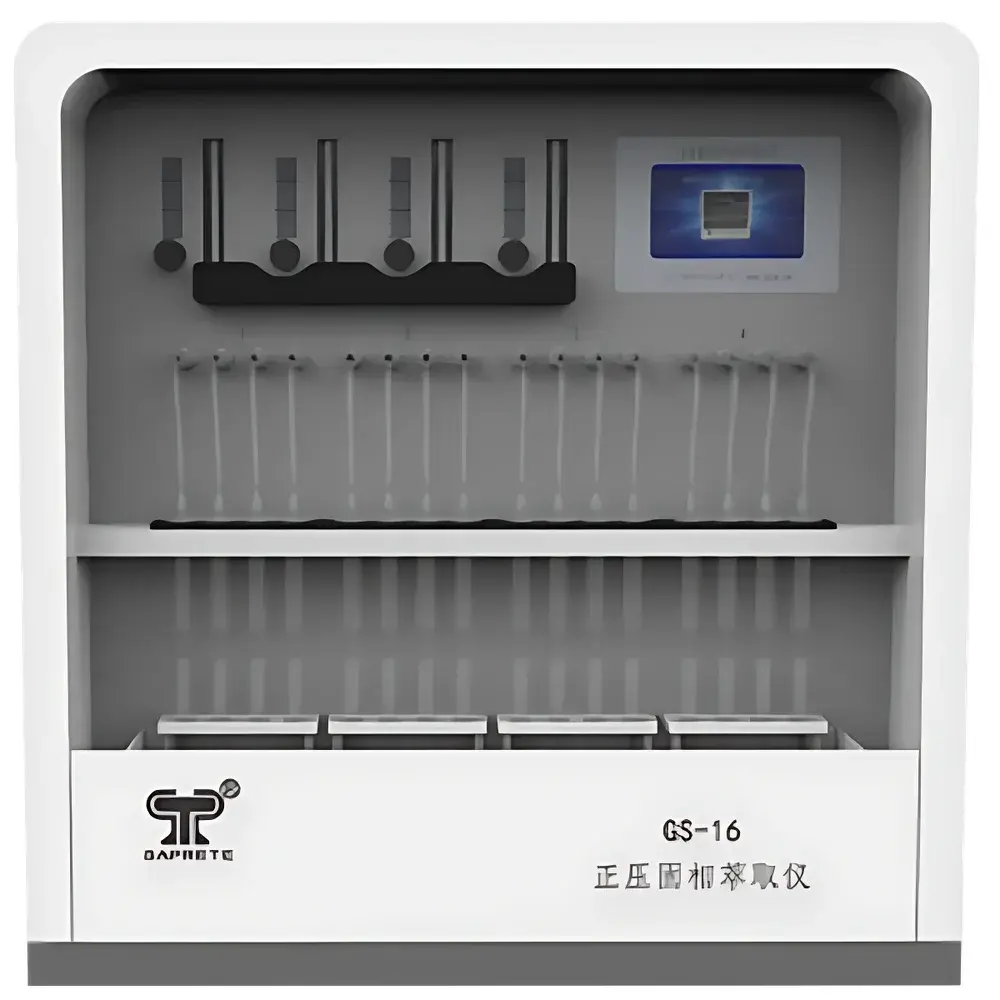
- 16-position parallel processing with individual pneumatic control per channel—enabling true multi-method flexibility within a single run.
- Four independently programmable flow paths, each supporting discrete gradient or stepwise elution profiles across up to five solvent types.
- PTFE-wetted fluidic path ensures chemical compatibility with aggressive solvents (e.g., acetonitrile, dichloromethane, methanol, ethyl acetate, and aqueous buffers), minimizing adsorption losses and carryover.
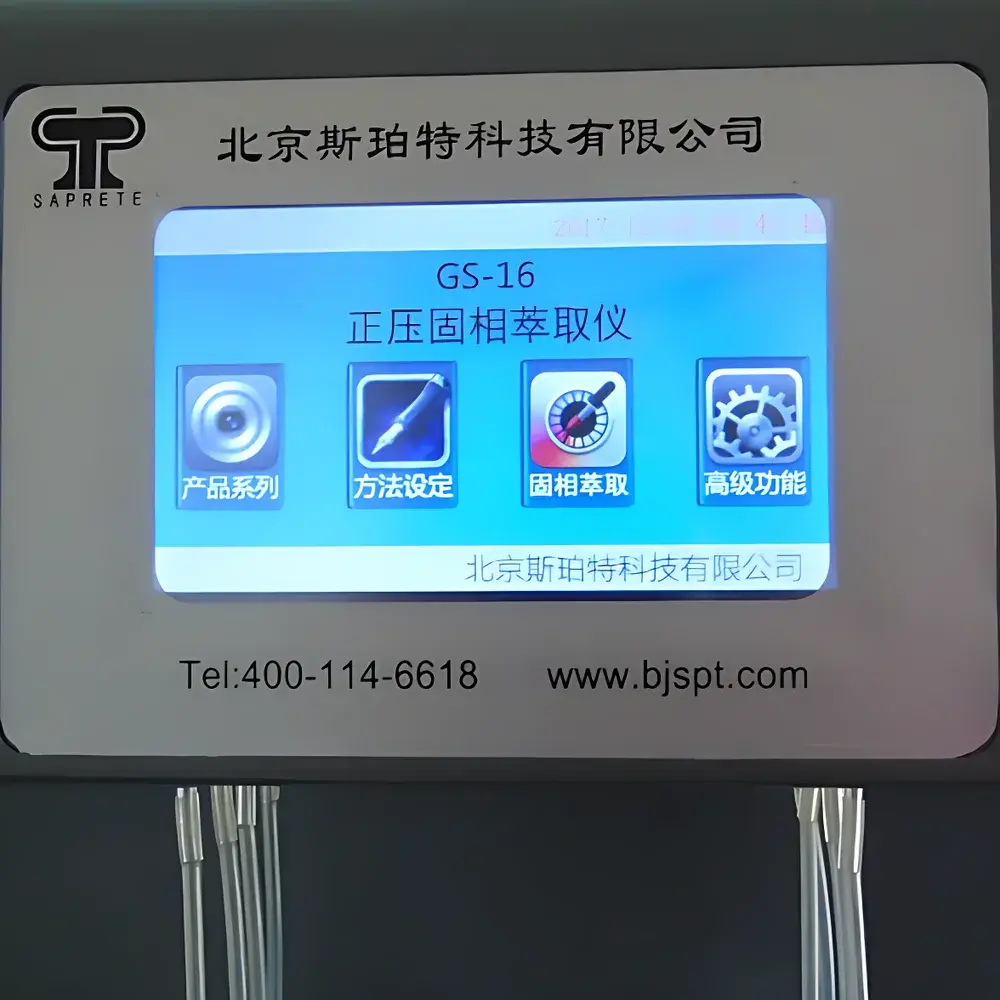
- Touchscreen HMI with intuitive workflow navigation, real-time pressure monitoring, and on-device method storage (≥100 protocols).
- Push-pull eluate/waste switching mechanism eliminates manual tube repositioning and reduces risk of cross-contamination during fraction collection.
- Support for standard SPE cartridge formats: 1 mL, 3 mL, 6 mL, and 10 mL columns—compatible with C18, silica, SCX, SAX, Florisil, and mixed-mode sorbents from major vendors.
- Adjustable flow rate range (6–60 mL/min) allows optimization for both rapid clean-up (e.g., pesticide screening) and gentle elution of labile compounds (e.g., glucuronide metabolites).
Sample Compatibility & Compliance
The GS-16 accommodates complex biological matrices—including serum, plasma, whole blood lysates, urine, and tissue homogenates—as well as environmental water extracts, food homogenates (milk, juice, wine), and agricultural commodity extracts (grains, fruits, vegetables). Its PTFE construction meets USP Class VI biocompatibility requirements and resists corrosion from halogenated solvents and acidic/basic mobile phases. The system supports documentation practices aligned with GLP and GMP frameworks: all method parameters (flow rates, dwell times, solvent sequences) are timestamped and stored locally; audit trails can be exported in CSV format for regulatory review. While not inherently 21 CFR Part 11 compliant out-of-the-box, the instrument’s deterministic control logic and non-volatile protocol memory facilitate validation under ISO/IEC 17025 and ASTM D5179–22 (Standard Practice for SPE of Organic Compounds from Water Samples).
Software & Data Management
Operation is managed via an embedded Linux-based controller with a 7-inch capacitive touchscreen interface. No external PC is required for basic operation, though optional Ethernet connectivity enables remote status monitoring and centralized method deployment via secure HTTP(S) API. All user actions—including method selection, start/stop commands, and parameter adjustments—are logged with operator ID, timestamp, and system state. Exportable logs include pressure curves, flow deviation alerts, and cartridge position mapping. For labs implementing LIMS integration, the GS-16 supports structured data output (JSON schema) containing sample IDs, extraction metrics, and QC flagging for failed runs (e.g., overpressure events or flow timeout).
Applications
- Environmental Analysis: Pre-concentration and cleanup of PAHs, PCBs, organochlorine pesticides, and perfluoroalkyl substances (PFAS) from surface water, groundwater, and wastewater prior to GC-MS or LC-MS/MS analysis.
- Food Safety Testing: Isolation of melamine, dioxins, mycotoxins (aflatoxin B1, ochratoxin A), and veterinary drug residues (tetracyclines, sulfonamides) from dairy, cereal, and fruit matrices.
- Pharmaceutical R&D: Purification of herbal extract fractions for fingerprinting and active constituent quantitation; removal of phospholipids from plasma in bioanalytical method development.
- Clinical Toxicology: Simultaneous extraction of benzodiazepines, opioids, and stimulants from human serum using mixed-mode cation-exchange cartridges.
- Regulatory Compliance: Validated implementation in methods adhering to EPA Method 525.3, ISO 17993:2021, and EU Commission Decision 2002/657/EC.
FAQ
What pressure source is required for operation?
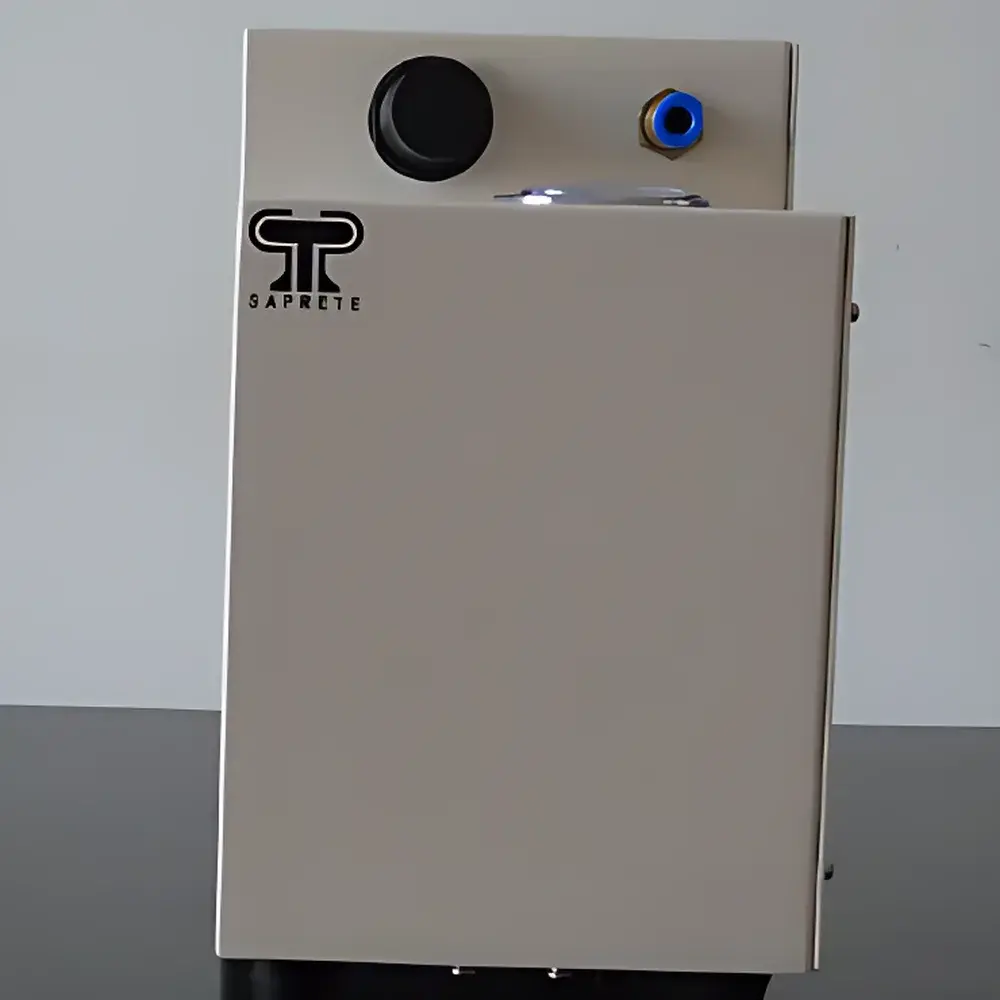
Nitrogen gas (≥99.5% purity) or oil-free compressed air at 0.4–0.7 MPa supply pressure. An integrated pressure regulator and filter ensure stable delivery to the manifold.
Can the GS-16 be used with 96-well SPE plates?
No—it is configured exclusively for individual cylindrical SPE cartridges (1–10 mL volume). Plate-based formats require dedicated plate-manifold systems.
Is method validation support available?
Yes. Saprete provides IQ/OQ documentation templates, flow accuracy verification procedures, and a certified reference pressure gauge kit for on-site performance qualification.
How is carryover minimized between runs?
Each channel includes automated post-run solvent flush (configurable volume and dwell time), and the PTFE fluid path prevents analyte adhesion. Recommended cleaning protocols are included in the operator manual.
Does the system support unattended overnight operation?
Yes—programmable start/stop timing, automatic solvent switching, and pressure-failure shutdown logic enable fully autonomous batch processing.



