
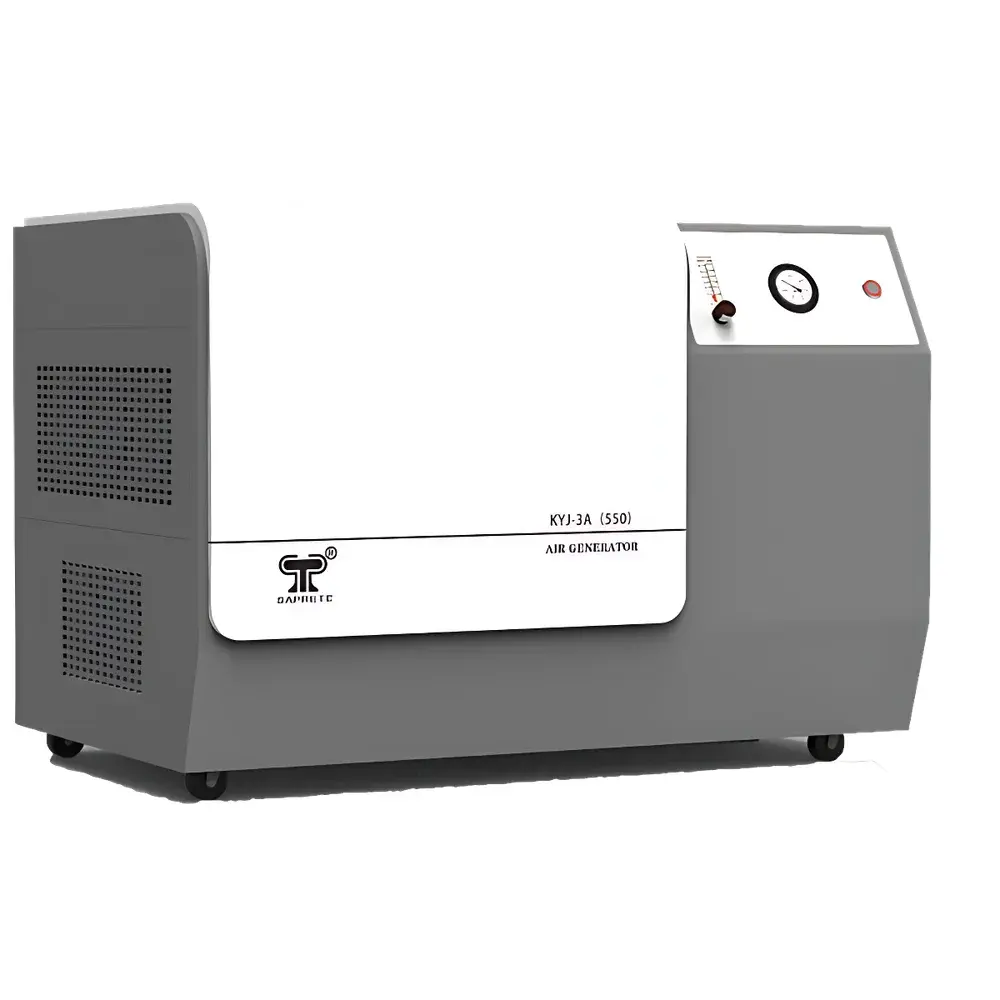
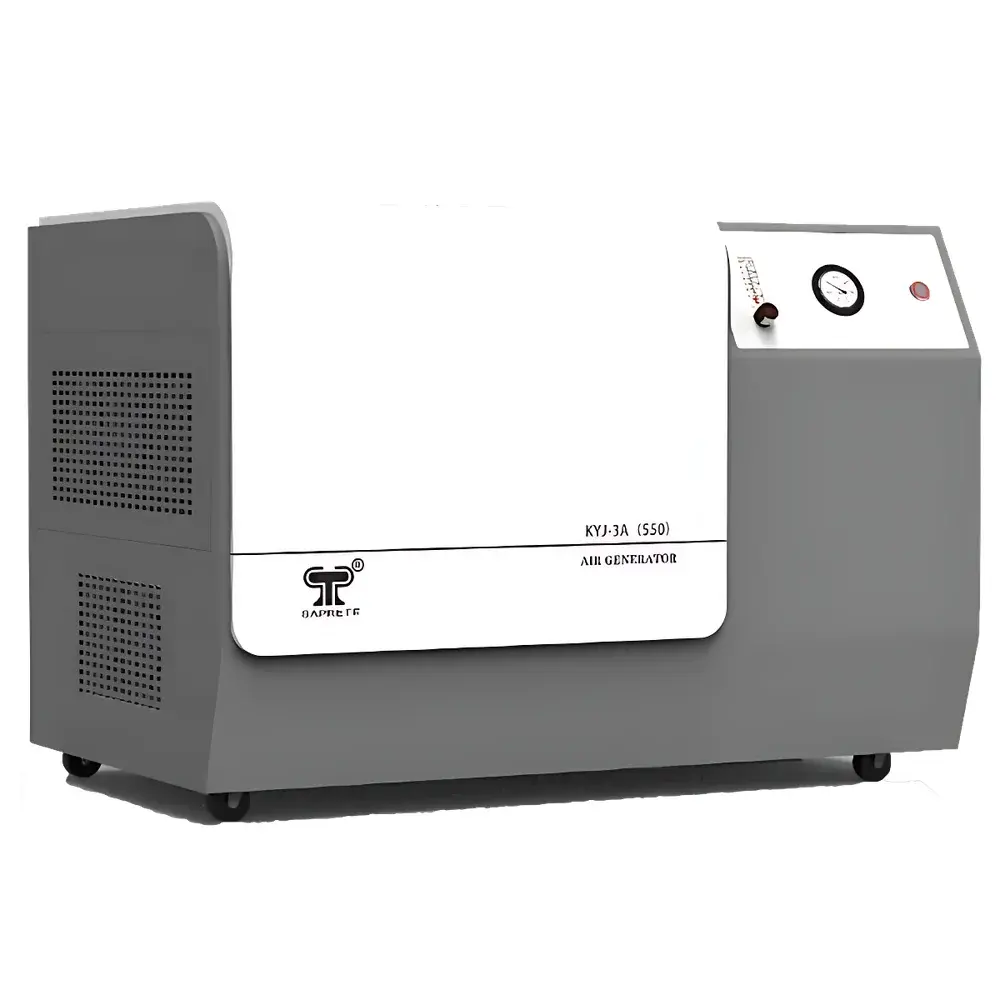
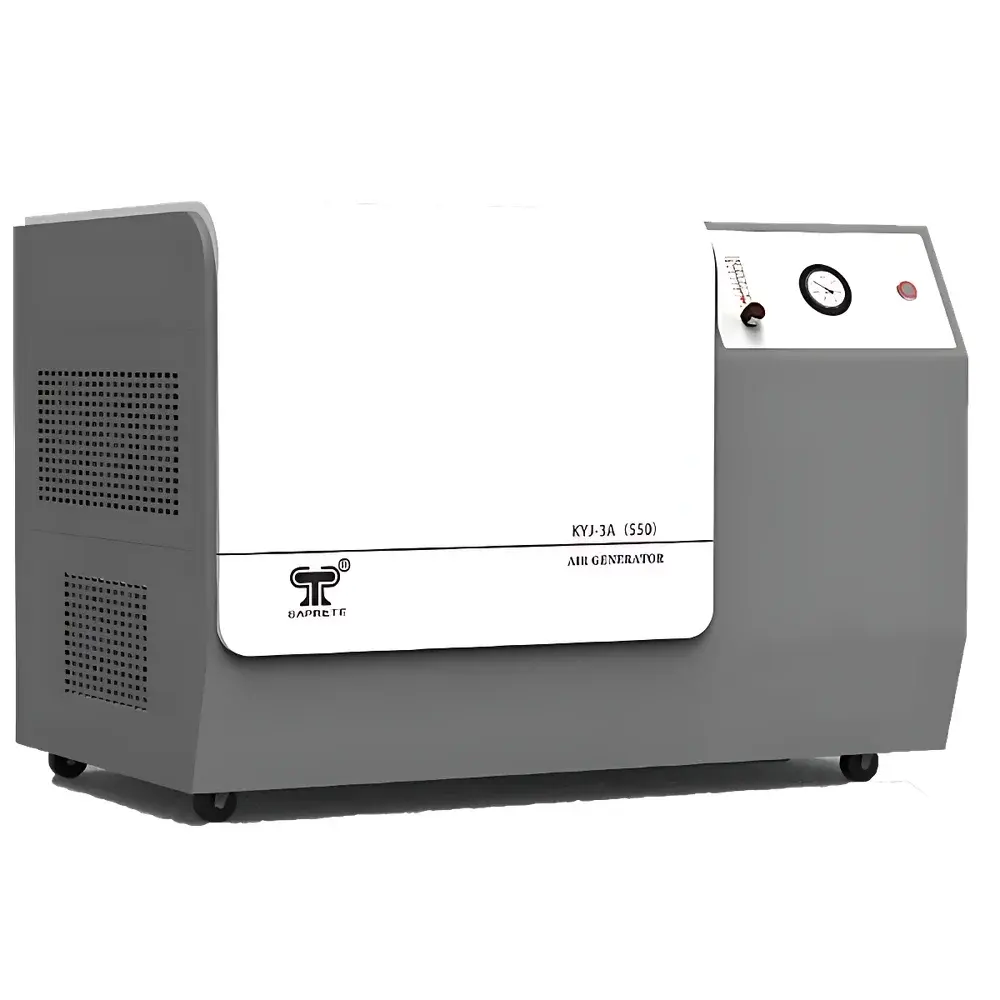
Saprete KYJ3A-550 Air Generator
| Brand | Saprete |
|---|---|
| Origin | Beijing, China |
| Manufacturer Type | Direct Manufacturer |
| Model | KYJ3A-550 |
| Output Flow Rate | 0–38 L/min |
| Output Pressure | 0–0.7 MPa |
| Dew Point | −40 °C |
| Power Supply | 220–230 V, 50 Hz |
| Operating Temperature | 5–40 °C |
| Relative Humidity | 10–85% RH |
| Filtration Stages | 3-stage integrated filtration (particulate, coalescing, desiccant) |
| Cooling Method | Convection-based thermal management |
| Safety Features | Pressure relief valve, over-pressure shutdown, auto-drain condensate trap |
Overview
The Saprete KYJ3A-550 Air Generator is an engineered laboratory-grade compressed air source designed specifically to support sample preparation workflows requiring clean, dry, and pressure-stable airflow—particularly in conjunction with nitrogen evaporation systems (e.g., nitrogen blow-down concentrators), gas chromatography auxiliary air supplies, and other analytical instrumentation demanding consistent low-dew-point air. Unlike oil-lubricated compressors or bottled compressed air, the KYJ3A-550 employs a maintenance-optimized, oil-free diaphragm compression mechanism coupled with a three-stage integrated purification architecture. This ensures continuous delivery of instrument-grade air meeting ISO 8573-1 Class 2:2:2 specifications for particulates, water, and oil content—critical for preventing column contamination, detector drift, or false positives in trace-level organic analysis.
Key Features
- Oil-free diaphragm compressor core delivering stable output across the full 0–38 L/min flow range, with precise needle-valve flow control calibrated for compatibility with multi-channel nitrogen concentrators.
- Three-stage filtration system: (1) external pre-filter for coarse particulate removal (≥5 µm), (2) internal coalescing filter for aerosol and liquid water separation, and (3) regenerative desiccant cartridge achieving a certified dew point of −40 °C at rated flow and ambient conditions.
- Externally mounted primary air intake filter—tool-free access enables rapid replacement without disassembly, minimizing downtime during routine maintenance cycles.
- Passive convection cooling architecture eliminates reliance on fans or forced-air ducting, reducing acoustic noise (<52 dB(A)) and enhancing long-term reliability in temperature-sensitive lab environments.
- Integrated pressure regulation and safety circuitry: adjustable pressure setpoint (0–0.7 MPa), mechanical pressure relief valve, automatic over-pressure shutdown, and condensate auto-drain trap with visual level indicator.
Sample Compatibility & Compliance
The KYJ3A-550 is validated for use with standard laboratory nitrogen evaporation platforms (e.g., Techne, Organomation, Biotage), GC air supply modules (FID, NPD, TCD), and automated sample prep workstations requiring non-reactive, hydrocarbon-free air. Its −40 °C dew point satisfies ASTM D6304 and ISO 8573-1 requirements for moisture-sensitive applications including headspace analysis, purge-and-trap, and solvent evaporation under inert atmosphere. The unit complies with IEC 61010-1:2010 for electrical safety in laboratory equipment and meets CE marking requirements for EMC and low-voltage directives. No external exhaust venting is required; all heat dissipation and condensate management occur internally.
Software & Data Management
The KYJ3A-550 operates as a standalone hardware platform with analog control interface—no embedded firmware, touchscreen, or network connectivity. All operational parameters (flow, pressure, runtime) are monitored via front-panel mechanical gauges and tactile rotary controls. While it does not generate digital logs or support remote monitoring, its design aligns with GLP/GMP documentation requirements: pressure and flow settings are manually recorded in lab notebooks or LIMS-integrated SOPs, and filter replacement intervals (recommended every 6 months or 2000 operating hours) are tracked via physical service log tags. For regulated environments, the absence of software eliminates 21 CFR Part 11 validation overhead while maintaining full auditability of physical usage records.
Applications
- Primary air supply for nitrogen blow-down concentrators in pesticide residue, PAH, and pharmaceutical impurity analysis per EPA Method 525.3, USP , and ISO 17025-accredited labs.
- Auxiliary air source for flame ionization detectors (FID) and nitrogen-phosphorus detectors (NPD) in gas chromatographic systems where hydrocarbon-free air is mandatory.
- Clean air feed for vacuum manifold drying stations, automated SPE systems, and positive-pressure glove boxes used in controlled sample handling.
- Low-particulate air source for calibration gas dilution systems and environmental chamber purge applications requiring ISO Class 5 particulate compliance.
FAQ
What is the recommended maintenance schedule for the KYJ3A-550?
Filter cartridges should be replaced every 6 months or after 2000 hours of cumulative operation—whichever occurs first. The external pre-filter may require more frequent cleaning in high-dust environments.
Can this generator be used continuously for 24/7 operation?
Yes. Its convection-cooled architecture and duty-cycle-rated compressor enable unattended operation within specified ambient conditions (5–40 °C, ≤85% RH). Thermal protection circuitry prevents overheating under sustained load.
Does the KYJ3A-550 meet ISO 8573-1 Class 2:2:2 for compressed air purity?
When operated within rated flow (≤38 L/min) and maintained per schedule, the unit delivers air compliant with ISO 8573-1:2010 Class 2 (≤0.1 µm particles), Class 2 (dew point ≤−40 °C), and Class 2 (oil content ≤0.1 mg/m³).
Is external drainage required for the condensate trap?
No. The integrated auto-drain trap features a sealed collection reservoir with visual fill-level window and manual dump port—no plumbing or floor drain connection needed.
Can output pressure be regulated independently of flow rate?
Yes. A dedicated pressure regulator allows stable pressure setting (0–0.7 MPa) regardless of downstream flow demand, enabling simultaneous use with multiple instruments at varying pressure requirements.



