
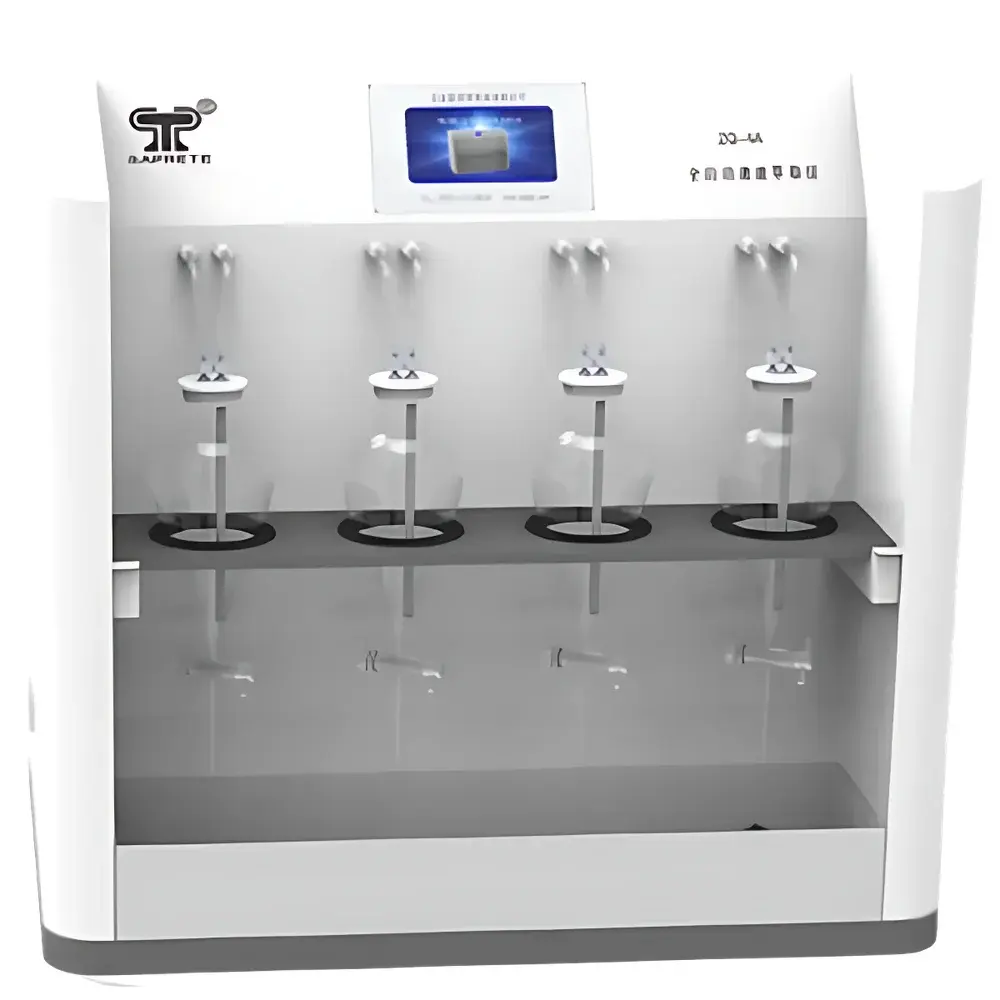
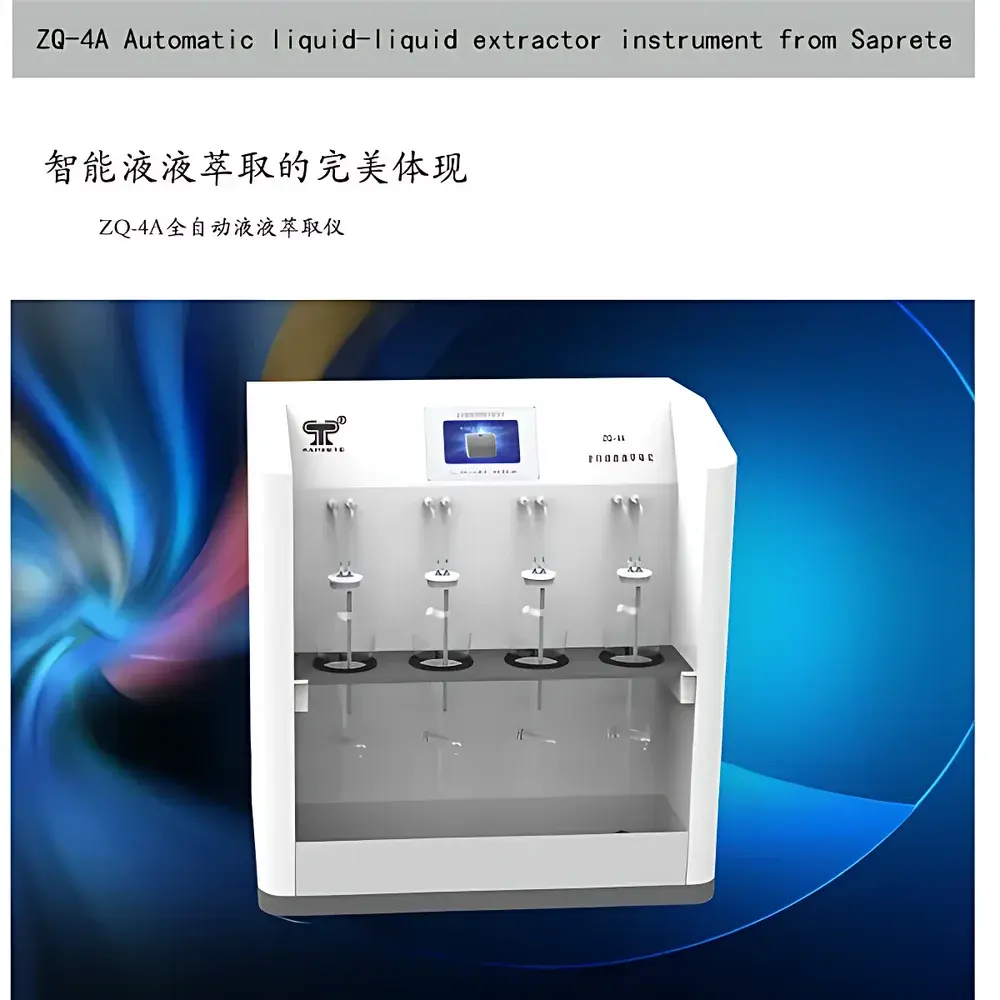
Saprete ZQ-4A Automated Liquid-Liquid Extractor
| Brand | Saprete |
|---|---|
| Origin | Beijing, China |
| Manufacturer Type | Direct Manufacturer |
| Product Category | Domestic |
| Model | ZQ-4A |
| Extraction Efficiency | 100% |
| Extraction Time | Adjustable |
| Agitation Method | Pneumatic |
| Simultaneous Extraction Channels | 4 |
Overview
The Saprete ZQ-4A Automated Liquid-Liquid Extractor is an engineered solution for high-throughput, reproducible liquid-liquid extraction (LLE) in analytical laboratories. Designed around pneumatic agitation and fully enclosed gas-tight operation, it implements the fundamental principle of partition coefficient-based solute transfer between immiscible phases—typically aqueous and organic solvents—to isolate target analytes prior to chromatographic or spectroscopic analysis. Unlike manual or semi-automated methods, the ZQ-4A eliminates operator variability, reduces solvent exposure risk, and ensures consistent phase separation kinetics across all four independent extraction stations. Its architecture supports method standardization in regulated environments where trace-level recovery and inter-batch repeatability are critical—particularly in environmental testing (e.g., EPA Method 3510C), food safety residue analysis, and pharmaceutical impurity profiling.
Key Features
- Four independent extraction positions with individual pneumatic actuation control—enabling parallel processing without cross-contamination or timing interference.
- Pneumatic oscillation mechanism delivering precise, repeatable mixing energy across variable cycle durations and stroke amplitudes—optimized for emulsion formation and subsequent phase demulsification.
- Integrated touch-screen interface with programmable extraction time, rest intervals, and post-extraction settling duration—supporting method development and SOP adherence.
- Hermetically sealed extraction chamber and closed-loop air path eliminate volatile organic compound (VOC) leakage, eliminating the need for fume hood installation and complying with OSHA 29 CFR 1910.1200 and EU Directive 2004/37/EC occupational exposure limits.
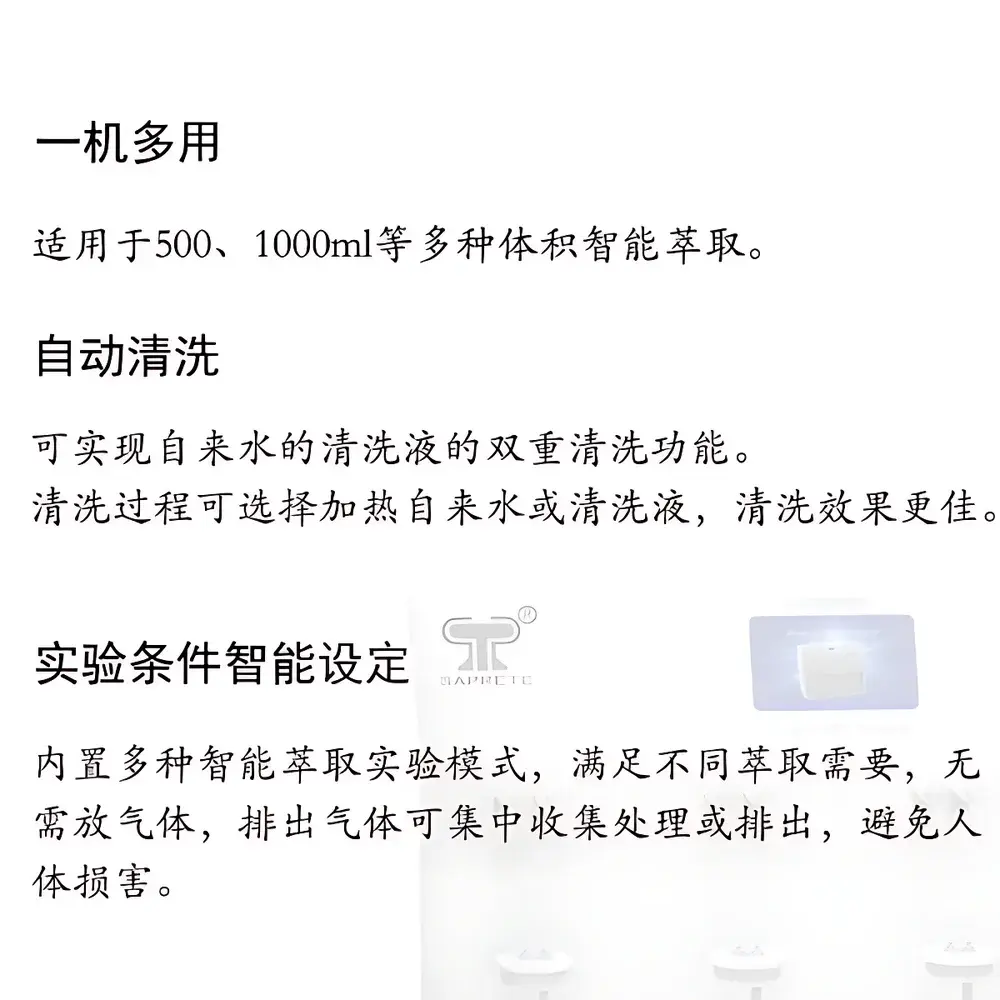
- Automated post-extraction thermal rinse cycle using heated solvent vapor—removing residual analytes and matrix components from internal tubing and valve manifolds to prevent carryover between runs.
- Dual-collection design: segregated ports for collected extract (target phase) and spent aqueous/organic waste—facilitating downstream handling per ISO 14001 waste segregation protocols.
Sample Compatibility & Compliance
The ZQ-4A accommodates standard volumetric glassware including 500 mL and 1000 mL separatory funnels, as well as custom-fit extraction vessels conforming to ASTM D3412 and ISO 11339 specifications. It supports common LLE solvent systems such as dichloromethane/water, ethyl acetate/phosphate buffer, and hexane/acetonitrile mixtures. All wetted surfaces are constructed from chemically resistant borosilicate glass and PTFE-sealed stainless steel—validated for compatibility with pH 1–14 solutions and halogenated solvents. The system meets GLP documentation requirements through timestamped run logs and user-accessible audit trails. While not inherently 21 CFR Part 11 compliant, its data export functionality (CSV/Excel) enables integration into validated LIMS or ELN platforms supporting electronic signature and change control workflows.
Software & Data Management
Operation is managed via an embedded Linux-based HMI with a 7-inch capacitive touchscreen. Each extraction protocol stores parameters—including agitation frequency, dwell time, temperature setpoint for rinse cycles, and operator ID—as encrypted configuration files. System-generated reports include start/stop timestamps, total cycle duration, error codes (e.g., pressure fault, timeout), and manual override annotations. Raw data exports support CSV format with column headers aligned to ISO/IEC 17025 clause 7.7 record retention standards. Firmware updates are performed via USB drive with SHA-256 checksum verification to ensure integrity.
Applications
- Environmental laboratories performing PAHs, PCBs, organochlorine pesticides, and phenolic compounds analysis per EPA SW-846 Methods 3510C and 3520C.
- Food testing facilities extracting mycotoxins (e.g., aflatoxin B1), veterinary drug residues (e.g., sulfonamides), and plasticizer contaminants (e.g., phthalates) prior to LC-MS/MS quantification.
- Pharmaceutical QC labs conducting genotoxic impurity isolation (ICH M7) and cleaning validation swab extract preparation under GMP Annex 15 guidelines.
- Academic research groups requiring standardized LLE workflows for metabolomics sample preparation where reproducibility across biological replicates is essential.
FAQ
What types of separatory funnels are compatible with the ZQ-4A?
Standard tapered-glass 500 mL and 1000 mL separatory funnels with PTFE stopcocks and ground-glass joints—conforming to ASTM E288 and ISO 1042 dimensional tolerances.
Does the instrument require external compressed air supply?
Yes—a clean, oil-free compressed air source at 0.4–0.6 MPa is required for pneumatic actuation; an optional integrated air dryer module is available for humid environments.
Can extraction parameters be exported for regulatory audit purposes?
All run metadata (timestamps, settings, operator ID, error logs) are stored locally and exportable as timestamped CSV files—suitable for inclusion in FDA inspection packages or ISO 17025 technical records.
Is method validation support provided by Saprete?
Saprete supplies application notes documenting recovery studies (n=6), precision (RSD ≤3.2%), and robustness testing across pH and ionic strength gradients—intended as starting points for client-specific IQ/OQ/PQ protocols.
Related Products



