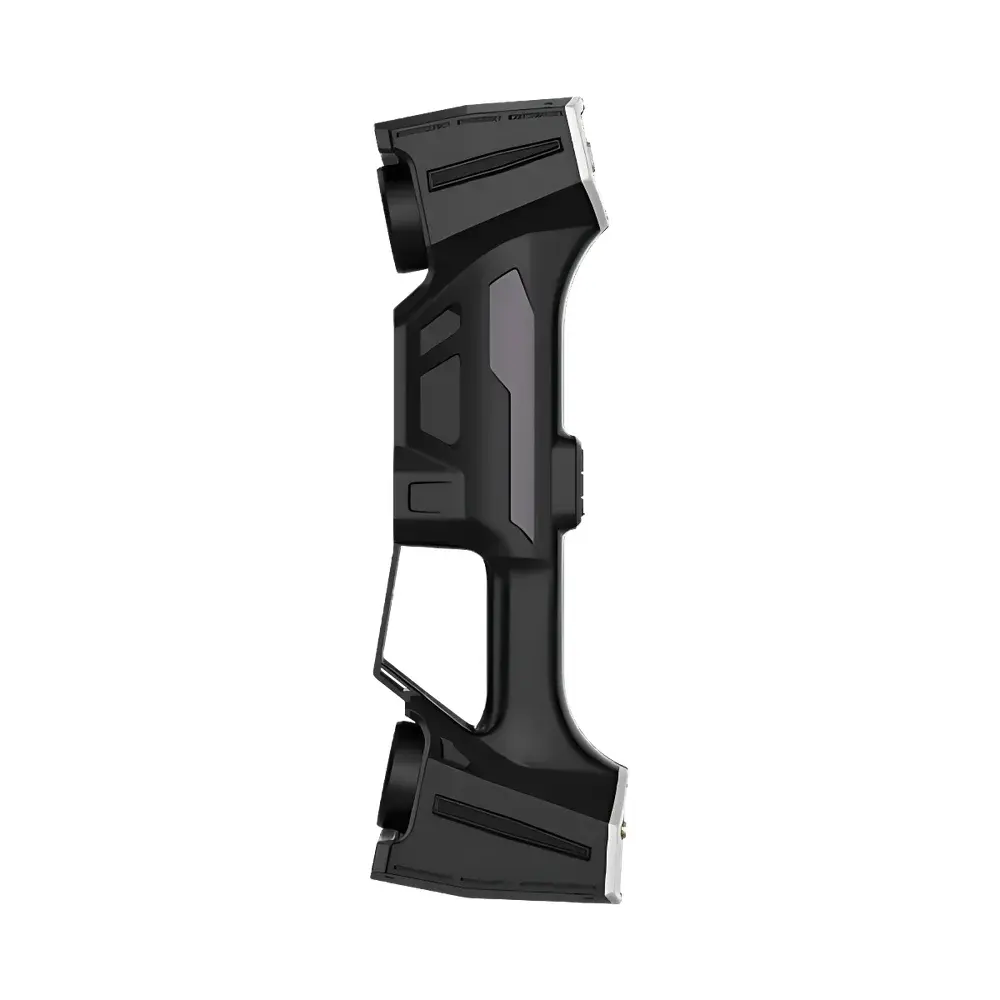
Junray ZR-4001 Airflow Visualization Generator
| Brand | Junray |
|---|---|
| Origin | Shandong, China |
| Manufacturer Type | Original Equipment Manufacturer (OEM) |
| Country of Origin | Domestic (PRC) |
| Model | ZR-4001 |
| Pricing | Upon Request |
Overview
The Junray ZR-4001 Airflow Visualization Generator is an engineered metrological instrument designed for qualitative and semi-quantitative assessment of airflow patterns in controlled environments. It operates on the principle of ultrasonic nebulization—using high-frequency transducers to atomize deionized or purified water into a stable, non-invasive aerosol with a mass median aerodynamic diameter (MMAD) controllably centered between 1 µm and 10 µm. This particle size range ensures optimal light scattering under standard illumination while minimizing gravitational settling and inertial impaction—critical attributes for faithful visualization of laminar flow, turbulence onset, eddy formation, and stagnation zones. The device is purpose-built for compliance-driven validation workflows in biosafety and cleanroom engineering, particularly where regulatory verification of directional airflow integrity is mandated—such as in Class II biological safety cabinets (BSCs), ISO 5–8 cleanrooms, and aseptic processing suites.
Key Features
- Portable, integrated architecture: Compact main unit housed in impact-resistant polymer casing; includes custom carry pouch enabling one-hand transport and rapid deployment in field or facility settings.
- Autonomous operation: Internal rechargeable lithium-ion battery supports ≥90 minutes of continuous雾 generation at nominal output—enabling testing in locations without accessible AC power or UPS infrastructure.
- Real-time operational feedback: Integrated monochrome LCD display shows real-time values for雾 output rate (mL/min), airflow velocity (m/s, when used with optional calibrated anemometer integration), and remaining battery charge (%).
- Dual independent adjustment: Separate rotary controls for雾 generation intensity and auxiliary airflow assist—allowing fine-tuned modulation of plume density, trajectory, and dispersion characteristics across diverse cabinet geometries and room-scale configurations.
- Ergonomic fluid handling: Quick-connect water reservoir with transparent level indicator; bottom-mounted drain valve enables full emptying and residue-free drying between uses—essential for cross-contamination prevention in GMP environments.
- Optimized optical contrast: Built-in LED array (525 nm peak wavelength) provides directional, shadow-reducing illumination aligned with the雾 ejection axis; optional external collimated light source (e.g., 635 nm laser sheet) can be mounted via standardized 1/4″-20 threaded port for enhanced particle tracking in PIV-compatible setups.
Sample Compatibility & Compliance
The ZR-4001 is validated exclusively for use with purified water (conductivity ≤1 µS/cm, endotoxin <0.03 EU/mL) to ensure residue-free evaporation and avoid surface deposition on HEPA filters or work surfaces. It meets the functional requirements specified in YY 0569–2011 and GB 41918–2022 for Class II BSC airflow pattern verification, and aligns with the measurement uncertainty and procedural rigor outlined in JJF 1815–2020 for calibration laboratories performing BSC performance assessments. Its design also supports execution of Annex A.3 (Airflow Smoke Visualization) in GB 50591–2010 for cleanroom commissioning and requalification. While not a certified reference standard, the instrument is routinely employed by CNAS-accredited third-party testing laboratories and metrology institutes for routine conformity checks under GLP and ISO/IEC 17025 quality management systems.
Software & Data Management
The ZR-4001 operates as a standalone hardware platform with no embedded firmware-based data logging or cloud connectivity. All operational parameters are displayed locally and not stored or exportable—consistent with its role as a deterministic visualization aid rather than a quantitative sensor. Users are expected to document test conditions, observation timestamps, and qualitative findings manually or via synchronized video capture (e.g., using time-stamped HD recording per FDA 21 CFR Part 11-compliant systems). For audit readiness, traceability is maintained through instrument serial number, calibration certificate (issued per JJF 1001 and JJF 1059.1), and logbook entries referencing applicable test protocols (e.g., ISO 14644-3 Annex B.5).
Applications
- Qualitative mapping of inflow and downflow velocities in Class II A2 and B2 biological safety cabinets during installation qualification (IQ) and periodic performance verification.
- Identification of turbulent zones, recirculation loops, and dead-air regions in pharmaceutical cleanrooms (ISO 14644-1 Class 5–8) during certification and change control assessments.
- Educational demonstration of fluid dynamic principles—including Coanda effect, boundary layer separation, and jet entrainment—in university teaching labs and technical training centers.
- Supporting root-cause analysis during environmental monitoring deviations—for example, correlating airflow anomalies with particle counter excursions or microbial recovery events.
- Pre-commissioning smoke studies for HVAC system balancing in hospital isolation rooms and vaccine manufacturing suites.
FAQ
Does the ZR-4001 generate ISO-standardized challenge aerosols for filter testing?
No. It produces only water-based fog for visual airflow tracing—not polydisperse oil or sodium chloride aerosols required for HEPA/ULPA filter integrity testing per ISO 14644-3 or EN 1822.
Can it be used with alcohol-based or glycerol solutions?
No. Only purified water is permitted. Non-aqueous or viscous fluids risk transducer fouling, inconsistent droplet sizing, and residue accumulation incompatible with cleanroom-grade maintenance protocols.
Is the device suitable for outdoor or high-humidity environments?
It is rated for indoor use only (IP20 enclosure). Ambient RH >80% or condensation-prone conditions compromise雾 stability and optical contrast; operation is recommended at 40–60% RH and 18–25°C.
What maintenance is required between tests?
After each use: empty reservoir, purge tubing with air, wipe exterior with 70% IPA, and store desiccated. Quarterly ultrasonic bath cleaning of the nebulizer chamber is advised per manufacturer service bulletin ZR-MAINT-2023.