
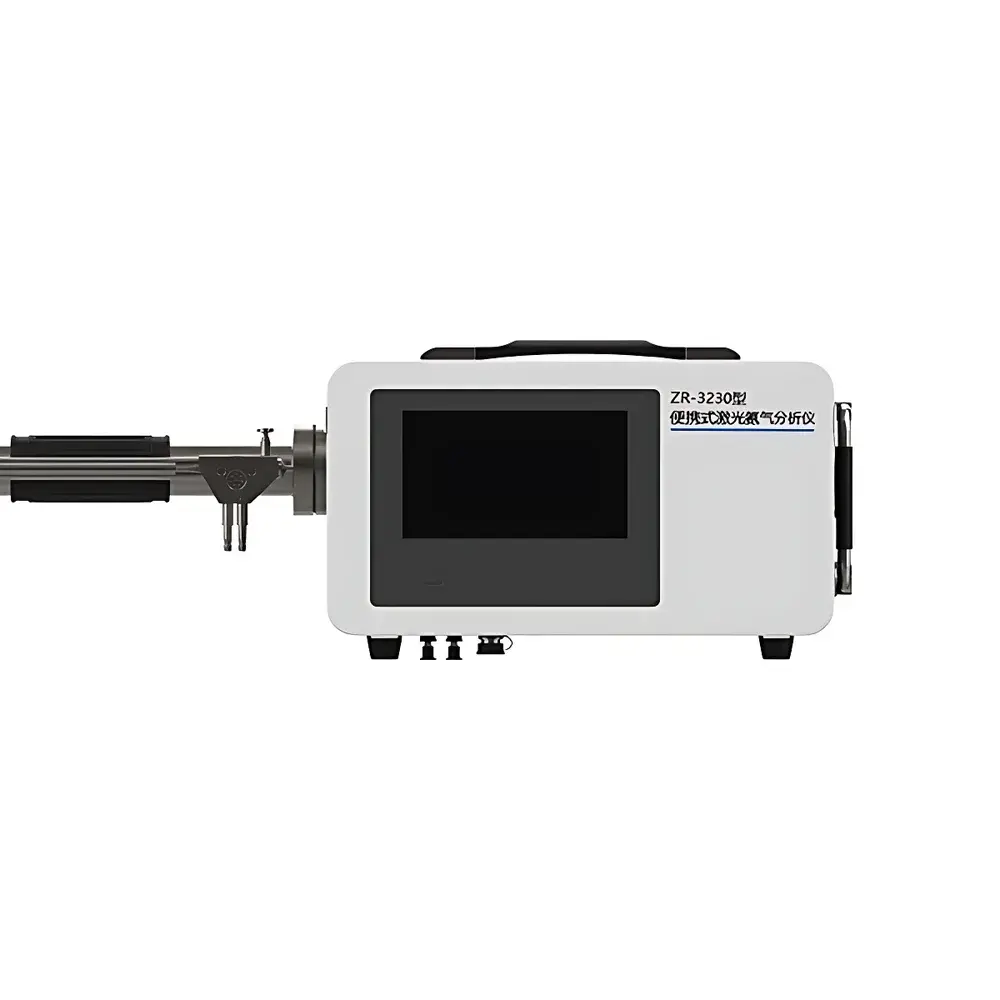
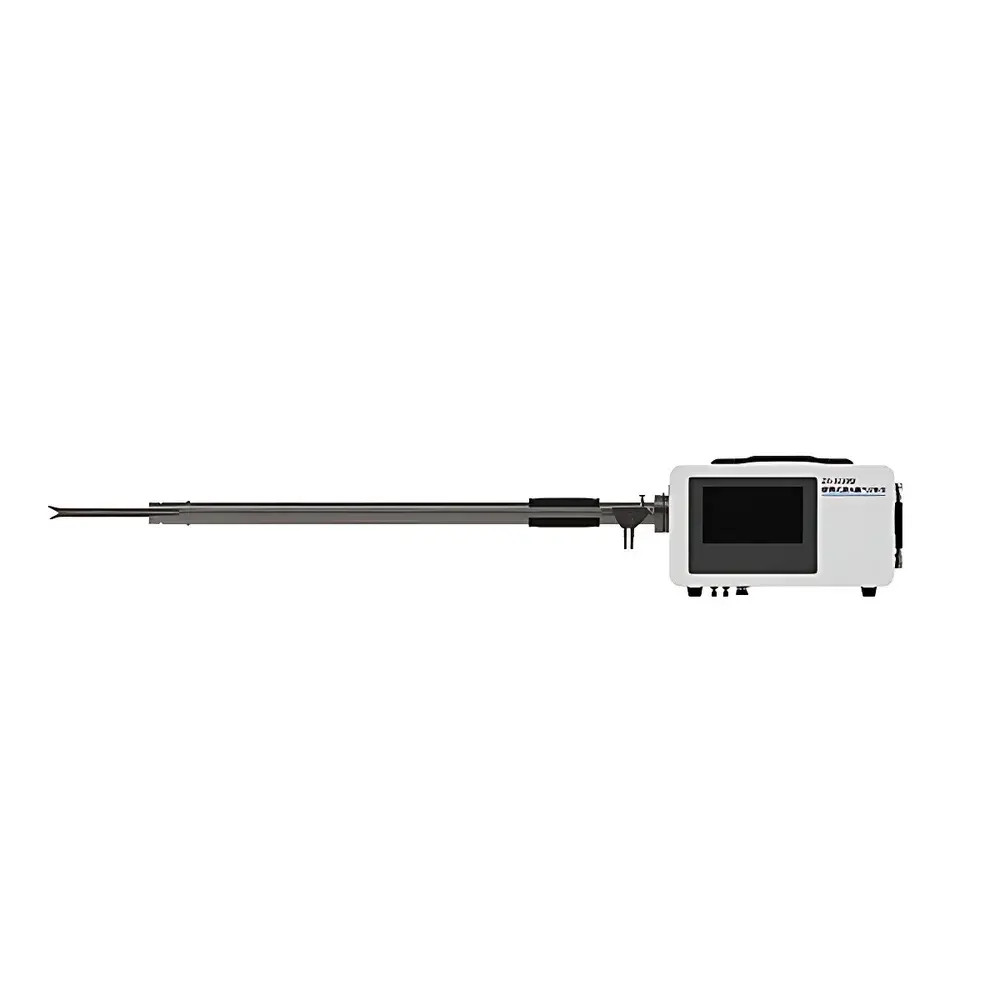
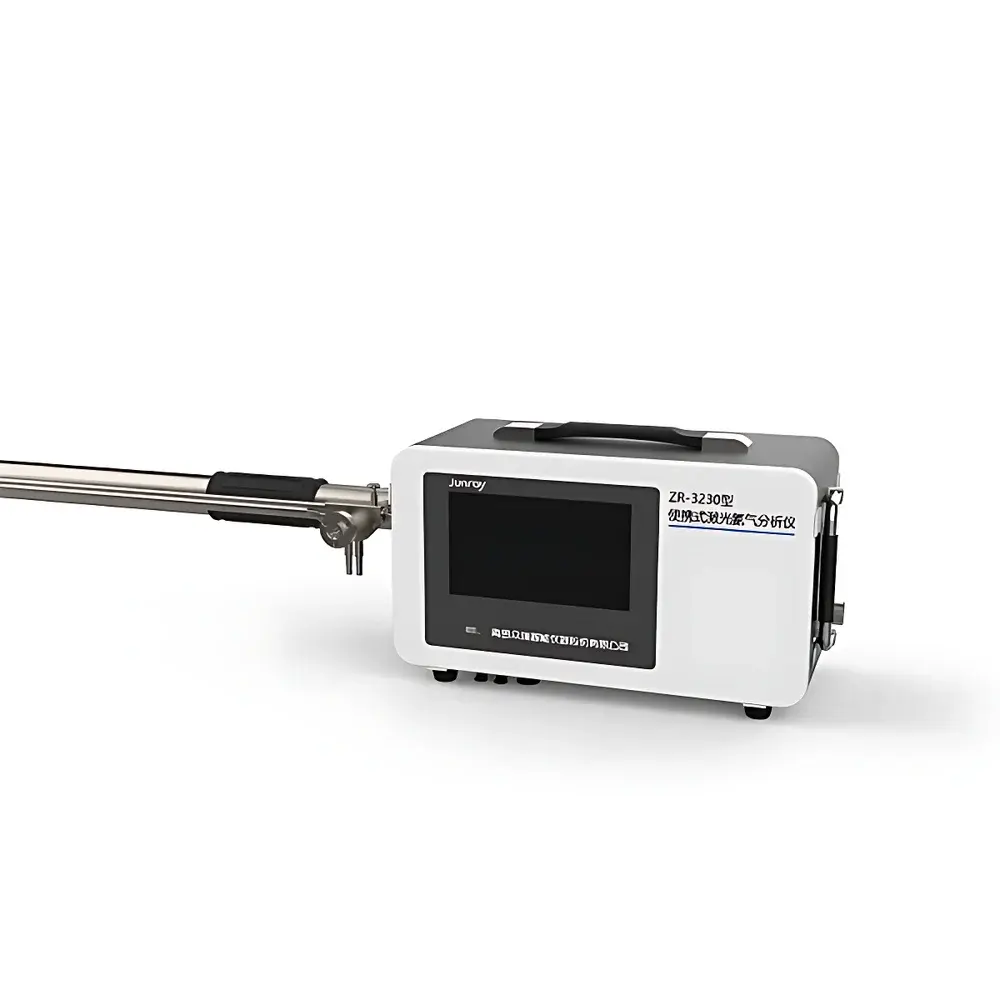
Junray ZR-3230 Portable TDLAS-Based Ammonia Analyzer for Fixed Emission Sources
| Brand | Junray |
|---|---|
| Origin | Shandong, China |
| Manufacturer Type | Direct Manufacturer |
| Country of Origin | China |
| Model | ZR-3230 |
| Measurement Principle | Tunable Diode Laser Absorption Spectroscopy (TDLAS) |
| Measurement Range | Configurable (ppm level) |
| Accuracy | ±0.01 ppm |
| Response Time | ≤30 s |
| Repeatability | High (with heated sample path) |
| Operating Ambient Temperature | −20 to +45 °C |
| Sample Handling | Heated extractive sampling (≥180 °C), hot-wet measurement |
| Compliance Standards | JJG 1105–2015, GB/T 16157–1996, JJG 968–2002, JJG 518–1998 |
Overview
The Junray ZR-3230 Portable TDLAS-Based Ammonia Analyzer is an engineered solution for quantitative, real-time measurement of ammonia (NH₃) concentration in flue gas streams from fixed emission sources—particularly in coal-fired power plants, waste-to-energy facilities, cement kilns, and SCR/SNCR denitrification systems. It employs Tunable Diode Laser Absorption Spectroscopy (TDLAS), a highly selective optical absorption technique operating on the Beer–Lambert law. A narrow-linewidth semiconductor laser is precisely tuned across a fundamental ro-vibrational absorption line of NH₃ (typically near 1512 nm or 2200 nm, depending on configuration), enabling species-specific detection with negligible cross-sensitivity to H₂O, CO₂, SO₂, NOₓ, or particulate matter. Unlike electrochemical or metal oxide sensors, TDLAS delivers inherent stability, zero drift over extended operation, and immunity to poisoning or aging effects. The ZR-3230 implements a hot-wet extractive methodology: gas is drawn through a fully heated (≥180 °C) stainless-steel sampling probe and transfer line, preserving NH₃ integrity by preventing condensation, wall adsorption, or ammonium salt formation—critical for accurate “ammonia slip” quantification downstream of selective catalytic reduction (SCR) reactors.
Key Features
- Integrated hot-extractive design: Combines sampling probe, heated filter module, TDLAS optical cell, and parametric sensor suite (O₂, temperature, pressure, flow) into a single portable chassis.
- Real-time wet/dry basis conversion: Built-in capacitive humidity sensor enables automatic calculation and switching between wet-basis and dry-basis NH₃ concentration per regulatory reporting requirements (e.g., EPA Method 320, ISO 14956).
- Active condensate management: Integrated Peltier-cooled condenser and peristaltic pump continuously remove liquid water without interrupting analysis—eliminating risk of optical window fouling or sensor saturation.
- Dual wireless connectivity: Simultaneous Wi-Fi (IEEE 802.11 b/g/n) and Bluetooth 5.0 support secure data streaming to field tablets or central SCADA systems; supports Modbus TCP/RTU and MQTT protocols.
- Intelligent diagnostics & maintenance: Self-calibrating leak detection, automatic optical path cleaning via pulsed purge gas, modular replaceable filters (stainless mesh + sintered ceramic), and detachable Pitot tube for field recalibration.
- Robust environmental adaptation: IP54-rated enclosure, −20 °C to +45 °C operational range, and anti-vibration mounting ensure reliability in harsh industrial perimeters.
Sample Compatibility & Compliance
The ZR-3230 is validated for use with flue gases containing up to 20% O₂, ≤15% H₂O (v/v), ≤1000 mg/m³ total suspended particulates, and trace levels of acid gases (SO₂ ≤ 2000 ppm, NOₓ ≤ 1000 ppm). Its heated architecture prevents NH₃ loss due to thermophoretic deposition or NH₄HSO₄ crystallization—common failure modes in unheated chemiluminescence or ion-molecule reaction analyzers. The instrument conforms to Chinese national verification regulations JJG 1105–2015 (Ammonia Gas Detectors), JJG 968–2002 (Flue Gas Analyzers), and GB/T 16157–1996 (Sampling Methods for Particulate and Gaseous Pollutants). While not certified to EU Measuring Instruments Directive (MID) or US EPA PS-17, its TDLAS core technology meets the performance criteria referenced in ISO 14956:2021 (Air quality — Requirements for automated measuring systems) and supports GLP-compliant audit trails when paired with Junray’s optional data logger software.
Software & Data Management
The embedded Linux-based firmware provides a 7-inch capacitive touchscreen interface with multilingual UI (English, Chinese, Spanish). Real-time parameters—including NH₃ concentration (ppm), O₂ (%), flue gas temperature (°C), static/dynamic pressure (kPa), volumetric flow (Nm³/h), and dew point—are displayed with configurable trend graphs and statistical overlays (min/max/avg/std dev). All measurements are timestamped with GPS-synchronized UTC and stored locally on encrypted microSD (up to 64 GB). Data export supports CSV, PDF report generation (with digital signature), and direct upload to cloud platforms via TLS 1.2–secured HTTPS. Optional software modules include remote firmware OTA updates, multi-instrument fleet monitoring dashboards, and 21 CFR Part 11–compliant electronic record functionality (user roles, audit log, electronic signatures) for regulated QA/QC environments.
Applications
- Ammonia slip monitoring at SCR/SNCR system outlets to optimize reagent injection and minimize secondary emissions.
- Stack compliance testing per local environmental protection bureau mandates (e.g., China’s “Emission Standard of Air Pollutants for Thermal Power Plants” GB 13223–2011).
- Source apportionment studies and fugitive emission surveys in fertilizer production, coke ovens, and chemical synthesis units.
- Validation and calibration auditing of continuous emission monitoring systems (CEMS) using dynamic dilution standards.
- Research-grade NH₃ flux quantification in laboratory-scale combustion rigs and pilot-scale scrubber trials.
- Occupational health & safety assessments in enclosed industrial spaces where NH₃ exposure limits (e.g., OSHA PEL: 50 ppm TWA) must be enforced.
FAQ
What is the minimum detectable NH₃ concentration?
The instrument achieves a limit of detection (LOD) of 0.01 ppm (v/v) at 1σ noise level under standard conditions (1 m optical path, 1 Hz bandwidth). LOD may vary slightly depending on flue gas matrix and selected measurement range.
Does the ZR-3230 require zero/span calibration gases during routine operation?
No external calibration gases are required for daily use. The system performs automatic zero referencing using high-purity N₂ purge cycles and internal wavelength stabilization via reference gas cell (H₂O or NH₃), satisfying JJG 1105–2015 long-term stability requirements.
Can it measure NH₃ in high-dust environments without frequent maintenance?
Yes. The dual-stage heated filtration (stainless mesh + sintered ceramic) and ≥180 °C entire gas path prevent clogging and ammonium bisulfate deposition—even at dust loadings exceeding 5 g/Nm³.
Is the analyzer compatible with third-party CEMS data acquisition systems?
Yes. It supports analog 4–20 mA outputs (isolated), RS485 Modbus RTU, and Ethernet-based Modbus TCP, enabling seamless integration into existing DCS or PLC architectures.
How is data integrity ensured during power interruption?
Upon unexpected power loss, the unit initiates an automatic purge sequence to clear residual gas from the optical cell and sample lines, followed by safe shutdown with non-volatile memory retention of all calibration coefficients and event logs.







