
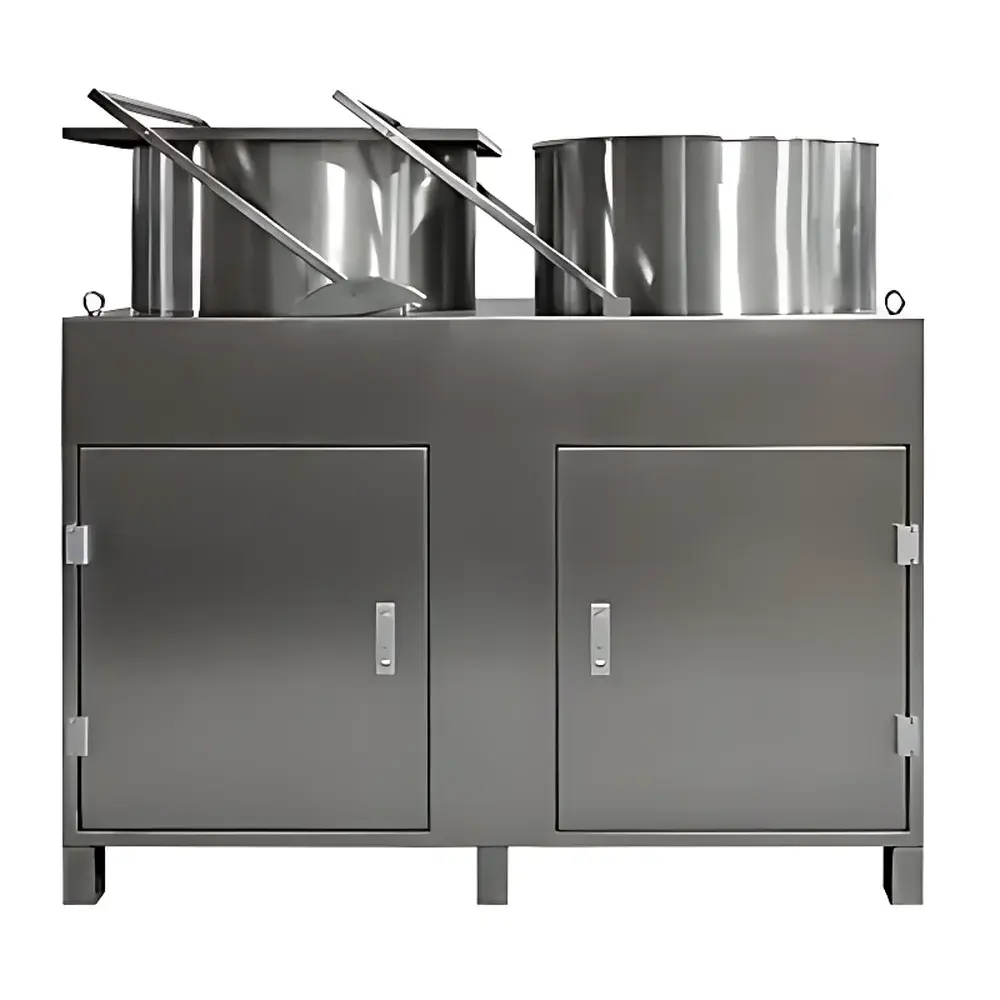
Junray ZR-3900 Fully Automated Dry and Wet Deposition Sampler
| Brand | Junray |
|---|---|
| Origin | Shandong, China |
| Manufacturer Type | Direct Manufacturer |
| Country of Origin | China |
| Model | ZR-3900 |
| Pricing | Upon Request |
Overview
The Junray ZR-3900 Fully Automated Dry and Wet Deposition Sampler is an engineered environmental monitoring instrument designed for long-term, unattended collection and characterization of atmospheric deposition—including both wet deposition (rain, snow, fog drip) and dry deposition (aerosol-bound particulates, gaseous precursors, and resuspended dust). It operates on a dual-mode sampling principle: precipitation-triggered activation via intelligent rain-sensing logic, combined with time-synchronized dry deposition collection intervals. The system conforms to standardized atmospheric deposition monitoring protocols required for regulatory compliance, ecological baseline studies, and radiological surveillance programs. Its architecture integrates meteorological parameter acquisition—such as real-time rainfall intensity, cumulative precipitation volume, ambient temperature, and event timing—with precise sample segregation logic to ensure representative, temporally resolved deposition records.
Key Features
- Programmable rain sensor with adjustable sensitivity threshold and integrated anti-frost heating element to prevent false triggering or sensor icing in sub-zero conditions
- Four-bar linkage lid actuation mechanism ensuring high mechanical reliability (>100,000 operational cycles) and consistent sealing integrity under wind loading and thermal cycling
- Corrosion-resistant 316 stainless steel enclosure rated for continuous operation in coastal saline environments (ISO 9223 C5-M corrosion class)
- Wide-temperature LCD display functional across –40 °C to +70 °C ambient range, with backlight optimization for low-light field deployment
- Dual-stage thermal management: cabinet-level heating (maintains internal electronics above –20 °C) and optional snow-melting function (controlled ramp heating up to 15 °C) for solid-phase sample recovery
- Integrated liquid-level detection in wet deposition collectors enabling automatic bucket switching upon fill-level threshold detection; supports up to four interchangeable 10-L polyethylene sample vessels
- Comprehensive electrical safety: built-in RCD (Residual Current Device), surge protection compliant with IEC 61643-11 Class II, and galvanic isolation between sensor, actuator, and data modules
- Non-volatile memory retention supporting ≥20 years of timestamped event logs (rain onset/offset, bucket changes, temperature excursions, power interruptions) without battery backup
Sample Compatibility & Compliance
The ZR-3900 accommodates standard 10-L HDPE or fluorinated ethylene propylene (FEP)-lined collection vessels compatible with trace-metal, anion, cation, radionuclide (e.g., 137Cs, 90Sr, 3H), and organic contaminant analysis. Its sampling sequence adheres to GB 13580.1–13580.13 (Methods for Sampling and Analysis of Atmospheric Precipitation) and HJ/T 61–2001 (Technical Specification for Radiation Environmental Monitoring). Data structure and metadata tagging support traceability requirements aligned with ISO/IEC 17025:2017 Clause 7.5.2 (Control of Records) and GLP principles for environmental monitoring laboratories. Optional audit-trail firmware enables time-stamped operator actions and configuration changes per ALCOA+ data integrity guidelines.
Software & Data Management
Onboard firmware stores all sensor readings and event logs in binary-encoded CSV-compatible format with UTC-synchronized timestamps (NTP-capable via optional GSM/GPRS module). Local data retrieval is supported via USB 2.0 port using standard FAT32-formatted USB flash drives—no proprietary drivers required. Field-deployable configuration utility (Windows/Linux CLI) allows remote setup of rain thresholds, heating setpoints, bucket rotation rules, and alarm conditions. Optional Bluetooth 5.0 interface enables pairing with certified portable thermal printers (e.g., Zebra ZQ520) for on-site hardcopy generation of sampling certificates. All exported datasets include embedded calibration identifiers, instrument serial number, and GPS-derived location metadata (when external GNSS module installed).
Applications
- Radiological environmental monitoring networks—tracking fallout dispersion, identifying source terms during incident response, and establishing background baselines near nuclear facilities or legacy sites
- National atmospheric deposition monitoring programs evaluating nitrogen/sulfur loadings, heavy metal fluxes (Pb, Cd, As), and persistent organic pollutants (POPs) across ecological gradients
- Long-term climate–chemistry interaction studies requiring decadal-scale wet/dry deposition ratios and seasonal partitioning analysis
- Coastal and island-based stations where salt aerosol interference demands corrosion-resistant hardware and thermally stabilized sensor operation
- Regulatory compliance reporting for environmental permits under national emission control frameworks and transboundary pollution agreements
FAQ
Does the ZR-3900 meet international standards for deposition monitoring?
Yes—it implements measurement logic and data formatting aligned with GB 13580 series, HJ/T 61–2001, and technical conventions referenced in EMEP/CEIP and GAW-WMO deposition protocols.
Can the system operate autonomously during extended power outages?
It retains full event logging and clock functionality for >72 hours on internal supercapacitors; external battery backup (12 V DC, ≥7 Ah) extends operation to >30 days.
Is the snow-melting function suitable for isotopic analysis (e.g., δ2H, δ18O)?
Yes—the controlled melting profile avoids fractionation; meltwater is collected separately from rainwater to preserve isotopic integrity.
How is sample contamination prevented during lid opening/closing?
The four-bar linkage ensures vertical lift-off without lateral sweep; combined with hydrophobic PTFE gasketing and timed purge airflow, particle ingress is minimized per ISO 14644-1 Class 8 cleanroom-equivalent criteria.
What maintenance intervals are recommended for field deployment?
Biannual inspection of rain sensor optics, lid seal integrity, and heater resistance; annual recalibration of temperature and rainfall transducers against NIST-traceable references.
Related Products







