
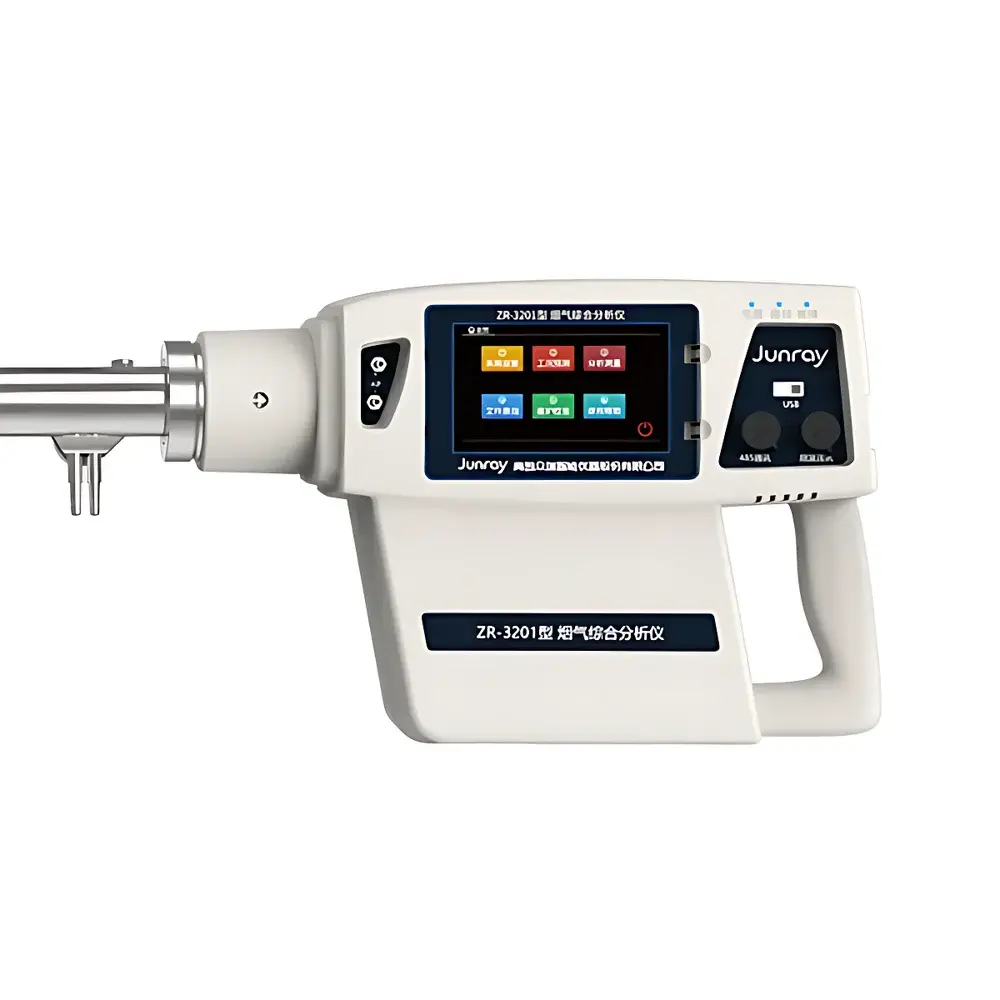
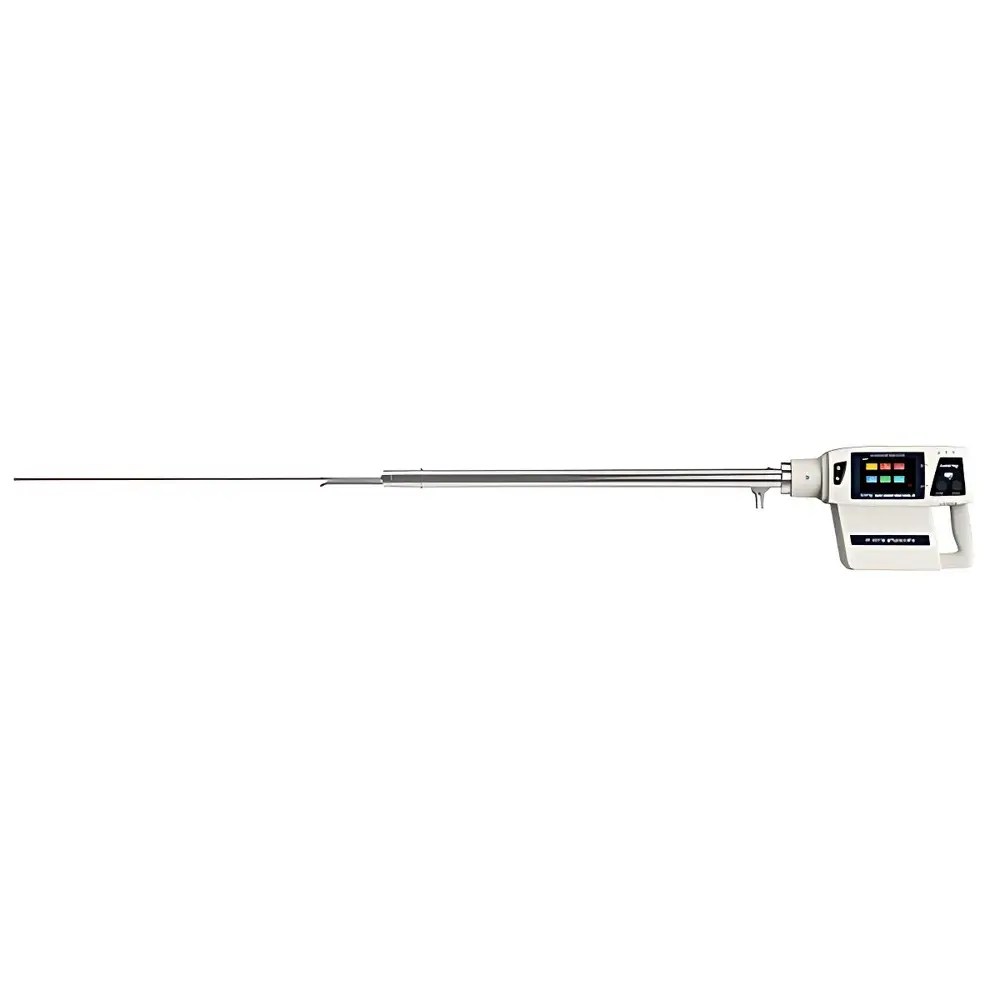
Junray ZR-3201 Portable Flue Gas Analyzer
| Brand | Junray |
|---|---|
| Origin | Shandong, China |
| Manufacturer Type | Direct Manufacturer |
| Instrument Type | Portable Flue Gas Analyzer |
| Measurement Principle | Electrochemical Sensor (O₂, SO₂, NO, NO₂) |
| Accuracy | ±3% FS |
| Repeatability | ≤1.50% |
| Response Time | ≤90 s |
| Drift | <5% over 1 h |
| Measured Gases | O₂, SO₂, NO, NO₂, CO (optional), H₂S (optional), CO₂ (optional) |
| Compliance Standards | GB 13233–2011, HJ 57–2017, HJ 693–2014, HJ 973–2018, HJ/T 46–1999, HJ/T 397–2007, HJ 870–2017, JJG 968–2002, JJF 1362–2012, Q/0214 ZRB009–2017 |
Overview
The Junray ZR-3201 Portable Flue Gas Analyzer is an integrated, field-deployable instrument engineered for real-time, multi-component flue gas analysis in stationary emission sources. It employs electrochemical sensing technology for the quantitative determination of oxygen (O₂), sulfur dioxide (SO₂), nitric oxide (NO), and nitrogen dioxide (NO₂), with optional electrochemical sensors for carbon monoxide (CO) and hydrogen sulfide (H₂S), and a non-dispersive infrared (NDIR) module for carbon dioxide (CO₂). Designed to meet rigorous regulatory measurement requirements, the analyzer supports simultaneous acquisition of gas concentrations, flue gas temperature (via integrated thermocouple), and velocity (via built-in Pitot tube), enabling on-site calculation of standardized emission concentrations, excess air ratio (λ), and mass emission rates per unit time. Its architecture complies with the metrological and performance criteria defined in Chinese national standards including HJ 57–2017 (SO₂), HJ 693–2014 (NOₓ), HJ 973–2018 (CO), and HJ 870–2017 (CO₂), as well as JJG 968–2002 verification regulations for flue gas analyzers.
Key Features
- Integrated electrochemical sensor array with factory-calibrated, cross-interference-compensated detection cells for O₂, SO₂, NO, and NO₂ — ensuring stable baseline response and minimal drift over extended field operation.
- Modular sensor configuration: users may select optional CO, H₂S, and CO₂ detection modules without hardware modification, supporting flexible deployment across diverse combustion processes (e.g., coal-fired boilers, waste incinerators, cement kilns).
- Onboard environmental parameter acquisition: integrated K-type thermocouple (range: 0–600 °C) and Pitot tube with differential pressure transducer enable concurrent flue gas temperature and velocity measurement — essential for volumetric flow normalization and emission rate computation.
- Active condensate management system: built-in Peltier-cooled condenser and peristaltic pump continuously remove moisture from the sample stream, protecting electrochemical cells from electrolyte dilution and electrode poisoning — critical for long-term sensor integrity in high-humidity flue streams.
- Dual-power architecture: automatic switchover between AC mains and internal rechargeable Li-ion battery (≥3 hours continuous operation at full sensor load) ensures uninterrupted sampling during power interruptions or remote site access.
- Field-optimized human interface: high-contrast backlit LCD displays real-time concentration values, normalized (11% O₂ or 3% O₂ basis) and unnormalized readings, λ factor, and calculated emission rates — all configurable per local regulatory reporting formats.
Sample Compatibility & Compliance
The ZR-3201 is validated for use with flue gases from fossil-fueled and biomass combustion systems operating under typical industrial stack conditions (temperature ≤600 °C, dew point ≤60 °C, particulate loading <100 mg/m³). Its sensor design accommodates variable O₂ content (0–25% vol) and mitigates interference from common combustion byproducts (e.g., NH₃, Cl₂, HCl) via selective membrane filtration and algorithmic compensation. The instrument meets the accuracy, repeatability, and response time requirements stipulated in HJ/T 397–2007 (Technical Specification for Emission Monitoring of Fixed Pollution Sources) and JJF 1362–2012 (Type Evaluation Outline for Flue Gas Analyzers). All calibration protocols align with traceable NIST-equivalent reference gases, and data logging supports audit-ready records compliant with GLP-aligned quality assurance practices.
Software & Data Management
Data acquisition and post-processing are supported through embedded firmware with timestamped storage of raw sensor outputs, environmental parameters, and user annotations. Measurement results are exportable via USB flash drive in CSV format for integration into laboratory information management systems (LIMS) or regulatory reporting platforms. Bluetooth 4.2 connectivity enables wireless printing to compatible thermal printers (e.g., Zebra ZQ520), eliminating manual transcription errors. Firmware updates are performed via USB, and all stored datasets retain immutable metadata (date/time, operator ID, calibration status, ambient conditions). While not FDA 21 CFR Part 11-certified, the system implements password-protected configuration access and sequential record numbering to support basic data integrity requirements in environmental QA/QC workflows.
Applications
- Regulatory compliance monitoring for coal-, oil-, and gas-fired power plants per GB 13233–2011 and provincial emission permit requirements.
- Stack testing and periodic verification of continuous emission monitoring systems (CEMS) in accordance with HJ/T 397–2007.
- Combustion optimization studies in industrial boilers, ceramic kilns, and glass furnaces — leveraging real-time λ and NOₓ/SO₂ ratios to adjust air-fuel stoichiometry.
- Environmental due diligence assessments during facility acquisition or ISO 14001 internal audits.
- Mobile source emissions screening at temporary stacks, emergency generators, or construction-site diesel engines.
FAQ
What gases are measured by default, and which require optional modules?
The base configuration measures O₂, SO₂, NO, and NO₂ using electrochemical sensors. CO and H₂S detection require separately ordered electrochemical modules; CO₂ requires the NDIR module.
Is the instrument suitable for high-moisture flue gases?
Yes — the integrated Peltier condenser and auto-drain peristaltic pump maintain dew point below 5 °C at the sensor inlet, preventing condensation-related signal instability or sensor damage.
How is calibration performed in the field?
Zero calibration uses ambient air (for O₂) or nitrogen (for toxic gases); span calibration employs certified standard gases traceable to national metrology institutes. Both procedures are guided step-by-step via the onboard menu.
Does the ZR-3201 support standardized emission concentration calculations?
Yes — it computes both O₂-normalized (e.g., 11% O₂ for coal, 3% O₂ for gas) and dry/wet basis concentrations, and outputs mass emission rates (mg/m³, g/h) using user-input stack diameter and measured velocity.
Can measurement data be integrated into enterprise environmental reporting systems?
CSV exports include all required metadata (timestamps, sensor IDs, calibration flags, environmental parameters), enabling direct ingestion into Excel-based reporting templates or custom Python/SQL EHS dashboards.
Related Products







