
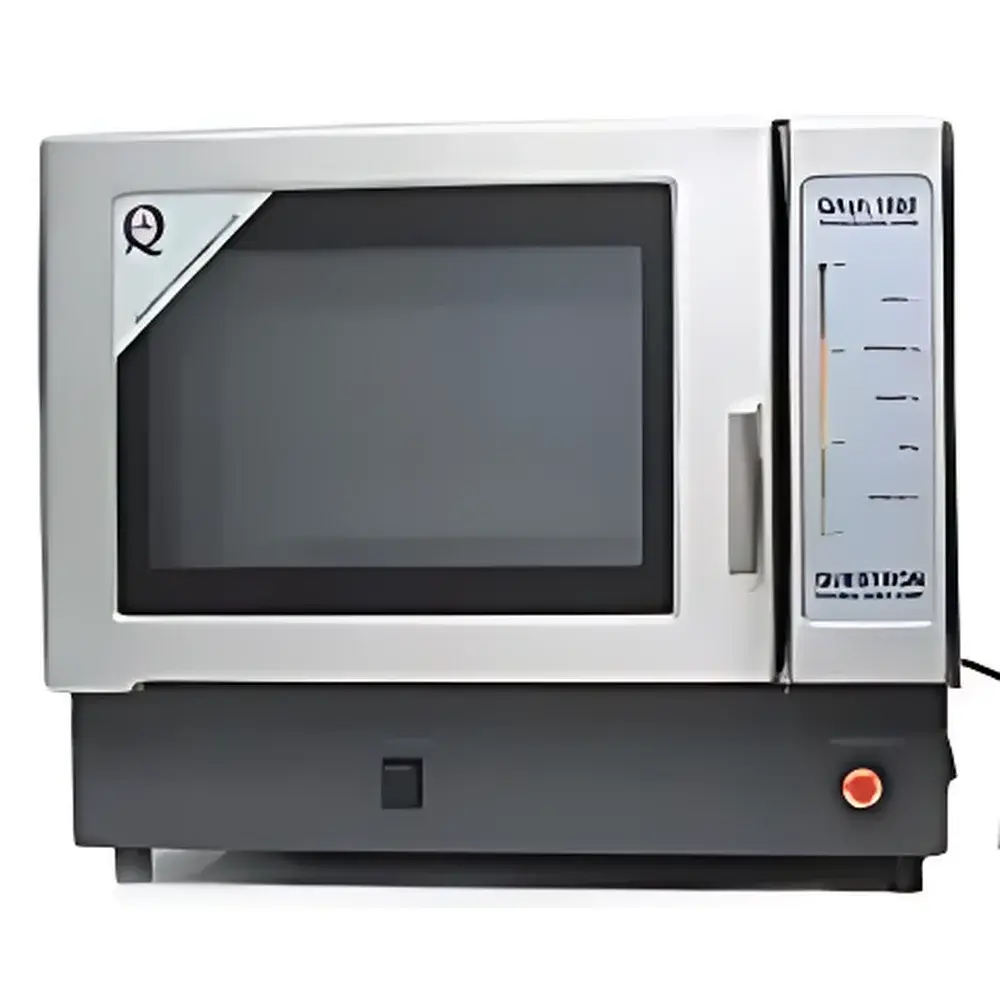
QAsh1800 Microwave Muffle Furnace
| Origin | Canada |
|---|---|
| Manufacturer Type | Authorized Distributor |
| Origin Category | Imported |
| Model | QAsh1800 |
| Instrument Type | Crucible Furnace |
| Max Temperature | 1200 °C |
| Temperature Control Accuracy | ±5 °C |
| Max Power Output | 1800 W |
| Heating Rate to Max Temp | ≤120 min |
| Heating Method | Microwave (2450 MHz) |
| Internal Chamber Dimensions | 36 × 41 × 27 cm |
| Power Supply | 220 V, 50 Hz, 20 A |
| Exhaust Flow Rate | 150 CFM |
| Ambient Operating Range | 5–40 °C, 10–80% RH |
| Net Weight | 35 kg |
| Temperature Sensor | R-type Thermocouple |
| Data Acquisition Interval | 5 s |
| Scan Cycle | 0.16 s |
| Software Platform | QAsh™ for Windows® 2000 / XP |
Overview
The QAsh1800 Microwave Muffle Furnace is an advanced, CE-compliant laboratory instrument engineered for rapid, controlled, and reproducible sample ashing using microwave-assisted thermal processing. Unlike conventional resistive-heating muffle furnaces, the QAsh1800 employs a precisely tuned 2450 MHz microwave cavity coupled with an inert, high-purity ceramic chamber to deliver uniform volumetric heating. This principle—microwave energy absorption by polar molecules and ionic species in the sample—enables direct internal heating rather than surface conduction, significantly reducing thermal lag and improving energy transfer efficiency. Designed for routine and regulated analytical workflows, the system supports full traceability of thermal profiles across multiple samples, making it suitable for laboratories operating under GLP, ISO/IEC 17025, or USP and metal impurity testing requirements.
Key Features
- 1800 W magnetron-driven microwave source with real-time power modulation to maintain setpoint stability during dynamic load conditions
- R-type thermocouple sensor with 0.16-second response time and 5-second data logging interval for high-fidelity temperature monitoring
- Robust double-walled stainless-steel housing with integrated forced-air exhaust (150 CFM) and catalytic VOC scrubbing capability
- Sealed ceramic reaction chamber (22 × 14 × 10 cm internal) rated for continuous operation up to 1200 °C, compatible with quartz, alumina, and silicon carbide crucibles
- Programmable ramp-soak profiles with up to 10 independent segments per method, supporting ASTM D5630 (plastics ash content), AOAC 942.05 (food ash), and EPA Method 3050B (acid digestion prep)
- Hardware-level interlocks including door safety switch, overtemperature cutoff, and microwave leakage monitoring compliant with IEC 61000-3-2 and EN 61000-6-3
Sample Compatibility & Compliance
The QAsh1800 accommodates standard crucible formats (up to 100 mL capacity) and accepts heterogeneous matrices including petroleum distillates, pharmaceutical tablets, animal feed, polymer pellets, municipal sludge, and cellulose-based materials. Its closed-cavity design minimizes volatile loss and prevents cross-contamination between runs—critical for multi-element ICP-OES/MS analysis. The system meets regulatory expectations for method validation under FDA 21 CFR Part 11 when paired with QAsh™ software’s audit-trail-enabled user authentication and electronic signature functionality. All thermal protocols are exportable as CSV or XML for integration into LIMS environments.
Software & Data Management
The QAsh™ control software provides a deterministic, deterministic Windows-based interface (Windows 2000/XP certified) for method development, real-time graphing of temperature vs. time curves, and automated report generation. Each run logs timestamped metadata—including power output history, thermocouple readings, door status, and error flags—with SHA-256 checksum integrity verification. Data archives support version-controlled backups and can be configured for network storage with role-based access permissions. Software validation documentation (IQ/OQ/PQ templates) is provided to support GMP-aligned deployment in QC labs.
Applications
- Petroleum & Fuels: Ash residue quantification per ASTM D482 for lubricating oils and ASTM D189 for refinery feedstocks; elemental retention assessment for Ni/V/Na monitoring
- Pharmaceuticals: Residual catalyst screening in API synthesis (e.g., Pd, Pt, Ru); excipient purity verification per USP /
- Foods & Feeds: Total ash determination in dairy powders (AOAC 942.05), pet food (AOAC 942.06), and cereal grains (ISO 2171)
- Polymers & Plastics: TiO₂ pigment quantification in PVC compounds; filler ash yield analysis per ISO 3451-1
- Environmental: Sludge and sediment ashing prior to heavy metal extraction (EPA 3050B, ISO 11885)
FAQ
Does the QAsh1800 require special ventilation or fume hood installation?
No—the integrated 150 CFM exhaust system with activated carbon filter enables benchtop operation in standard laboratory environments meeting ANSI Z9.5 airflow guidelines.
Can the system be validated for GMP compliance?
Yes—full IQ/OQ/PQ documentation packages, 21 CFR Part 11 configuration files, and calibration certificates traceable to NIST standards are included.
Is microwave leakage tested and certified?
Each unit undergoes factory leakage testing per IEC 62209-1 at 5 cm distance (<1 mW/cm²), with test report supplied with shipment.
What crucible materials are recommended for 1200 °C operation?
Alumina (Al₂O₃) and silicon carbide (SiC) crucibles are validated for full-range use; quartz is limited to ≤1000 °C.
How does microwave ashing compare to conventional furnace ashing in terms of analyte recovery?
Peer-reviewed studies (e.g., J. Anal. At. Spectrom., 2019, 34, 1227) demonstrate equivalent or improved recovery of alkali metals, alkaline earths, and transition metals due to reduced volatilization time and minimized redox side reactions.



