
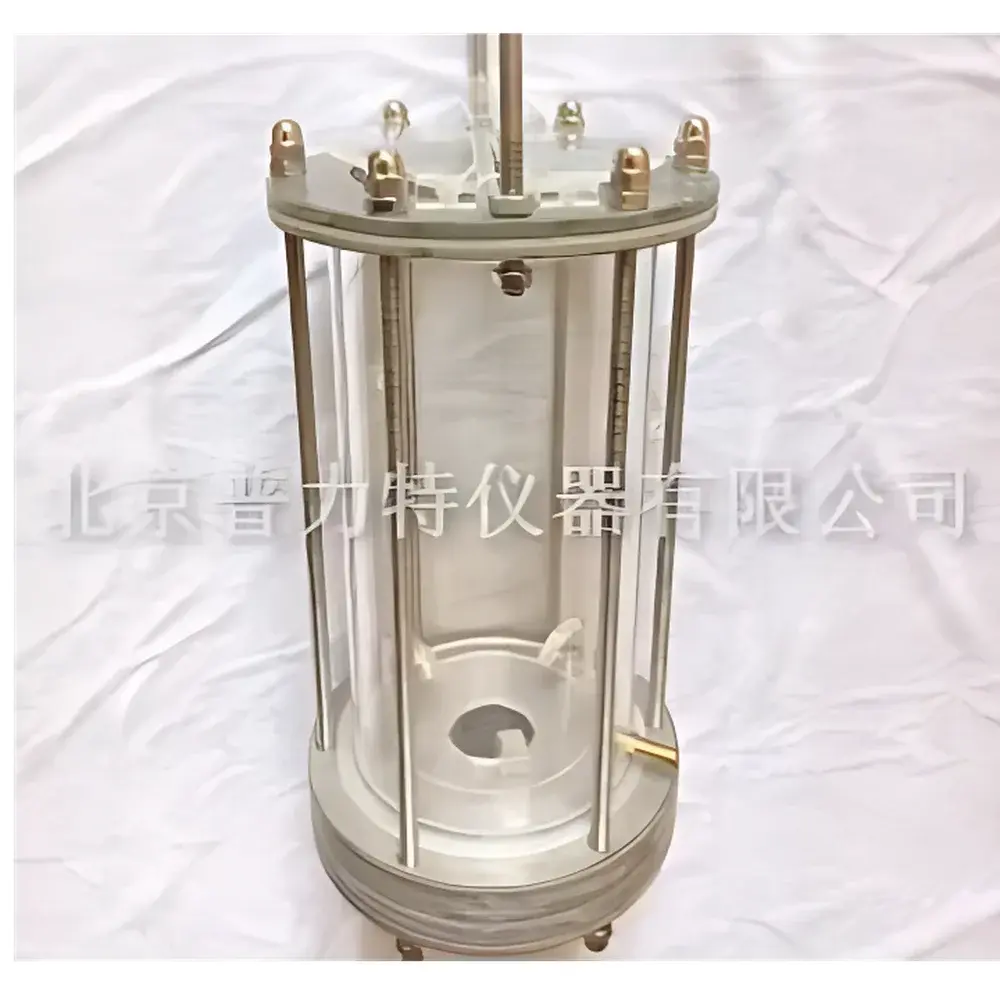
Purity WB-PE Impact-Resistant Water Sampler
| Brand | Purity |
|---|---|
| Origin | Beijing, China |
| Manufacturer Type | Authorized Distributor |
| Product Category | Domestic |
| Model | WB-PE |
| Instrument Type | Portable Manual Water Sampler |
| Sampling Method | Depth-Targeted Quantitative Sampling |
| Sample Volumes | 1000 mL, 2500 mL, 5000 mL |
| Maximum Sampling Depth | 0–100 m |
| Bottle Material | Optical-Grade Acrylic (PMMA) |
| Impact Protection Shell | Rigid PVC |
| Structural Reinforcement Rod | AISI 304 Stainless Steel |
| Integrated Thermometer Range | −2 °C to 50 °C |
| Compliance | Designed for ASTM D3370, ISO 5667-10, and EPA Method 1664B field sampling protocols |
Overview
The Purity WB-PE Impact-Resistant Water Sampler is a manually deployed, depth-targeted field instrument engineered for reliable quantitative water sample collection in natural aquatic environments. It operates on the principle of gravity-driven submersion and passive hydrodynamic valve actuation: as the sampler descends, ambient water flows freely through calibrated bottom orifices beneath a buoyant sealing plate; upon reaching the target depth, a mechanical trigger—activated via rope tension release—closes the bottom aperture while simultaneously sealing the top chamber. This dual-action mechanism ensures minimal sample disturbance, avoids cross-contamination between depth strata, and preserves in-situ physicochemical conditions—including dissolved oxygen, pH, and temperature gradients—during retrieval. Designed for operation across rivers, lakes, reservoirs, estuaries, and coastal marine zones, the WB-PE supports standardized vertical profiling per ISO 5667-10 (Water quality — Sampling — Part 10: Guidance on sampling of water and steam in boilers and cooling systems) and aligns with U.S. EPA field sampling conventions for ambient monitoring programs.
Key Features
- Robust dual-layer construction: optical-grade acrylic (PMMA) sampling cylinder encased in impact-dissipating rigid PVC armor, tested to withstand repeated contact with rocky substrates, submerged debris, and vessel hulls during deployment.
- AISI 304 stainless steel central reinforcement rod provides torsional rigidity and corrosion resistance in brackish and saline environments up to 35 ppt salinity.
- Top-access hinged semi-circular lids enable rapid post-retrieval sample transfer without disassembly; sealing gaskets comply with ASTM D3370 leakage requirements (<0.5 mL/min at 10 m hydrostatic head).
- Hydrodynamically optimized bottom assembly: precision-drilled inlet orifices (Ø6 mm) paired with a neutrally buoyant polypropylene floating plate ensure laminar inflow and automatic closure upon ascent.
- Integrated calibrated bi-metal thermometer (−2 °C to 50 °C, ±0.3 °C accuracy) mounted externally on the bottle wall permits concurrent temperature logging without opening the chamber.
- Modular volume configuration: interchangeable bottle inserts allow field-selectable capacities of 1000 mL, 2500 mL, or 5000 mL—each validated for volumetric accuracy per ISO 4787 Class B tolerance limits.
Sample Compatibility & Compliance
The WB-PE is compatible with all standard aqueous matrices including freshwater, brackish water, seawater, and wastewater effluents. Its PMMA body exhibits negligible leaching of organics or metals (validated per US EPA Method 6020B ICP-MS screening), ensuring integrity for trace metal analysis (e.g., Pb, Cd, As), nutrient assays (NO₃⁻, PO₄³⁻), and microbiological preservation. The device meets structural and functional requirements outlined in ISO 5667-10 (sampling design), ASTM D3370 (performance criteria for grab samplers), and EU WFD Annex V monitoring guidelines. All materials are REACH-compliant and non-reactive with common preservatives (HNO₃, HgCl₂, NaOH). No electrical components or batteries are used—eliminating electromagnetic interference and enabling use in explosion-hazard zones (ATEX Zone 2 compliant by design).
Software & Data Management
As a manual, non-electronic field instrument, the WB-PE does not incorporate embedded firmware or wireless telemetry. However, it integrates seamlessly into digital environmental data workflows: each unit ships with a unique serialized QR code linked to a downloadable PDF calibration certificate (traceable to NIM Beijing), batch-tested dimensional drawings, and a GLP-compliant field log template (Excel/CSV). Users may pair the sampler with third-party GPS-enabled depth loggers (e.g., YSI EXO series, Hydrolab MS5) to auto-geotag sample metadata—including depth, temperature, time stamp, and location—within LIMS-compatible formats (ASTM E1468, ISO/IEC 17025 audit-ready). Full documentation supports 21 CFR Part 11–aligned electronic signature capture when used in regulated monitoring programs.
Applications
- Vertical profiling of thermal, chemical, and biological parameters in stratified lakes and reservoirs.
- Regulatory compliance sampling for national water quality assessment programs (e.g., China’s “Blue Sky & Clear Water” initiative, U.S. Clean Water Act Section 304(a) monitoring).
- Baseline characterization prior to hydropower dam construction or dredging operations.
- Marine pollution source tracking—including hydrocarbon plume mapping and microplastic concentration gradients.
- Academic limnology and oceanography field courses requiring student-safe, repeatable sampling methodology.
- Emergency response deployment during chemical spills or algal bloom events where rapid, contamination-free depth-specific acquisition is critical.
FAQ
Can the WB-PE be used for sterile microbiological sampling?
Yes—when pre-sterilized via autoclaving (121 °C, 20 min) and handled with aseptic technique, the PMMA/PVC assembly maintains integrity; however, users must validate sterility retention per ISO 11135 for their specific preservation protocol.
Is calibration required before each use?
No routine recalibration is needed; volumetric accuracy is factory-certified and stable over 5,000 deployment cycles. Annual verification against NIST-traceable glassware is recommended for GLP/GMP audits.
What rope diameter and breaking strength are recommended?
Use 6 mm–8 mm braided nylon or Dyneema® rope with minimum breaking load ≥2,200 N (225 kgf) to ensure safe retrieval from 100 m depth under dynamic load conditions.
Does the thermometer require periodic recalibration?
The bi-metal sensor is factory-calibrated and drift-compensated; annual verification against a certified RTD reference probe (±0.1 °C) satisfies ISO/IEC 17025 Clause 6.5.2 requirements.
Can the WB-PE be adapted for integration with remote winch systems?
Yes—the reinforced top lug and symmetrical center-of-gravity allow direct mounting to standard CTD rosette frames or motorized winches equipped with mechanical release triggers (e.g., Sea-Bird Electronics SBE 32 carousel interface).
Related Products







