
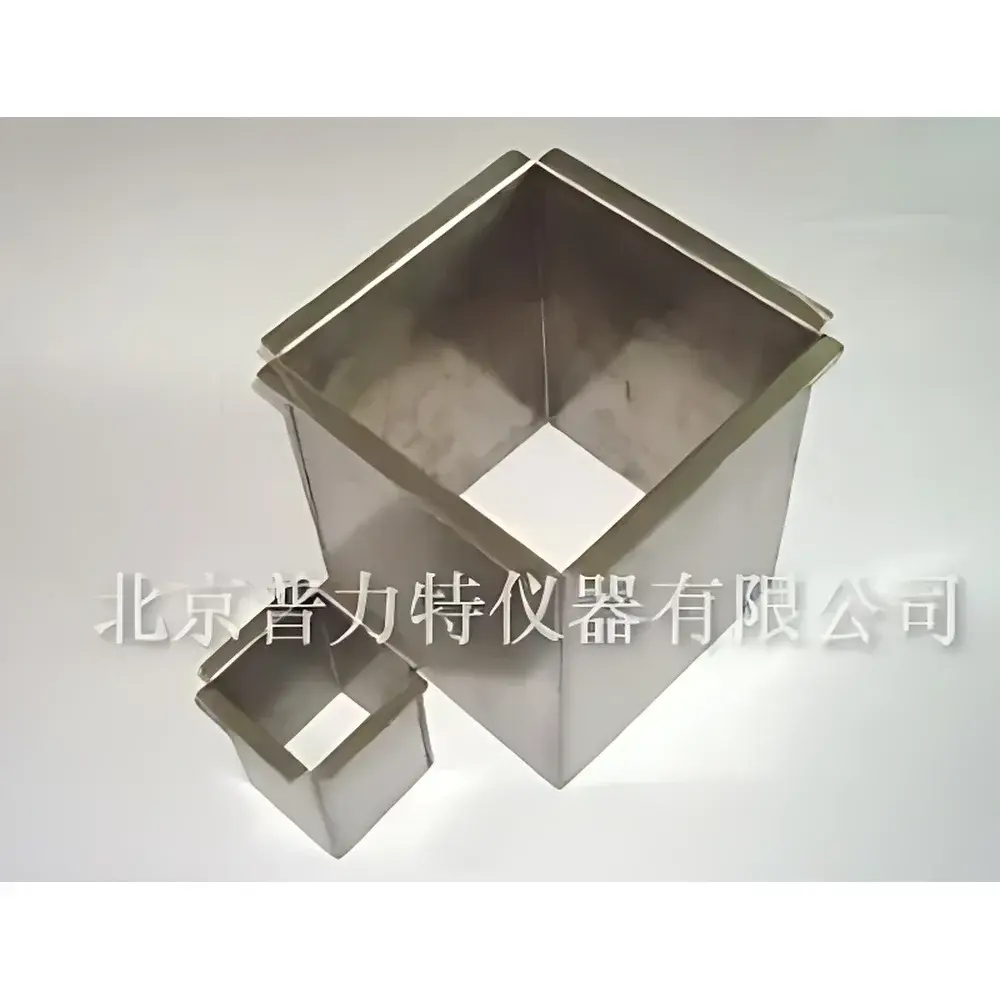
Quantitative Sampling Frame QF by Beijing Pulite Instruments Co., Ltd.
| Origin | Beijing, China |
|---|---|
| Manufacturer Type | Authorized Distributor |
| Origin Category | Domestic (China) |
| Model | QF |
| Quotation | Available Upon Request |
| Material | AISI 304 Stainless Steel |
| Thickness | 2 mm |
| Dimensions | 25 cm × 25 cm × 30 cm and 10 cm × 10 cm × 15 cm |
Overview
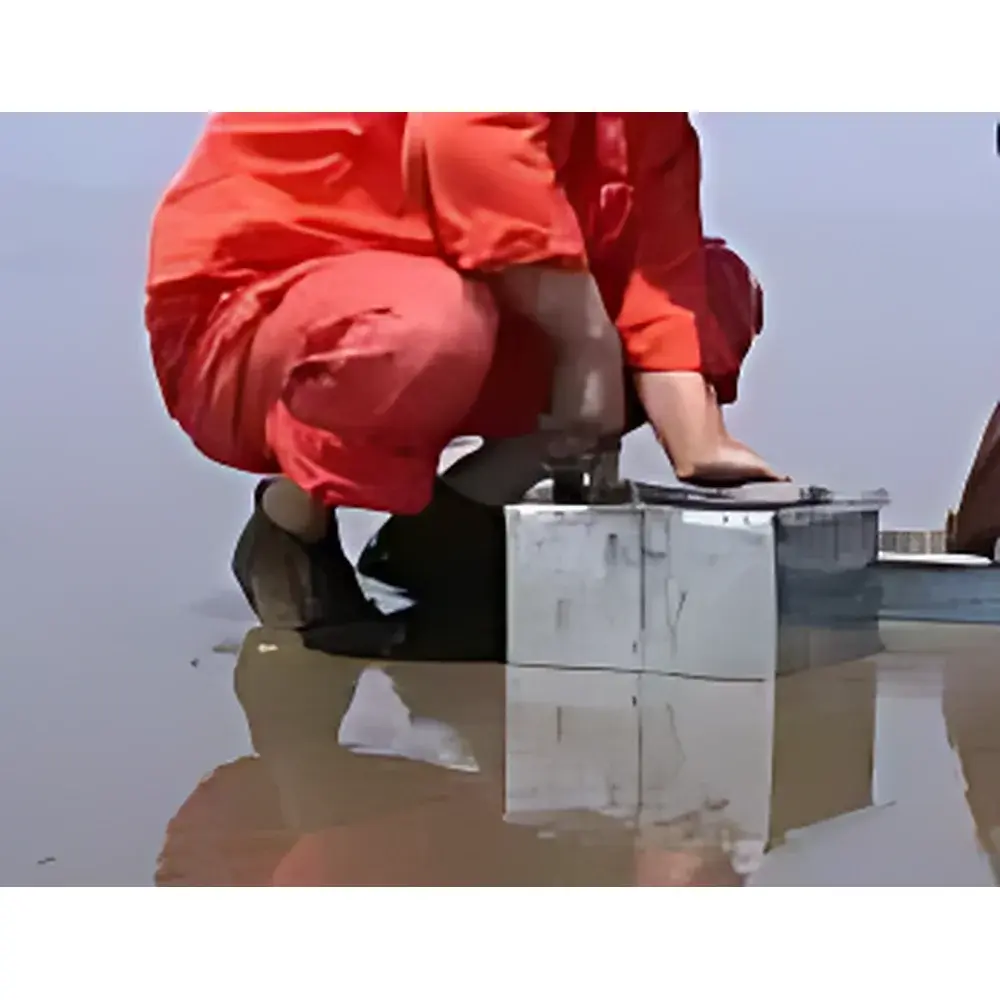
The Quantitative Sampling Frame QF is a precision-engineered field instrument designed for standardized benthic macrofauna sampling in intertidal zones, salt marshes, mudflats, and shallow wetland sediments. Based on the principle of area-restricted quantitative sampling—where a fixed-volume frame defines a reproducible sediment volume—the QF enables statistically robust estimation of species density, biomass, diversity indices (e.g., Shannon–Wiener, Simpson), and community structure. Its rigid, corrosion-resistant construction ensures dimensional stability during repeated insertion into cohesive or semi-fluid substrates, minimizing frame deformation and sample loss. Unlike grab samplers or dredges, the QF delivers undisturbed vertical stratification integrity, preserving the natural spatial distribution of epifaunal and infaunal organisms within the defined column. It is widely referenced in ecological monitoring protocols aligned with ISO 16666:2017 (Water quality — Guidance on sampling of benthic invertebrates) and supports long-term trend analysis required under national and regional water framework directives.
Key Features
- Rigid monolithic frame design fabricated from AISI 304 stainless steel—resistant to chloride-induced pitting and sulfide corrosion typical in estuarine and marine sediments.
- Two standardized size configurations: 25 cm × 25 cm × 30 cm (18.75 L sediment volume) and 10 cm × 10 cm × 15 cm (1.5 L sediment volume), enabling scalable sampling intensity across habitat heterogeneity gradients.
- Uniform 2 mm wall thickness ensures structural rigidity without excessive weight—optimized for manual deployment in soft, anoxic sediments without sinking or tilting.
- Smooth, burr-free edges and square-corner geometry facilitate clean insertion and minimize lateral displacement of sediment during emplacement.
- Non-magnetic construction prevents interference with magnetically sensitive field sensors (e.g., handheld GPS units or electronic sediment profilers) used concurrently during survey workflows.
- Modular compatibility with standard field gear: integrates seamlessly with stainless-steel sediment scoops, sieves (250 µm and 500 µm mesh), specimen trays, and portable cold storage for taxonomic processing.
Sample Compatibility & Compliance
The QF is validated for use across a broad spectrum of soft-bottom benthic habitats—including muddy sand, silty clay, peat-rich marsh soils, and bioturbated tidal flats. It accommodates both sessile epibenthic taxa (e.g., barnacles, mussels, tube-dwelling polychaetes) and mobile infauna (e.g., nematodes, oligochaetes, bivalve juveniles) up to ~5 cm burial depth. Sample recovery efficiency exceeds 92% for organisms >1 mm body length when paired with standardized washing and sieving protocols per ASTM D5104-19 (Standard Guide for Field Sampling of Benthic Invertebrates). The device complies with GLP-aligned documentation requirements: each frame carries a permanent laser-etched serial number for traceability, and batch certification includes material test reports (MTRs) confirming 304 SS composition per ASTM A240/A240M.
Software & Data Management
While the QF is a passive, non-electronic sampling tool, its output directly feeds into digital ecological data pipelines. Field-collected metadata—including GPS coordinates (WGS84), sediment grain-size classification (ISO 14688-1), redox potential (Eh), and salinity—are logged via structured templates compatible with EcoRecorder, OBIS-SEAMAP, and national biodiversity portals (e.g., GBIF). When used in conjunction with laboratory-based image analysis systems (e.g., ZooScan or AI-powered taxonomic classifiers), QF-derived specimens support machine-learning training datasets for automated species identification. All associated sampling event records adhere to Darwin Core standards and may be archived with full audit trails compliant with ISO/IEC 17025:2017 clause 7.5.2 (Control of data and information management).
Applications
- Baseline benthic surveys prior to coastal infrastructure development (e.g., port expansions, offshore wind farm cable laying).
- Long-term ecological monitoring under national water quality assessment programs (e.g., China’s “Blue Bay Restoration Initiative” and EU WFD Article 8 reporting).
- Impact assessment of aquaculture effluent discharge, dredged material disposal, and hypoxia-driven regime shifts.
- Taxonomic validation of environmental DNA (eDNA) metabarcoding results through physical specimen verification.
- Academic research on bioturbation rates, sediment–water nutrient flux modeling, and climate-driven range shifts of intertidal indicator species (e.g., Corophium volutator, Hydrobia ulvae).
FAQ
Is the QF suitable for rocky or gravelly substrates?
No—the QF is specifically engineered for cohesive and semi-cohesive soft sediments. Use in coarse-grained or highly consolidated substrates risks frame deformation, incomplete insertion, and biased sample representation.
Can the QF be autoclaved for sterile sampling in microbiological studies?
Yes—AISI 304 stainless steel is fully compatible with standard laboratory autoclaving cycles (121 °C, 15 psi, 20 min); however, repeated thermal cycling may accelerate surface passivation layer fatigue over extended service life.
Does the QF meet ISO/IEC 17025 accreditation requirements for certified labs?
While the frame itself is not a measuring instrument subject to calibration, its dimensional tolerances (±0.5 mm per linear dimension) and material certification support accredited laboratories’ method validation under ISO/IEC 17025 clause 7.2.2 (Selection of methods).
Are replacement parts or custom dimensions available?
Beijing Pulite Instruments offers OEM fabrication services for bespoke frame geometries (e.g., circular variants, depth-adjustable collars) upon submission of technical specifications and compliance documentation.
Related Products







