
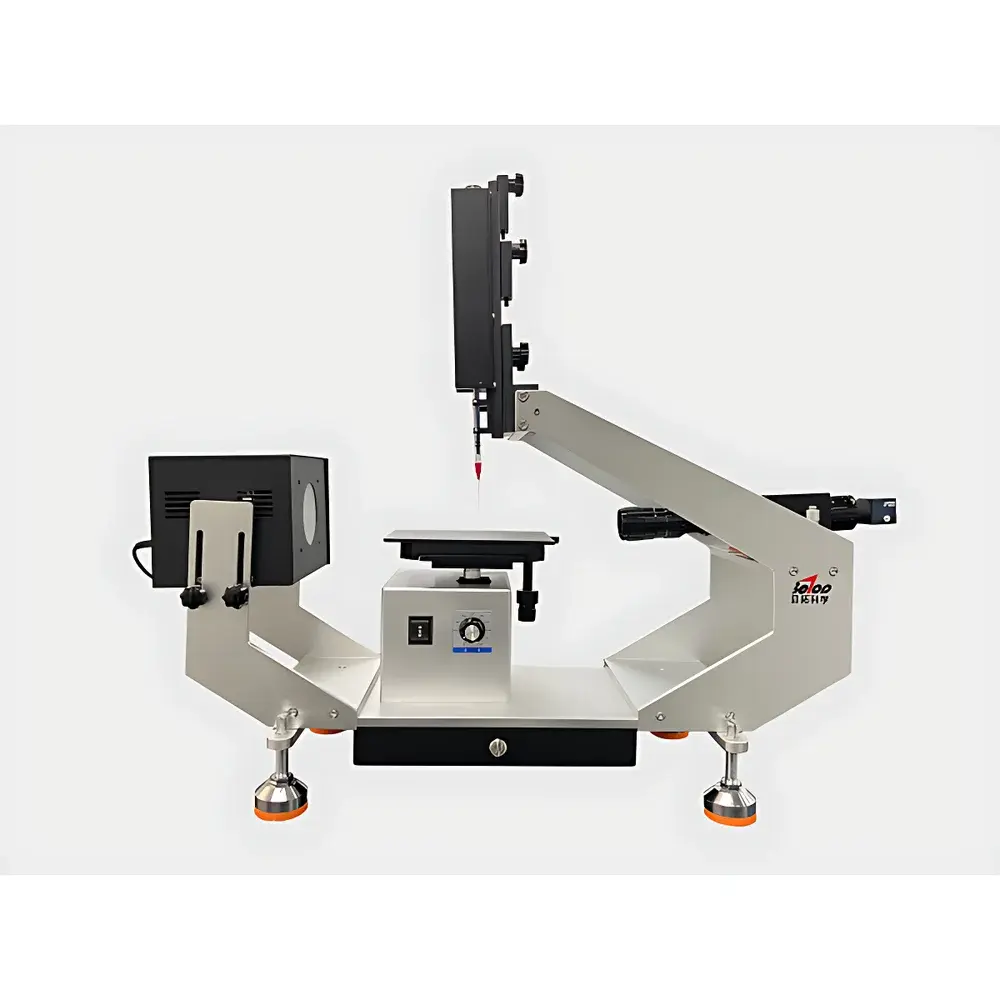
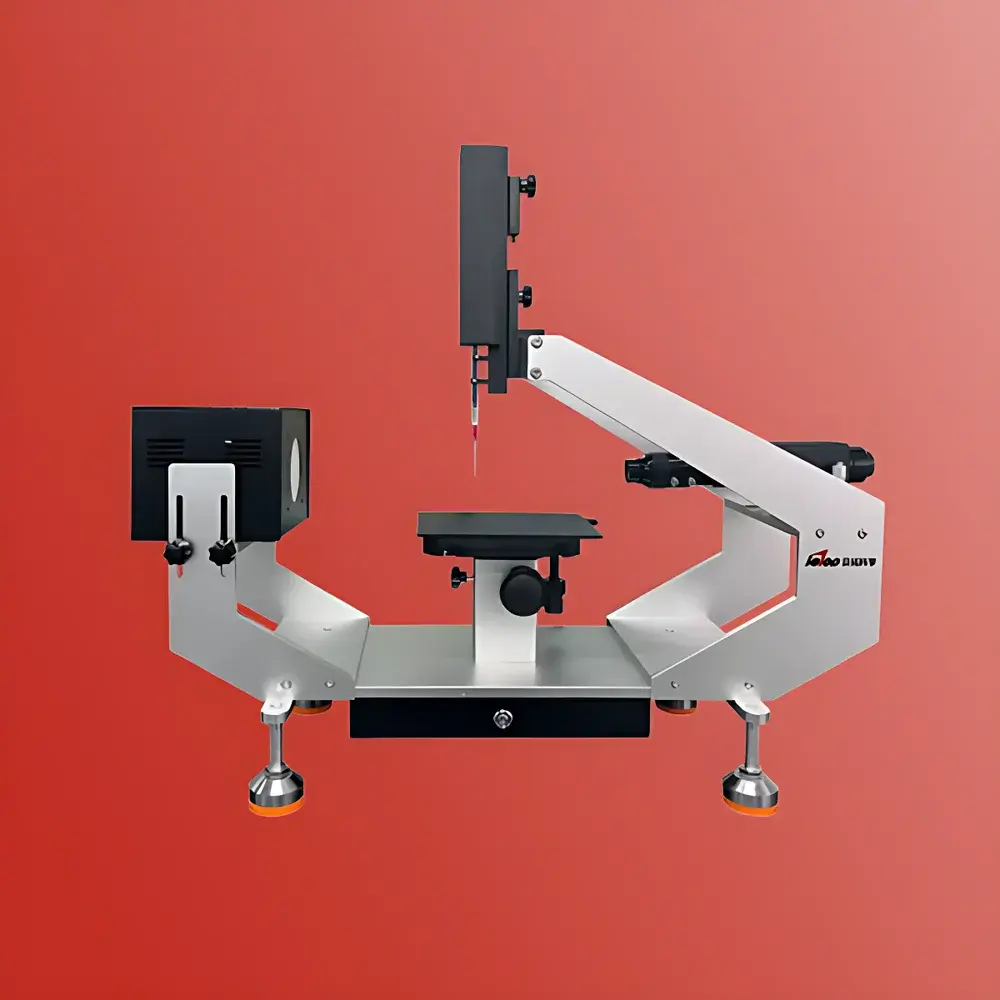
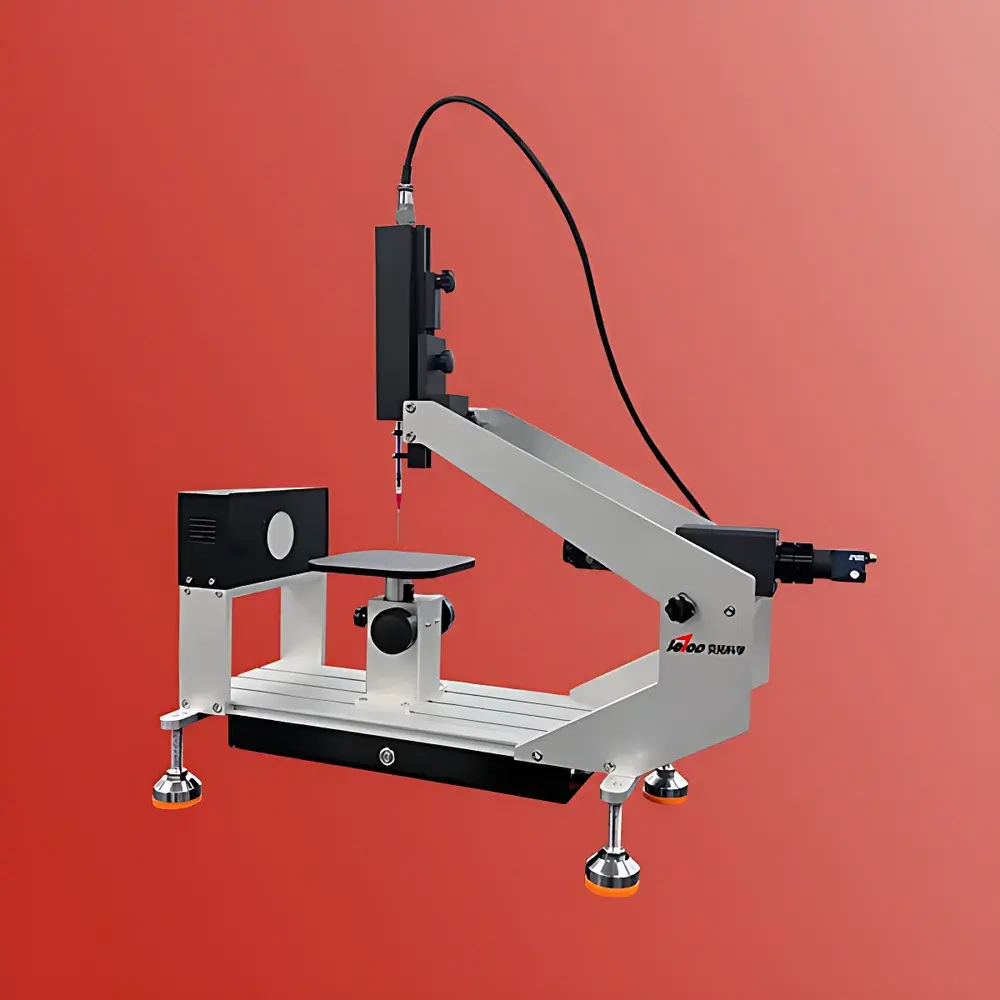
Betop Scientific DSA-X Research-Grade Video-Based Contact Angle Analyzer
| Brand | Betop Scientific |
|---|---|
| Origin | Guangdong, China |
| Manufacturer Type | Direct Manufacturer |
| Instrument Category | Domestic |
| Model | DSA-X |
| Price Range | USD 11,200 – 12,600 (FOB) |
| Instrument Type | Benchtop Video Optical Contact Angle Analyzer |
| Contact Angle Measurement Range | 0–180° |
| Contact Angle Accuracy | ±0.1° |
| Contact Angle Resolution | ±0.01° |
| Stage Dimensions (Fixed) | 150 × 150 mm |
| Maximum Sample Dimensions | 300 × ∞ × 160 mm (W × D × H) |
| Stage Load Capacity | 100 kg |
| Optical Zoom Magnification | 0.7–4.5× |
| Interfacial Tension Measurement Range | 0–2000 mN/m |
| Interfacial Tension Accuracy | ±0.01 mN/m |
| Camera Frame Rate | 210 fps (full resolution) |
| Camera Resolution | 1300 × 1024 pixels |
| Syringe Dispensing Precision | 0.01 µL |
| Stage Translation Range (X/Y/Z) | 100 × 100 × 50 mm (optional extended Z) |
| Tilt Adjustment Range | ±4° |
| Contact Angle Methods | Static, Dynamic (advancing/receding), Roll-off Angle |
| Fitting Algorithms | 6 standard methods (e.g., Circle, Ellipse, Young–Laplace, SCA, Baseline-Independent, Tangent) |
| Surface Energy Models | OWRK, Fowkes, Wu, van Oss-Chaudhury-Good |
| Optional Accessories | Vacuum Stage (for thin films), Motorized Tilt Stage, Top-View Imaging Module, Custom Needle Sets |
Overview
The Betop Scientific DSA-X is a research-grade, benchtop video-based contact angle analyzer engineered for high-precision interfacial characterization in academic laboratories, R&D centers, and industrial quality control environments. It operates on the principle of optical silhouette imaging combined with advanced digital image analysis to quantify the contact angle formed at the three-phase boundary (solid–liquid–vapor or solid–liquid–liquid). By capturing high-speed, high-resolution images of sessile or pendant liquid drops on solid substrates—or liquid–liquid interfaces—the DSA-X enables quantitative determination of wettability, surface heterogeneity, and interfacial thermodynamics. Its modular architecture supports both static and dynamic measurements—including advancing, receding, and roll-off angles—making it suitable for evaluating time-dependent phenomena such as absorption, spreading kinetics, and hysteresis. The system is calibrated traceably to NIST-traceable reference standards and designed to maintain measurement stability across ambient temperature fluctuations (15–30°C) and relative humidity up to 60% RH (non-condensing), ensuring reproducibility in diverse laboratory conditions.
Key Features
- High-speed CMOS camera (210 fps at 1300 × 1024 px) with real-time auto-exposure and hardware-triggered acquisition for capturing transient wetting events.
- Motorized XYZ stage (100 × 100 × 50 mm travel, optional extension) with programmable positioning repeatability ≤ ±1 µm, enabling precise sample alignment and multi-point mapping.
- Optical system featuring continuously variable zoom (0.7–4.5×) and motorized focus adjustment, optimized for both macro-scale (>5 mm droplets) and micro-scale (<0.5 mm) interfacial analysis.
- Integrated precision dispensing unit with 0.01 µL volumetric resolution, compatible with syringes ranging from 10 µL to 1 mL; supports automated drop deposition, sequential dosing, and dynamic volume ramping.
- Intelligent baseline detection algorithm that autonomously identifies substrate contours—even on textured, transparent, or low-contrast surfaces—minimizing operator bias.
- Real-time anti-noise image processing engine with adaptive thresholding, edge enhancement, and motion-compensated frame averaging to suppress vibration-induced artifacts.
- Full compliance with ISO 19403-2:2017 (Contact angle measurement — Part 2: Static contact angle) and ASTM D7334-22 (Standard Practice for Surface Wettability Assessment).
Sample Compatibility & Compliance
The DSA-X accommodates a broad spectrum of sample geometries and material classes: rigid flat substrates (glass, silicon wafers, metals, ceramics), flexible films (PET, PI, polymer coatings), porous media (filter papers, membranes, textiles), and irregularly shaped components (e.g., microfluidic chips, semiconductor packages). Its open-stage design (max. 300 mm width × unlimited depth × 160 mm height) allows integration of auxiliary modules—including vacuum chucks for ultra-thin films (<5 µm), motorized tilt stages for roll-off angle quantification (0–90° range), and top-view optics for concave or recessed surfaces. All firmware and software modules adhere to GLP/GMP documentation requirements, supporting full audit trails, electronic signatures (per FDA 21 CFR Part 11), and IQ/OQ documentation templates. Calibration certificates are provided with each instrument, referencing ISO/IEC 17025-accredited metrology labs.
Software & Data Management
The proprietary DSA Analysis Suite v4.2 runs on Windows 10/11 (64-bit) and provides a unified interface for acquisition, processing, modeling, and reporting. It includes six validated contact angle fitting algorithms (Circle, Ellipse, Young–Laplace, SCA, Baseline-Independent, Tangent), each selectable per frame or batch-processed across entire video sequences. Surface energy calculations implement OWRK, Fowkes, Wu, and van Oss-Chaudhury-Good models with built-in dispersion/polar component databases. Data export supports CSV, TXT, XML, and PDF formats; report generation includes customizable templates compliant with internal SOPs or external regulatory submissions. Raw image sequences (AVI/MP4) and processed metadata are stored with embedded timestamps, instrument ID, operator login, and environmental logs (ambient T/RH if connected to optional sensors). Version-controlled software updates are delivered via secure HTTPS portal with SHA-256 integrity verification.
Applications
- Quantitative evaluation of plasma, corona, flame, or chemical surface treatments on polymers, metals, and composites.
- Development and QC of hydrophobic/hydrophilic coatings (e.g., anti-fog, self-cleaning, anti-reflective films).
- Characterization of inkjet printability, adhesive bonding strength, and coating uniformity in packaging and electronics manufacturing.
- Surface cleanliness assessment of medical devices prior to sterilization or bonding (per ISO 10993-1).
- Interfacial thermodynamic analysis of surfactant formulations, emulsions, and Pickering systems using pendant drop tensiometry.
- Dynamic wettability studies during immersion, drying, or thermal cycling for battery separator films and fuel cell membranes.
FAQ
What standards does the DSA-X comply with for contact angle measurement?
The system conforms to ISO 19403-2:2017 (static contact angle), ISO 19403-3:2017 (dynamic contact angle), and ASTM D7334-22. Full traceability documentation and calibration protocols are included.
Can the DSA-X measure contact angles on curved or non-planar surfaces?
Yes—using the optional top-view imaging module and motorized tilt stage, the system supports convex, concave, and cylindrical substrates with curvature radii ≥5 mm.
Is the software validated for regulated environments (e.g., pharmaceutical or medical device QA)?
Yes. The DSA Analysis Suite supports 21 CFR Part 11 compliance with role-based access control, electronic signatures, and immutable audit trails—all configurable per user-defined validation protocols.
What is the minimum droplet volume resolvable for surface tension calculation via pendant drop?
With optimal lighting and contrast, the system reliably analyzes pendant drops as small as 0.2 µL (≈2 mm diameter), corresponding to surface tensions down to 0.1 mN/m with <±0.05 mN/m repeatability.
Does Betop provide application support and method development assistance?
Yes. Every DSA-X shipment includes on-site or remote installation qualification (IQ), operational qualification (OQ), and application-specific method development workshops led by certified surface science engineers.



