
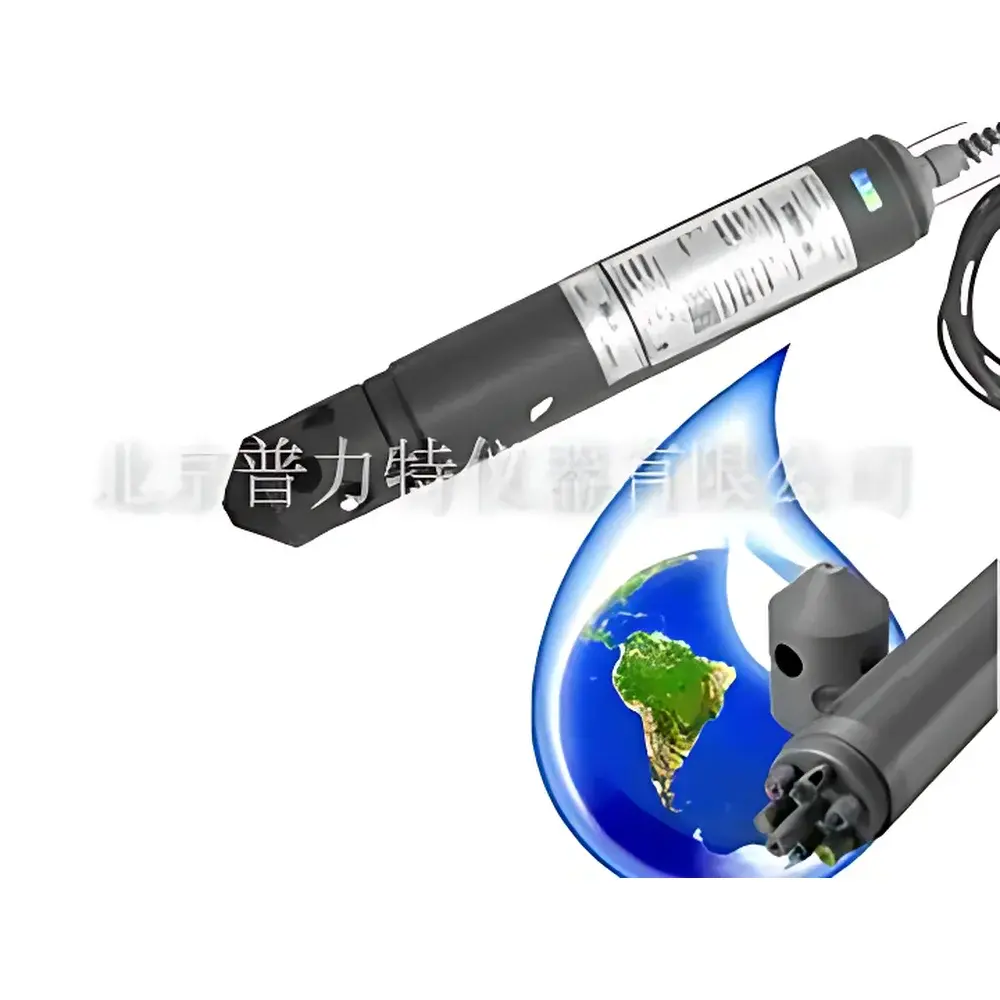
WMP6-DL Multi-Parameter Water Quality Analyzer (Italian-Made)
| Origin | Italy |
|---|---|
| Manufacturer Type | Authorized Distributor |
| Origin Category | Imported |
| Model | WMP6-DL |
| Price Range | USD 7,000–14,000 |
| Instrument Type | Portable/Handheld Water Quality Analyzer |
| Measured Parameters | pH, Water Depth (Level), Temperature, Conductivity, Oxidation-Reduction Potential (ORP), Dissolved Oxygen (DO), Turbidity |
Overview
The WMP6-DL Multi-Parameter Water Quality Analyzer is an autonomous, submersible field instrument engineered for long-term, unattended monitoring of physicochemical water properties in diverse aquatic environments. Designed and manufactured in Italy, it operates on the principle of multi-sensor electrochemical and optical transduction—integrating calibrated glass pH electrodes, platinum ORP sensors, galvanic or optical DO cells, thermistor-based temperature compensation, inductive or electrode-based conductivity measurement, pressure-derived depth sensing, and nephelometric turbidity detection. Its robust PVC housing, CE-marked construction, and 300-meter depth rating enable deployment in marine, lacustrine, fluvial, groundwater, aquaculture, drinking water distribution, and industrial process streams. Unlike benchtop analyzers requiring continuous power and operator presence, the WMP6-DL functions independently underwater for extended periods using its internal rechargeable battery (10.8–16 V DC), logging time-stamped data at user-defined intervals—making it functionally equivalent to a compact, multi-parameter CTD (Conductivity-Temperature-Depth) profiler for oceanographic and limnological applications.
Key Features
- Integrated six-parameter baseline configuration: pH, water depth (level), temperature, electrical conductivity, oxidation-reduction potential (ORP), and dissolved oxygen (DO)
- Expandable sensor architecture supporting one additional parameter: either turbidity (0–4000 NTU, 0.5 NTU resolution) or a single ion-selective electrode (ISE) from a validated portfolio including NH₄⁺, NO₃⁻, Cl⁻, F⁻, K⁺, Na⁺, Ca²⁺, Cu²⁺, Pb²⁺, and others
- Submersible operation up to 300 m depth (30 bar optional); rated for continuous immersion in seawater, freshwater, and brackish environments
- RS485 or USB communication interface for post-deployment data download and real-time telemetry (when connected via compatible datalogger or telemetry hub)
- Onboard non-volatile memory with timestamped data logging; no external PC required during measurement cycles
- Field-calibratable via intuitive Windows-based software—no specialized tools or calibration gases needed for pH, DO, ORP, or conductivity
- Low-maintenance design: sensor surfaces require only periodic cleaning with deionized water; no membrane replacement or electrolyte refilling under standard operating conditions
- Operating temperature range: −5 °C to +60 °C; pressure tolerance up to 3 bar standard (30 bar option available for deep-well or high-head applications)
Sample Compatibility & Compliance
The WMP6-DL is validated for use in clear to moderately turbid natural and engineered waters—including open-ocean surface layers, coastal zones, reservoirs, rivers, groundwater wells, recirculating aquaculture systems (RAS), and municipal water storage tanks. It complies with EU Directive 2014/30/EU (EMC Directive) and 2014/53/EU (Radio Equipment Directive), bearing the CE marking for conformity with health, safety, and environmental protection standards. While not certified to ISO/IEC 17025 for accredited laboratory testing, its sensor performance aligns with ASTM D1293 (pH), ASTM D3693 (conductivity), ASTM D888 (DO), and ISO 5815-1 (electrochemical DO), supporting data integrity in environmental monitoring programs compliant with EPA Method 150.1, USGS NWIS protocols, and EU WFD (Water Framework Directive) reporting requirements. The device supports audit-ready calibration logs and metadata tagging per GLP-aligned field data collection practices.
Software & Data Management
Data acquisition, configuration, and post-processing are managed through the vendor-supplied Windows desktop application, which provides full control over sampling frequency (1 min to 24 h intervals), sensor activation/deactivation, alarm thresholds, and unit conversion (e.g., µS/cm ↔ mS/m, mg/L ↔ % saturation). All measurements are stored with UTC timestamps, sensor IDs, and environmental metadata (depth, temperature, pressure). Export formats include CSV, Excel (.xlsx), and XML—compatible with LIMS integration and GIS mapping platforms such as QGIS or ArcGIS via geotagged depth-temperature-conductivity profiles. The software enforces password-protected user roles and maintains immutable calibration history with operator ID and date/time stamps—facilitating traceability in regulated monitoring contexts where FDA 21 CFR Part 11 compliance is pursued via procedural controls.
Applications
- Oceanographic profiling: Real-time CTD-style vertical casts in shelf-break zones and estuarine gradients
- Drinking water quality assurance: Continuous verification of residual disinfectant (via ORP), turbidity, and conductivity in distribution networks
- Aquaculture health monitoring: Early detection of hypoxia, pH drift, or ammonia accumulation in pond and tank systems
- Industrial effluent surveillance: Compliance tracking of conductivity, DO, and redox status in cooling water and wastewater outfalls
- Groundwater vulnerability assessment: Long-term trend analysis of salinity intrusion (via conductivity/temperature coupling) and redox zonation (via ORP)
- Regulatory ambient monitoring: Supporting WFD Article 8 reporting, EPA NPDES permit compliance, and ISO 14001 environmental management system documentation
FAQ
What is the maximum operational depth of the WMP6-DL, and can it be used in seawater?
The standard model is rated to 300 meters (30 bar optional); all wetted parts are corrosion-resistant and validated for continuous operation in full-strength seawater.
How often does the instrument require calibration?
Calibration is recommended annually under stable field conditions; however, field verification checks (e.g., two-point pH buffer check, air-saturated DO validation) are advised before each major deployment.
Does the WMP6-DL support real-time telemetry?
No—it operates as a standalone logger; real-time transmission requires integration with an external telemetry module (e.g., cellular or LoRaWAN gateway) connected via RS485.
Can multiple ion sensors be installed simultaneously?
No—the expansion port supports only one additional ISE at a time; switching between ions requires physical sensor replacement and software reconfiguration.
Is the data export format compatible with common environmental databases?
Yes—CSV and Excel exports include column headers aligned with EPA STORET and WQP metadata conventions, enabling direct ingestion into Water Quality Portal (WQP) and similar national monitoring systems.







