
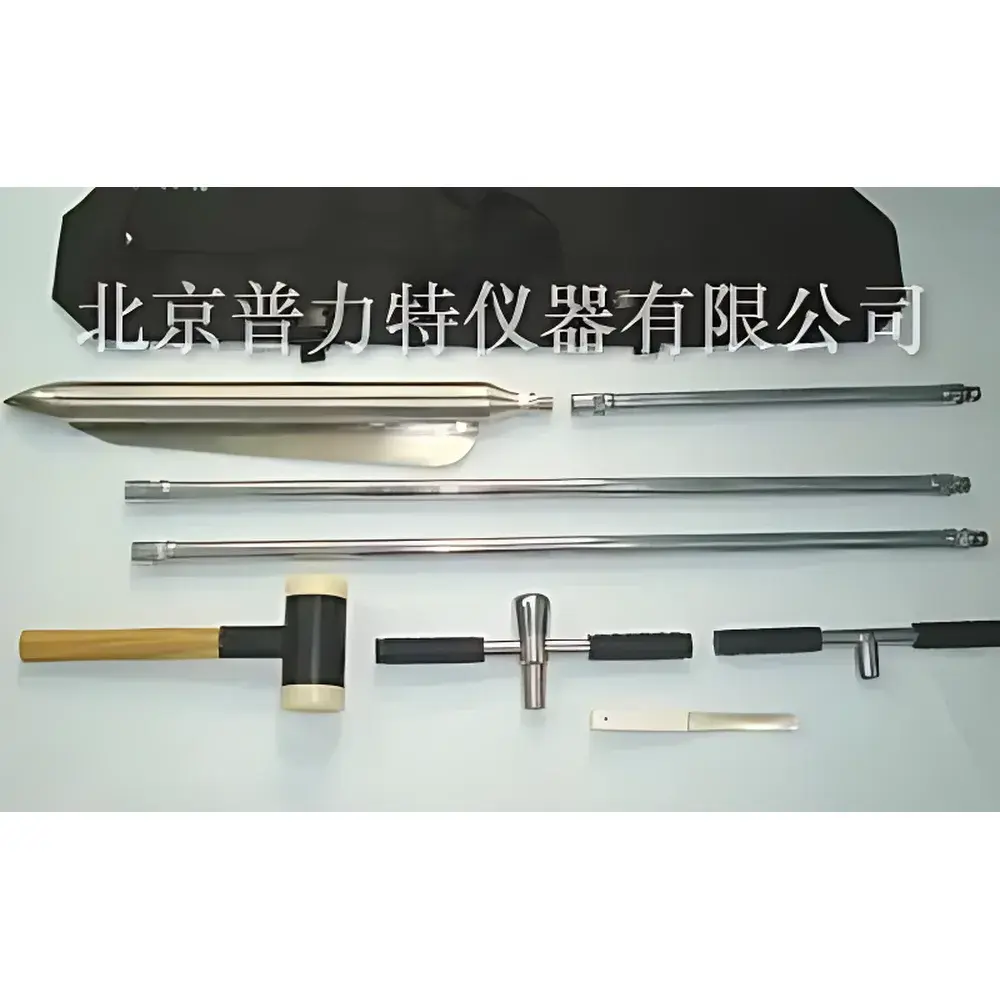
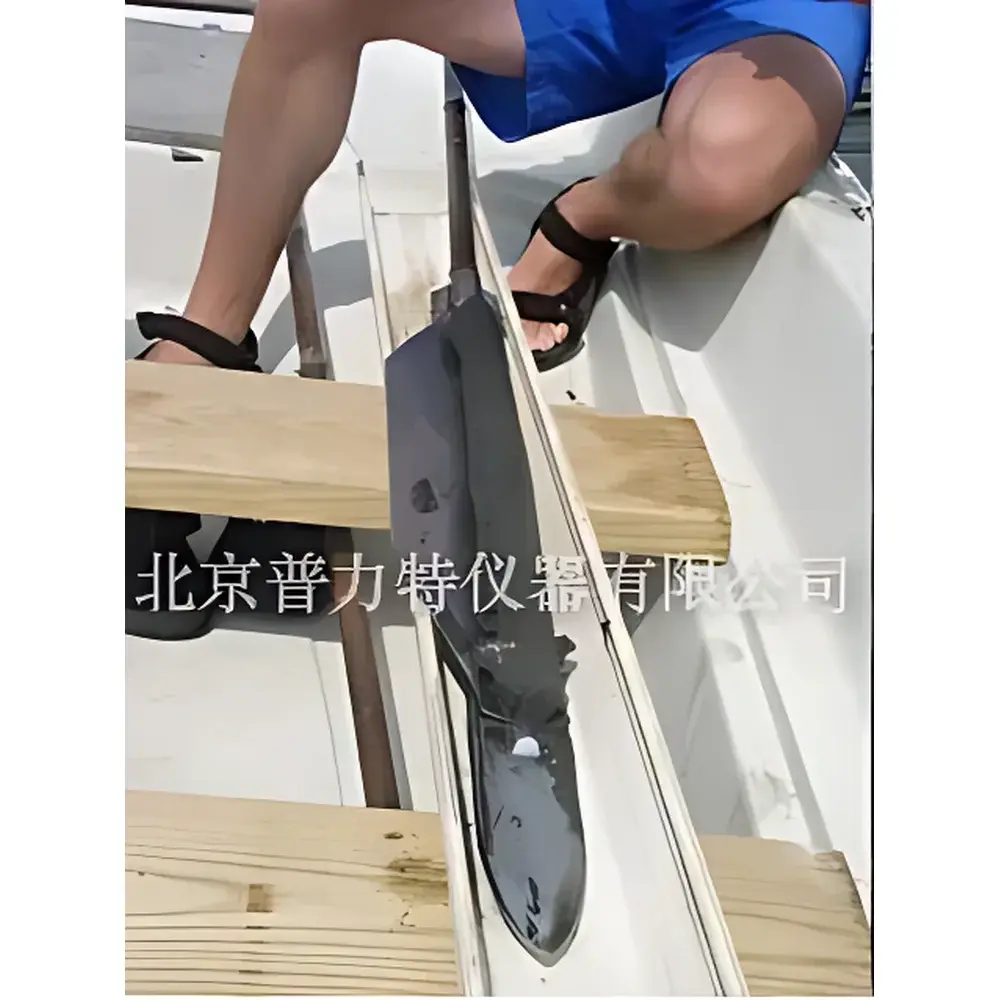
RPB Sediment Depth-Specific Coring Drill
| Origin | Beijing |
|---|---|
| Manufacturer Type | Distributor |
| Origin Category | Domestic (China) |
| Model | RPB |
| Pricing | Upon Request |
Overview
The RPB Sediment Depth-Specific Coring Drill is a field-deployable, manually operated coring device engineered for stratified sediment sampling in freshwater, estuarine, and shallow marine environments. Based on the proven Russian Peat (RP) corer design principle, it enables discrete, depth-referenced collection of undisturbed sediment layers without cross-contamination from overlying strata. Its operational mechanism relies on vertical penetration followed by rotational closure of the core barrel—ensuring sample integrity at pre-determined depths (e.g., 5 cm, 15 cm, or 30 cm below surface). Unlike push-type samplers, the RPB’s rotating latch system seals the core immediately upon reaching target depth, minimizing smearing, compaction, and interlayer mixing. This makes it particularly suitable for geochemical profiling, porewater extraction, microbial community analysis, and contaminant vertical distribution studies where stratigraphic fidelity is critical.
Key Features
- Rotational closure core barrel with stainless-steel, lance-shaped bit—optimized for low-resistance penetration into cohesive and semi-consolidated sediments (e.g., clays, silts, organic-rich muds).
- Modular extension rods (0.5 m or 1.0 m per section), threaded for rapid assembly and depth scalability up to 3+ meters in soft-bottom conditions.
- Integrated stainless-steel hammer handle and energy-absorbing nylon striking hammer—designed to deliver controlled impact force while reducing operator fatigue and equipment rebound.
- Dedicated stainless-steel sediment scraper and trimming knife—enabling precise core sectioning, surface leveling, and extrusion preparation under field conditions.
- Complete field kit includes calibrated depth markers on extension rods, two adjustable wrenches for rod coupling, one pair of chemical-resistant gloves, and a waterproof, compartmentalized carry bag compliant with ISO 5667-6 field sampling logistics requirements.
Sample Compatibility & Compliance
The RPB drill is validated for use in fine-grained, non-rocky sediments with shear strength < 50 kPa (as estimated via hand penetrometer or vane test). It is not intended for gravelly, sandy, or highly oxidized crust layers. Core recovery efficiency exceeds 85% in typical lacustrine and riverine deposits (per ASTM D1586-22 guidelines for manual coring validation). All wetted components are 316 stainless steel or food-grade nylon—ensuring minimal metal leaching and compatibility with trace-metal, nutrient, and organic contaminant analyses (e.g., EPA Method 1664, ISO 11466). The system supports GLP-aligned field documentation when used with standardized depth logs and chain-of-custody forms.
Software & Data Management
While the RPB is a mechanical, non-electronic instrument, its operation integrates seamlessly with digital field data capture workflows. Depth-specific sampling events can be logged using mobile applications such as ESRI Field Maps or QField, linked to GPS coordinates, photo documentation, and lab submission IDs. Optional barcode-labeled core tube sleeves (sold separately) enable traceability from field acquisition through laboratory subsampling and archive storage. Full audit trails—including operator ID, date/time stamp, water depth, sediment type description, and core length—meet minimum metadata requirements for ISO/IEC 17025-accredited environmental testing laboratories.
Applications
- Vertical profiling of heavy metals (Pb, Cd, Hg), PAHs, PCBs, and microplastics across sediment horizons.
- Extraction of interstitial water for dissolved nutrient (NH₄⁺, PO₄³⁻, NO₃⁻) and sulfide speciation analysis.
- Microbial DNA/RNA sampling for metagenomic and transcriptomic studies requiring depth-resolved biological stratigraphy.
- Calibration and ground-truthing of in situ porewater sensors (e.g., DET, DGT, peepers).
- Pre-construction baseline surveys and post-dredging monitoring per ISO 13970 and EU Water Framework Directive Annex V protocols.
FAQ
What sediment types are compatible with the RPB corer?
It performs optimally in unconsolidated to moderately cohesive sediments (clay, silt, organic mud) with moisture content >40% and shear strength <50 kPa. Avoid use in coarse sand, gravel, or desiccated crusts.
Can the RPB collect samples at exact depth intervals (e.g., every 5 cm)?
Yes—depth accuracy is ensured by marked extension rods and repeatable rotational closure timing; users may extract sequential 5–10 cm sections using the provided scraper and ruler-guided sectioning protocol.
Is the RPB compliant with international environmental sampling standards?
It conforms to the mechanical design and procedural principles outlined in ISO 5667-6:2019 (Water quality — Sampling — Part 6: Guidance on sampling of rivers and lakes) and ASTM D1586-22 (Standard Test Method for Penetration Test and Split-Barrel Sampling of Soils), supporting defensible data generation for regulatory reporting.
How is sample contamination prevented during retrieval?
The rotating closure mechanism isolates the target layer prior to withdrawal; combined with stainless-steel construction and field-cleanable components, it minimizes both external particulate ingress and cross-layer smearing.
Are replacement parts available?
Yes—individual core barrels, extension rods, nylon hammers, and scrapers are stocked and supplied with material certification (EN 10204 3.1) for traceability.
Related Products







