
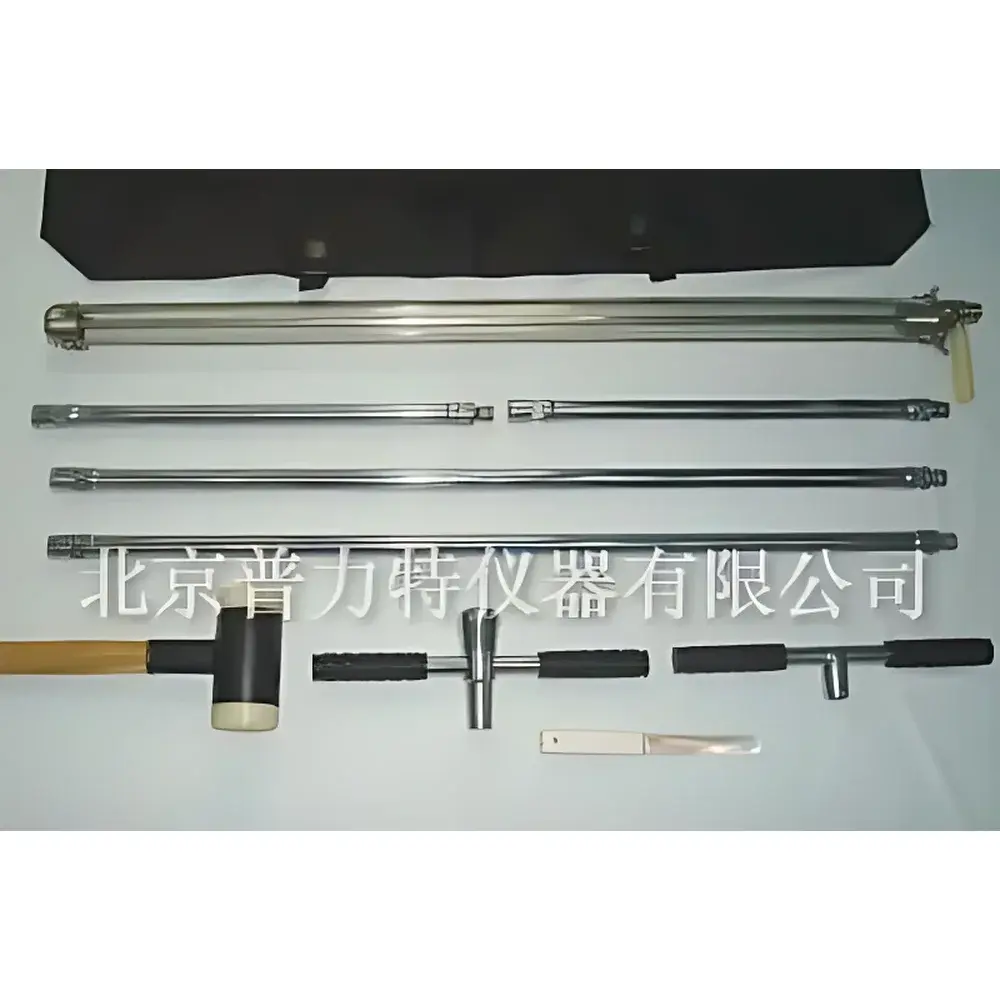
ASC Transparent Core Sampler
| Origin | Beijing |
|---|---|
| Manufacturer Type | Distributor |
| Origin Category | Domestic (China) |
| Model | ASC |
| Price | Upon Request |
Overview
The ASC Transparent Core Sampler is an engineered sediment sampling instrument designed in accordance with the structural and functional principles of the European Multisampler series. It is a gravity-driven, piston-type coring device optimized for high-fidelity acquisition of undisturbed, stratified sediment cores from freshwater and marine benthic environments—including rivers, lakes, reservoirs, and shallow coastal zones (depths up to ~10 m). Its defining feature is the use of optically clear, high-impact polymethyl methacrylate (PMMA) sampling tubes, enabling direct visual inspection of sediment layering, color gradients, particle sorting, redox boundaries, and macrofaunal distribution without sample extrusion or sectioning. The integrated piston mechanism minimizes compaction and water infiltration during penetration, preserving in situ sediment structure and interstitial porewater integrity—critical for subsequent geochemical, microbiological, and ecotoxicological analyses.
Key Features
- Optical clarity: 100 cm × 40 mm ID PMMA sampling tube provides real-time, non-destructive observation of sediment stratigraphy and interface morphology.
- Piston-assisted deployment: Stainless steel cutting head and internal piston rod ensure consistent penetration force transmission and reduce core shortening (<5% typical under standard field conditions).
- Modular extension system: Threaded aluminum alloy extension rods (1 m per segment) allow depth adaptation up to 3–4 m total penetration in soft-to-medium cohesive sediments.
- Dual-handling configuration: Includes ergonomic T-handle for controlled manual lowering and hammer-handle assembly with energy-dissipating nylon impact hammer for enhanced driving efficiency in denser substrates.
- Post-sampling integrity tools: Precision stainless steel sediment scraper enables clean, horizontal sectioning at defined depths; calibrated steel tape measure supports accurate core depth registration.
- Field-ready packaging: Waterproof carry bag accommodates full system (core tube, extensions, handles, hammer, scraper, wrenches, spare parts), meeting ISO 14001-aligned field logistics requirements.
Sample Compatibility & Compliance
The ASC sampler is validated for use with unconsolidated to moderately cohesive sediments (e.g., silts, clays, fine sands, organic-rich muds) exhibiting shear strengths between 0.5–20 kPa. It is not intended for gravelly, rocky, or highly cemented substrates. All wetted components comply with ASTM D3697 (Standard Practice for Sampling Bottom Sediments) and ISO 5667-13 (Water quality — Sampling — Part 13: Guidance on sampling of suspended matter and bottom sediments). The PMMA tube meets EU Regulation (EC) No 1935/2004 for materials intended to come into contact with environmental samples, ensuring no leachable interference in trace metal or organic contaminant assays.
Software & Data Management
While the ASC is a manually operated mechanical instrument with no embedded electronics, it integrates seamlessly into digital field workflows. Core depth metadata (penetration depth, GPS coordinates, time stamp, operator ID) are recorded via compatible mobile data capture platforms (e.g., Fulcrum, Survey123) supporting structured form submission and GIS-linked archiving. Optional barcode labeling of PMMA tubes (using solvent-resistant, UV-stable labels) enables traceability across laboratory subsampling, storage, and analytical reporting—fully auditable under GLP and ISO/IEC 17025 frameworks.
Applications
- Environmental baseline studies and long-term sediment monitoring programs (e.g., EPA Region 10 Sediment Quality Triad protocols)
- Contaminant profiling: vertical distribution mapping of heavy metals (Pb, Cd, Hg), PAHs, PCBs, microplastics, and emerging contaminants (PFAS, pharmaceuticals)
- Benthic habitat assessment: identification of redox zonation (Fe/Mn oxyhydroxide layers, sulfidic horizons), bioturbation signatures, and macroinvertebrate burrow structures
- Sediment dating: collection of intact cores for 210Pb and 137Cs geochronology
- Microbial ecology: retrieval of anaerobic/anoxic zone material for DNA extraction, metagenomic sequencing, and sulfate-reducing bacterial isolation
- Regulatory compliance sampling: aligned with USACE ERDC guidelines, OSPAR Commission sediment assessment criteria, and China’s HJ 442.7–2023 technical specification for marine environmental monitoring.
FAQ
What sediment types are suitable for sampling with the ASC Transparent Core Sampler?
It is optimized for fine-grained, low-to-moderate strength sediments including silt, clay, organic mud, and silty sand. Avoid use in coarse gravel, shell hash, or lithified deposits.
Can the PMMA tube be autoclaved or chemically sterilized?
No. PMMA is incompatible with autoclaving (>80 °C causes deformation) and strong oxidizers (e.g., concentrated HNO3). Clean with 70% ethanol, diluted hydrogen peroxide, or mild detergent followed by ultrapure water rinse.
Is the piston seal replaceable in the field?
Yes. A complete spare piston assembly—including food-grade nitrile rubber seal and stainless steel retainer—is included in the standard kit and can be swapped using supplied wrenches in under 90 seconds.
How is core recovery calculated and reported?
Core recovery (%) = (Length of recovered core / Penetration depth) × 100. Field logs must record both values; recovery >85% is considered acceptable for most regulatory applications.
Does the system meet FDA or CLIA requirements?
Not applicable—the ASC is an environmental field sampling tool, not a clinical or diagnostic device. It conforms to ISO/IEC 17025 pre-analytical sampling standards when used in accredited environmental testing laboratories.
Related Products







