
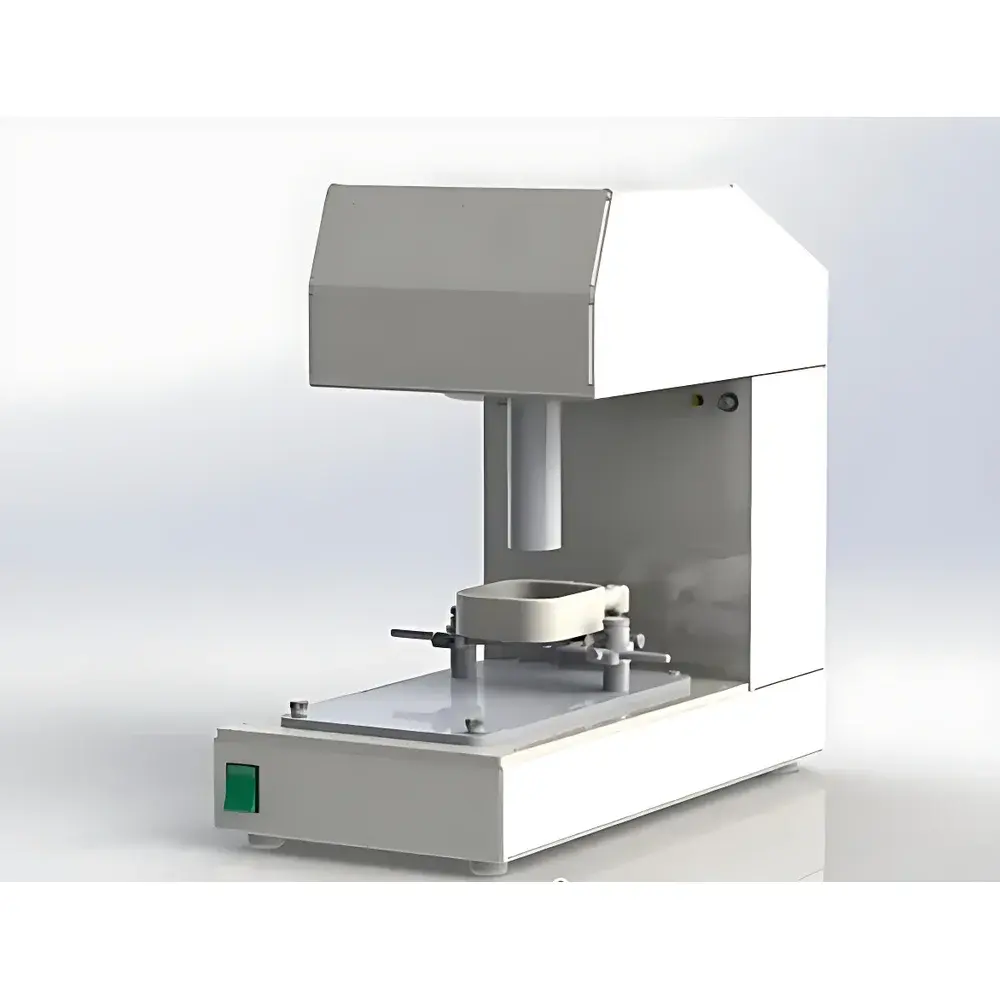
Pharmasonics PK-300/50 & LP-100 Focused Ultrasound (FUS) Blood-Brain Barrier Opening Systems
| Origin | Canada |
|---|---|
| Manufacturer Type | Authorized Distributor |
| Origin Category | Imported |
| Models | PK-300, PK-50, LP-100 |
| Pricing | Available Upon Request |
| Transducer Frequency | 0.5–2.0 MHz (PK-300), 0.5 MHz / 1.5 MHz (PK-50), Configurable for Clinical MRI (LP-100) |
| Transducer Aperture | 25 mm (PK-300) |
| Focal Depth | 20 mm (PK-300) |
| Mechanical Scan Range | S/I ±12 mm, A/P ±2.5 mm, L/R ±9 mm (PK-300) |
| Spatial Accuracy | ≤0.2 mm (PK-50) |
| Max Acoustic Power Output | 20 W (all models) |
| Hydrophone Bandwidth | 0.5–1.0 MHz (PK-300), 750 kHz (PK-50) |
| MRI Compatibility | Bruker preclinical systems (PK-300), Clinical 1.5T/3T MRI (LP-100) |
Overview
The Pharmasonics PK-300/50 and LP-100 Focused Ultrasound (FUS) Blood-Brain Barrier (BBB) Opening Systems are precision-engineered platforms for noninvasive, transient, and spatially controlled neuromodulation and targeted therapeutic delivery in preclinical neuroscience research. These systems operate on the physical principle of acoustic cavitation—induced by high-intensity focused ultrasound waves—combined with intravenously administered microbubble contrast agents. Under precisely calibrated pressure amplitudes and pulse sequences, inertial cavitation generates localized mechanical stress at the capillary endothelium, resulting in reversible tight junction modulation without thermal ablation or tissue necrosis. This mechanism enables safe, repeatable, and millimeter-scale BBB disruption—critical for evaluating CNS drug penetration, gene vector delivery, immunotherapeutics, and functional neuroimaging paradigms. Unlike electromagnetic neuromodulation techniques (e.g., TMS or tDCS), which exhibit centimeter-level spatial resolution and limited depth penetration, FUS achieves sub-5-mm lateral resolution at depths exceeding 15 mm in rodent brain tissue—enabling interrogation of discrete nuclei such as the hippocampus, thalamus, or substantia nigra under real-time MRI guidance.
Key Features
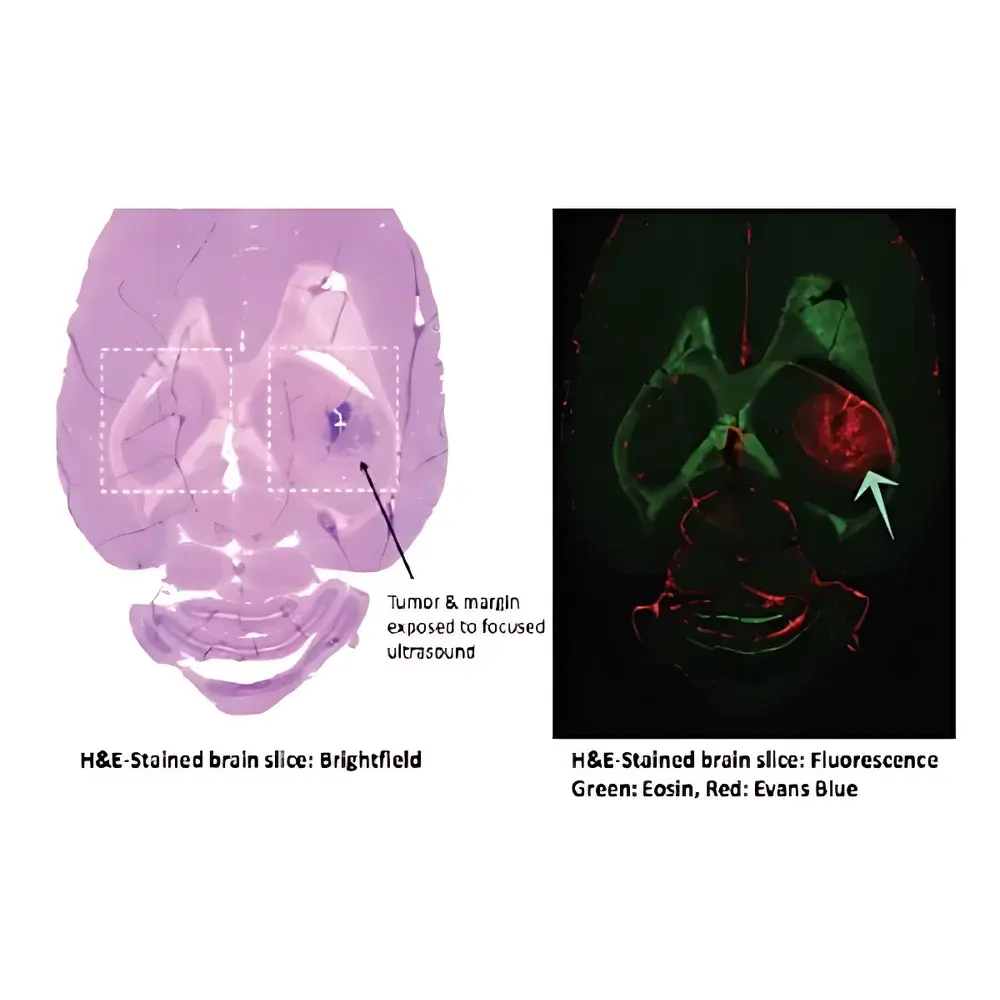
- Transient and reversible BBB opening: Demonstrated restoration of barrier integrity within 4–6 hours post-exposure, confirmed via Evans Blue extravasation and immunohistochemical assessment of claudin-5 and occludin expression.
- Sub-millimeter targeting accuracy: PK-50 integrates stereotactic atlas registration (e.g., Paxinos & Watson) with motorized 3-axis positioning (RL/AP/DV), achieving ≤0.2 mm mechanical reproducibility.
- MRI compatibility: PK-300 is fully compatible with Bruker BioSpec 7T/9.4T systems; LP-100 meets IEC 60601-2-37 requirements for operation within clinical 1.5T and 3T MRI suites, including RF-shielded transducer housings and gradient-synchronized triggering.
- Real-time acoustic monitoring: Integrated hydrophone feedback (750 kHz–1.0 MHz bandwidth) enables closed-loop control of peak negative pressure (PNP), ensuring compliance with safety thresholds defined in FDA Guidance for Industry (2021) and ICNIRP 2022 recommendations.
- Configurable exposure protocols: Predefined and user-defined pulse lengths (1–10 ms), duty cycles (0.1–10%), and repetition frequencies (1–10 Hz) support mechanistic studies of sonopermeability kinetics and bioeffect dose-response relationships.
Sample Compatibility & Compliance
These systems are validated for use in adult Sprague-Dawley and C57BL/6 mice (20–30 g) and Long-Evans rats (250–350 g), with anesthesia delivered via isoflurane (1–2% in O₂/N₂O) using integrated gas anesthesia interfaces. All hardware and software components comply with ISO 13485:2016 for medical device quality management systems. The LP-100 platform supports 21 CFR Part 11-compliant audit trails, electronic signatures, and data integrity controls required for GLP-regulated neuropharmacokinetic studies. Protocols align with ASTM E2987-22 (Standard Practice for Characterizing FUS Exposure Parameters) and NIH-NIBIB FUS Safety Working Group best practices for preclinical sonobiomodulation.
Software & Data Management
Pharmasonics Control Suite v4.2 provides a validated, Windows-based interface supporting protocol templating, multi-session experiment logging, and DICOM-SR integration for MRI-guided targeting. Raw hydrophone waveforms, acoustic pressure maps, and physiological telemetry (respiratory rate, rectal temperature) are time-stamped and exported in HDF5 format for MATLAB/Python-based analysis. Audit logs record operator ID, timestamp, parameter modifications, and system error events—retained for ≥10 years per ALCOA+ principles. Optional API access enables integration with LabArchives ELN or Benchling for automated metadata capture and cross-platform study tracking.
Applications
- Preclinical evaluation of monoclonal antibodies, antisense oligonucleotides (ASOs), and AAV vectors across neurodegenerative disease models (e.g., APP/PS1 Alzheimer’s, MPTP Parkinson’s).
- Quantitative assessment of blood-to-brain transfer coefficients (Kin) using dynamic contrast-enhanced MRI (DCE-MRI) and PET radiotracers (e.g., [¹¹C]verapamil).
- Functional connectivity mapping via simultaneous FUS neuromodulation and resting-state fMRI or calcium imaging (e.g., GCaMP6f fiber photometry).
- Therapeutic sonothrombolysis and targeted fibrinolytic delivery in ischemic stroke models.
- Development of FUS-triggered nanocarrier release systems (e.g., phase-shift perfluorocarbon droplets, thermosensitive liposomes).
FAQ
Is the PK-300 compatible with non-Bruker MRI platforms?
The PK-300 is mechanically and electronically optimized for Bruker BioSpec systems; integration with other vendors (e.g., Agilent, Siemens Preclinical) requires custom RF shielding validation and gradient coil clearance verification.
What microbubble agents are validated for use with these systems?
Definity® (perflutren lipid microspheres) and Sonazoid® (perfluorobutane-filled) are clinically approved and extensively characterized in peer-reviewed literature; custom formulations require in-house cavitation threshold calibration.
Does the system support real-time passive acoustic mapping (PAM)?
Yes—optional PAM modules utilize multi-element hydrophone arrays to reconstruct cavitation source locations with ≤1.5 mm spatial uncertainty, enabling online feedback for adaptive exposure control.
Can the LP-100 be used for thermal ablation applications?
No—the LP-100 is configured exclusively for low-duty-cycle, nonthermal BBB opening; ablation-capable variants (e.g., LP-200) operate at higher duty cycles (>20%) and require separate regulatory clearance.
Are software updates provided under warranty?
Yes—customers receive 24 months of complimentary software maintenance, including security patches, regulatory compliance updates (e.g., new 21 CFR Part 11 features), and minor version releases.



