
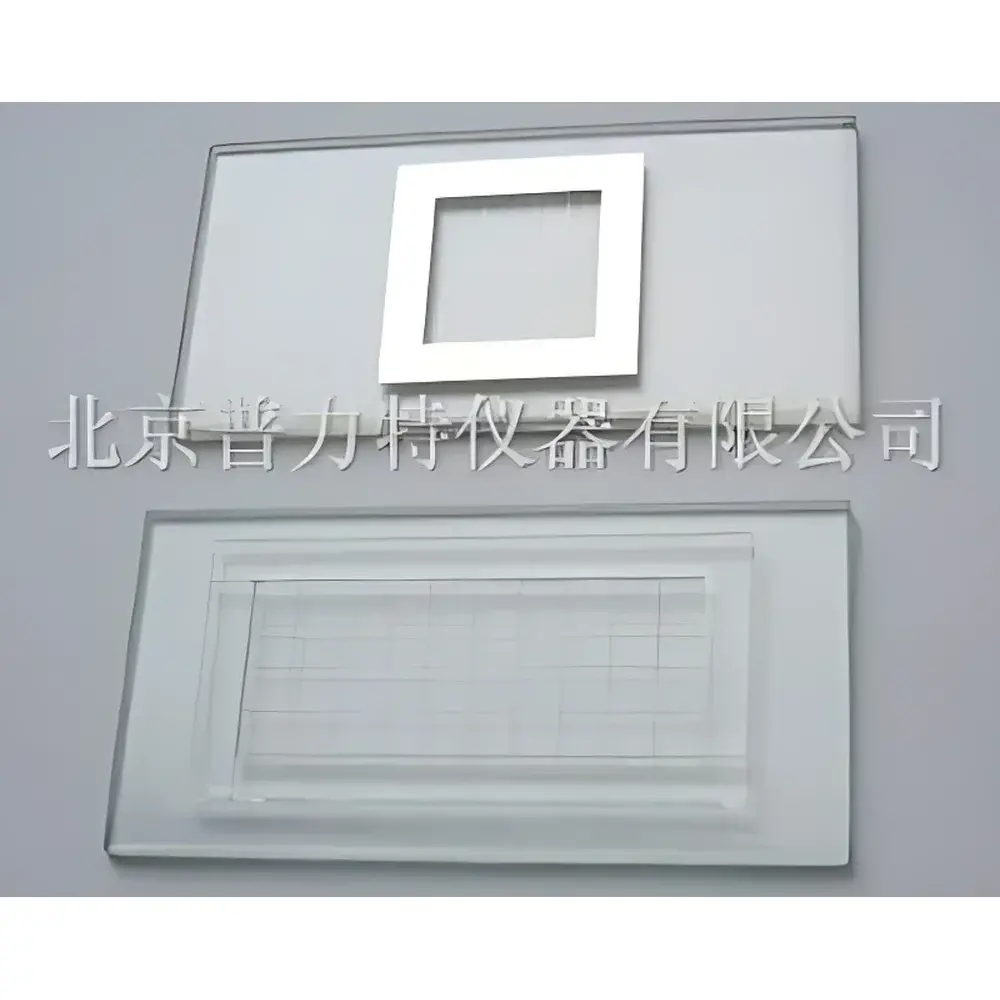
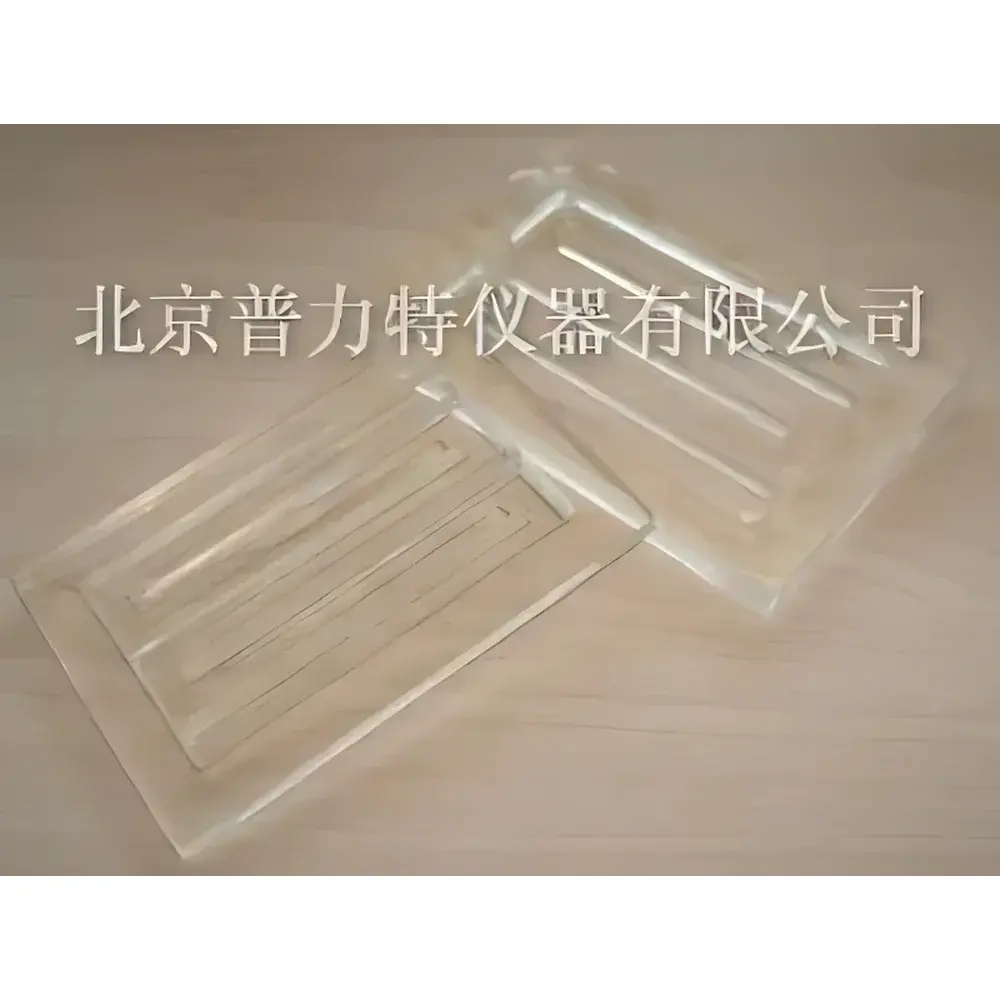
Plankton Counting Chamber (CC-F & CC-S Series)
| Origin | Beijing, China |
|---|---|
| Manufacturer Type | Authorized Distributor |
| Origin Category | Domestic (China) |
| Model | CC-F / CC-S |
| Pricing | Available Upon Request |
| Instrument Type | Algal and Plankton Counting Chamber |
| Material | Borosilicate Glass (CC-F & CC-S), Stainless Steel Frame (CC-F 0.1 mL variant) |
| Volume Options | 0.1 mL, 1 mL (CC-F) |
| Grid Configuration | CC-F 0.1 mL — 100-square grid (20 mm × 20 mm chamber, 0.02 mm line width, molded scribe lines) |
| Microscopy Compatibility | CC-F — upright optical microscope (40×–100× objective range) |
Overview
The Plankton Counting Chamber (CC-F & CC-S Series) is a precision-engineered optical counting device designed for standardized enumeration of planktonic organisms in freshwater, marine, and wastewater samples. Unlike automated image-analysis systems, this manual counting chamber operates on the principle of volumetric subsampling and geometric grid-based quantification—fully compliant with established limnological and oceanographic protocols including ISO 14442:2022 (Water quality — Enumeration of phytoplankton — Microscopic method) and APHA Standard Method 10200 G (Phytoplankton Enumeration). The CC-F variant supports high-magnification identification and enumeration of microplankton (e.g., diatoms, dinoflagellates, cyanobacteria colonies, and rotifers), while the CC-S accommodates mesozooplankton (e.g., cladocerans, copepodites, nauplii, and small gelatinous taxa) under low-magnification stereoscopic observation. Both models eliminate parallax error through optically flat, strain-free borosilicate glass construction and maintain consistent settling geometry to ensure reproducible cell distribution during静置 (settling time ≥5 min recommended per ASTM D5907-21 Annex A3).
Key Features
- Optically calibrated chamber volumes (0.1 mL, 1 mL, 5 mL, and 10 mL) traceable to NIM (National Institute of Metrology, China) certified reference standards.
- CC-F 0.1 mL model features a 20 mm × 20 mm counting area subdivided into 100 precisely spaced squares (each 0.04 mm²), scribed via hardened steel mold imprinting—line width controlled at 0.02 mm ± 0.003 mm for unambiguous boundary recognition at 40× magnification.
- CC-F 1 mL model utilizes laser-etched 40-square grid (50 mm × 20 mm chamber) enabling rapid scanning of heterogeneous samples without loss of statistical representativeness.
- CC-S series employs a milled serpentine trough architecture with uniform 0.8 mm depth and polished vertical walls—optimized to retain motile macrozooplankton during extended observation and minimize edge-induced drift.
- Stainless steel perimeter frame (CC-F 0.1 mL) ensures dimensional stability across thermal gradients (operating range: 5–40 °C) and resists deformation during mechanical stage translation.
- All glass components meet USP and ISO 8536-4 requirements for pharmaceutical-grade glass clarity and surface roughness (Ra < 0.4 µm).
Sample Compatibility & Compliance
The CC-F chamber is validated for use with Lugol’s iodine-preserved, formalin-fixed, or glutaraldehyde-stabilized phytoplankton suspensions; its shallow depth prevents sedimentation artifacts common in deeper chambers. The CC-S accommodates live, anaesthetized, or lightly stained zooplankton without compression damage. Both models are compatible with common mounting media including glycerol-water (20:80 v/v), sucrose solution (40% w/v), and non-evaporative immersion oil (n = 1.518). Chambers conform to GLP documentation requirements when used within validated laboratory SOPs (e.g., EPA Method 10200, IOC-UNESCO Manual on Quantitative Phytoplankton Analysis). Grid layout and volume markings comply with ISO/IEC 17025:2017 clause 7.7.1 for measurement traceability.
Software & Data Management
While inherently hardware-based, the CC-F and CC-S integrate seamlessly into digital microscopy workflows. When paired with motorized stages and calibrated camera systems (e.g., Olympus DP80, Zeiss AxioCam HRm), users may employ open-source platforms such as ImageJ/Fiji with the “Cell Counter” plugin or commercial LIMS modules (e.g., LabWare LIMS, Thermo Fisher SampleManager) to log replicate counts, calculate confidence intervals (95% CI via Poisson distribution), and generate audit-ready reports. All manual count records must include chamber ID, lot number, analyst initials, date/time stamp, magnification used, and preservation method—supporting full compliance with FDA 21 CFR Part 11 when electronic signatures are enabled.
Applications
- Quantitative phytoplankton monitoring in drinking water source assessment (e.g., cyanobacterial bloom early warning).
- Trophic state index (TSI) calculation per Carlson’s model using chlorophyll-a proxy data derived from biovolume conversion.
- Zooplankton community structure analysis in eutrophication studies and biomanipulation efficacy trials.
- Regulatory compliance reporting for municipal wastewater discharge permits (e.g., NPDES) requiring plankton density thresholds.
- Academic research in aquatic ecology, paleolimnology (sediment trap calibration), and ballast water treatment verification (IMO G8/G9 standards).
- Method validation and inter-laboratory comparison exercises coordinated by IWA or ICES Working Groups.
FAQ
What cleaning protocol is recommended between samples?
Rinse thoroughly with deionized water, followed by immersion in 70% ethanol for 2 minutes; air-dry vertically on lint-free cellulose wipers. Avoid ultrasonic cleaning or abrasive wipes to preserve grid integrity.
Can the CC-F be used with inverted microscopes?
Yes—provided the objective working distance exceeds 3.5 mm and the chamber is placed inverted on the stage with coverslip-side down; verify focus plane alignment using stage micrometer calibration.
Is there a certified reference material available for performance verification?
NIST SRM 2975 (phytoplankton suspension in glycerol) and CEFAS QC-PLANK-01 (mixed zooplankton standard) are traceably compatible for recovery rate validation.
How often should grid accuracy be verified?
Annually using a calibrated stage micrometer (±0.5 µm uncertainty) or upon receipt of new chamber lots; documented verification is required under ISO/IEC 17025 accreditation.
Are custom grid layouts or volume specifications available?
Yes—OEM customization is supported for ISO-compliant grid subdivisions (e.g., 25-, 64-, or 144-square variants) and non-standard volumes (0.05–20 mL), subject to minimum order quantities and metrological validation lead time.







