
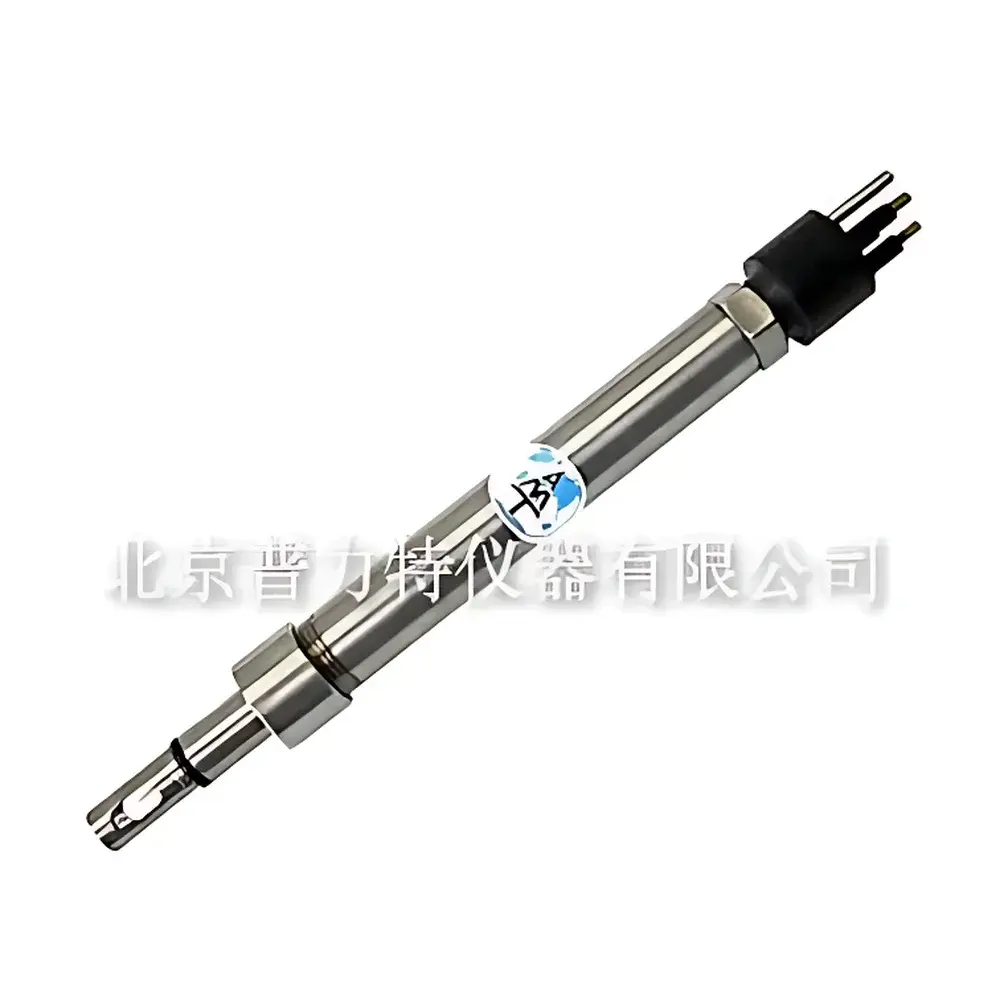
AMT-H2S Electrochemical Hydrogen Sulfide (H₂S) Sensor
| Origin | Germany |
|---|---|
| Manufacturer Type | Authorized Distributor |
| Origin Category | Imported |
| Model | AMT-H2S |
| Pricing | Available Upon Request |
Overview
The AMT-H2S is a high-performance, submersible electrochemical sensor engineered for the selective, real-time quantification of dissolved hydrogen sulfide (H₂S) and total sulfide species in aqueous environments. It operates on the amperometric principle—relying on diffusion-controlled oxidation of H₂S across a gas-permeable membrane to a catalytic working electrode, generating a current linearly proportional to analyte concentration. Designed for operation within pH 5.0–8.5, the sensor integrates on-board temperature and pH compensation algorithms to ensure thermally stable, chemically accurate output under variable field conditions. Its titanium alloy housing (Grade 5, ASTM B348) and pressure-rated construction enable continuous deployment at depths up to 100 meters, supporting both long-term in-situ monitoring and laboratory benchtop analysis in wastewater treatment plants, aquaculture systems, groundwater assessment sites, and industrial effluent streams.
Key Features
- Sub-second response time (t90% < 1 s), enabling dynamic tracking of transient H₂S events in flowing or aerated waters
- High selectivity: Immune to interference from CO, CO₂, CH₄, NH₃, and water vapor—validated per ISO 10523 and ASTM D4129 protocols
- Robust matrix tolerance: Unaffected by turbidity, color, or salinity up to 40 g/L NaCl—suitable for estuarine, marine, and hypersaline applications
- Modular design: Field-replaceable sensing head with pre-calibrated electrode assembly, minimizing downtime and recalibration frequency
- Integrated signal conditioning: On-sensor electronics perform real-time temperature compensation (PT1000 reference) and pH-correction using embedded Nernst-based algorithms
- Wide dynamic range via three interchangeable sensor variants: Type I (0.05–10 mg/L), Type II (0.5–50 mg/L), and Type III (0.01–3 mg/L)
Sample Compatibility & Compliance
The AMT-H2S sensor is validated for use in natural waters, treated effluents, anaerobic digesters, and process liquors where sulfide speciation is critical to corrosion control, odor management, and biological treatment efficiency. It complies with key regulatory frameworks governing environmental monitoring instrumentation, including EN 14181 (QAL3 validation requirements for automated measuring systems), ISO 5667-3 (water sampling guidance), and EPA Method 376.1 (for sulfide determination in wastewater). Its titanium housing meets ISO 15156-3 for sour service compatibility, and the device supports GLP-compliant data acquisition when paired with certified logging systems.
Software & Data Management
The sensor outputs a linear 0–3 VDC analog signal (configurable to 4–20 mA or RS-485 Modbus RTU upon request), compatible with industry-standard SCADA platforms (e.g., Ignition, Siemens Desigo, Schneider EcoStruxure). Optional firmware enables automatic timestamping, sensor health diagnostics (electrode impedance monitoring), and drift alert thresholds. When integrated with AMT’s AquaLink™ data hub, raw signals undergo real-time conversion to [H₂S], [HS⁻], and [S²⁻] concentrations using temperature- and pH-dependent dissociation constants (pKa1 = 6.99, pKa2 = 14.0 at 25°C), with audit-trail logging compliant with FDA 21 CFR Part 11 requirements.
Applications
- Real-time monitoring of H₂S breakthrough in biogas scrubbers and sewer networks
- In-situ profiling of sulfide stratification in sediment porewater and hypolimnetic zones
- Process control in sulfate-reducing bioreactors and zero-valent iron permeable reactive barriers
- Early-warning detection of anaerobic conditions in aquaculture recirculation systems
- Compliance reporting for NPDES permits requiring sulfide concentration limits in discharge streams
- Field validation of laboratory-based methylene blue spectrophotometric assays (APHA 4500-S²⁻ B)
FAQ
What calibration protocol is recommended for routine maintenance?
A two-point calibration using certified H₂S standard solutions (e.g., 0.1 mg/L and 5 mg/L in deoxygenated buffer, pH 7.0) is required before deployment and every 30 days during continuous operation. Zero-point verification with nitrogen-purged water is advised prior to each measurement cycle.
Can the sensor be deployed in oil-contaminated water?
Hydrocarbon films may foul the gas-permeable membrane. For oily matrices, integration with a mechanical wiper or periodic ultrasonic cleaning module (optional accessory) is recommended to maintain response fidelity.
Is temperature compensation fully automatic?
Yes—the integrated PT1000 sensor and microcontroller apply real-time correction based on the Arrhenius relationship for H₂S diffusion rate and electrode kinetics, eliminating manual coefficient entry.
How is sensor lifetime defined and monitored?
Rated operational life is 18 months under continuous immersion at 25°C. The onboard diagnostic circuit logs cumulative polarization time and impedance shifts, triggering a service alert when electrode degradation exceeds 15% deviation from baseline.
Does the sensor meet ATEX or IECEx certification for hazardous area use?
The AMT-H2S itself is not intrinsically safe; however, it may be installed in Zone 1/2 hazardous locations when used with an approved galvanic isolator and barrier system meeting IEC 60079-11 standards.







