
ZiQi ZQ20-A / ZQ20-B / ZQ20-C Digital Orbital & Reciprocating Shaker
| Brand | ZiQi |
|---|---|
| Origin | Shanghai, China |
| Manufacturer | ZiQi Laboratory Equipment Co., Ltd. |
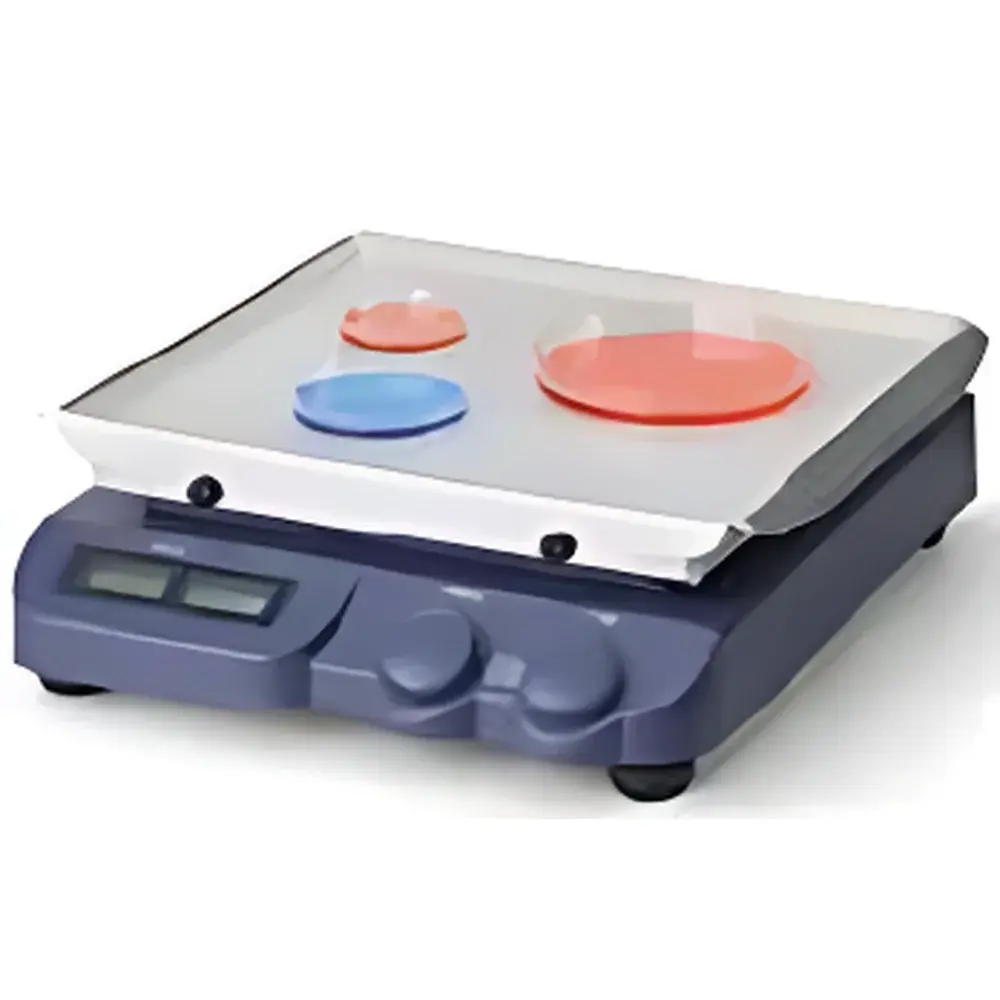
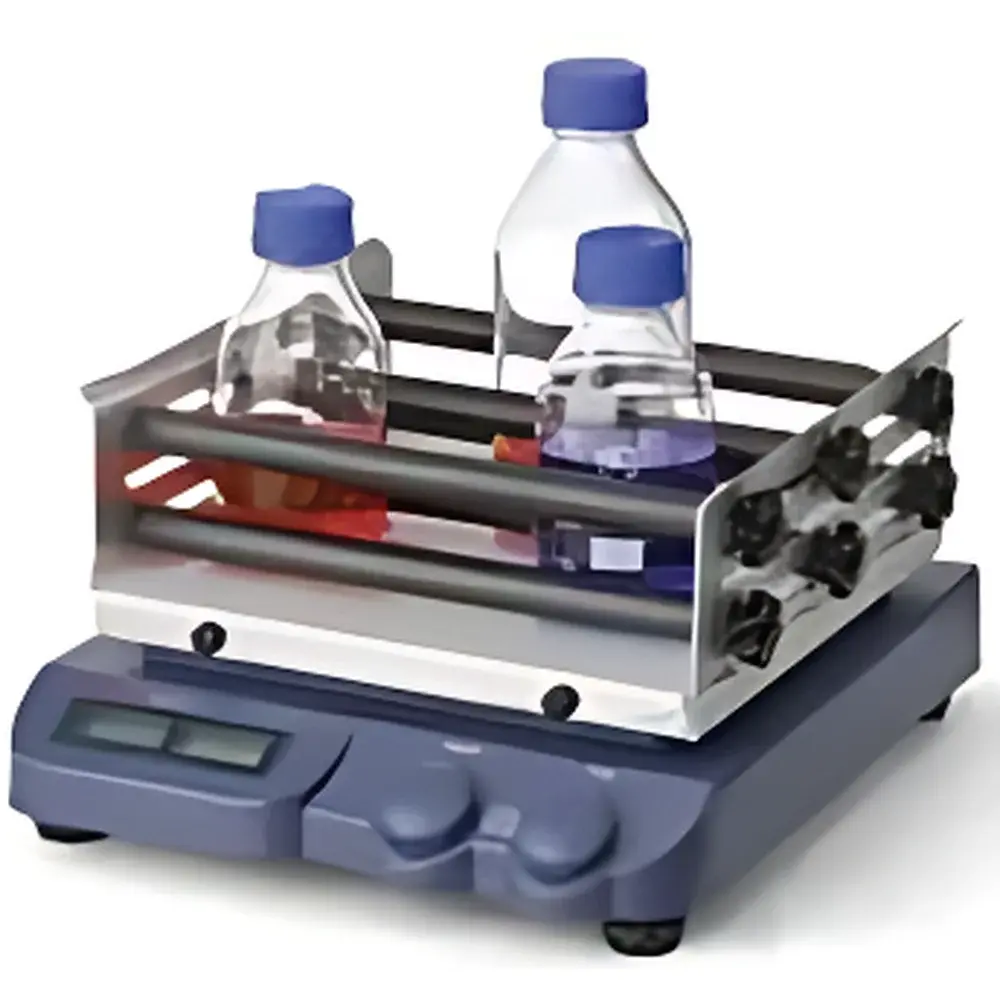
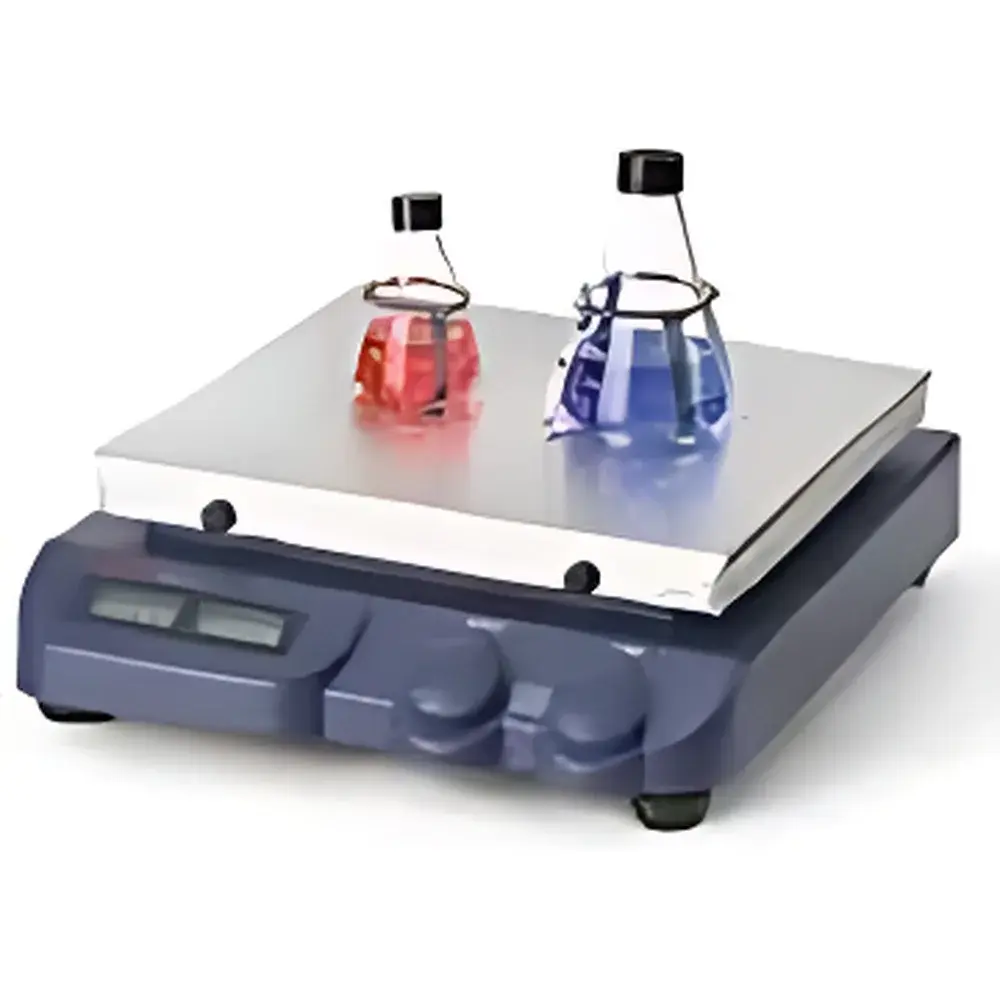
| Model | ZQ20-A (Flat Platform), ZQ20-B (Rod Clamp Platform), ZQ20-C (Erlenmeyer Flask Spring Clamp) |
| Timing Range | 1–19 h 59 min |
| Oscillation Frequency | 10–350 rpm (orbital), 100–500 rpm (reciprocating) |
| Orbit Diameter | 10 mm (both modes), 20 mm (orbital only) |
| Stroke Amplitude | 10 mm |
| Load Capacity | 7.5 kg (including fixtures) |
| Operating Temperature | 5–50 °C |
| Relative Humidity | ≤80 % RH |
| Protection Rating | IP21 (DIN EN 60529) |
| Input Voltage | 100–120 V / 220–240 V AC, 50/60 Hz |
| Power Consumption | 35 W |
| Motor Type | Brushless DC |
| Dimensions (W×D×H) | 420 × 360 × 100 mm |
| Weight | 13 kg |
| RS-232 Interface | Yes |
| Analog Output | Yes |
| Display | Dual LCD (speed & timer) |
| Operation Modes | Timed / Continuous |
| Brake Function | Yes |
Overview
The ZiQi ZQ20 series represents a line of precision-engineered digital orbital and reciprocating shakers designed for routine and demanding life science applications in academic laboratories, biotechnology R&D facilities, and quality control environments. Built upon a robust mechanical architecture with a reinforced aluminum alloy chassis and high-tolerance bearing assembly, the ZQ20 platform delivers consistent motion profiles across its full operational range. Its dual-mode operation—supporting both orbital (circular) and reciprocating (linear back-and-forth) motion—is governed by a closed-loop brushless DC motor system, eliminating carbon brush wear and electromagnetic interference commonly associated with brushed motors. The 10 mm standard orbit/stroke ensures uniform mixing of heterogeneous suspensions while minimizing shear-induced cell damage during microbial or mammalian cell culture maintenance. With an effective load capacity of 7.5 kg—including fixture mass—the unit accommodates multi-vessel configurations such as stacked flasks, deep-well plates, or large-volume bioreactor vessels without compromising speed stability or positional repeatability.
Key Features
- Brushless DC motor drive ensuring >20,000 hours of continuous operation, low acoustic emission (<45 dB at 1 m), and zero maintenance under normal use conditions
- Dual-motion capability: selectable orbital (10 mm or 20 mm diameter) and reciprocating (10 mm stroke) modes via front-panel interface
- High-resolution dual LCD display showing real-time rpm, elapsed/remaining time, and active mode status with intuitive soft-key navigation
- Programmable timing function covering 1 minute to 19 hours 59 minutes, supporting single-step or cascade protocols when integrated with external controllers
- Integrated electronic braking system halting motion within <2 seconds after stop command—critical for preserving sample integrity in sensitive assays
- Universal voltage input (100–120 V / 220–240 V AC, 50/60 Hz) with internal line regulation to mitigate fluctuations in laboratory power infrastructure
- RS-232 serial port and analog 0–5 V output enable bidirectional communication with LIMS, SCADA systems, or custom automation frameworks compliant with ASTM E1384 and ISO/IEC 17025 data traceability requirements
Sample Compatibility & Compliance
The ZQ20-A, ZQ20-B, and ZQ20-C variants are differentiated solely by their interchangeable platform assemblies, each optimized for distinct vessel geometries and clamping requirements. The ZQ20-A flat platform supports Petri dishes, microtiter plates, and shallow trays using non-slip silicone mats; the ZQ20-B rod clamp configuration secures cylindrical containers including graduated cylinders and volumetric flasks; and the ZQ20-C spring-loaded clamp platform provides secure retention of conical flasks (up to 5 L) and separatory funnels with variable neck diameters. All platforms conform to DIN EN 60529 IP21 ingress protection standards, limiting exposure to vertically falling solids and preventing accidental contact with live components. The instrument meets IEC 61010-1 safety requirements for laboratory equipment and is suitable for use in GLP-compliant environments where audit-ready operation logs can be exported via RS-232 for FDA 21 CFR Part 11–aligned recordkeeping.
Software & Data Management
While the ZQ20 operates as a standalone benchtop device, its embedded firmware supports ASCII-based command protocols over RS-232, allowing integration into centralized lab automation ecosystems. Users may configure remote start/stop, speed ramping profiles, and timed sequence execution using third-party software tools compatible with Modbus RTU or custom Python/Node-RED drivers. Analog output signals (0–5 V DC proportional to setpoint rpm) facilitate real-time monitoring via PLCs or data acquisition modules. Internal non-volatile memory retains last-used parameters across power cycles, reducing setup time between experiments. No proprietary software installation is required—configuration and diagnostics are accessible through terminal emulation (e.g., PuTTY) or simple text-based scripting.
Applications
- Cell culture agitation in suspension bioreactors and shake-flask optimization studies
- Extraction protocols requiring controlled mechanical dispersion (e.g., DNA/RNA isolation, protein solubilization)
- Immunoassay plate washing and antigen-antibody incubation steps
- Environmental microbiology—water sample homogenization prior to membrane filtration
- Pharmaceutical QC testing including dissolution rate verification and excipient blending validation
- Enzyme kinetics assays requiring precise temperature-independent agitation
FAQ
What is the difference between ZQ20-A, ZQ20-B, and ZQ20-C?
The distinction lies exclusively in the mechanical interface: ZQ20-A features a smooth flat surface for plates and dishes; ZQ20-B uses parallel stainless-steel rods for clamping round-bottom containers; ZQ20-C employs adjustable spring-loaded clamps for conical flasks and separatory funnels.
Can the ZQ20 operate continuously without timing limits?
Yes—selecting “Continuous” mode bypasses the timer and maintains user-defined speed until manually stopped or power-cycled.
Is calibration documentation available for ISO/IEC 17025 compliance?
Factory calibration certificates (traceable to NIST standards) and user-accessible adjustment routines for speed and timing accuracy are provided with each unit upon request.
Does the ZQ20 support external temperature monitoring integration?
No built-in temperature sensor is included, but the analog output channel and RS-232 interface allow synchronization with external environmental probes via programmable logic controllers.
What maintenance intervals are recommended?
No scheduled maintenance is required beyond periodic inspection of platform fasteners and cleaning of ventilation grilles every 6 months under typical usage conditions.





