
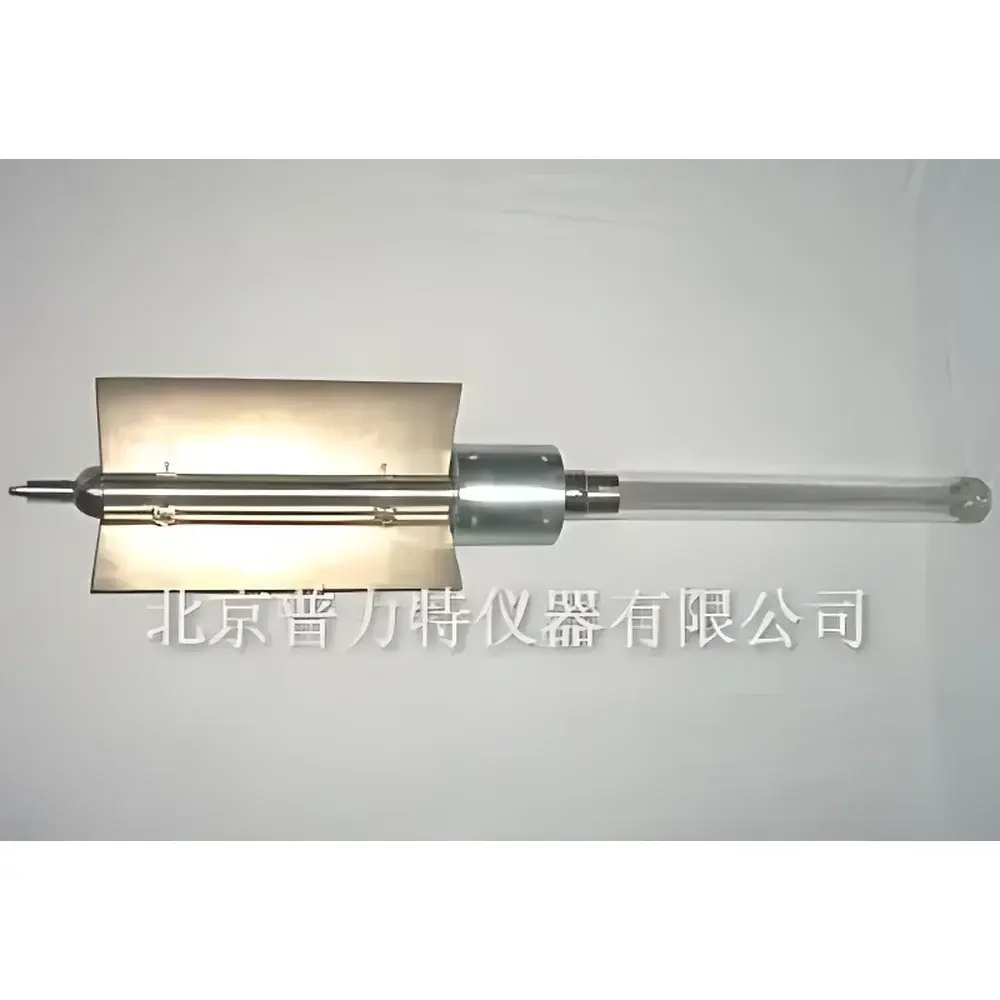
Vertical Gravity Piston Corer PC
| Origin | Beijing |
|---|---|
| Manufacturer Type | Distributor |
| Origin Category | Domestic |
| Model | PC |
| Price | Upon Request |
Overview
The Vertical Gravity Piston Corer PC is an engineered sediment sampling device designed for high-fidelity, undisturbed collection of stratified bottom sediments from marine, lacustrine, and reservoir environments. Based on the proven piston coring principle—where a free-falling weight drives a core barrel vertically into the sediment bed while a stationary piston minimizes compression and fluid displacement—the PC corer ensures minimal sample deformation during penetration. This mechanism preserves vertical sediment structure, interstitial water distribution, and geochemical gradients critical for paleoenvironmental reconstruction, contaminant profiling, and benthic ecological assessment. Its deployment is compatible with standard research vessels equipped with A-frames or winch systems, and it operates effectively in water depths up to 200 meters, depending on cable strength and vessel stability.
Key Features
- Gravity-driven piston mechanism: Utilizes a 40 kg stainless steel main weight to generate controlled impact force, enabling consistent penetration into soft to medium-consistency sediments without mechanical actuation.
- Stainless steel structural frame: Corrosion-resistant 316 stainless steel construction ensures long-term durability in saline and freshwater environments, meeting ASTM A240 standards for marine-grade alloys.
- Optically transparent core liner: 60 mm diameter × 1000 mm length acrylic (PMMA) liner allows real-time visual inspection of sediment stratigraphy, color layering, gas bubble distribution, and redox boundary identification prior to extrusion.
- Four-vane stabilizing tail fin assembly: Symmetrically arranged hydrodynamic fins reduce lateral drift during descent and improve vertical alignment under variable current conditions, enhancing core recovery reproducibility.
- Modular interface design: Standardized 2-inch NPT thread connections at the top cap enable integration with extension rods, pressure-equalizing valves, or trigger-release mechanisms for deeper deployments.
Sample Compatibility & Compliance
The PC corer is validated for collecting intact sediment cores from cohesive silts, clays, organic-rich muds, and fine sands typical of estuarine, continental shelf, and deep-lake settings. Core geometry (Ø60 mm × 1000 mm) conforms to ISO 14687:2022 guidelines for sediment sampling apparatus dimensional tolerances and material compatibility. All wetted components comply with EPA Method 1664B requirements for non-reactive contact surfaces, ensuring no leaching of trace metals or plasticizers into porewater. The system supports GLP-compliant field documentation workflows when paired with certified depth loggers and time-stamped core labeling protocols.
Software & Data Management
While the PC corer operates as a standalone mechanical instrument, its output integrates seamlessly into digital sediment analysis pipelines. Core images captured through the acrylic liner are compatible with open-source platforms such as SedLog and CoreWall for stratigraphic annotation, grayscale intensity profiling, and digital archiving. When used with optional depth-sensing winch systems (e.g., OceanoTech DigiWinch), real-time penetration rate and deceleration profiles can be logged via ASCII-compatible serial output and imported into MATLAB or Python-based sediment dynamics models. Audit trails—including deployment timestamp, vessel GPS coordinates, water depth, and operator ID—are maintainable in accordance with ISO/IEC 17025:2017 data integrity provisions.
Applications
- High-resolution paleoclimatic and paleoecological studies using varve counting, diatom assemblage analysis, and stable isotope (δ13C, δ15N) profiling.
- Legacy contaminant mapping (e.g., PCBs, PAHs, heavy metals) across sediment depth profiles to establish historical loading rates and burial efficiency.
- Benthic biogeochemical flux quantification—particularly oxygen, sulfide, and ammonium diffusion gradients measured via microelectrode transects.
- Sediment toxicity testing (e.g., Solid Phase Microextraction–SPME coupled with GC-MS) requiring representative, uncompressed matrix sampling.
- Calibration and ground-truthing of acoustic sub-bottom profilers (e.g., chirp sonar) by correlating physical core stratigraphy with reflector signatures.
FAQ
What sediment types are optimal for sampling with the PC corer?
The corer performs best in unconsolidated to semi-consolidated fine-grained sediments (clay, silt, organic mud) with shear strengths below 10 kPa. It is not recommended for gravelly substrates or highly compacted clay layers without pre-conditioning.
Can the acrylic liner be replaced with alternative materials for specific analytical needs?
Yes—standardized Ø60 mm inner diameter allows substitution with borosilicate glass liners for trace-metal clean protocols or fluorinated ethylene propylene (FEP) tubing for hydrophobic contaminant studies, provided wall thickness maintains structural rigidity during extraction.
Is the PC corer compliant with international shipping and customs documentation requirements?
All units are supplied with CE-conformity declarations (per Machinery Directive 2006/42/EC), RoHS-compliant material certifications, and UN-certified export packaging for maritime transport.
How is core recovery calculated, and what is the typical recovery rate?
Recovery is defined as (recovered core length / theoretical penetration depth) × 100%. Under standard deployment conditions, average recovery exceeds 92% for sediments with water content >50%, per ISO 22475-1:2006 Annex C verification procedures.
Related Products







