
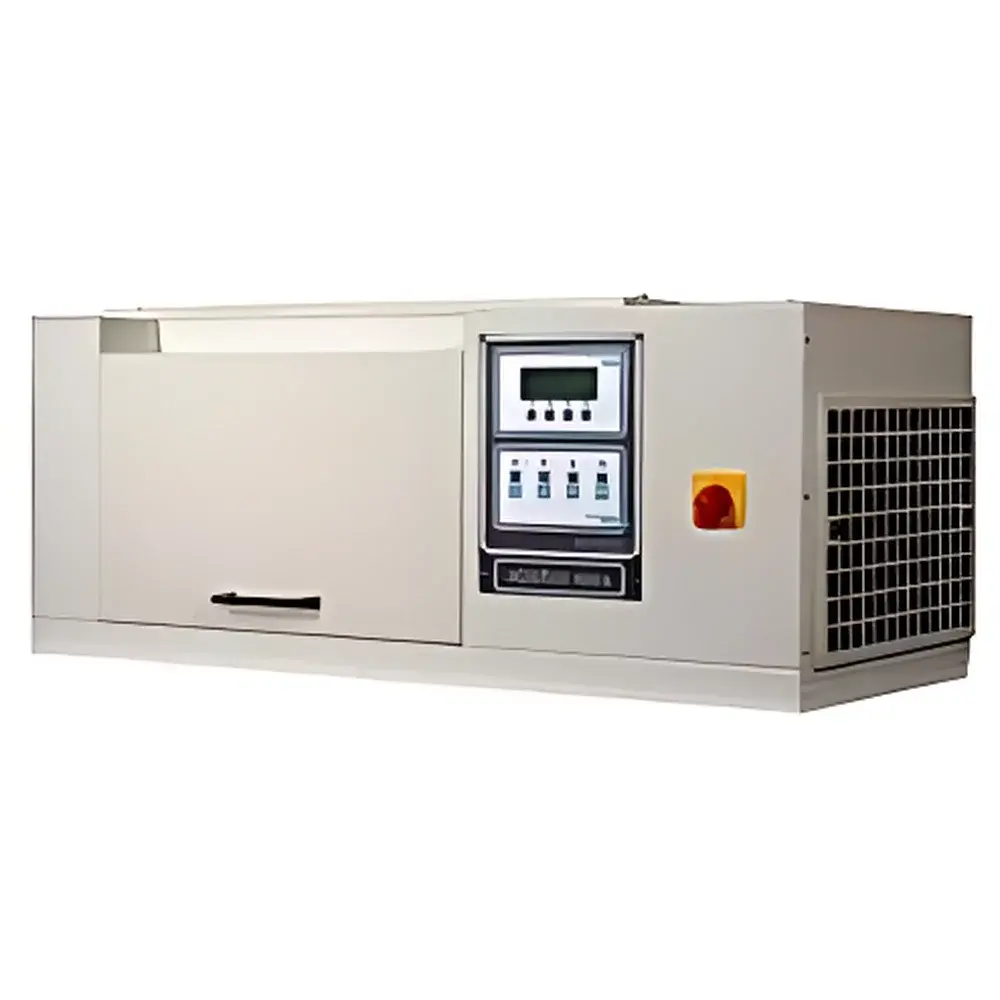
Cofomegra SOLARBOX Series Xenon Arc Weathering Chamber
| Brand | Cofomegra |
|---|---|
| Origin | Italy |
| Model | SOLARBOX (1500e / 3000e) |
| Spray Mode | Continuous |
| Fog Collection Rate | 1–2 mL/80 cm²/h |
| Nozzle Pressure | 0.7 bar |
| De-fogging Method | Air-assisted雾 removal |
| Salt Fog Settling Rate | 1–2 mL/80 cm²/h |
| Temperature Range | Ambient to 100°C |
| Black Panel Temperature Range | 35–100°C |
| Water Injection Interval | 1–999 min |
| Water Temperature | 30–50°C |
| Chamber Volume | Up to 300 L (D100/D200) |
| Compliance | ASTM D1735, ASTM D2247, ISO 6270-1, ISO 4541, ISO 3231, DIN 50017, EN ISO 6988, VDA 621-421 |
Overview
The Cofomegra SOLARBOX Series is a high-precision xenon arc weathering chamber engineered for accelerated simulation of natural outdoor exposure conditions—including solar radiation, thermal cycling, humidity, and controlled wetting cycles. Unlike UV fluorescent or metal halide-based systems, the SOLARBOX employs air-cooled xenon lamps with calibrated optical filters to reproduce the full solar spectrum (290–800 nm), including critical UVA, UVB, visible, and near-infrared components. This spectral fidelity enables realistic photochemical degradation assessment across polymers, coatings, textiles, automotive trim, and architectural materials. The parabolic reflector geometry positions the lamp at the focal point, ensuring uniform irradiance distribution (±5% across specimen plane) as verified per ISO 4892-2 Annex B. Radiation intensity is continuously monitored and regulated via a calibrated broadband radiometer (300–800 nm), maintaining setpoint stability within ±0.5 W/m²/nm—critical for inter-laboratory reproducibility and compliance with ASTM G155 and ISO 4892-2 requirements.
Key Features
- Two platform variants: compact benchtop SOLARBOX 1500e (150 L chamber) and large-capacity SOLARBOX 3000e (300 L chamber), accommodating 3D industrial parts and multi-specimen arrays
- Integrated black panel thermometer (BPT) system with PID-controlled heating and forced-air cooling, enabling precise black panel temperature regulation from 35°C to 100°C—mimicking real-world surface heating under solar load
- Programmable water injection module with adjustable interval (1–999 minutes), temperature-controlled deionized water delivery (30–50°C), and dual operational modes (lamp ON/OFF during spray)
- Recirculating deionized water reservoir (50 L capacity) with PVC and corrosion-resistant pump construction, minimizing consumable usage while maintaining consistent spray morphology
- Modular filter system supporting multiple spectral configurations: Daylight-Q (ISO 4892-2), Window Glass-Q (ASTM G155 Cycle 1), and Extended UV (for aggressive stabilization screening)
- Dual-purpose auxiliary chamber option: D100 (humidity-only condensation testing) and D200 (SO₂-enhanced cyclic corrosion per DIN 50018 and VDA 621-421)
Sample Compatibility & Compliance
The SOLARBOX accommodates flat panels (up to 600 × 600 mm), molded 3D components, and assembled subassemblies without geometric restriction. Specimen mounting uses non-reflective, thermally inert aluminum racks with adjustable angle (0°–30°) to replicate real-world orientation effects. All internal chamber surfaces are constructed from UV-stable, non-outgassing polypropylene or fiberglass-reinforced polyester—eliminating catalytic interference and ensuring long-term calibration integrity. The system fully complies with international standards governing light exposure and corrosion testing, including ASTM D1735 (water immersion resistance), ASTM D2247 (100% RH condensation), ISO 6270-1 (condensation humidity), ISO 3231 (SO₂ corrosion), EN ISO 6988 (cyclic salt mist/SO₂), and VDA 621-421 (automotive component validation). Full traceability is supported via integrated audit trail logging compliant with FDA 21 CFR Part 11 requirements when paired with optional software modules.
Software & Data Management
The SOLARBOX operates via an embedded industrial controller with intuitive touchscreen HMI, supporting up to 99 programmable test cycles with independent ramp/soak profiles for irradiance, black panel temperature, chamber humidity, and water injection timing. Optional Cofomegra LabControl™ software provides remote monitoring, real-time data export (CSV/Excel), automated report generation (PDF), and GLP-compliant electronic signatures. All operational parameters—including lamp voltage, filter age, radiometer drift correction, and calibration history—are timestamped and archived with SHA-256 hash verification. Data logs meet ISO/IEC 17025 documentation requirements for accredited testing laboratories and support full retrospective analysis for root cause investigations in failure analysis workflows.
Applications
- Automotive OEMs and Tier-1 suppliers validating exterior trim, headlamp lenses, sealants, and interior soft-touch materials per SAE J2527 and GMW14872
- Coatings manufacturers assessing chalk resistance, gloss retention, and color shift in architectural and industrial paints (ASTM D4587, ISO 11341)
- Polymer compounders evaluating UV stabilizer package efficacy in PP, PE, PC, and ABS formulations
- Aerospace material suppliers qualifying composite resins and protective films under MIL-STD-810H Method 505.6
- Textile labs measuring photofading of dyed fabrics and functional finishes per AATCC TM16 and ISO 105-B02
- Building product certifiers conducting durability assessment of roofing membranes, cladding systems, and window glazing per EN 1297 and ASTM D4798
FAQ
What spectral range does the SOLARBOX xenon lamp cover?
The air-cooled xenon arc lamp delivers continuous output from 290 nm to 800 nm, covering UVB, UVA, visible, and near-IR regions—fully aligned with terrestrial solar irradiance as defined in CIE 85 and ISO 4892-2.
Can the SOLARBOX perform combined light/humidity/spray cycles?
Yes. The system supports fully synchronized sequences integrating irradiance control, black panel temperature ramping, relative humidity modulation (up to 95% RH), and timed water injection—all independently programmable within a single test cycle.
Is SO₂ corrosion testing integrated into the main chamber?
No. SO₂ capability is provided via the dedicated D200 auxiliary chamber, which interfaces with the SOLARBOX control system for coordinated multi-stage testing (e.g., UV exposure → SO₂ condensation → drying), meeting DIN 50018 and VDA 621-421 protocols.
How often does the radiometer require recalibration?
Annual traceable recalibration against NIST-traceable reference standards is recommended; the system logs cumulative lamp operating hours and triggers maintenance alerts at 1,500-hour intervals.
Does the chamber support third-party data acquisition systems?
Yes. Analog 0–10 V and digital RS-485 Modbus RTU interfaces are standard, enabling integration with SCADA platforms, LIMS, or custom Python-based monitoring scripts.



