
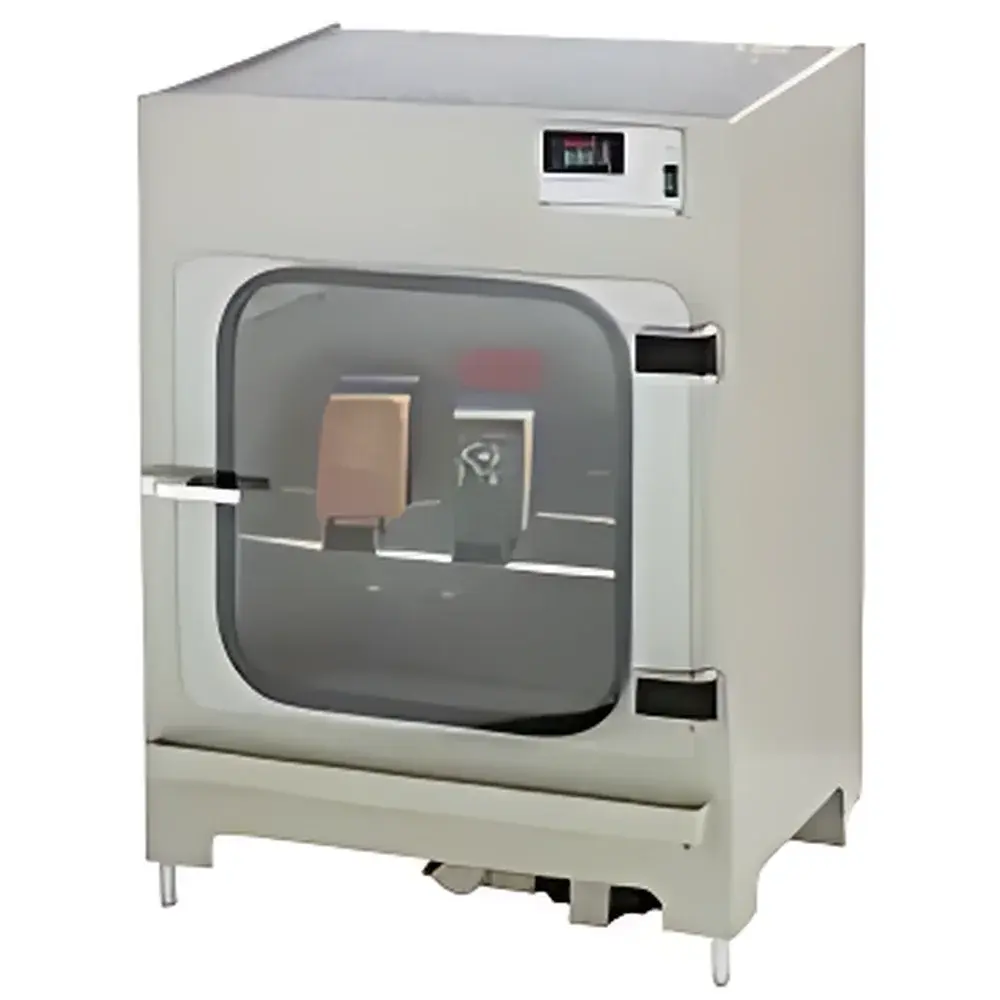
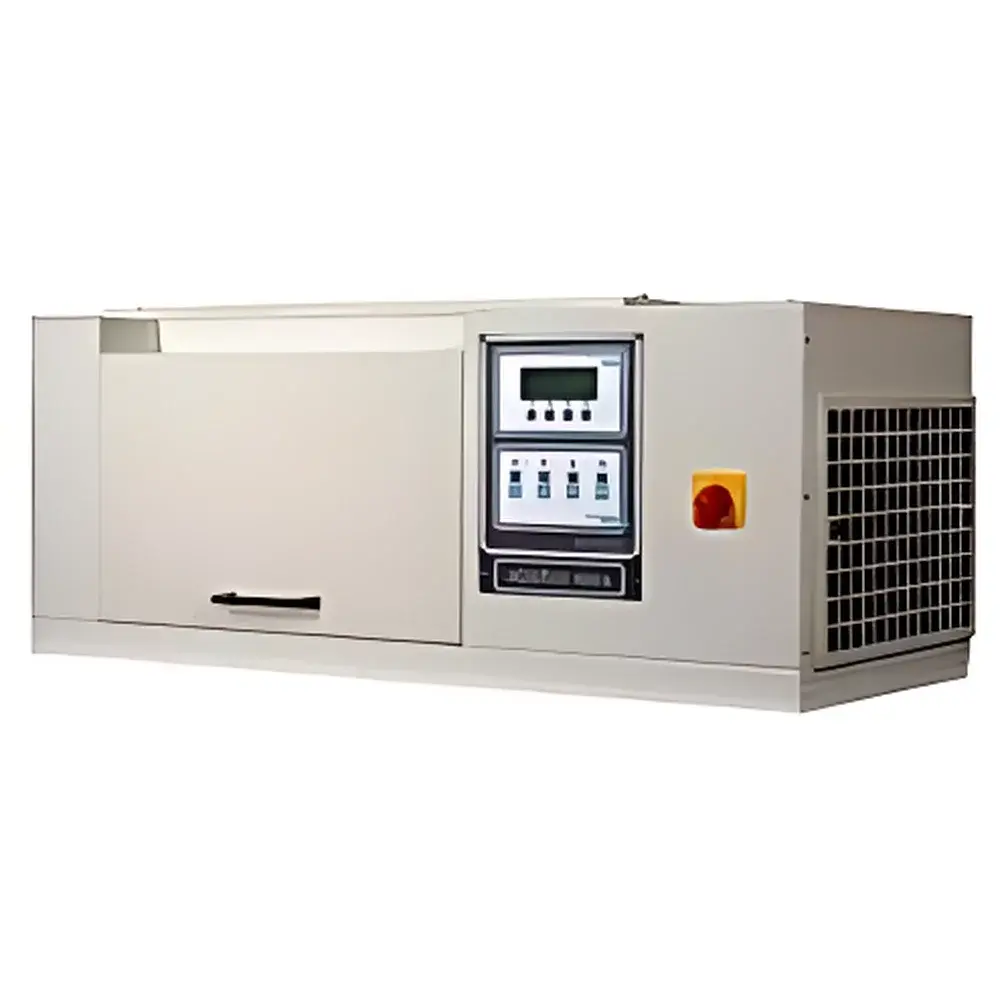
Cofomegra D100 Environmental Test Chamber for Humidity-Controlled Corrosion Testing
| Brand | Cofomegra |
|---|---|
| Origin | Italy |
| Model | D100 |
| Chamber Volume | 300 L |
| Interior Material | Full Plastic Construction |
| Temperature Range | Up to 55 °C |
| Spray Method | Single Nozzle System |
| Salt Fog Deposition Rate | Compliant with ISO 9227 & ASTM B117 Baseline Requirements |
| Humidity Control | Saturated Atmosphere at Constant RH |
| Compliance | ASTM D1735, ASTM D2247, BS 3900/F9, DIN 50017, DIN 55958, DIN 55991, ISO 11503, ISO 6270-1, ISO 4541, ISO 3231, NFT 30-077 |
| Electrical Supply | 230 V, 50 Hz |
| Configuration | Standalone Unit with Manual Operation Interface |
Overview
The Cofomegra D100 Environmental Test Chamber is a precision-engineered instrument designed for controlled humidity corrosion testing under saturated atmospheric conditions. It operates on the principle of maintaining a stable, fully saturated environment—typically at elevated temperatures (up to 55 °C)—to accelerate electrochemical degradation mechanisms in metallic and coated substrates. Unlike conventional salt spray chambers governed solely by ASTM B117, the D100 implements a humidity-dominant exposure paradigm aligned with standards such as ASTM D1735 (water immersion resistance), ASTM D2247 (condensing humidity), and ISO 6270-1 (humidity cabinet testing). Its 300 L test chamber features full plastic construction—including polypropylene walls, lid, and internal fixtures—to eliminate metallic contamination and ensure long-term chemical inertness during prolonged exposure to chloride-laden or acidic vapors. The system is configured for static saturation mode only, without SO₂ injection capability (a function reserved for the D200 variant), making it ideal for evaluating paint adhesion, galvanic coating integrity, and polymer barrier performance under high-RH stress.
Key Features
- 300 L corrosion test chamber with seamless, chemically resistant polypropylene interior
- Precise temperature regulation up to 55 °C with ±0.5 °C stability over 24-hour cycles
- Controlled saturated atmosphere generation via integrated water reservoir and vapor diffusion path
- Single-nozzle salt fog delivery system calibrated to meet ISO 9227 deposition rate requirements (1.0–2.0 mL/80 cm²/h)
- Passive de-misting mechanism ensuring rapid ambient reconditioning post-test
- Compliance-ready design supporting audit documentation for ISO/IEC 17025-accredited laboratories
- 230 V, 50 Hz single-phase power interface compatible with European mains infrastructure
Sample Compatibility & Compliance
The D100 accommodates flat-panel specimens up to 300 mm × 300 mm × 25 mm, with adjustable sample racks allowing vertical or angled orientation. It supports standard test coupons per ASTM G1, ISO 1514, and EN ISO 1513. All internal surfaces are non-metallic and UV-stabilized to prevent catalytic surface reactions. The chamber meets essential regulatory benchmarks including ASTM D1735 (cyclic condensation), ASTM D2247 (100% RH at 38 °C), ISO 6270-1 (humidity cabinet method), and ISO 3231 (sulfur dioxide resistance—though SO₂ is not delivered in D100 configuration). It does not incorporate automated gas dosing or dynamic RH modulation; therefore, it is not certified for EN ISO 6988 or DIN 50018 (SO₂ cyclic tests), which require the D200 model.
Software & Data Management
The D100 operates via a dedicated analog/digital hybrid control panel with LED indicators for temperature, saturation status, and operational cycle phase. While it lacks embedded microprocessor-based programming or Ethernet connectivity, its control architecture is fully traceable and supports GLP-compliant manual logging. Temperature sensors are calibrated to NIST-traceable references, and calibration certificates are provided upon installation. Users may integrate external data loggers (e.g., HOBO UX100 series) via the accessible sensor port for continuous monitoring and CSV export. The unit complies with general electrical safety standards IEC 61010-1 and carries CE marking for EMC and low-voltage directive conformity.
Applications
This chamber is routinely deployed in QC laboratories for evaluating: corrosion resistance of automotive body panels and fasteners; durability of marine-grade aluminum alloys; blistering and delamination thresholds in coil-coated steel; long-term stability of printed circuit board conformal coatings; and hydrolytic degradation kinetics in biodegradable packaging films. It is widely specified in supplier qualification protocols for Tier 1 automotive OEMs (e.g., VW TL 226, Ford WSK-M2G322-A2) and aerospace component manufacturers requiring humidity-induced failure mode analysis per SAE AMS 2700. Academic researchers utilize the D100 for fundamental studies on moisture diffusion coefficients in epoxy–glass composites and interfacial water layer formation at polymer–metal interfaces.
FAQ
Does the D100 support SO₂ gas injection?
No. SO₂ capability is exclusive to the D200 model. The D100 is limited to humidity-saturated and salt fog exposures only.
Can the D100 be used for ASTM B117 salt spray testing?
It is not optimized for ASTM B117, which requires pressurized atomization and strict pH/temperature control. Its design follows ASTM D1735 and ISO 6270-1 protocols instead.
What maintenance intervals are recommended?
Daily visual inspection of water level and nozzle integrity; monthly cleaning of the saturation chamber with deionized water; annual recalibration of the PT100 temperature sensor by an accredited metrology lab.
Is remote monitoring possible?
Not natively. However, third-party data loggers can be connected to the analog output terminals for real-time cloud-based logging and alarm triggering.
Does the chamber include a test report generator?
No built-in reporting software exists. Test records must be manually compiled using time-stamped temperature logs and visual inspection sheets aligned with ISO/IEC 17025 documentation requirements.



