
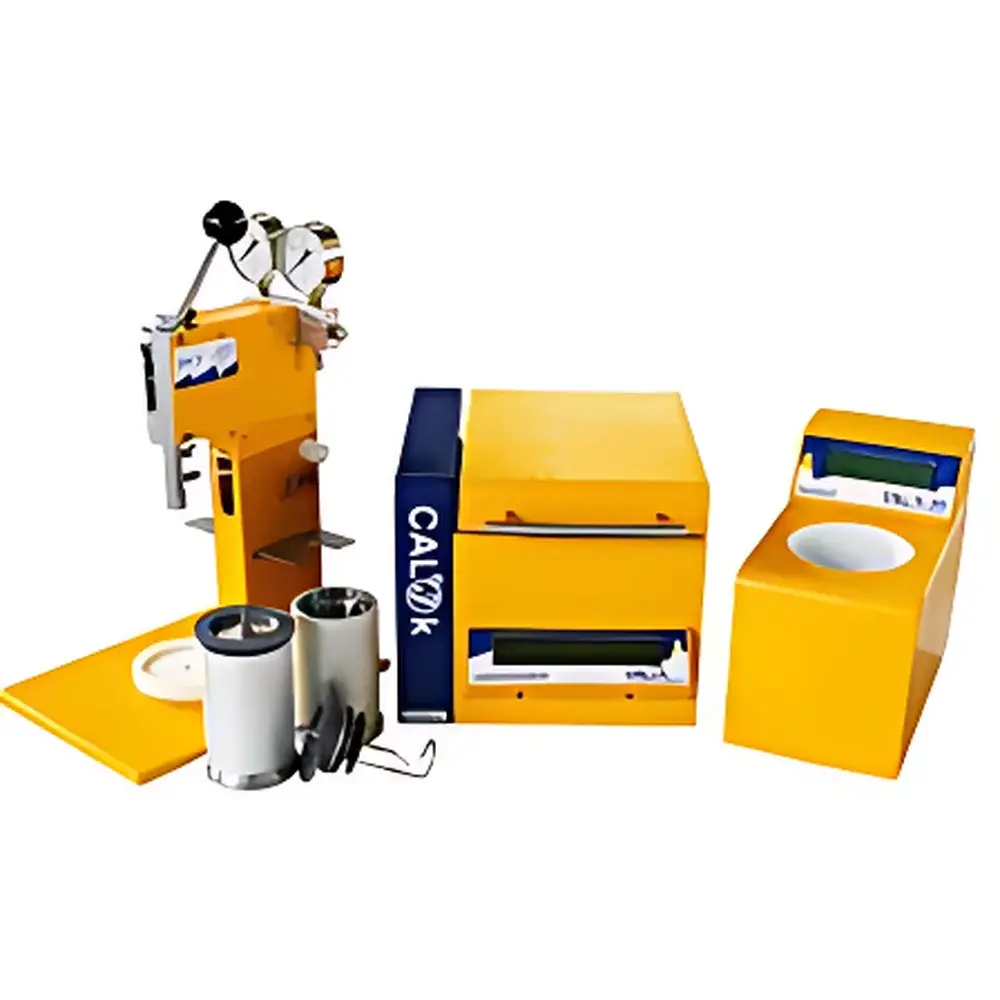
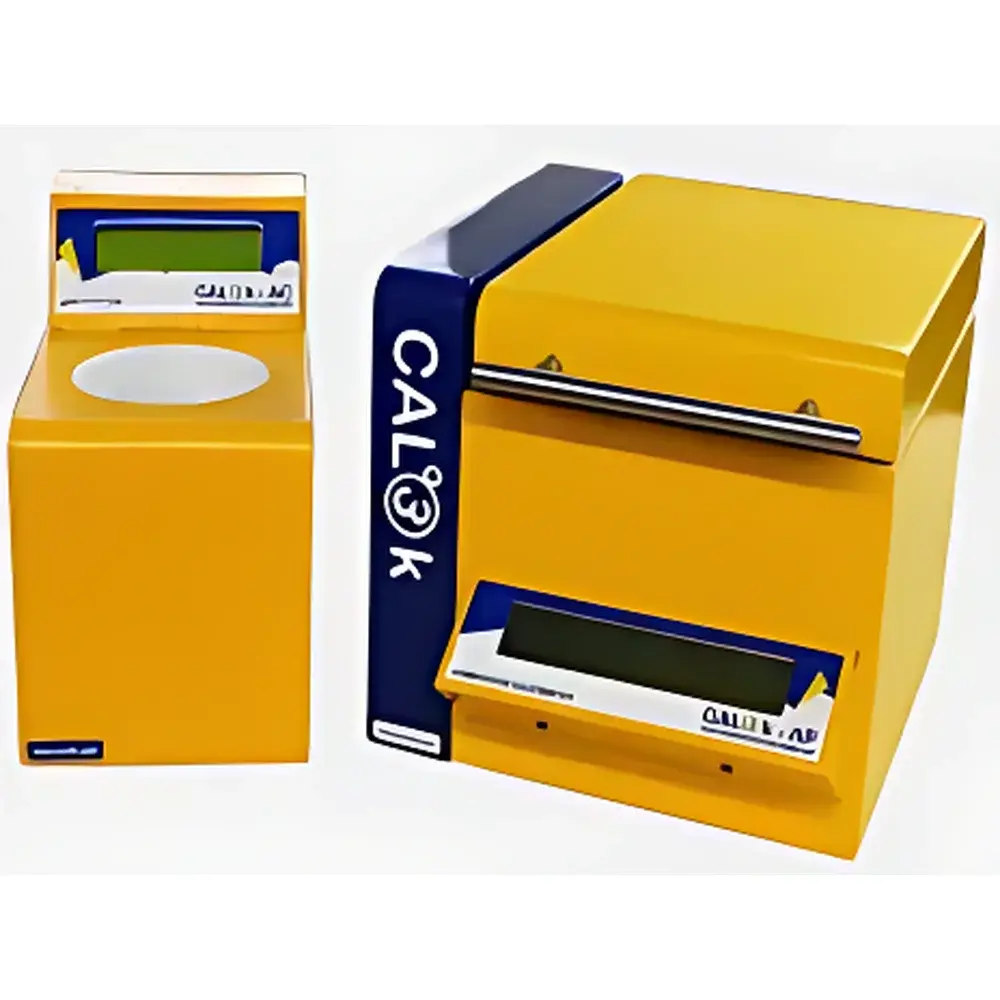
DDS CAL3K-A Isoperibolic Oxygen Bomb Calorimeter
| Key | Brand: DDS |
|---|---|
| Origin | South Africa |
| Model | 2370/SEM |
| Compliance | ASTM D240, D5865, D4809, D5468, E144, E711 |
| BS 4791 | 1985 |
| Sample Throughput | Up to 8 CV determinations per hour |
| Measurement Time | 2–4 min per test |
| Memory Capacity | 1000 test records with operator metadata and test conditions |
| Smart Bomb Count | 255 uniquely identified intelligent oxygen bomb vessels |
| Calibration Modes | Automatic correction for fuse wire, cotton, ignition energy |
| Integrated Calibration Sensors | Embedded in each bomb vessel |
| Mass Input Options | Manual keypad, analytical balance interface, or PC-based data import |
Overview
The DDS CAL3K-A Isoperibolic Oxygen Bomb Calorimeter is a high-precision, fully automated instrument engineered for the accurate determination of gross calorific value (GCV) and net calorific value (NCV) of solid, liquid, and semi-solid fuels and organic materials. Operating on the principle of isoperibolic calorimetry—where the outer jacket temperature remains constant while the inner calorimeter vessel undergoes controlled thermal exchange—the system delivers exceptional reproducibility and long-term stability without reliance on water-level management or manual thermal equilibrium adjustments. Unlike adiabatic or static-bomb systems, the CAL3K-A’s isoperibolic architecture eliminates water bath overflow risks, evaporation drift, and operator-dependent leveling procedures. Each intelligent oxygen bomb is equipped with an integrated microprocessor, embedded calibration sensor, and self-diagnostic firmware, enabling real-time thermal compensation and traceable measurement integrity across all operational conditions.
Key Features
- Fully automated operation from sample loading to final GCV report generation, minimizing manual intervention and inter-operator variability.
- High-throughput capability: supports up to eight complete calorific value determinations per hour under standard operating conditions—optimized for QC laboratories, power plant fuel monitoring, and bulk material certification.
- Intelligent oxygen bomb fleet: up to 255 uniquely addressable bomb vessels, each storing ten independent calibration curves (in BTU, cal, or MJ/kg) and maintaining individual calibration history and fault logs.
- Adaptive ignition control: user-configurable ignition energy thresholds, adjustable high/low mass limits, and programmable test cycle parameters—including pre-ignition stabilization, combustion duration, and post-combustion cooling phases.
- Multi-source mass input integration: direct communication with analytical balances (RS-232 or USB), manual entry via alphanumeric keypad, or batch import from LIMS or ERP systems.
- Onboard memory storage: retains 1000 full test records—including sample ID, operator ID, ambient conditions, calibration coefficients, raw temperature rise data, and statistical summaries—fully compliant with GLP audit requirements.
- Networked operation: up to seven CAL3K-A units can be synchronized and centrally managed via Ethernet, enabling coordinated calibration schedules, shared reference standards, and consolidated reporting.
Sample Compatibility & Compliance
The CAL3K-A is validated for heterogeneous sample matrices including bituminous and anthracite coals, biomass pellets, animal feedstuffs, cement clinker, industrial explosives, liquid hydrocarbons (e.g., diesel, biodiesel blends), and food-grade organic substrates. Its design and performance are rigorously aligned with international regulatory and standardization frameworks: ASTM D240 (petroleum products), D5865 (coal and coke), D4809 (liquid fuels), D5468 (waste-derived fuels), E144 (calorimeter calibration), and E711 (refuse-derived fuel); ISO 1928 (solid mineral fuels); DIN 51900-2 (German standard for solid fuels); British Standard BS 4791:1985; and Chinese national standards GB 14402 and JJG 672. All calibration protocols support traceability to NIST-traceable benzoic acid standards, and system validation includes repeatability (≤0.1% RSD) and accuracy verification against certified reference materials (CRMs).
Software & Data Management
The instrument operates under DDS Calorimetry Suite v4.x—a Windows-based application supporting role-based access control, electronic signatures, and full 21 CFR Part 11 compliance when deployed in regulated environments. Audit trails capture every parameter change, calibration event, and result modification with timestamp, user ID, and reason-for-change annotation. Data export options include CSV, XML, and PDF formats compatible with laboratory information management systems (LIMS). Remote diagnostics, firmware updates, and calibration curve synchronization are supported over secure TCP/IP connections. The software also provides statistical process control (SPC) dashboards—tracking moving averages, control charts, and outlier detection based on historical test populations.
Applications
- Coal and coke quality assurance in thermal power generation and metallurgical processing.
- Alternative fuel characterization for waste-to-energy facilities and cement kiln co-processing.
- R&D and formulation development in food science, animal nutrition, and biofuel synthesis.
- Regulatory compliance testing for emissions trading schemes (e.g., EU ETS) requiring verified GCV inputs.
- Explosives safety certification and energetic material performance benchmarking.
- Academic research in thermodynamics, combustion kinetics, and sustainable energy material screening.
FAQ
What distinguishes isoperibolic operation from adiabatic or static-bomb calorimetry?
Isoperibolic design maintains a constant outer jacket temperature while precisely measuring heat flow into the inner vessel—eliminating water-level dependency and reducing sensitivity to ambient fluctuations compared to adiabatic systems, and offering superior precision versus static-bomb methods.
How is calibration traceability ensured across multiple intelligent bomb vessels?
Each bomb contains a factory-calibrated temperature sensor and stores its own set of 10 calibration curves; all calibrations are referenced to NIST SRM 39j benzoic acid and documented in the system audit trail.
Can the CAL3K-A integrate with existing LIMS or SAP QM modules?
Yes—via configurable ODBC drivers and HL7-compatible data export templates, supporting seamless two-way communication for sample dispatch, result ingestion, and certificate generation.
Is remote firmware update supported without onsite service intervention?
Yes—secure over-the-air (OTA) updates are delivered via encrypted HTTPS channels and require dual-authorized approval before installation.
What maintenance intervals are recommended for long-term metrological reliability?
Annual verification using certified CRMs is advised; oxygen bomb pressure testing and electrical insulation checks should be performed quarterly per ISO/IEC 17025 guidelines.



