
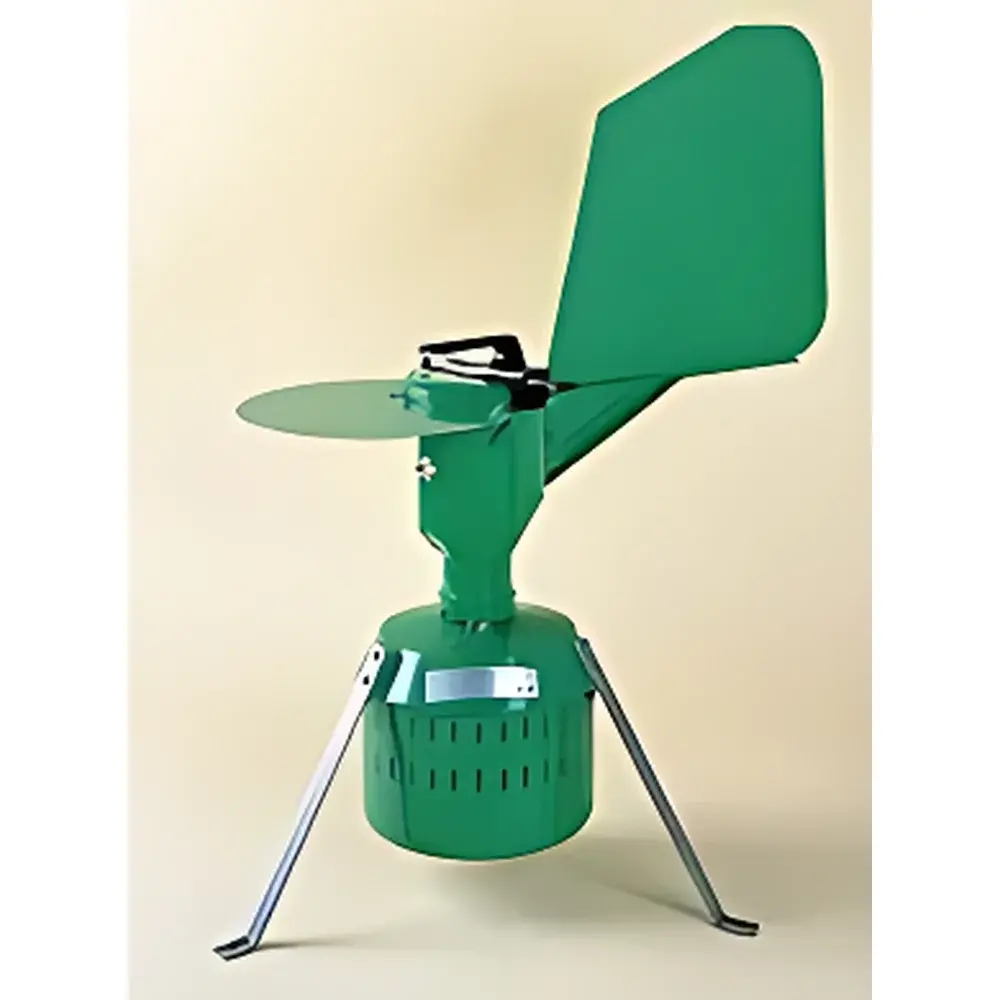
Hirst-Type Spore Trap
| Origin | UK |
|---|---|
| Manufacturer Type | Authorized Distributor |
| Origin Category | Imported |
| Model | Hirst-Type |
| Pricing | Available Upon Request |
Overview
The Hirst-Type Spore Trap is a precision-engineered, continuous-volume air sampling instrument designed for long-term, quantitative monitoring of airborne biological particulates—including fungal spores, pollen grains, and other bioaerosols in the 1–10 µm aerodynamic diameter range. Developed and manufactured in the United Kingdom by Burkard Manufacturing Co. Ltd., this instrument operates on the principle of inertial impaction onto a moving adhesive surface—specifically, a transparent polyester tape driven by a high-accuracy 7-jewel clockwork mechanism. Air is drawn through a calibrated orifice (2 mm × 14 mm) at a controlled volumetric flow rate of up to 10 L/min via an integrated vacuum pump. The sampler’s large vane rotor ensures directional sensitivity to subtle wind shifts, enabling representative ambient air intake without active orientation control. Its modular architecture supports both mains-powered and battery-operated operation (12 V DC), with optional solar photovoltaic integration—featuring a compact 55 W panel (330 × 1300 × 35 mm)—and intelligent charge management for uninterrupted 24/7 operation.
Key Features
- Continuous 7-day sampling cycle using precision-driven adhesive tape transport (2 mm/h linear speed)
- Robust aluminum frame with enamel or anodized aluminum surface finish for corrosion resistance and portability (net weight: 16 kg)
- Interchangeable orifice design optimized for enhanced collection efficiency of particles 1–10 µm in aerodynamic diameter
- Dual power configuration: switchable between AC mains supply and rechargeable 12 V battery pack
- Integrated solar-ready controller with day/night energy management—stores daytime PV output for nocturnal operation
- Modular mounting options: ground-mounted, rooftop-mounted, or pole-mounted (requires anodized aluminum support frame for fixed installations)
- Optional microscope slide adapter kit available for direct deposition onto standard 25 × 76 mm glass slides (24-hour capture mode)
- Calibrated airflow regulation via manometer or metering screw; maximum flow: 10 L/min
Sample Compatibility & Compliance
The Hirst-type spore trap is validated for use in environmental monitoring programs aligned with international guidelines for aerobiological surveillance, including WHO Technical Report Series No. 961 (2011), ISO 8573-7:2019 (airborne particle counting), and EN 13725:2003 (odor measurement—dynamic olfactometry, where spore load correlates with bioaerosol background). While not a diagnostic medical device, its consistent tape-based collection method supports downstream microscopic identification and semi-quantitative enumeration per standardized protocols (e.g., USDA APHIS identification keys, European Aerobiology Federation methodologies). The adhesive tape substrate (polyester film) preserves morphological integrity of captured spores and pollen, enabling staining, phase contrast, or fluorescence microscopy. All structural materials comply with RoHS Directive 2011/65/EU and are non-reactive under typical laboratory storage conditions.
Software & Data Management
The Hirst spore trap is a standalone electromechanical instrument with no embedded firmware or digital interface. Data acquisition occurs post-sampling via manual microscopic analysis of the tape or slide—enabling full traceability and analyst-controlled interpretation. For laboratories operating under GLP or GMP frameworks, the system supports audit-ready documentation: each tape roll bears sequential lot numbering, and time-stamped sampling logs (aligned to the 7-jewel clock’s ±15 sec/day accuracy) can be maintained manually or integrated into LIMS via barcode-scanned tape identifiers. Optional third-party image analysis software (e.g., ImageJ plugins, NIS-Elements) may be applied to digitized tape scans for particle counting and size distribution profiling—provided calibration standards (NIST-traceable microspheres) are used during validation.
Applications
- Aerobiological surveillance for early warning of plant pathogen outbreaks (e.g., Puccinia, Alternaria, Cladosporium) in agricultural and forestry settings
- Urban and rural pollen forecasting networks supporting public health advisories (e.g., hay fever risk modeling)
- Indoor air quality assessment in hospitals, pharmaceutical cleanrooms, and archival storage facilities
- Baseline bioaerosol characterization for environmental impact assessments (EIAs) and regulatory compliance reporting
- Research on atmospheric transport dynamics of microbial aerosols across mesoscale gradients
- Validation of computational dispersion models (e.g., HYSPLIT, CALPUFF) with empirical spore deposition data
FAQ
What is the standard sampling duration, and can it be adjusted?
The default continuous sampling cycle is 7 days using the adhesive tape system. When configured with the optional microscope slide adapter, the capture duration is limited to 24 hours per slide due to surface saturation constraints.
Is calibration required before deployment?
Yes—volumetric flow must be verified using a primary standard flow calibrator (e.g., dry gas meter or electronic bubble flowmeter) prior to each field campaign. The orifice geometry and pump performance should be rechecked after transport or maintenance.
Can the unit operate unattended in remote locations?
Yes—when paired with the solar charging system and deep-cycle battery, the trap maintains fully autonomous 24/7 operation for extended periods without grid connectivity.
Does the instrument meet FDA 21 CFR Part 11 requirements?
No—the device generates no electronic records and does not fall within the scope of Part 11. However, handwritten or LIMS-integrated sampling logs derived from its output are compatible with ALCOA+ data integrity principles when properly governed.
What maintenance intervals are recommended?
The vacuum pump oil should be replaced every 6 months under continuous operation; the clockwork mechanism requires annual lubrication by certified service technicians. Orifice plates and adhesive tapes are single-use consumables and must be replaced per sampling cycle.
Related Products



