
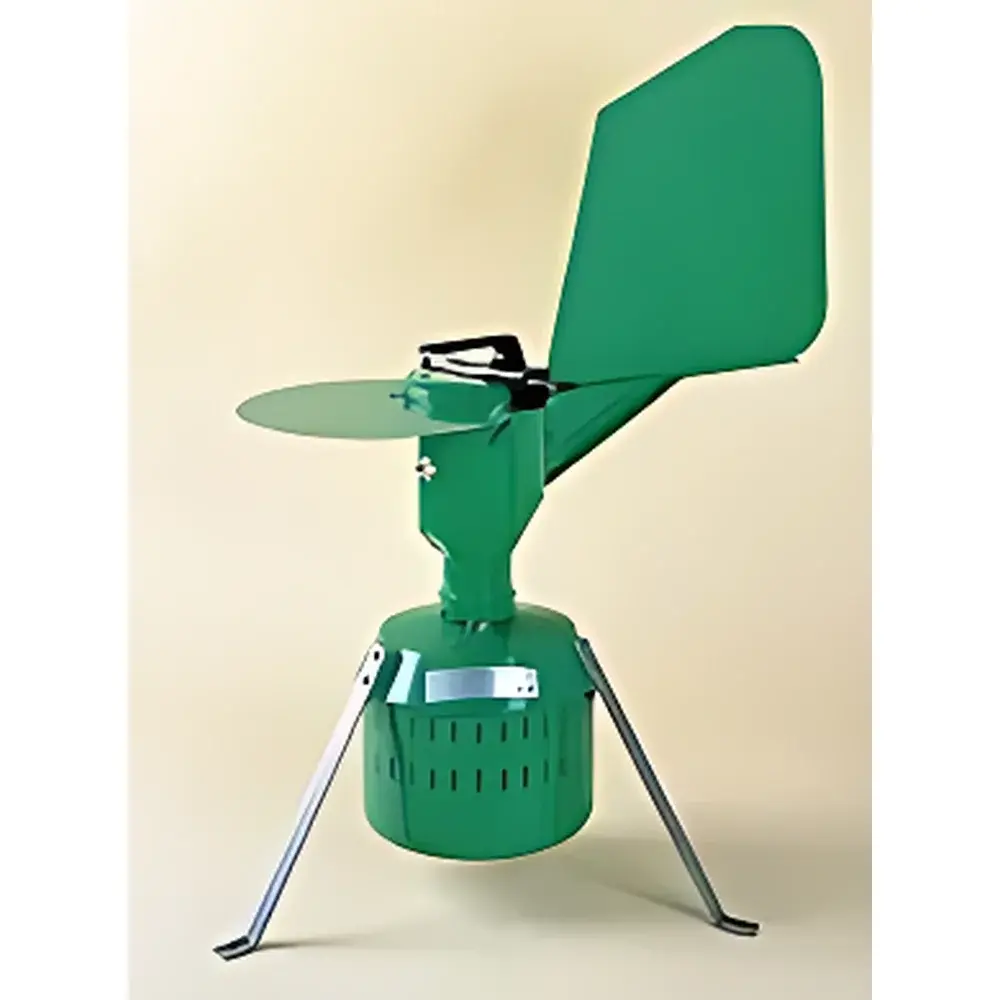
Burkard HIRST-Type Spore Trap
| Brand | Burkard |
|---|---|
| Origin | United Kingdom |
| Model | HIRST-Type |
| Power Options | AC Mains or 12V Rechargeable Battery |
| Airflow | 10 L/min (adjustable via rotameter or needle valve) |
| Sampling Duration | Up to 7 days continuous (standard) |
| Drum Advancement Rate | 2 mm/h |
| Aperture Dimensions | 2 mm × 14 mm |
| Capture Substrate | Transparent polyester adhesive tape (standard) |
| Capture Area | 0.882 m² (at 53 cm radius) |
| Overall Height | 94 cm |
| Footprint | 60 × 70 × 80 cm |
| Net Weight | 16 kg |
| Solar Compatibility | Optional 55 W monocrystalline PV panel (330 × 1300 × 35 mm), with charge controller for 24/7 operation |
| Construction | Anodized aluminum frame |
| Compliance | Designed in accordance with ISO 21527-1:2008 (Microbiology of food and animal feeding stuffs — Horizontal method for the enumeration of yeasts and moulds — Part 1: Colony count technique at 25 °C) and aligned with UK DEFRA & EPAA spore monitoring protocols |
Overview
The Burkard HIRST-Type Spore Trap is a precision-engineered, volumetric air sampling instrument designed for long-term, quantitative aerobiological monitoring of airborne fungal spores, pollen, and other respirable bioaerosols in the 1–10 µm aerodynamic diameter range. Based on the foundational Hirst volumetric sampling principle first described in Annals of Applied Biology (1952, Vol. 39, pp. 257–265), this instrument integrates mechanical timekeeping accuracy, controlled airflow dynamics, and standardized substrate geometry to deliver reproducible, traceable spore deposition data. Its core operating principle relies on isokinetic aspiration: ambient air is drawn through a calibrated rectangular orifice (2 mm × 14 mm) at a constant flow rate of up to 10 L/min, generating laminar flow across an adhesive capture surface. Spores impact and adhere to a continuously advancing transparent polyester tape mounted on a precision drum—driven by a temperature-compensated, 7-jewel mechanical clock movement—ensuring uniform linear advancement at 2 mm/h. This architecture enables spatially resolved temporal profiling over extended periods (up to 7 days), facilitating diurnal and synoptic pattern analysis without manual intervention.
Key Features
- Volumetric sampling compliant with ISO 21527-1:2008 and widely referenced in UK DEFRA, EPAA, and EU Plant Health Directive monitoring frameworks
- Robust anodized aluminum chassis with enamel-coated structural components, ensuring corrosion resistance in outdoor deployment environments (coastal, agricultural, urban)
- Dual-power architecture: supports 12 V DC battery operation (enabling remote site deployment) and AC mains input; integrated solar-ready interface with dedicated charge controller for uninterrupted 24/7 operation
- Adjustable airflow regulation via calibrated rotameter or fine-thread needle valve, enabling precise validation and calibration against primary flow standards
- Interchangeable aperture system optimized for enhanced collection efficiency across the 1–10 µm particle size range, surpassing original Hirst design limitations
- Modular substrate options: standard adhesive polyester tape (for microscopy and digital image analysis) or optional glass slide cassette (for direct staining and morphological identification per USP & EP guidelines)
- Lightweight portable design (16 kg net weight) with universal mounting compatibility—ground-mounted, rooftop-fixed, or pole-mounted using anodized aluminum support frames
Sample Compatibility & Compliance
The HIRST-Type Spore Trap is validated for the collection of viable and non-viable fungal conidia (e.g., Cladosporium, Alternaria, Aspergillus), ascospores, basidiospores, and allergenic pollen grains. Its standardized orifice geometry, consistent tape velocity, and defined capture area (0.882 m² at 53 cm radius) enable quantitative comparison across multi-site networks and longitudinal studies. The instrument conforms to Good Laboratory Practice (GLP) documentation requirements when paired with calibrated flow meters and timestamped tape reels. Data generated supports regulatory submissions under EU Regulation (EU) 2016/2031 and aligns with WHO Air Quality Guidelines for biological particulates. Optional glass slide configurations facilitate compliance with pharmacopoeial methods (USP , Ph. Eur. 2.6.12) for environmental monitoring in cleanroom and pharmaceutical manufacturing settings.
Software & Data Management
While the HIRST-Type operates as a standalone mechanical sampler, its output is inherently compatible with digital workflow integration. Adhesive tapes are digitized using high-resolution brightfield or fluorescence microscopes equipped with automated stage scanning and AI-assisted particle recognition software (e.g., ImageJ macros, SPIRIT, or custom Python-based classifiers). Timestamped tape segments correspond directly to hourly/diurnal intervals, enabling temporal metadata tagging in LIMS or ELN platforms. For networked deployments, optional Bluetooth-enabled flow loggers (e.g., TSI Flow Tracker Pro) can be retrofitted to record real-time airflow deviation, supporting 21 CFR Part 11–compliant audit trails when used with electronic signatures and secure storage protocols.
Applications
- Aerobiological surveillance for early warning of plant pathogen dispersal (e.g., Puccinia rusts, Botrytis grey mold) in agricultural extension programs
- Urban air quality monitoring of allergenic pollen and mold spore concentrations for public health forecasting
- Baseline environmental monitoring in pharmaceutical cleanrooms and biotech manufacturing facilities
- Climate change impact studies on phenological shifts in spore release timing and abundance
- Validation of HVAC filtration efficiency in hospital and laboratory ventilation systems
- Forensic mycology and indoor air investigation of moisture-damaged buildings
FAQ
What is the recommended calibration frequency for the airflow system?
Annual verification using a NIST-traceable primary standard (e.g., dry gas meter or critical flow orifice) is advised; field checks with a handheld thermal mass flow meter should be performed before each sampling campaign.
Can the instrument operate unattended for 7 days in sub-zero temperatures?
Yes—provided the 12 V battery is rated for low-temperature discharge (e.g., LiFePO₄) and the adhesive tape is selected for cold-weather performance (e.g., Burkard Cryo-Tape); standard acrylic adhesives may lose tack below −5 °C.
Is the solar power option compatible with off-grid telemetry transmission?
Yes—the 55 W PV panel and charge controller provide sufficient surplus capacity to power 3G/LoRaWAN modems for remote data transmission of flow logs and GPS-tagged location metadata.
How is tape alignment verified prior to deployment?
A laser alignment jig (optional accessory) ensures orthogonal tape tension and uniform gap between orifice plane and adhesive surface; visual inspection under 10× magnification confirms absence of wrinkles or static-induced particle deflection.
Does Burkard supply certified reference tapes for inter-laboratory proficiency testing?
Yes—Burkard offers ISO/IEC 17043-accredited spore-spiked reference tapes (with Cladosporium herbarum and Alternaria alternata) for method validation and operator competency assessment.



