
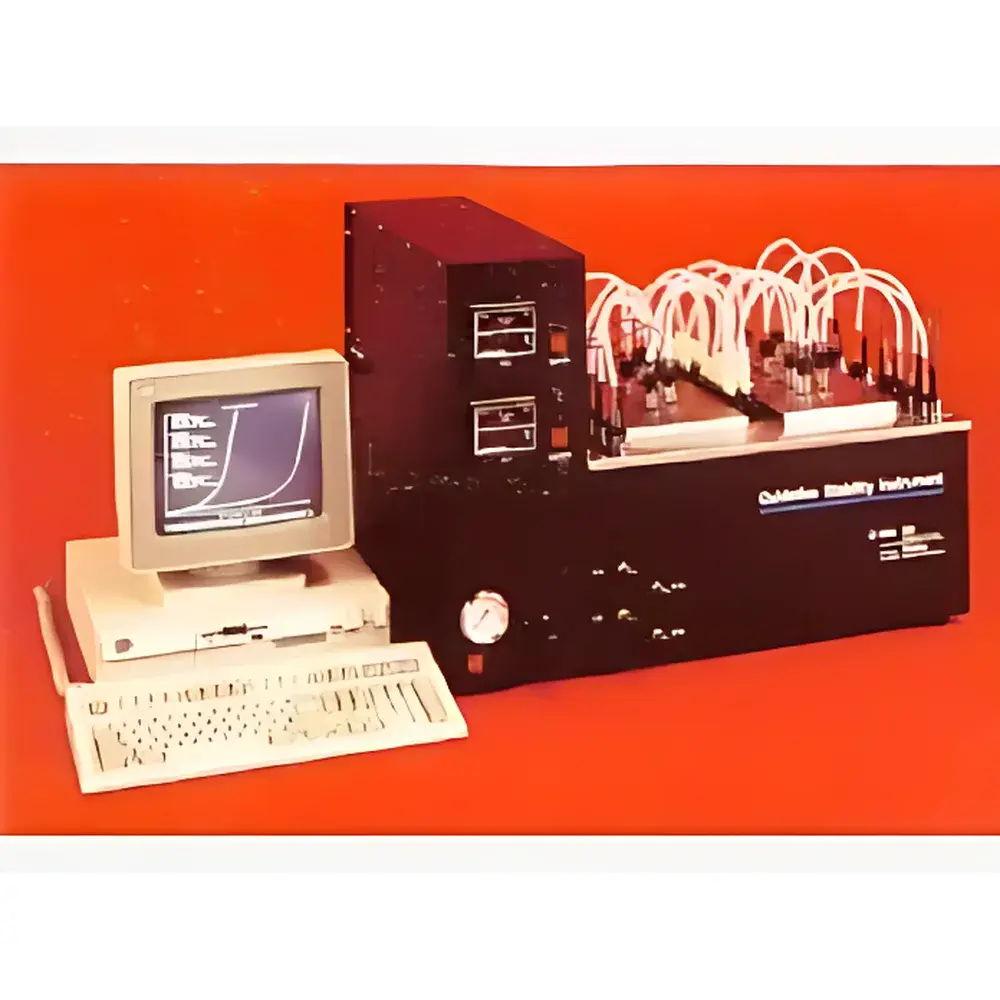
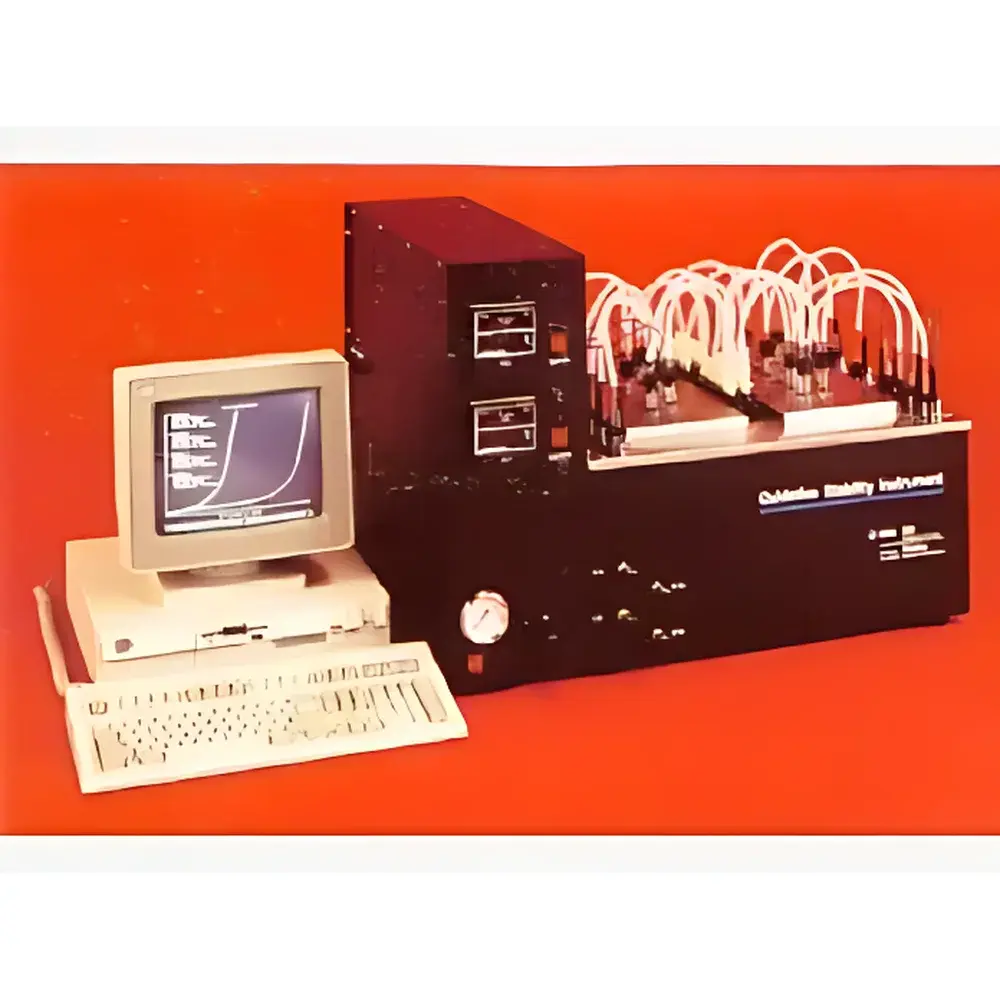
Omnion OSI-24 Oxidation Stability Index Analyzer
| Brand | Omnion |
|---|---|
| Origin | USA |
| Model | OSI-24 |
| Sample Capacity | 24 positions |
| Temperature Range | 40–200 °C |
| Measurement Principle | Oxygen Uptake by Conductometric Detection (OSI Method) |
| Compliance | ASTM D5768, ISO 6886, AOCS Cd 12b-92, EN 14112 |
| Data Output | Real-time oxygen consumption curves, automatic endpoint detection, ISO-compliant report generation |
Overview
The Omnion OSI-24 Oxidation Stability Index Analyzer is a dedicated benchtop instrument engineered for precise, automated determination of oxidation induction time (OIT) — reported as the Oxidation Stability Index (OSI) — in fats, oils, and lipid-containing materials. It implements the standardized oxygen uptake method (OSI), which measures the time required for rapid oxygen consumption under controlled elevated temperature and pure oxygen flow, reflecting the resistance of samples to oxidative degradation. Unlike the outdated Active Oxygen Method (AOM), which relies on manual titration and subjective endpoint judgment, the OSI-24 employs conductometric detection of dissolved oxygen depletion in real time across all 24 sample channels simultaneously. This eliminates operator bias, minimizes exposure to hazardous reagents (e.g., iodine monochloride), and delivers high reproducibility essential for quality control laboratories operating under GLP, GMP, or ISO/IEC 17025 frameworks.
Key Features
- 24-position parallel sample analysis with independent temperature and gas flow control per station, enabling statistically robust batch testing and accelerated stability screening.
- Programmable temperature range from 40 °C to 200 °C in 0.1 °C increments, calibrated traceably to NIST standards; thermal uniformity ±0.3 °C across all wells.
- Integrated mass-flow-controlled oxygen delivery system (purity ≥99.995%) with adjustable flow rate (10–100 mL/min), ensuring consistent oxidative stress conditions compliant with ASTM D5768 and AOCS Cd 12b-92.
- High-sensitivity dual-electrode conductometric sensor array with auto-zeroing and drift compensation, capable of detecting sub-micromolar changes in conductivity associated with peroxide formation and subsequent oxygen depletion.
- Rugged stainless-steel reaction chamber with inert gas purge capability (N₂ or Ar) for baseline stabilization and method validation.
- Embedded microprocessor with onboard data logging (≥10,000 test records), USB and Ethernet connectivity, and password-protected user access levels (operator, supervisor, administrator).
Sample Compatibility & Compliance
The OSI-24 accommodates a broad spectrum of lipid-based matrices without requiring derivatization or solvent extraction: edible oils (soybean, palm, sunflower), animal fats (tallow, lard, butterfat), specialty lipids (cocoa butter, coconut oil), processed foods (chips, crackers, baked goods), pet food formulations, biodiesel (FAME), cosmetic emollients, PVC stabilizers, and feed additives. Each test conforms to internationally recognized protocols: ASTM D5768 (standard test method for oxidative stability of fatty materials by OSI), ISO 6886 (animal and vegetable fats and oils — determination of oxidative stability — accelerated oxidation test), AOCS Cd 12b-92, and EN 14112. Instrument design supports 21 CFR Part 11 readiness through electronic signatures, audit trails, and secure data archiving — facilitating regulatory submissions and third-party laboratory accreditation.
Software & Data Management
Omnion OSI Control Suite v4.x provides intuitive method setup, real-time multi-channel visualization (conductivity vs. time), dynamic endpoint calculation using first-derivative thresholding, and customizable reporting templates aligned with ISO/IEC 17025 documentation requirements. Raw data files (.osi) are stored with full metadata (operator ID, calibration log, environmental conditions, instrument firmware version). Export options include CSV, PDF, and XML formats compatible with LIMS integration. Software validation packages (IQ/OQ/PQ documentation) and change control logs are available upon request to support pharmaceutical-grade or contract research organization (CRO) workflows.
Applications
- Quality assurance of incoming crude and refined oils in edible oil refineries.
- Stability benchmarking of natural antioxidants (e.g., tocopherols, rosemary extract) versus synthetic alternatives (BHA, BHT, TBHQ).
- Shelf-life prediction modeling for snack foods, infant formulas, and dietary supplements.
- Regulatory compliance testing for EU Novel Foods dossiers and FDA GRAS notifications involving lipid-rich ingredients.
- R&D screening of novel fat substitutes, structured lipids, and algal oil formulations under accelerated aging protocols.
- Feed mill QC for ruminant and aquaculture diets where lipid oxidation impacts palatability and nutrient bioavailability.
FAQ
What distinguishes the OSI method from the traditional AOM test?
The OSI method uses instrumental conductometric detection of oxygen consumption under controlled temperature and oxygen flow, delivering objective, repeatable endpoints. AOM relies on manual iodometric titration after fixed air-bubbling intervals, introducing significant inter-operator variability and chemical hazards.
Can the OSI-24 be used for non-food applications such as polymer stabilizers?
Yes — the instrument has been validated for oxidative stability assessment of PVC heat stabilizers, lubricant base stocks, and bio-based plasticizers per ASTM D3893 and ISO 11346 methodologies, with minor method adaptation.
Is method transfer supported between different OSI-24 units?
All units ship with factory-installed reference standards and NIST-traceable calibration certificates. Cross-unit reproducibility studies demonstrate <±2% RSD for identical samples tested across multiple instruments within the same lab environment.
Does the system comply with FDA 21 CFR Part 11 requirements?
The hardware and software architecture supports Part 11 compliance when deployed with validated IT infrastructure, including electronic signatures, audit trail review, and role-based access control — documentation kits are provided for internal validation.
What maintenance is required for long-term reliability?
Routine maintenance includes quarterly sensor recalibration using certified oxygen-depleted standard solutions, annual mass flow controller verification, and biannual thermal gradient mapping — all procedures documented in the OEM service manual.





