
LDI FLUO-IMAGER Portable 3D Fluorescence Spectrometer
| Brand | LDI |
|---|---|
| Origin | Europe |
| Model | FLUO-IMAGER |
| Type | Automatic Portable Spectrometer |
| Haze Range | 0–30% |
| Transmittance Range | 0–100% |
| Haze Repeatability | ±0.2% |
| Transmittance Repeatability | ±0.5% |
| Weight (Portable Version) | 7 kg |
| Battery Life (Standby) | 10 h |
| Measurement Throughput | 500 spectra in ≤6.5 h |
| Excitation Source | Pulsed Xenon Flash Lamp |
| Detection Mode | Simultaneous SFS (EEM) and Absorption Spectroscopy |
| Sample Compatibility | Liquid aqueous matrices only |
| Compliance | Designed for ASTM D1003, ISO 14782, USP <791>, and GLP/GMP-aligned data integrity workflows |
Overview
The LDI FLUO-IMAGER Portable 3D Fluorescence Spectrometer is an engineered field-deployable instrument designed for rapid, reagent-free molecular fingerprinting of organic contaminants in aqueous environments using synchronous fluorescence spectroscopy (SFS) and excitation-emission matrix (EEM) acquisition. Unlike conventional single-wavelength fluorometers, the FLUO-IMAGER captures full three-dimensional fluorescence landscapes—excitation wavelength (λex), emission wavelength (λem), and intensity—enabling unambiguous identification and quantification of overlapping fluorophores such as polycyclic aromatic hydrocarbons (PAHs), petroleum hydrocarbons, phenolic compounds, humic substances, and phytoplankton pigments (e.g., chlorophyll-a). Its core optical architecture employs a high-stability pulsed xenon flash lamp coupled with dual monochromators and a thermoelectrically cooled CCD detector, ensuring low-noise spectral acquisition across 200–700 nm excitation and 250–800 nm emission ranges. The system operates on the principle of inner-filter effect correction via concurrent absorption spectroscopy, permitting accurate fluorescence quantitation even in optically dense or turbid water samples—critical for industrial cooling water, produced water, groundwater monitoring, and marine oil-spill response.
Key Features
- True portable operation: Integrated rechargeable battery supports 10-hour standby and enables up to 500 consecutive EEM measurements within 6.5 hours without external power.
- Simultaneous dual-mode acquisition: Real-time collection of both SFS/EEM datasets and UV-Vis absorption spectra (200–800 nm) in a single sample interrogation—eliminating sequential measurement errors and enabling inner-filter correction.
- Self-adapting spectral library: User-configurable reference database for multivariate calibration (e.g., PARAFAC, MCR-ALS); supports incremental training with new field-collected spectra to improve detection specificity for site-specific contaminants.
- No chemical reagents required: Non-destructive, non-invasive analysis preserves sample integrity; post-measurement reuse is permitted per ISO 5667-3 guidelines for environmental water sampling.
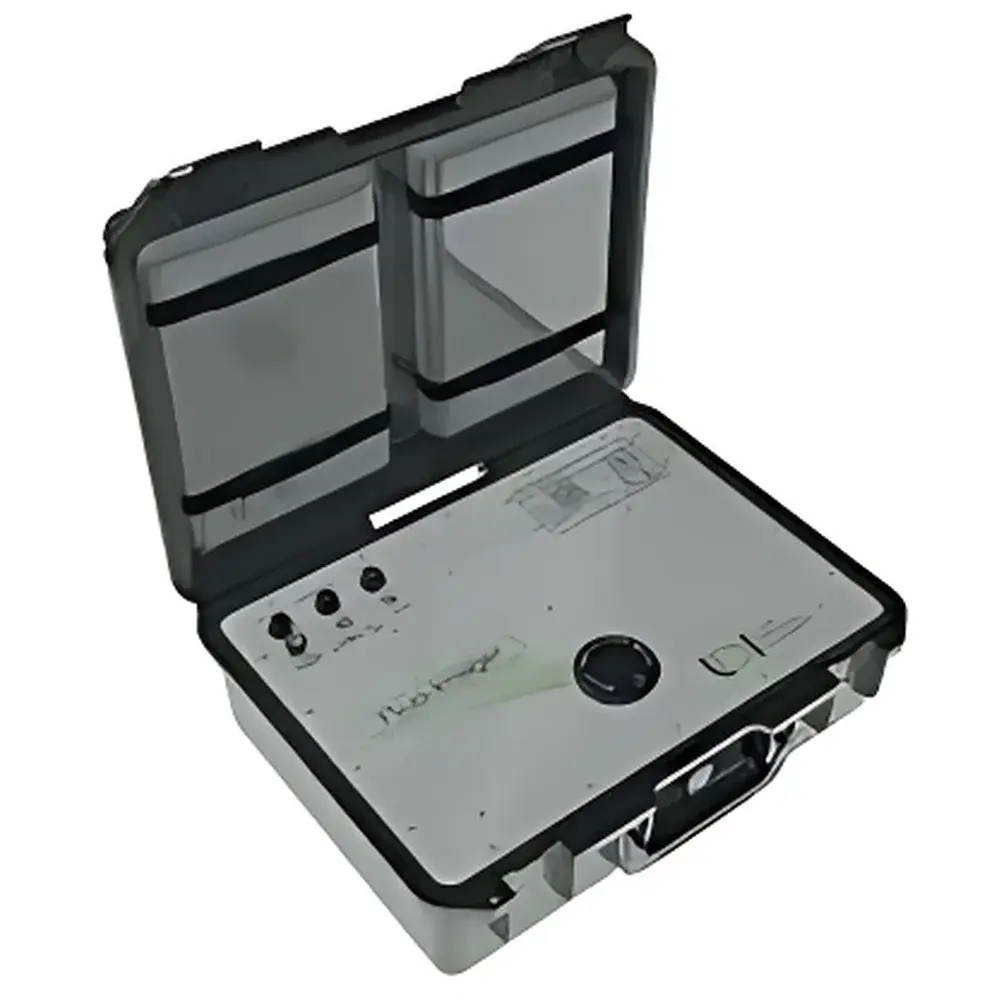
- Field-optimized ergonomics: Ruggedized hand-carried enclosure (IP54-rated), 7 kg total mass, 6.5″ touchscreen interface with offline data storage (≥10,000 spectra), and onboard spectral preprocessing (smoothing, baseline correction, scatter removal).
- Configurable alert logic: Threshold-based real-time alarms for pre-defined analytes (e.g., naphthalene >5 µg/L, phenol >0.01 mg/L) with timestamped event logging compliant with FDA 21 CFR Part 11 audit trail requirements.
Sample Compatibility & Compliance
The FLUO-IMAGER is validated for direct analysis of unfiltered, unpreserved liquid water matrices—including natural surface water, groundwater, boiler feedwater, industrial effluents, seawater, and oil-contaminated bilge water—without dilution or pretreatment. It accommodates standard 1-cm quartz cuvettes (pathlength 10 mm) and optional flow-cell configurations for continuous monitoring. All spectral data adhere to ASTM E131-22 (Standard Terminology Relating to Molecular Spectroscopy) and ISO/IEC 17025:2017 traceability frameworks. Instrument firmware implements electronic signature capability, secure user access levels, and immutable raw-data archiving—supporting GLP and GMP laboratory audit readiness. Regulatory alignment includes USP (Spectrophotometric Identification), EPA Method 418.1 (oil-in-water by fluorescence), and ISO 17294-2 (water quality—spectral characterization of dissolved organic matter).
Software & Data Management
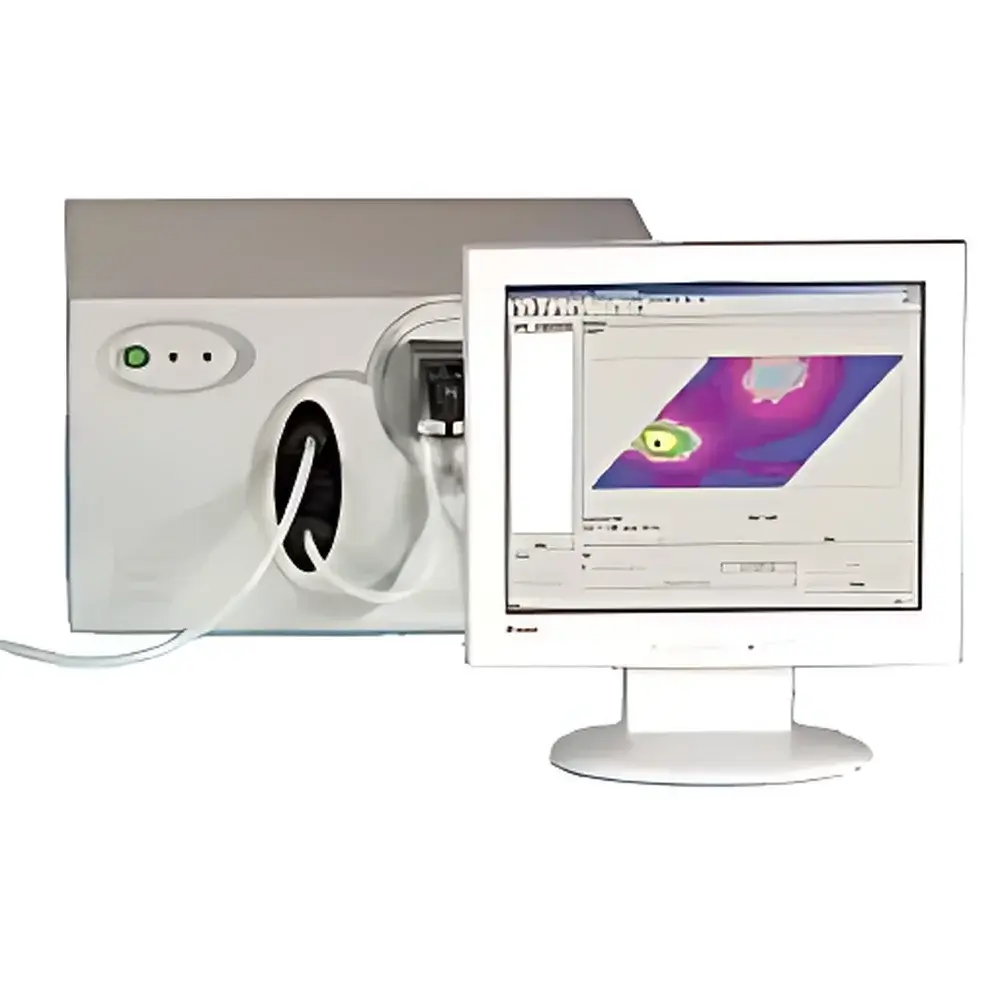
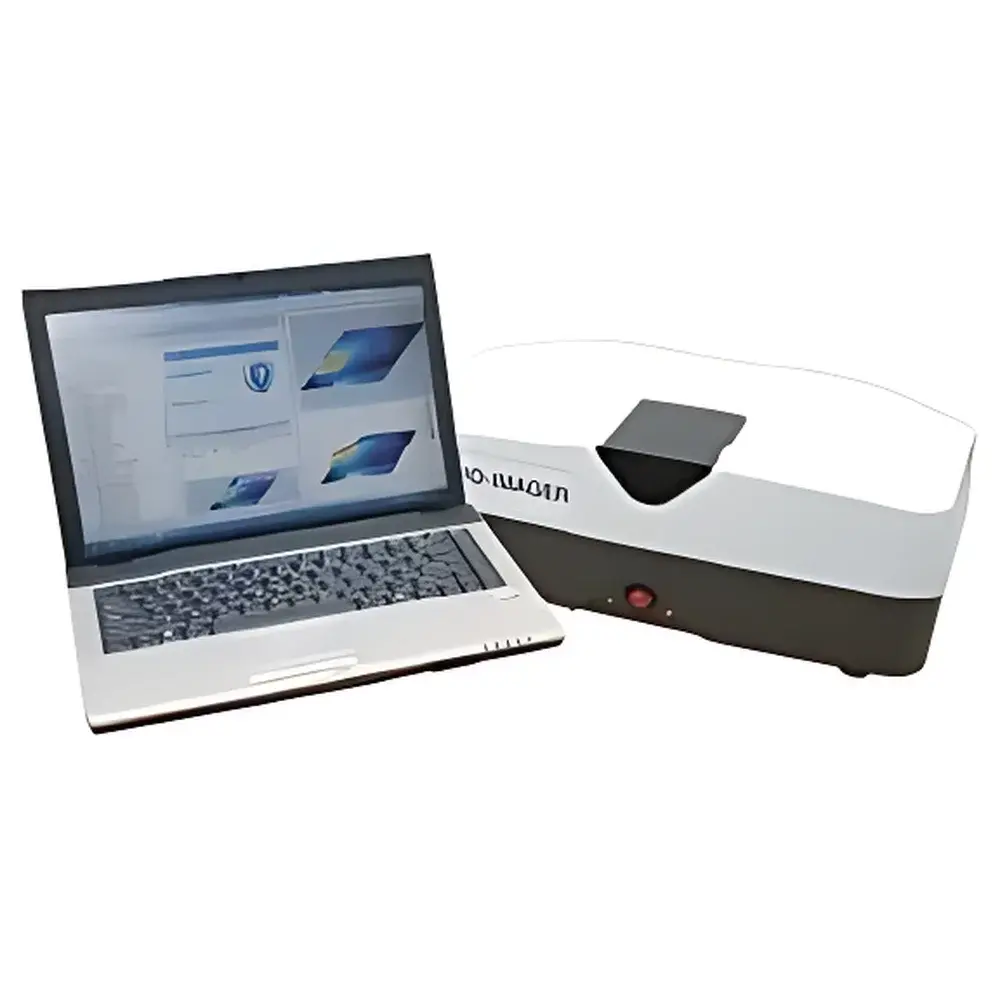
The included FLUO-ANALYZER software suite provides full control over acquisition parameters (integration time, scan speed, averaging cycles), automated EEM normalization, and advanced chemometric tools: parallel factor analysis (PARAFAC), principal component analysis (PCA), and partial least squares regression (PLSR). Raw spectral files are saved in vendor-neutral .jdx and HDF5 formats, facilitating third-party integration with MATLAB, Python (via PyMCA or scikit-learn), or LIMS platforms. Data export supports CSV, PDF reports, and annotated 2D contour plots or interactive 3D surface visualizations. All processing steps—including background subtraction, Raman normalization, and FDOM (fluorescent dissolved organic matter) indexing—are logged with metadata (operator ID, GPS coordinates, temperature, pH if interfaced) to ensure full analytical traceability.
Applications
- Oil pollution monitoring: Detection and semi-quantitative profiling of crude oil fractions (light/medium/heavy), fuel oils (kerosene, diesel, gasoline), and lubricants at sub-mg/L levels in marine and freshwater systems.
- PAH surveillance: Identification of carcinogenic markers (naphthalene, anthracene, benzo[a]pyrene) in sediment pore water, wastewater discharge, and drinking water sources.
- Phytoplankton dynamics: Discrimination of algal classes (diatoms, cyanobacteria, dinoflagellates) via chlorophyll-a, phycocyanin, and tryptophan-like fluorescence signatures—supporting eutrophication assessment and bloom forecasting.
- Industrial process control: Real-time tracking of organic fouling agents (humics, fulvics) in boiler water circuits and cooling towers to optimize coagulant dosing and membrane cleaning schedules.
- Regulatory compliance: Field verification of effluent limits under EU WFD (Water Framework Directive) Annex V and US Clean Water Act Section 402 permit requirements for fluorescent organic load.
FAQ
What is the minimum detectable concentration for benzene derivatives?
Typical LODs range from 0.01 mg/L (phenol) to 0.1 mg/L (m-cresol) and 0.05 mg/L (thymol), determined per IUPAC harmonized protocols using signal-to-noise ≥3 in spiked natural water matrices.
Can the instrument be used with turbid or colored samples?
Yes—concurrent absorption measurement enables inner-filter effect correction, extending reliable quantification to samples with absorbance ≤1.5 AU at 254 nm and haze ≤30%, as verified against ISO 14782 reference standards.
Is spectral library customization supported?
Yes—the onboard library supports import of user-defined EEM references, automatic peak matching, and iterative algorithm refinement via supervised learning modes.
Does the system comply with data integrity regulations for regulated laboratories?
Yes—audit trail functionality, electronic signatures, role-based access control, and raw-data immutability meet FDA 21 CFR Part 11, EU Annex 11, and ISO/IEC 17025 requirements.
What maintenance is required for field deployment?
No optical alignment or lamp replacement is needed during normal operation; xenon flash lamp lifetime exceeds 1 × 10⁶ pulses. Annual calibration verification using NIST-traceable fluorescein and quinine sulfate standards is recommended.




