
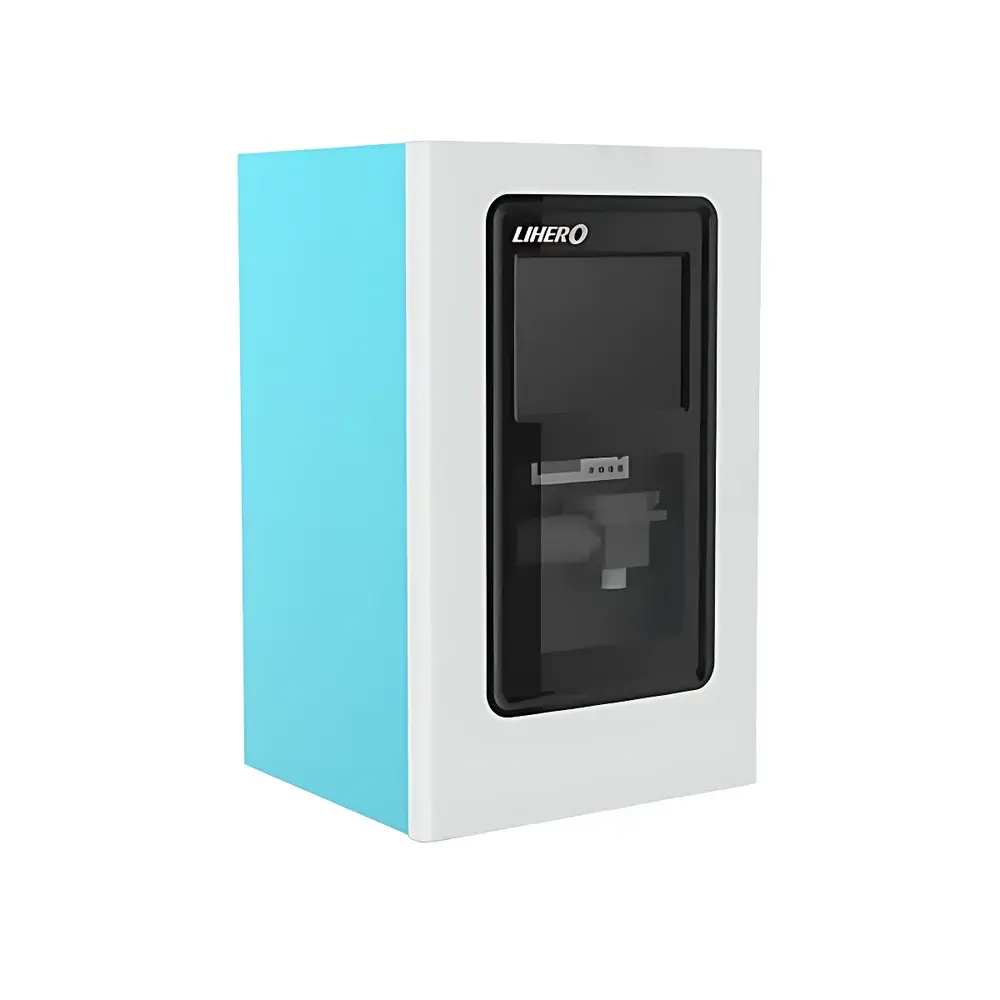
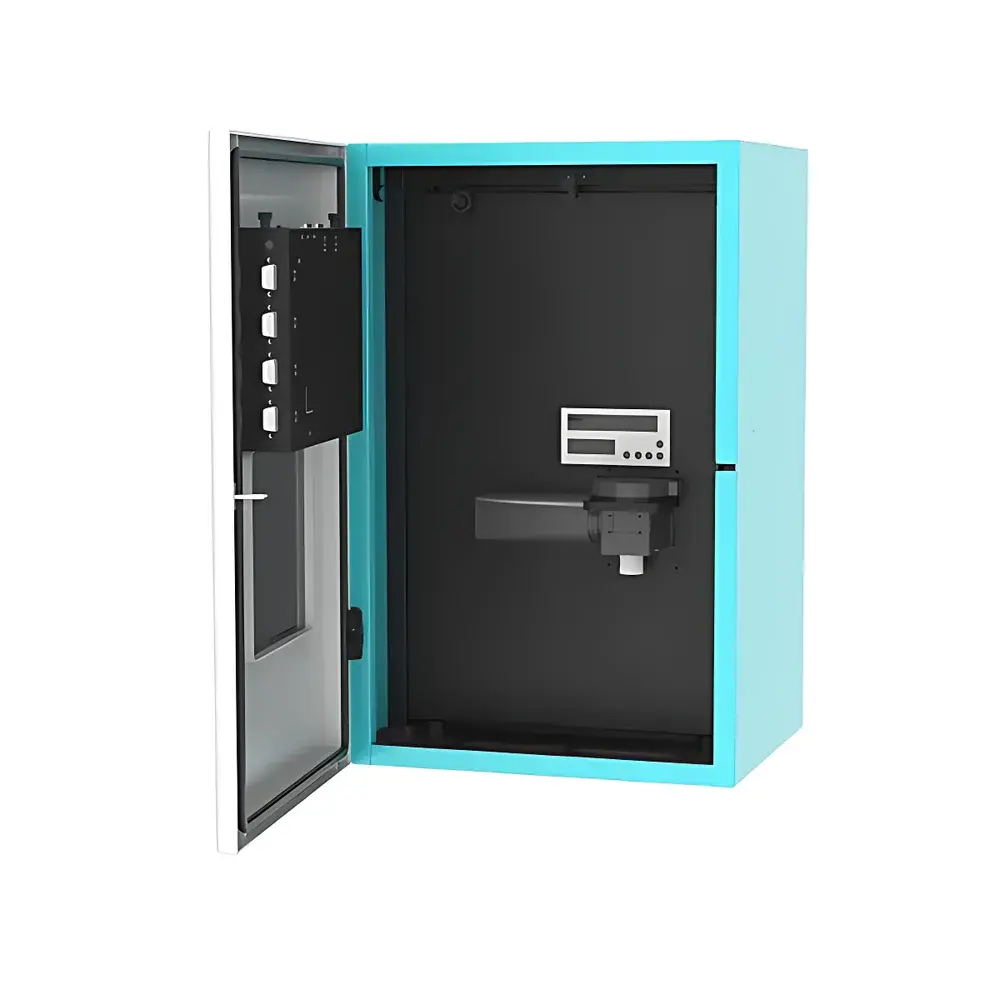
Lihero LFTB-2018 Total Coliform and Heterotrophic Plate Count (HPC) Analyzer
| Brand | Lihero |
|---|---|
| Model | LFTB-2018 |
| Measurement Principle | Enzyme-Substrate Fluorescence Kinetics |
| Detection Target | Total Viable Bacteria (HPC) in Water |
| Sample Throughput | Continuous Online Monitoring |
| Operational Duration | ≥ 10 Days Unattended |
| Automation Level | Fully Automated Reagent Dispensing, Mixing, and System Self-Cleaning |
| Compliance Context | Designed for EPA Method 1681 / ISO 9308-1 / Standard Methods 9215B Alignment |
Overview
The Lihero LFTB-2018 Total Coliform and Heterotrophic Plate Count (HPC) Analyzer is an automated, enzyme-based fluorescence detection system engineered for rapid, quantitative assessment of total viable bacterial load in drinking water, distribution systems, wastewater effluents, and process water streams. Unlike traditional membrane filtration or pour-plate culture methods—which require 48–72 hours incubation and manual colony enumeration—the LFTB-2018 employs a well-characterized enzymatic assay targeting conserved intracellular enzymes (e.g., β-D-galactosidase and esterases) present in metabolically active bacteria. Upon substrate hydrolysis, fluorogenic compounds (e.g., methylumbelliferyl-β-D-galactopyranoside derivatives) release measurable fluorescence at 450 nm (excitation) / 490 nm (emission). The instrument continuously monitors real-time fluorescence intensity kinetics, calculating bacterial concentration via calibrated initial rate (dF/dt) correlation to colony-forming units per milliliter (CFU/mL), traceable to NIST-traceable reference cultures.
Key Features
- Fully integrated fluidic architecture with precision syringe pumps and low-dead-volume microfluidic manifolds, minimizing carryover and ensuring reproducible reagent delivery.
- Onboard temperature-controlled incubation chamber (35 ± 0.5 °C), compliant with ISO 9308-1 and Standard Methods 9215B incubation requirements for heterotrophic plate count determination.
- Self-calibrating optical module featuring dual-wavelength LED excitation and photomultiplier tube (PMT) detection, optimized for signal-to-noise ratio in turbid or colored water matrices.
- Automated daily system validation using built-in positive/negative control checks—no operator intervention required for routine performance verification.
- Modular reagent cartridge design (pre-loaded, sealed, refrigerated-stable) enables >240 test cycles per cartridge; expiration tracking embedded in firmware.
- IP65-rated enclosure suitable for installation in pump stations, chlorination rooms, or laboratory wet benches without additional environmental housing.
Sample Compatibility & Compliance
The LFTB-2018 accepts raw, filtered, or disinfected water samples across a conductivity range of 50–2,000 µS/cm and turbidity up to 10 NTU without pretreatment. It has been validated per EPA Guidance Document QA/G-5 and meets functional equivalency criteria for HPC monitoring under US EPA Method 1681 (for indicator organism surveillance in drinking water) and ISO 9308-1:2014 (water quality — detection and enumeration of Escherichia coli and coliform bacteria). While not a replacement for regulatory-grade membrane filtration in compliance reporting, it delivers GLP-aligned trend data for operational decision support—including early warning of biofilm resurgence, post-disinfection regrowth, or filter breakthrough events. Data audit trails comply with 21 CFR Part 11 requirements when deployed with optional secure user authentication and electronic signature modules.
Software & Data Management
Instrument operation and data review are managed through Lihero’s AquaTrack™ v3.2 software suite, running on embedded Linux OS. The interface supports real-time fluorescence curve visualization, automatic baseline correction, kinetic slope calculation, and CFU/mL conversion using lot-specific calibration curves stored in encrypted reagent RFID tags. All measurement metadata—including sample ID, timestamp, ambient temperature, reagent lot number, and QC flag status—is exported in CSV/Excel format compatible with LIMS integration (via ASTM E1384-compliant HL7 messaging or OPC UA protocol). Audit logs record every user action, parameter change, and maintenance event with immutable timestamps, satisfying internal QA/QC documentation needs and external inspection readiness.
Applications
- Continuous monitoring of finished drinking water at entry points to distribution networks.
- Real-time assessment of biological stability in non-chlorinated groundwater supplies.
- Trend analysis of biofilm activity in recirculating cooling water systems.
- Verification of UV or ozone disinfection efficacy through post-treatment HPC kinetics.
- Supporting ISO 22000 and HACCP plans in beverage manufacturing facilities requiring process water microbiological control.
- Field-deployable use in emergency response scenarios where rapid microbial risk stratification is critical.
FAQ
Does the LFTB-2018 detect only coliforms, or does it measure total heterotrophic bacteria?
It quantifies total culturable heterotrophic bacteria (HPC) based on broad-spectrum enzyme activity—not species-specific coliform detection. Its correlation to standard plate counts has been verified across diverse water types per ISO 9308-1 Annex C.
Can it be integrated into SCADA or DCS environments?
Yes—via Modbus TCP or 4–20 mA analog output (optional); digital outputs support alarm triggers for threshold exceedance (e.g., >500 CFU/mL) with configurable hysteresis.
What maintenance is required during the 10-day unattended operation window?
No consumable replacement or manual cleaning is needed within this period; the system performs autonomous line flushing and probe rinsing between samples using deionized water from the integrated reservoir.
Is method validation documentation available for regulatory submissions?
Comprehensive validation reports—including precision (RSD 0.995 over 10–10⁴ CFU/mL), and interference testing against chlorine, iron, and humic substances—are provided upon request under NDA.
Related Products







