
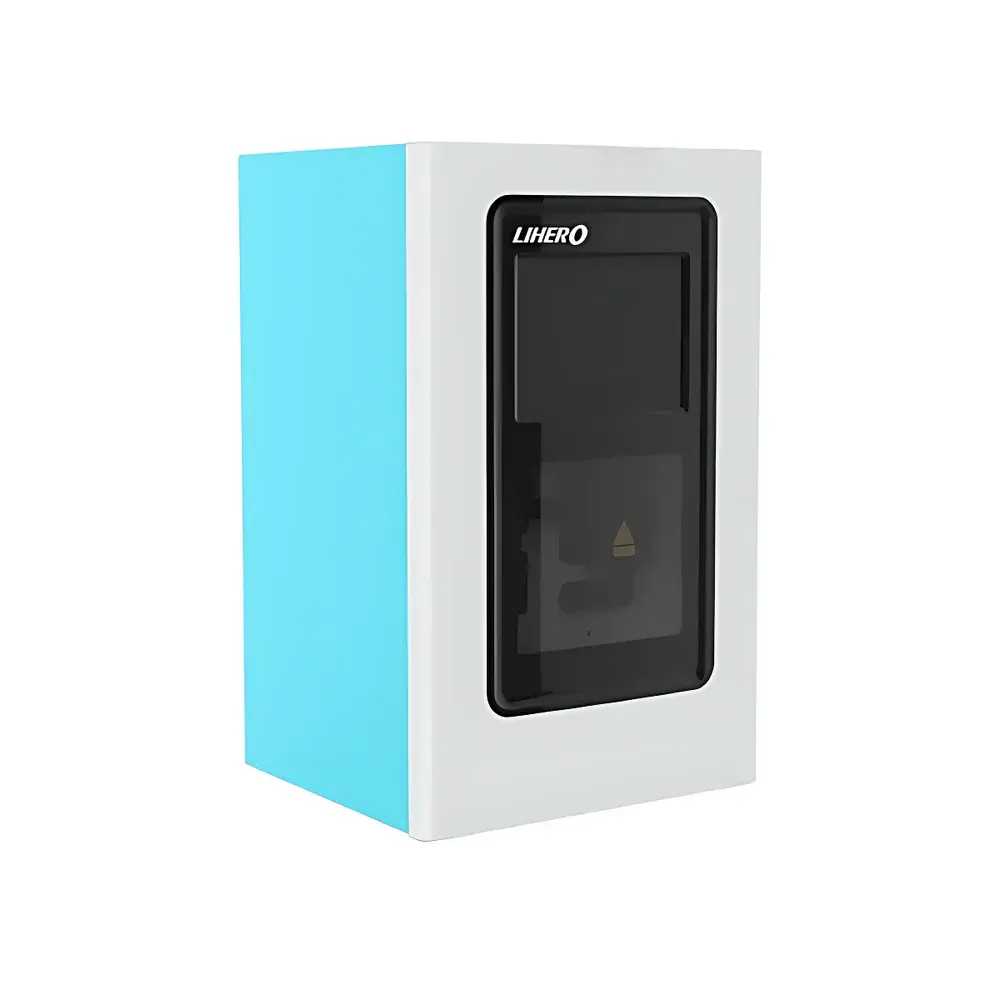
Lihero LFS-2002(S) Online Sulfide Analyzer
| Brand | Lihero |
|---|---|
| Model | LFS-2002(S) |
| Type | Online Analyzer |
| Measurement Principle | Direct Colorimetric Spectrophotometry (H₂S Gas-Phase Derivatization) |
| Detection Method | Acidification–Gas-Phase Transfer–Complexation with Specific Chromogenic Reagent |
| Output Interface | RS232 / RS485 |
| Automation Features | Auto-Cleaning, Auto-Calibration, Auto-Range Switching, Parallel Sample Testing, Standard Spike Recovery, Blank & Calibration Verification |
| Compliance Support | Designed for ISO 10304-1, ASTM D4129, and EPA Method 376.1–compliant water quality monitoring workflows |
| Power Supply | 220 VAC ±10%, 50 Hz |
| Ambient Operating Conditions | 5–40 °C, RH ≤85% non-condensing |
| Enclosure Rating | IP65 |
Overview
The Lihero LFS-2002(S) Online Sulfide Analyzer is an industrial-grade, fully automated instrument engineered for continuous, real-time quantification of dissolved sulfide (S²⁻, HS⁻, H₂S) in aqueous environmental matrices—including surface water, wastewater effluents, groundwater, and industrial process streams. It operates on the validated gas-phase derivatization principle: under controlled acidic conditions, sulfide species are protonated to volatile hydrogen sulfide (H₂S), which is selectively purged from the sample matrix using a precision-controlled nitrogen or air carrier stream. The liberated H₂S is then absorbed into a proprietary alkaline chromogenic reagent solution, forming a stable yellow-colored complex (typically a methylene blue-type or azo-dye derivative). Absorbance is measured at a defined wavelength (e.g., 420 nm or 670 nm, depending on reagent chemistry) via a high-stability photometric cell with temperature-compensated LED light source and silicon photodiode detection. Concentration is calculated using a pre-established calibration curve traceable to NIST-certified sulfide reference standards. This method eliminates interferences from turbidity, color, suspended solids, and common anions (e.g., thiosulfate, sulfate, nitrite) that compromise direct aqueous-phase assays—making the LFS-2002(S) suitable for challenging, unfiltered, or highly variable influent samples.
Key Features
- Gas-phase separation architecture with恒流 (constant-flow) purge system ensures reproducible H₂S transfer efficiency and minimizes carryover between measurements.
- Proprietary chromogenic reagent formulation delivers sub-ppb-level detection sensitivity (LOD < 0.5 µg/L as S) and linear dynamic range spanning 0–2 mg/L (extendable to 10 mg/L via auto-range switching).
- Integrated quality assurance protocols: dual-channel parallel analysis capability, scheduled standard spike recovery tests (per US EPA QA/QC requirements), blank subtraction cycles, and multi-point calibration verification with drift correction.
- Self-maintaining operation: automated daily cleaning of gas-transfer lines, absorption cell, and reagent delivery pathways using deionized water or mild acid wash; scheduled zero- and span-calibration without manual intervention.
- Rugged industrial design with IP65-rated enclosure, corrosion-resistant fluidic path (PTFE, PFA, and quartz components), and embedded thermal management for stable photometry across ambient fluctuations.
- Embedded microcontroller with non-volatile memory stores >12 months of operational logs, including error timestamps, reagent consumption, calibration history, and alarm events—supporting GLP-compliant data integrity.
Sample Compatibility & Compliance
The LFS-2002(S) accepts raw, unfiltered water samples with turbidity up to 200 NTU and total suspended solids (TSS) ≤150 mg/L. It is compatible with municipal wastewater, leachate, pulp/paper mill effluents, petroleum refinery discharges, and anaerobic digester supernatants. Method performance aligns with key regulatory frameworks: it satisfies the analytical rigor required by ISO 10304-1 (determination of anions including sulfide by ion chromatography—used here as a benchmark for comparability), ASTM D4129 (standard test method for sulfide in water by methylene blue spectrophotometry), and U.S. EPA Method 376.1 (determination of sulfide in water by gas-phase molecular absorption spectrometry). Data output and audit trail functionality support compliance with 21 CFR Part 11 when deployed in regulated facilities requiring electronic record retention.
Software & Data Management
The analyzer features an embedded web server accessible via Ethernet (optional) or serial interface (RS232/RS485 Modbus RTU). Local configuration, diagnostics, and historical data export (CSV format) are performed through a secure HTML5-based interface. All measurement events—including raw absorbance values, calculated concentrations, QC flags, and maintenance triggers—are timestamped and stored with full traceability. Remote monitoring integration is supported via OPC UA or MQTT protocols for SCADA and LIMS connectivity. Firmware updates are performed over-the-air (OTA) with cryptographic signature validation to ensure system integrity.
Applications
- Continuous emission monitoring at wastewater treatment plant headworks and anaerobic digestion units.
- Early-warning detection of sulfide breakthrough in drinking water distribution systems and reservoir intakes.
- Compliance reporting for NPDES permits and industrial discharge limits (e.g., 40 CFR Part 403).
- Process control feedback in biogas upgrading, sour water stripping, and sulfur recovery units.
- Long-term trend analysis in ecological monitoring programs targeting eutrophication and redox-sensitive aquatic habitats.
FAQ
What sample pretreatment is required prior to analysis?
No filtration or chemical preservative addition is needed. The instrument handles raw samples directly; particulate interference is mitigated by the gas-phase transfer step.
How often must reagents be replaced?
Reagent cartridges are designed for ≥30 days of continuous operation at 1-hour measurement intervals; usage duration scales inversely with sampling frequency and is tracked automatically.
Can the LFS-2002(S) be integrated into an existing PLC-based control system?
Yes—Modbus RTU over RS485 enables seamless read/write communication with Allen-Bradley, Siemens, and Schneider Electric PLCs for alarm forwarding and setpoint modulation.
Is third-party certification available for regulatory submissions?
Factory calibration certificates include uncertainty budgets per ISO/IEC 17025 guidelines; optional UKAS-accredited field verification services are available through authorized partners.
What maintenance tasks require operator intervention?
Only quarterly visual inspection of tubing integrity and annual photometer verification using certified optical filters—no routine optical alignment or lamp replacement is required due to solid-state LED architecture.







