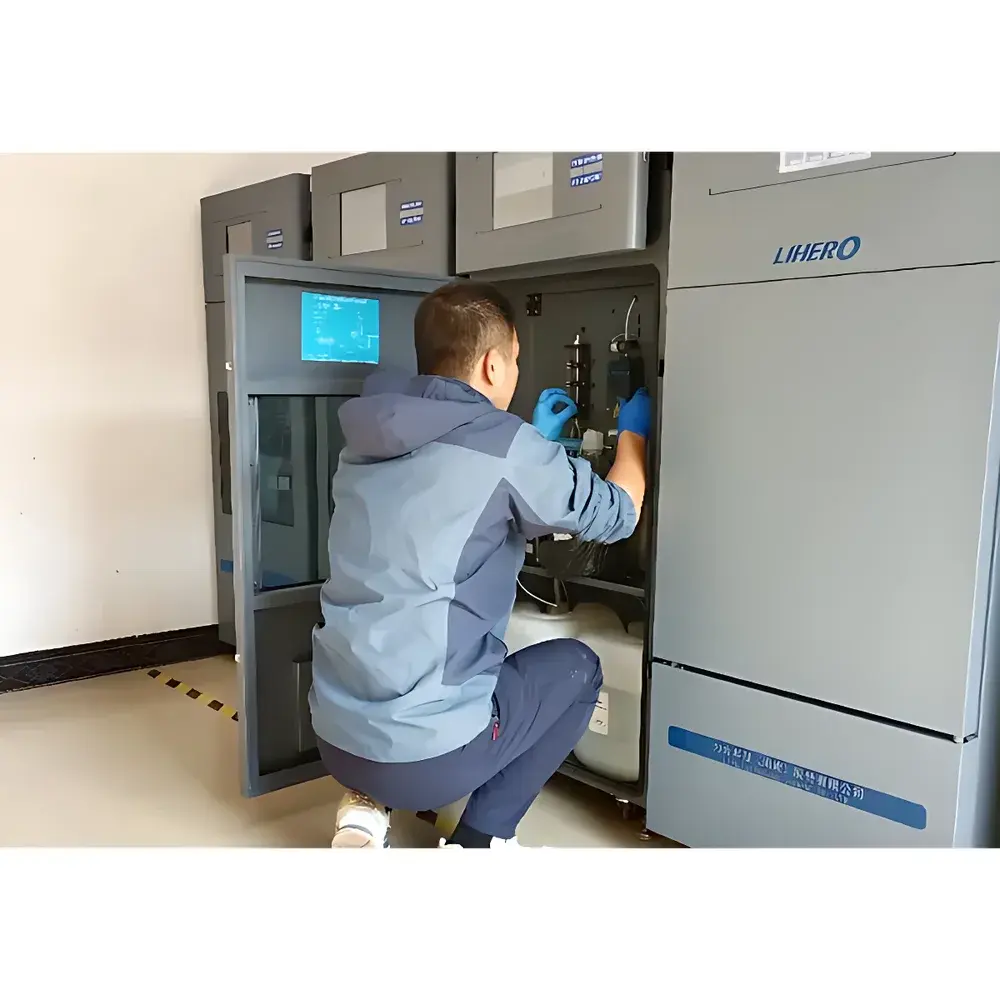
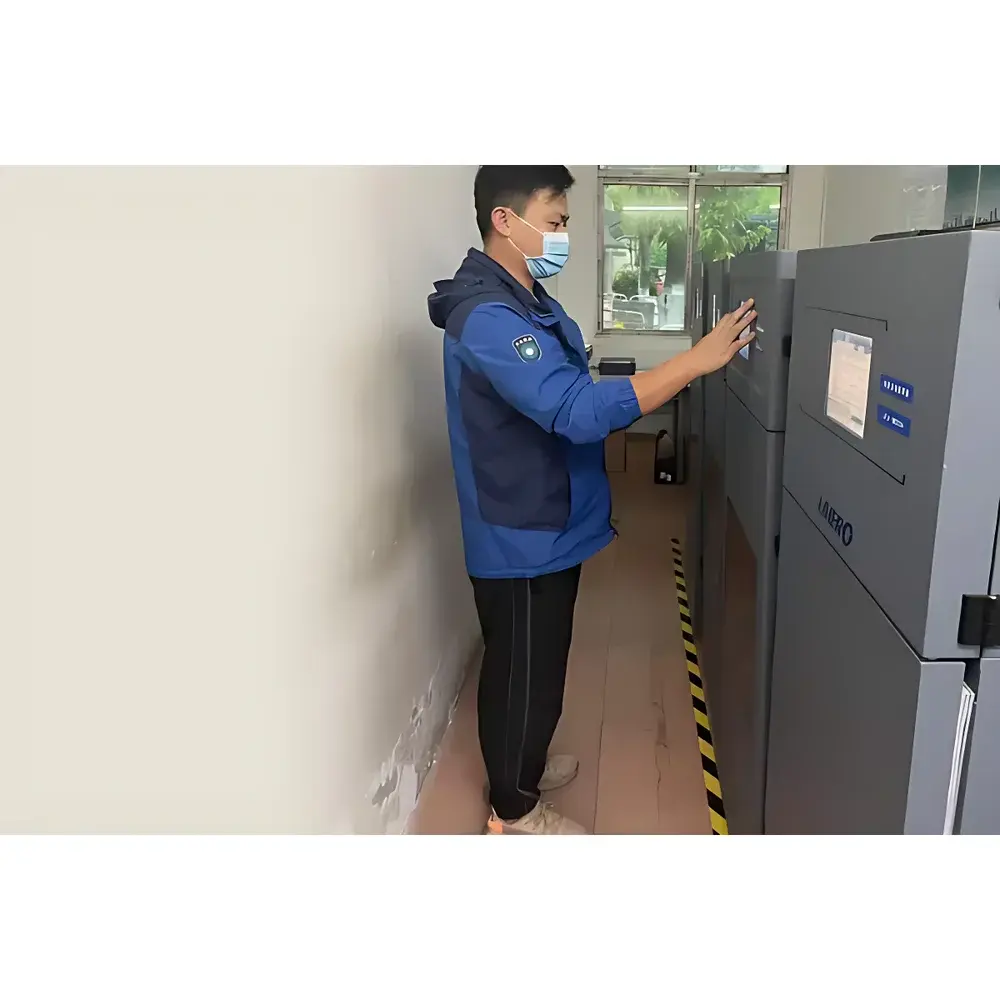
Water Pollution Source Online Monitoring System Maintenance & Operation Service
| Brand | LiheRO (Lihero) |
|---|---|
| Origin | Hunan, China |
| Manufacturer Type | Authorized Distributor |
| Product Origin | Domestic (China) |
| Model | Water Pollution Source Online Monitoring System Maintenance & Operation Service |
| Pricing | Available Upon Request |
Overview
This comprehensive maintenance and operation service is designed exclusively for water pollution source online monitoring systems deployed at industrial discharge points, municipal wastewater treatment plants, and ecological regulatory stations. Engineered to ensure continuous regulatory compliance and data integrity, the service supports long-term operational reliability of fixed-site environmental instrumentation—including COD, NH₃-N, TP, TN, pH, conductivity, flow meters, and integrated data acquisition units (DAUs). Leveraging over two decades of hands-on experience in manufacturing, deploying, and sustaining online water quality analyzers across China’s diverse environmental infrastructure, the program delivers standardized, audit-ready support aligned with national emission standards (e.g., HJ 353–2019, HJ 354–2019, HJ 355–2019, HJ 356–2019) and technical specifications for automatic monitoring of pollutant sources.
Key Features
- Field-validated response protocol: On-site technician dispatch within 2–4 hours for critical faults (subject to regional coverage), supported by a nationwide network of 32 certified service hubs and over 180 field engineers trained in multi-brand hardware diagnostics.
- Regulatory alignment engine: Proactive update integration of newly issued or revised environmental monitoring standards—including calibration verification cycles, data validity criteria, and mandatory reporting formats—ensuring uninterrupted compliance with MEE (Ministry of Ecology and Environment) requirements.
- Risk-mitigated service framework: Structured around ISO/IEC 17020-based inspection protocols and failure mode & effects analysis (FMEA) for high-risk components (e.g., peristaltic pump tubing, electrode assemblies, optical windows), reducing unplanned downtime by up to 41% based on historical fleet performance data.
- Cross-platform compatibility: Technical support covering >120 distinct analyzer models from domestic and international manufacturers—including LiheRO, Lianhua, Jiepu, Hach, Endress+Hauser, and S::CAN—enabling seamless transition between legacy and next-generation monitoring architectures.
- Preventive maintenance scheduling: Customizable service plans (quarterly, semi-annual, annual) incorporating sensor recalibration, fluidic path cleaning, DAU firmware validation, and backup battery health assessment, all documented with traceable digital work orders.
Sample Compatibility & Compliance
The service applies to continuous emission monitoring systems (CEMS) configured for aqueous effluent streams, including but not limited to: chemical oxygen demand (COD) analyzers (dichromate digestion or UV-Vis spectrophotometric methods), ammonia nitrogen (NH₃-N) analyzers (Nesslerization or ion-selective electrode), total phosphorus (TP) and total nitrogen (TN) analyzers (persulfate oxidation + colorimetry), and ancillary sensors (pH, ORP, turbidity, temperature, ultrasonic flow). All maintenance procedures conform to HJ 355–2019 (Technical Specifications for Operation and Maintenance of Automatic Monitoring Equipment for Pollution Sources) and support GLP-aligned documentation for regulatory audits. Calibration standards used meet GB/T 601–2016 requirements; reference materials are traceable to CNAS-accredited laboratories.
Software & Data Management
Maintenance activities are logged via a cloud-based service management platform compliant with ISO/IEC 27001 information security controls. Each intervention generates an auditable electronic record—including time-stamped photos, calibration certificates, parts replacement logs, and instrument performance verification reports. The system supports automated generation of MEE-required monthly operation reports (Form HJ 353 Annex II), exportable in XML format compatible with provincial environmental monitoring centers’ data ingestion gateways. Role-based access control ensures separation of duties between field technicians, QA reviewers, and client administrators. Full audit trail functionality satisfies internal quality assurance and external regulatory review requirements under China’s Environmental Monitoring Data Quality Management Measures (MEE Order No. 19).
Applications
- Continuous compliance assurance for enterprises subject to key pollutant discharge permits (e.g., steel, chemical, pharmaceutical, food processing industries)
- Sustained data availability for provincial and municipal ecological environment bureaus’ real-time pollution source supervision platforms
- Technical lifecycle extension of aging online analyzers beyond OEM warranty periods without compromising measurement traceability
- Support for third-party environmental inspection agencies conducting verification testing under HJ 354–2019
- Integration with enterprise-level environmental information systems (EIS) for centralized KPI tracking (e.g., instrument uptime ≥95%, data capture rate ≥99.5%)
FAQ
Is this service compatible with non-LiheRO branded analyzers?
Yes. Our engineers hold technical certifications across 120+ analyzer models and maintain proprietary diagnostic libraries for firmware-level troubleshooting.
How frequently are calibration standards verified?
All certified reference materials undergo quarterly re-certification by CNAS-accredited labs; field-use standards are replaced per HJ 355–2019 cycle requirements (typically every 7–14 days depending on matrix complexity).
Can maintenance records be exported for regulatory submission?
Yes. The service platform exports fully formatted MEE-compliant reports—including Form HJ 353 Annex II—in PDF and XML, with digital signatures and timestamped metadata.
Do you provide remote diagnostics support?
Yes. Remote access to DAUs and analyzers is enabled via secure TLS 1.2 tunnels; live diagnostics are conducted only with explicit client authorization and in accordance with GB/T 22239–2019 (Cybersecurity Level Protection Requirements).
What is the typical SLA for emergency response?
Critical fault response time is defined as ≤4 hours for Tier-1 cities and ≤8 hours for Tier-2/3 locations, measured from confirmed fault notification to technician arrival on-site.
Related Products