
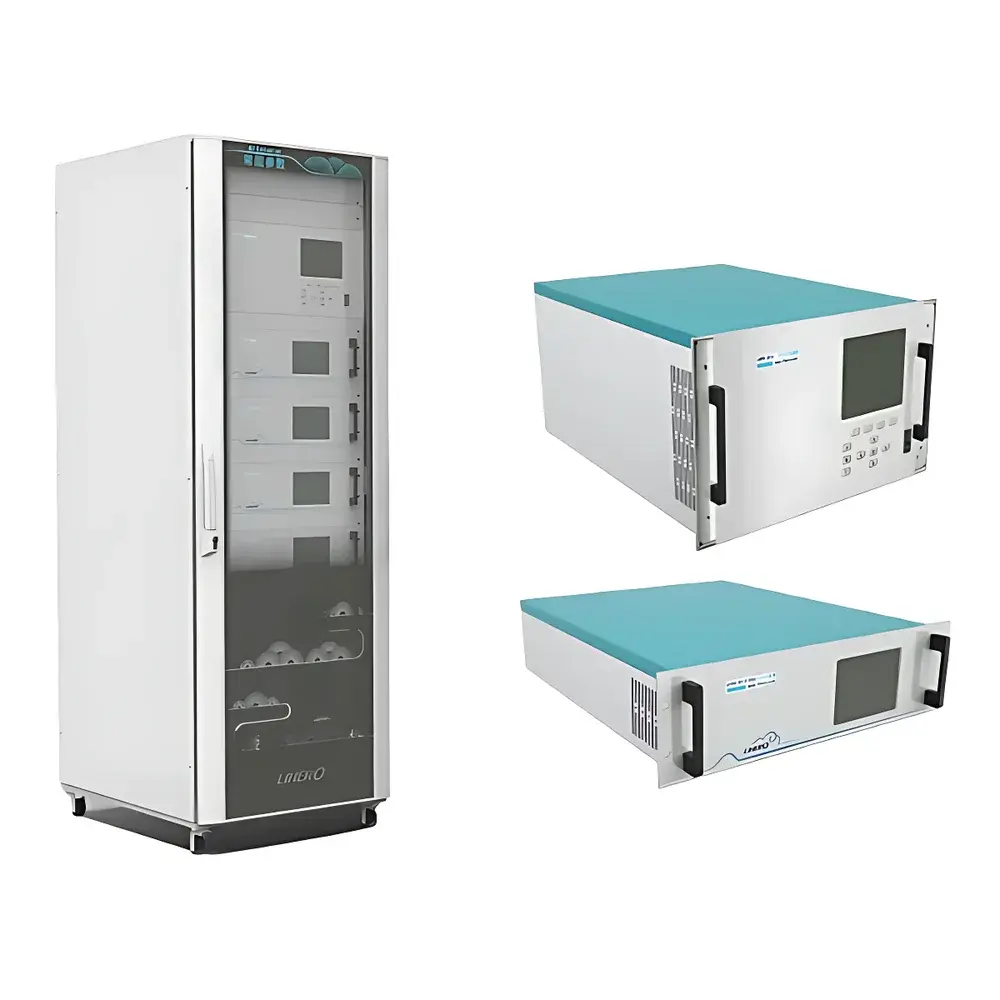
Lihero LFAQMS-2012 Integrated Ambient Air Monitoring System
| Brand | Lihero |
|---|---|
| Origin | Hunan, China |
| Manufacturer Type | Authorized Distributor |
| Country of Origin | China |
| Model | LFAQMS-2012 (Integrated) |
| Pricing | Available Upon Request |
Overview
The Lihero LFAQMS-2012 Integrated Ambient Air Monitoring System is a turnkey, modular environmental monitoring platform engineered for continuous, real-time measurement of regulated gaseous and particulate pollutants in ambient air. Designed to meet the operational rigor of national reference stations, urban air quality networks, and industrial boundary monitoring sites, the system integrates analyzers, meteorological sensors, data acquisition units, calibration subsystems, and environmental enclosures into a single coordinated architecture. Its core measurement principles align with internationally recognized physical and electrochemical detection methodologies: ozone (O₃) quantified via ultraviolet photometry (UV absorption at 254 nm), sulfur dioxide (SO₂) determined by pulsed ultraviolet fluorescence, nitrogen oxides (NO/NOx) measured using chemiluminescence detection with molybdenum converter-based NO2 conversion, carbon monoxide (CO) analyzed via non-dispersive infrared (NDIR) correlation spectroscopy with gas filter correlation (GFC) technology, and fine and coarse particulate matter (PM2.5 and PM10) monitored by beta-ray attenuation (β-ray) absorption with integrated temperature- and pressure-compensated mass loading correction. All analytical modules operate under ISO/IEC 17025–aligned quality assurance protocols and comply with Chinese Environmental Monitoring Technical Specifications (HJ 653–2013, HJ 654–2013, HJ 655–2013) as well as U.S. EPA Reference and Equivalent Method designations (e.g., EQOA-0899-121 for O₃, EQOA-0899-122 for SO₂, EQOA-0899-123 for NOx, EQOA-0899-124 for CO, and EQPM-1002-132 for PM2.5).
Key Features
- Modular, rack-mounted analyzer integration enabling flexible configuration for site-specific regulatory requirements (e.g., inclusion/exclusion of VOC or heavy metal modules)
- Automated on-site quality control (QC) routines including zero/span checks, multi-point calibration verification, and dynamic standard gas injection at programmable intervals (1–24 h)
- Full audit trail functionality: every data point carries embedded metadata—timestamp (UTC), instrument status flags, calibration event markers, maintenance logs, and operator ID (where applicable)
- Remote diagnostics and bidirectional communication via TCP/IP Ethernet, supporting secure SSH- and TLS-enabled remote desktop access for firmware updates, parameter adjustment, and zero/span execution
- Human-centered HMI interface with 10.1″ capacitive touchscreen, intuitive icon-driven navigation, and multilingual OS support (English, Spanish, Arabic, and simplified Chinese)
- Low-maintenance design: consumables limited to β-ray source replacement (typical interval: 10 years), ozone scrubber cartridges (6–12 months), and NOx converter sleeves (18–24 months); all modules feature self-diagnostics and predictive failure alerts
Sample Compatibility & Compliance
The LFAQMS-2012 is validated for operation across ambient temperature ranges of −30 °C to +50 °C and relative humidity up to 95% non-condensing. It accommodates inlet configurations compliant with EN 14625:2012 (for gaseous sampling) and EN 12341:2014 (for PM sampling), including heated sample lines, particle size-selective inlets (PM10/PM2.5 cyclones), and inertial impactors. All data outputs conform to ISO 19115–compliant metadata schemas and are structured for seamless ingestion into national air quality databases (e.g., China’s CNEMC AQS, U.S. EPA AIRNow, and EU’s EEA AirBase). The system supports GLP/GMP-aligned data integrity requirements—including electronic signatures, role-based access control, and 21 CFR Part 11–compatible audit logging—when deployed in regulatory or contract laboratory environments.
Software & Data Management
The embedded Lihero AQM-OS v4.2 operating system provides local data acquisition at 1-second resolution, 1-minute averaging, and 1-hour reporting intervals. Raw and processed data are stored redundantly on dual industrial-grade SSDs with automatic RAID 1 mirroring and encrypted backups to external NAS or cloud endpoints (AWS S3 or Azure Blob Storage). The optional Lihero CloudLink™ portal enables centralized fleet management, cross-site trend analysis, automated report generation (PDF/CSV/XLSX), and API-driven integration with third-party platforms (e.g., Power BI, Grafana, or custom SCADA systems). All software modules undergo annual penetration testing and maintain SOC 2 Type II certification for data handling security.
Applications
- National and municipal ambient air quality monitoring networks requiring compliance-grade reference measurements
- Industrial fence-line and community air monitoring programs (CAPs) for environmental justice and emissions accountability
- Research-grade field studies assessing spatial-temporal pollutant gradients, source apportionment, and atmospheric chemistry modeling inputs
- Transboundary air pollution tracking across regional grids (e.g., ASEAN, BRI corridor, or EU–Eastern Partnership corridors)
- Calibration and validation of low-cost sensor networks through co-location and bias correction workflows
FAQ
Does the LFAQMS-2012 meet U.S. EPA equivalency requirements for regulatory use?
Yes—each analyzer module holds EPA EQ designation for its respective target analyte, and full-system integration has been verified per EPA Guidance Document QA/G-5 (2021) for networked monitoring systems.
Can the system operate unattended for extended periods?
Yes—designed for ≥95% uptime over 12-month deployments; includes uninterruptible power supply (UPS) interface, solar-ready DC input option, and automated fault recovery sequences.
Is raw spectral or time-series data accessible for research reprocessing?
Yes—full-resolution 1-Hz analog/digital output streams are available via RS-485 or Modbus TCP; spectral files (e.g., UV absorbance scans, IR interferograms) are exportable in HDF5 format.
What cybersecurity standards does the system implement?
It complies with IEC 62443-3-3 SL2 requirements, featuring TLS 1.3 encryption, certificate-based authentication, firmware signature verification, and quarterly NIST SP 800-53 vulnerability scanning reports.
Are service contracts and certified technician support available globally?
Yes—Lihero partners with ISO 9001-certified service providers across APAC, EMEA, and LATAM; all field engineers hold manufacturer-issued Level 3 AQM certification and carry traceable calibration standards.
Related Products







