
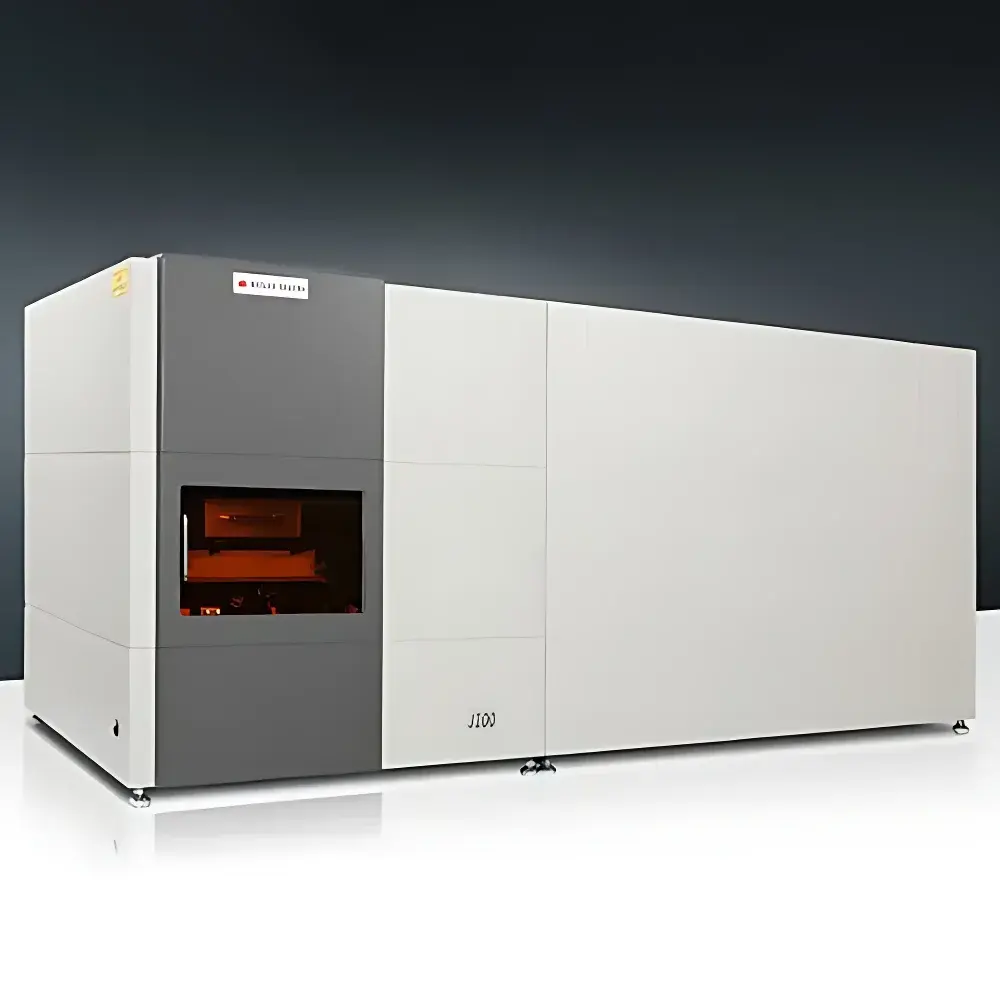
ASI J200-2 Femtosecond Laser Ablation System (LA)
| Brand | ASI |
|---|---|
| Origin | USA |
| Manufacturer Type | Authorized Distributor |
| Origin Category | Imported |
| Model | J200-2 |
| Instrument Type | Benchtop |
| Integration | Fully Integrated |
| Laser Pulse Energy | 200 µJ (at 800 nm, 1 kHz) |
| Laser Pulse Duration | <500 fs |
| Repetition Rate | 1–1000 Hz (software-adjustable) |
| Wavelength | 800 nm (fundamental), optionally tunable via OPA |
| Imaging | Wide-field optical view + high-magnification telecentric microscope (up to 100×) |
| Gas Control | Digital mass flow controllers (MFCs) for Ar, He, and auxiliary gases |
| Compatibility | Quadrupole ICP-MS, multi-collector ICP-MS, and time-of-flight ICP-MS |
Overview
The ASI J200-2 Femtosecond Laser Ablation System (LA) is a benchtop, fully integrated ablation platform engineered for high-precision, low-fractionation elemental and isotopic analysis in conjunction with inductively coupled plasma mass spectrometry (ICP-MS). Developed in close collaboration with scientists from Lawrence Berkeley National Laboratory, the system employs chirped-pulse amplification (CPA)-based femtosecond laser technology operating at 800 nm with pulse durations under 500 fs and adjustable repetition rates (1–1000 Hz). This ultra-short pulse regime enables non-thermal ablation—minimizing elemental fractionation, reducing thermal diffusion effects, and preserving spatial integrity of microstructures. Unlike nanosecond LA systems, the J200-2 delivers consistent stoichiometric sampling across heterogeneous, rough, or layered materials—including silicates, sulfides, glasses, biological tissues, and thin-film coatings—without requiring matrix-matched standards for quantitative calibration in many applications.
Key Features
- Autofocusing Z-sensor with real-time surface topography compensation: maintains constant focal plane and uniform fluence (J/cm²) across height variations up to ±500 µm, ensuring reproducible ablation crater geometry and signal stability.
- Dual-mode optical imaging: wide-field overview (4× objective) for rapid sample navigation and high-resolution telecentric microscopy (up to 100×) with diffraction-limited resolution for sub-µm feature targeting.
- Fully digital gas delivery architecture: independent, software-controlled mass flow controllers (MFCs) for Ar, He, and supplemental gases (e.g., N₂, H₂), enabling precise optimization of aerosol transport efficiency and oxide reduction (CeO⁺/Ce⁺ < 0.3%).
- Axiom™ LA software suite: intuitive graphical interface supporting pattern-based ablation (lines, grids, polygons, freehand), automated stage movement, and synchronized timing with ICP-MS acquisition triggers.
- Modular pneumatic design: tool-free access to gas lines and ablation cell components facilitates routine maintenance and cleaning per GLP-compliant laboratory protocols.
- Open-system compatibility: native integration with all major quadrupole, magnetic sector, and time-of-flight ICP-MS platforms via TTL/RS-232/USB interfaces; supports analog and digital signal synchronization.
Sample Compatibility & Compliance
The J200-2 accommodates standard 1″ and 2″ diameter polished sections, grain mounts, thin sections (≥20 µm thick), pressed pellets, and conductive/non-conductive substrates without metallization. Its low-energy, high-repetition-rate ablation minimizes cracking in brittle phases (e.g., zircon, apatite) and avoids melting in low-melting-point alloys. The system complies with ISO/IEC 17025 requirements for method validation in accredited laboratories and supports audit-ready data logging per FDA 21 CFR Part 11 when deployed with validated Axiom LA software configurations. All gas control firmware and motion logic are traceable to NIST-traceable calibration standards.
Software & Data Management
Axiom LA software provides full experimental scripting capability: users define multi-step ablation sequences—including stage positioning, laser parameter sets (energy, rep rate, spot size), dwell times, and gas switching events—as reusable “sampling schemes.” Schemes support version control, metadata tagging (operator, date, sample ID, project), and export of structured XML logs compatible with LIMS integration. Image overlays (brightfield, fluorescence, SEM-EDS maps) can be imported and georeferenced to the ablation coordinate system. Raw ablation data (intensity vs. time) is exported in ASCII or NetCDF format for downstream processing in Iolite, Glitter, or custom Python/R pipelines.
Applications
- High-spatial-resolution depth profiling of coated materials and diffusion couples (lateral resolution ≤ 0.8 µm, depth resolution ≤ 5 nm/shot).
- In situ U–Pb, Lu–Hf, and Sm–Nd isotope ratio analysis in accessory minerals with minimized common Pb correction uncertainty.
- Trace element mapping of fluid/melt inclusions in quartz and feldspar (detection limits: sub-pg absolute, ~0.01 ng/g in silicates).
- Quantitative analysis of metallurgical phases (e.g., carbides, intermetallics) without matrix-matched standards using element ratio internal normalization.
- Biological tissue imaging (e.g., metalloprotein distribution in brain sections) with minimal carbon deposition and no vacuum requirement for sample loading.
FAQ
What laser wavelength and pulse duration does the J200-2 use?
The system operates at 800 nm fundamental wavelength with pulse durations <500 fs, generated via Ti:sapphire CPA architecture.
Is the J200-2 compatible with single-collector ICP-MS instruments?
Yes—it is fully compatible with all commercially available quadrupole ICP-MS systems, including those from Thermo Fisher, Agilent, and PerkinElmer.
Does the system support automated depth profiling?
Yes—Axiom LA enables programmable sequential layer ablation with real-time feedback from the Z-sensor to maintain focus throughout multilayer stacks.
Can I import external microscopy images for ablation targeting?
Yes—BMP, TIFF, and PNG files with embedded scale bars can be georeferenced and overlaid onto the live optical feed for correlative analysis.
What maintenance intervals are recommended for the gas delivery system?
Digital MFCs require annual NIST-traceable recalibration; gas lines and ablation cell O-rings should be inspected and replaced every 6 months under continuous operation.
Related Products






