Brabender 19/10 DW Measuring Extruder
| Origin | Germany |
|---|---|
| Manufacturer Type | Authorized Distributor |
| Origin Category | Imported |
| Model | 19/10 DW |
| Pricing | Upon Request |
Overview
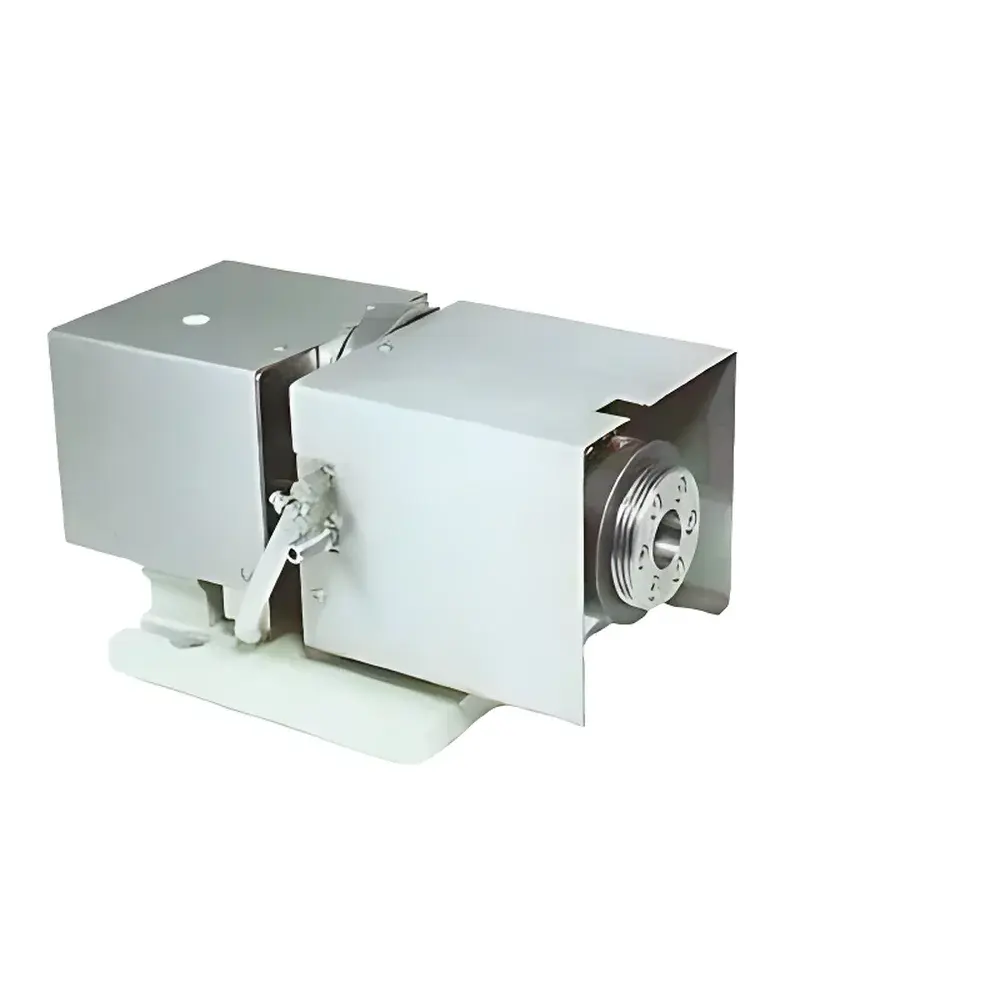
The Brabender 19/10 DW Measuring Extruder is a precision-engineered, laboratory-scale single-screw extrusion system designed specifically for rheological and processability evaluation of elastomers and thermoplastic elastomers (TPEs). Operating on the principle of controlled shear deformation under defined thermal and mechanical boundary conditions, it replicates key aspects of industrial extrusion processes—including feeding, conveying, melting, homogenization, pressurization, and die flow—in a fully instrumented, scalable environment. As an interchangeable measuring head within the Brabender Plasti-Corder or Plastograph EC plus modular workstation platform, the 19/10 DW integrates seamlessly with torque transducers, melt pressure sensors, and thermocouple arrays to deliver real-time, synchronized acquisition of critical process parameters: motor torque (N·m), barrel zone temperatures (°C), melt temperature (°C), melt pressure (bar), and mass throughput (g/min). Its design adheres to fundamental polymer processing principles rooted in polymer rheology and extrusion mechanics, enabling quantitative assessment of melt viscosity, thermal stability, dispersion quality, and extrudate uniformity under reproducible conditions.
Key Features
- Optimized screw geometry with 10D effective length—engineered for rapid thermal equilibration and minimal residence time, ideal for shear-sensitive elastomeric compounds.
- Integrated feed roller system ensures consistent, non-pulsating material intake—critical for stable solids conveying and eliminating feed-induced variability in torque and pressure signals.
- Interchangeable needle-type barrel configuration allows axial extension of the compression zone, facilitating tailored residence time distribution for vulcanizate or highly filled elastomer formulations.
- Direct-torque transmission via high-precision strain-gauge transducer protects both drive motor and extruder assembly during overload events—enabling safe operation at full-rated torque without mechanical coupling failure.
- Modular interface compatible with Brabender Plasti-Corder L, EC, or EC plus control units—supporting synchronized data logging at up to 10 Hz resolution across all analog and digital sensor channels.
- Robust stainless-steel construction with PID-controlled heating zones (±0.5 °C stability) meets ISO 1133 and ASTM D2532 requirements for thermal consistency in extrusion-based polymer characterization.
Sample Compatibility & Compliance
The 19/10 DW extruder accommodates raw elastomer compounds—including natural rubber (NR), styrene-butadiene rubber (SBR), ethylene-propylene-diene monomer (EPDM), thermoplastic polyurethane (TPU), and thermoplastic vulcanizates (TPVs)—in pellet, crumb, or pre-mixed sheet form. It supports standardized test protocols aligned with DIN 53736 (extrusion behavior of rubber compounds), ISO 20798 (plasticizing behavior of thermoplastics), and ASTM D3835 (extrusion plastometer testing). All measurement outputs—including torque curves, pressure profiles, and temperature gradients—are traceable to NIST-calibrated reference standards. The system architecture complies with GLP documentation requirements, supporting audit-ready data export with embedded timestamps, operator ID, and instrument calibration status per test run.
Software & Data Management
Data acquisition and analysis are performed using Brabender WinWedge Pro software, which provides real-time graphical overlay of torque, pressure, and temperature trends alongside tabular export in CSV and Excel-compatible formats. The software enforces structured test method templates compliant with 21 CFR Part 11 (electronic records and signatures), including user access control, electronic audit trails, and immutable raw data archiving. Post-test analysis modules support calculation of specific mechanical energy (SME), melt flow ratio (MFR), and dispersion index (DI) based on integrated pressure–torque correlations. Exported datasets are compatible with third-party statistical process control (SPC) platforms and LIMS integration via ODBC drivers.
Applications
- Rapid screening of elastomer compound formulations for scorch safety, filler dispersion efficiency, and plasticizer migration resistance.
- Quantitative evaluation of masterbatch compatibility and pigment (e.g., TiO₂) distribution homogeneity under shear flow conditions.
- Correlation of lab-scale extrudate surface quality (gloss, gel content, striations) with industrial die swell and sharkskin onset thresholds.
- Development of predictive models linking SME input to crosslink density in peroxide-cured systems.
- Validation of rheological models (e.g., Carreau-Yasuda, Cross) using transient torque–speed sweeps under constant temperature profiles.
- Supporting regulatory submissions requiring documented extrusion process understanding per ICH Q5E and Q8(R2) guidelines.
FAQ
What distinguishes the 19/10 DW from standard Brabender extruders?
The 19/10 DW features a shortened 10D screw length and dedicated feed roller assembly—optimized for low-viscosity, high-elasticity elastomers where extended residence time causes premature vulcanization or degradation.
Can the 19/10 DW be used with non-elastomeric polymers?
While primarily validated for elastomers, it may be applied to low-Mw thermoplastics (e.g., LDPE, EVA) with appropriate screw configuration and temperature profiling—but not recommended for high-melt-strength engineering resins.
Is calibration traceable to international standards?
Yes—torque, pressure, and temperature sensors are factory-calibrated against PTB/NIST-traceable references; calibration certificates are supplied with each unit and updated annually per ISO/IEC 17025 procedures.
Does the system support automated method execution?
WinWedge Pro enables programmable multi-step test sequences—including ramped speed profiles, timed zone temperature changes, and conditional stop triggers—fully compliant with ASTM D3835 Annex A1.
What downstream accessories are compatible?
Standard configurations include Garvey-type die heads, capillary dies (0.5–2.0 mm), and inline rheometers; optional gravimetric feeders and twin-belt chill rolls enable continuous extrudate property correlation studies.