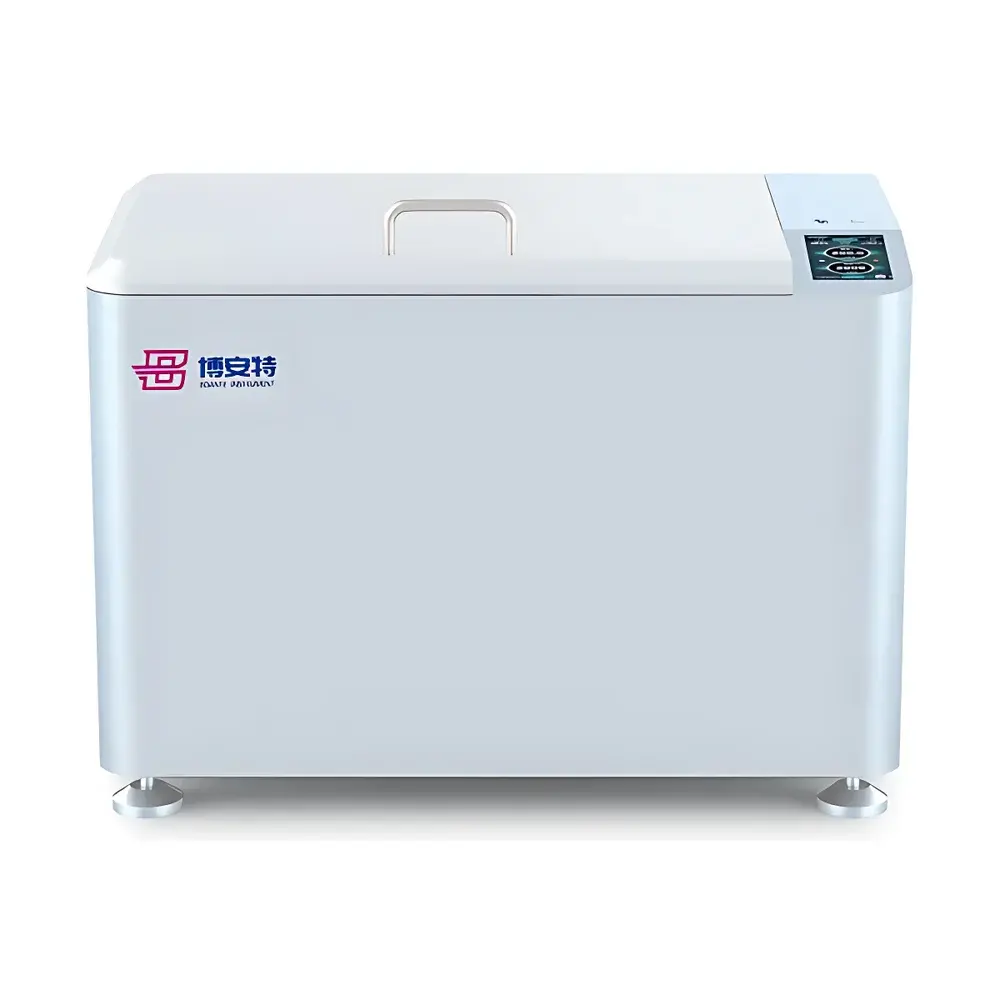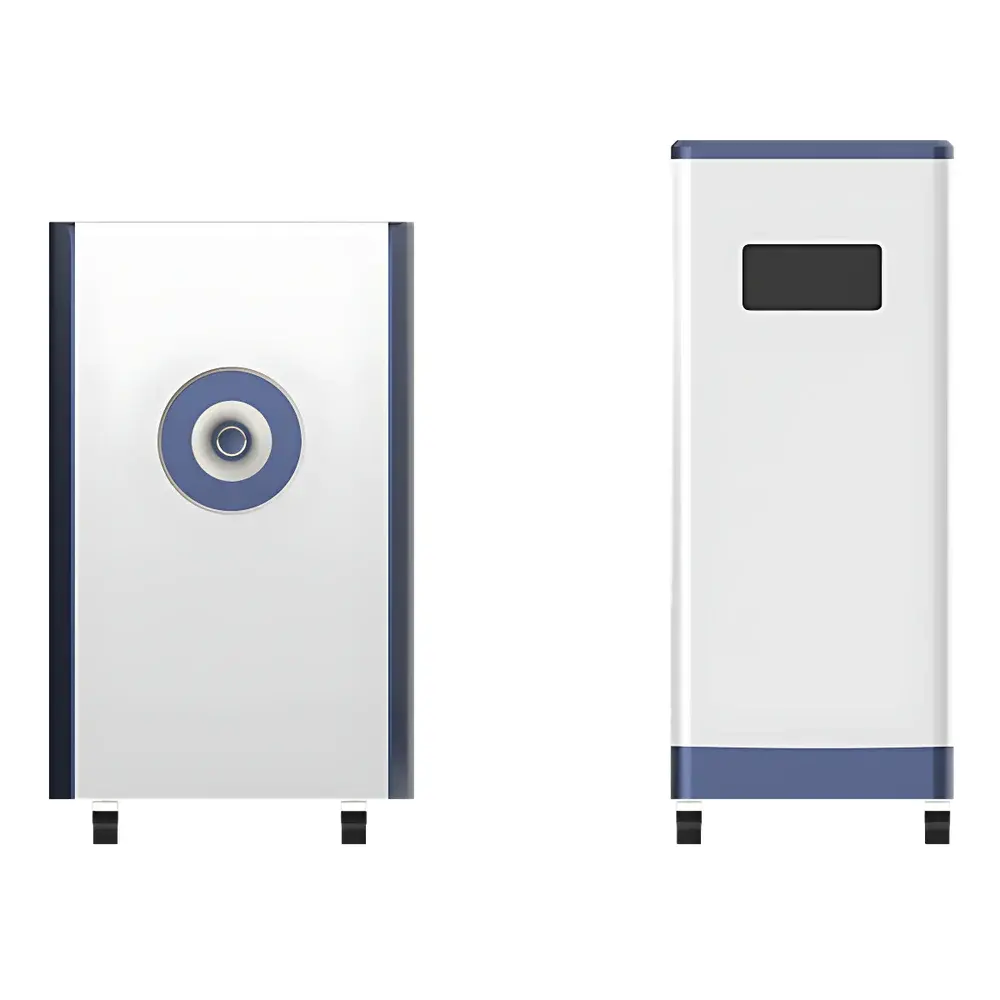
HTNMR HT-LFMR Low-Field Nuclear Magnetic Resonance Analyzer
| Brand | HTNMR |
|---|---|
| Model | HT-LFMR |
| Field Strength | < 0.5 T |
| Animal Compatibility | Mouse (in vivo) |
| Maximum Sample Penetration Depth | 60 mm |
| Bore Diameter Options | 40 mm / 60 mm |
| Operating Temperature Range | Customizable (Low-Temp & High-Temp Options Available) |
| Primary Measurement Parameters | T₁ Relaxation Time, T₂ Relaxation Time, Diffusion Coefficient (D) |
| Application Domain | Non-Destructive Quantitative Analysis of Water Distribution, Oil Content, Seed Viability, Food Quality, and Biomaterial Microstructure |
Overview
The HTNMR HT-LFMR Low-Field Nuclear Magnetic Resonance Analyzer is a benchtop, permanent-magnet-based NMR system engineered for quantitative, non-invasive characterization of molecular mobility and microstructural heterogeneity in biological and agricultural samples. Operating at magnetic field strengths below 0.5 T, the HT-LFMR leverages fundamental nuclear spin physics—specifically the relaxation behavior of 1H nuclei—to extract intrinsic physical parameters including longitudinal (T₁), transverse (T₂), and diffusion-weighted (D) relaxation signatures. Unlike high-field MRI systems requiring cryogenic superconducting magnets and RF-shielded rooms, the HT-LFMR employs a temperature-stabilized permanent magnet with ultra-low thermal drift coefficient, enabling long-term baseline stability and minimal operational maintenance. Its design prioritizes robustness, repeatability, and ease of integration into QC laboratories, academic core facilities, and industrial R&D environments where rapid, sample-intact assessment of water compartmentalization, oil content distribution, and structural integrity is required.
Key Features
- Stable permanent magnet architecture with temperature-compensated design, delivering <±0.01% field drift over 24 h without active shimming or liquid nitrogen
- Dual-bore configuration options: 40 mm and 60 mm inner diameter, supporting both ex vivo tissue specimens and live small-animal imaging (mouse-sized subjects)
- Maximum effective penetration depth of 60 mm—validated for uniform signal acquisition across heterogeneous biological matrices including seeds, muscle tissue, and plant stems
- Modular hardware platform supporting optional cryogenic (-40°C to +80°C) and heating probe modules for dynamic temperature-dependent relaxation studies
- Integrated pulse sequence library compliant with standard CPMG, IR, and stimulated echo protocols for T₂, T₁, and D quantification
- Real-time data acquisition engine capable of sub-second T₂ decay sampling resolution, enabling kinetic monitoring of moisture migration during drying, roasting, or freezing processes
Sample Compatibility & Compliance
The HT-LFMR is validated for use with intact, unprocessed biological specimens—including whole seeds, fruit sections, rodent tissues, and dairy emulsions—without chemical labeling, sectioning, or dehydration. It supports ISO/IEC 17025-aligned measurement workflows when paired with traceable reference standards (e.g., doped water phantoms for T₂ calibration). While not intended for clinical human diagnostics, the system complies with IEC 61000-6-3 (EMC emission limits) and meets CE marking requirements for laboratory equipment. All acquired relaxation data are stored in vendor-neutral, ASCII-compatible formats (e.g., CSV, TXT) suitable for third-party statistical analysis and GLP-compliant audit trails. The system supports user-defined metadata tagging per acquisition, facilitating alignment with FDA 21 CFR Part 11 requirements when integrated into validated laboratory information management systems (LIMS).
Software & Data Management
The HT-LFMR is operated via HTNMR’s proprietary NMRViewPro software suite, which provides full control over pulse programming, real-time FFT visualization, multi-exponential T₂ inversion (using NNLS or SVD algorithms), and automated peak assignment across defined T₂ ranges (e.g., T₂₁: 0–1 ms = bound water; T₂₂: 1–10 ms = immobilized water; T₂₃: 10–100 ms = loosely bound water; T₂₄: 100–1000 ms = free water). Data export includes raw FID files, inverted relaxation spectra, parametric maps (e.g., proton density, T₂-weighted images), and batch-processed summary reports. Software architecture supports role-based user permissions, electronic signature capture, and audit log generation—including timestamps, operator ID, instrument state, and sequence parameters—for regulatory documentation. Integration with MATLAB, Python (via PyNMR API), and JMP is supported for advanced multivariate modeling (e.g., PCA, PLS regression) of relaxation distributions against quality attributes.
Applications
- Non-destructive quantification of seed moisture content, oil fraction, and germination potential in cereal grains, oilseeds, and legumes
- In situ tracking of water redistribution dynamics during post-harvest drying, baking, roasting, or freeze-thaw cycles in fruits, meats, and seafood
- Discrimination of adulterated food products (e.g., olive oil dilution, milk reconstitution) based on characteristic T₂ spectral fingerprints
- Assessment of structural damage in plant tissues following mechanical injury, chilling stress, or pathogen infection
- Preclinical longitudinal monitoring of murine models—particularly in metabolic, oncology, and musculoskeletal studies—where contrast-free soft-tissue differentiation is sufficient
- Quality assurance in tobacco curing, tea fermentation, and dairy processing, where relaxation time shifts correlate directly with biochemical maturation markers
FAQ
What is the minimum detectable sample volume for reliable T₂ quantification?
For optimal signal-to-noise ratio, a minimum sample volume of 0.5 mL is recommended for homogeneous liquids; for heterogeneous solids (e.g., seeds), ≥2 g mass is advised.
Can the HT-LFMR perform true 2D/3D imaging?
Yes—the system supports gradient-enabled spin-echo imaging sequences, delivering 2D proton-density and T₂-weighted slice images with spatial resolution down to 150 µm (in-plane) under optimal conditions.
Is the system compatible with GMP/GLP-regulated environments?
Yes—when deployed with documented SOPs, calibrated reference standards, and enabled audit-trail functionality, the HT-LFMR supports compliance with GLP (OECD 1998) and GMP (ICH Q5C) guidelines for analytical method validation.
How is magnet homogeneity maintained over time?
The permanent magnet assembly incorporates passive shimming elements and temperature compensation layers; no active shim coils or cryogens are required, and routine homogeneity verification is performed annually using built-in field mapping routines.
Does the system require external RF shielding?
No—integrated Faraday cage construction ensures electromagnetic isolation; operation in standard laboratory environments (non-metallic benches, ambient lighting) is fully supported.