
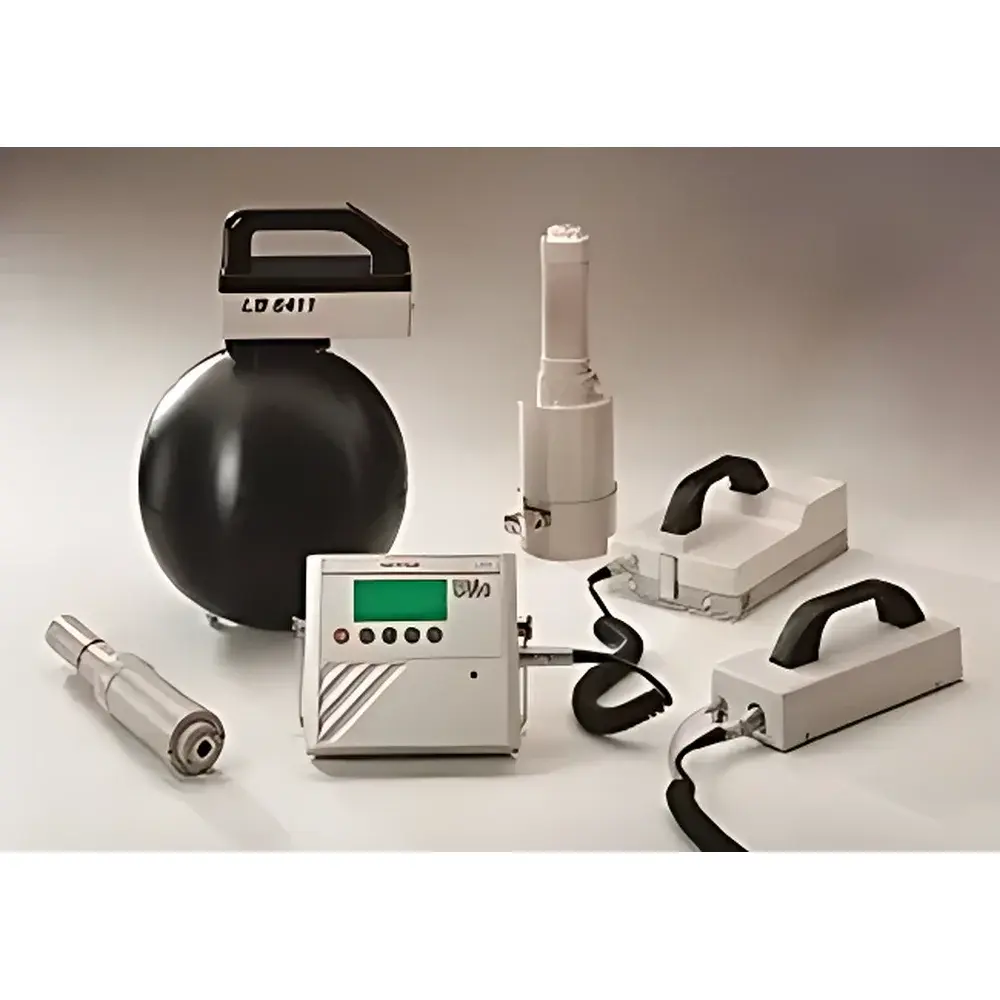
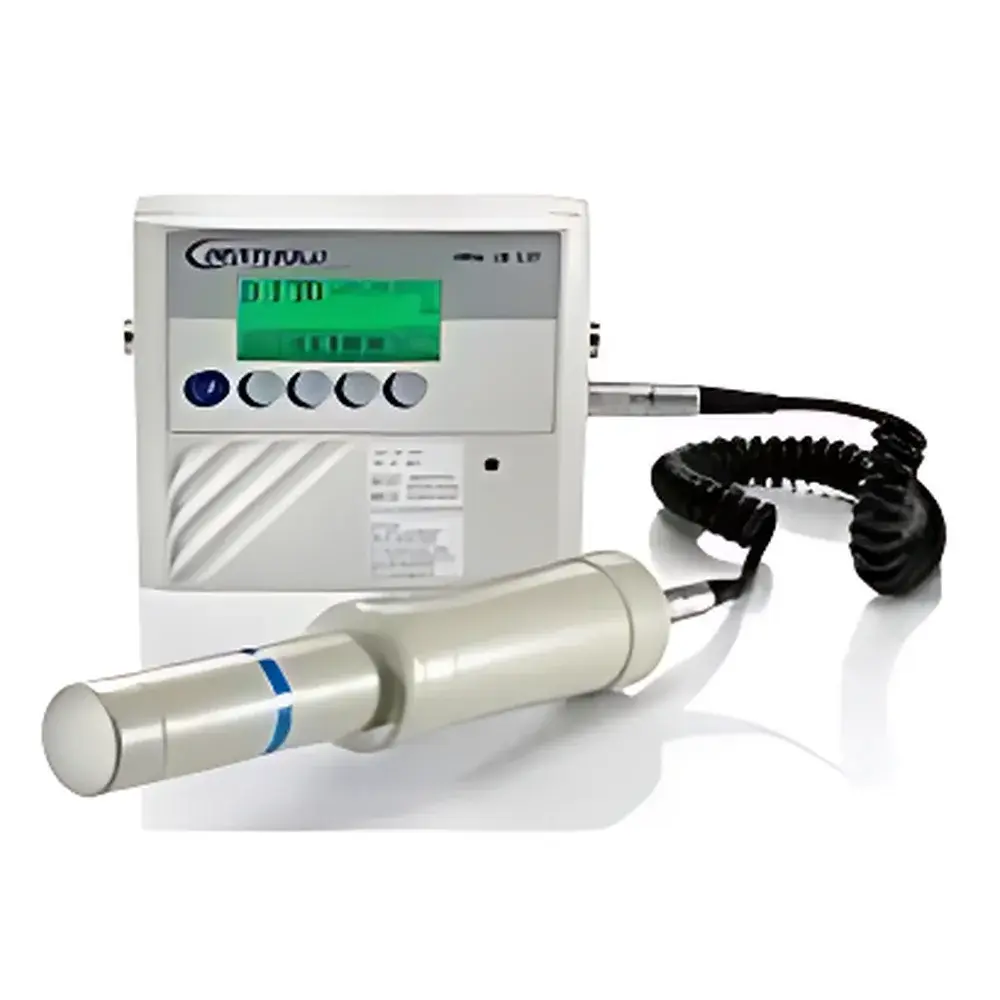
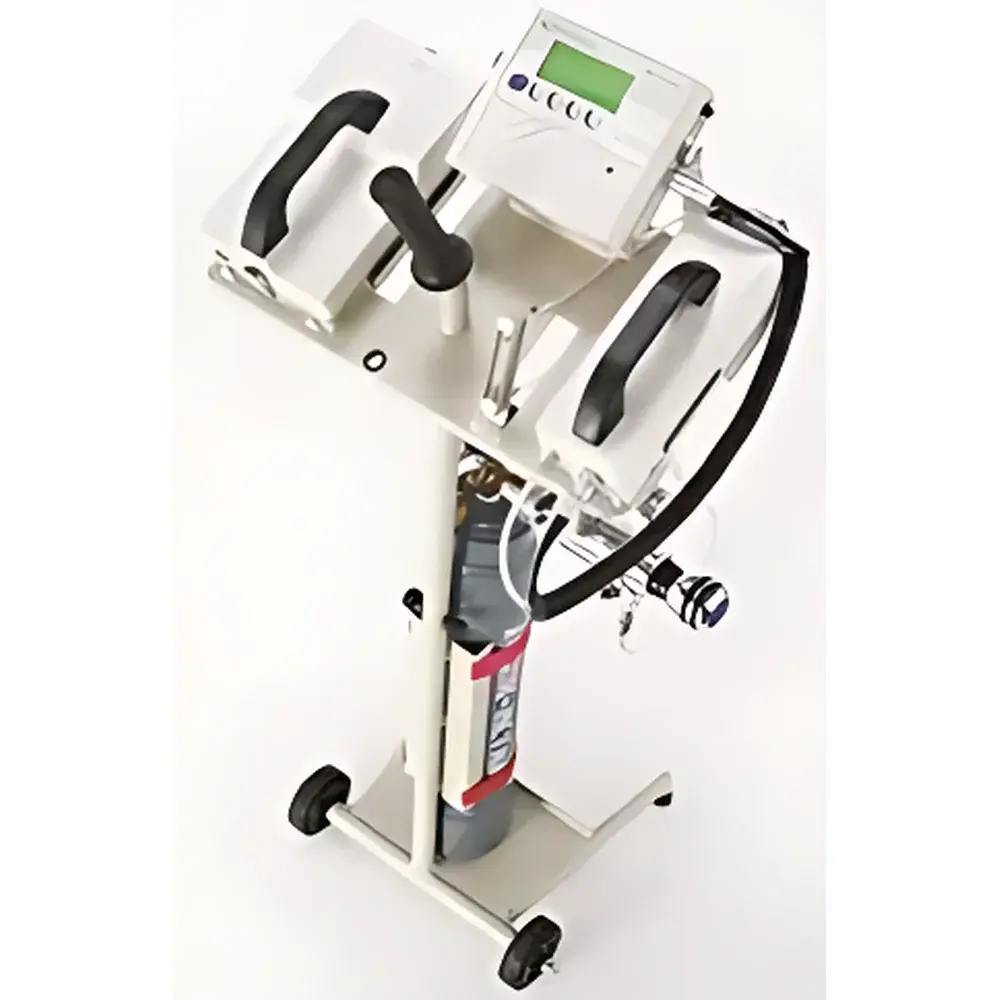
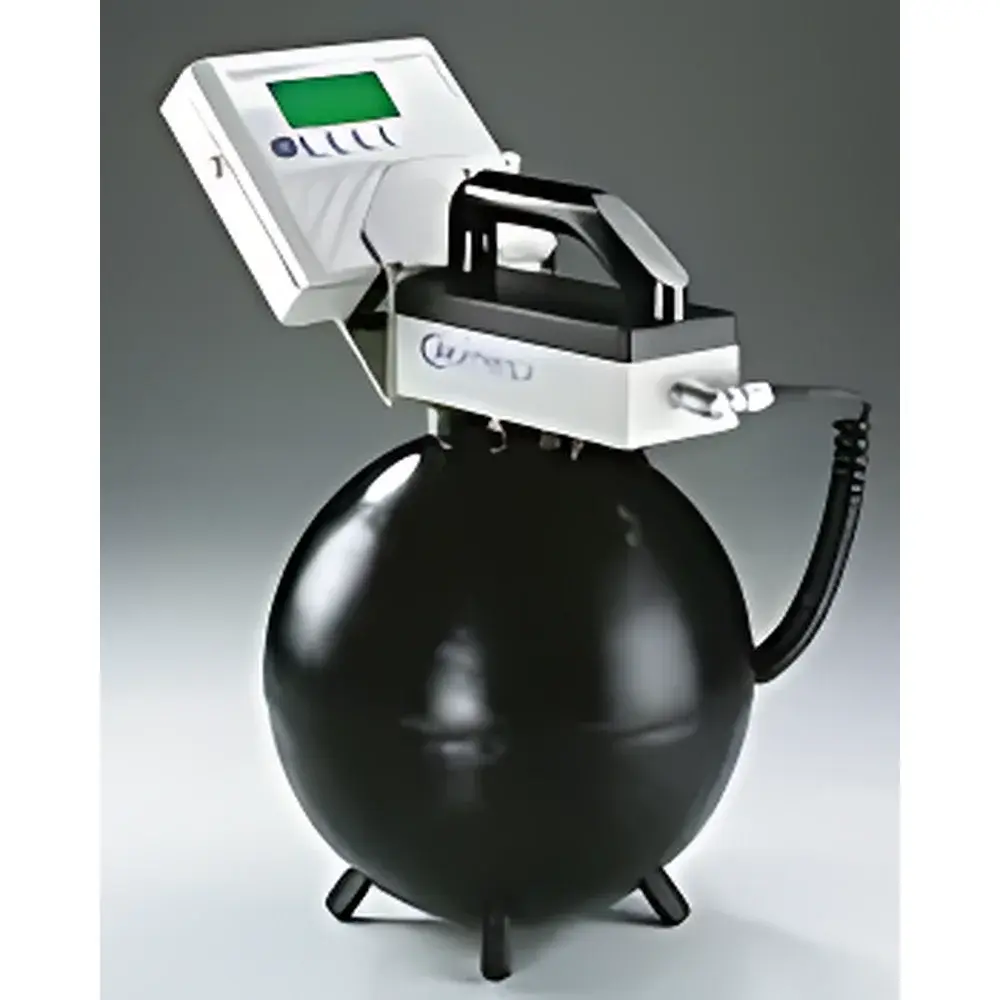
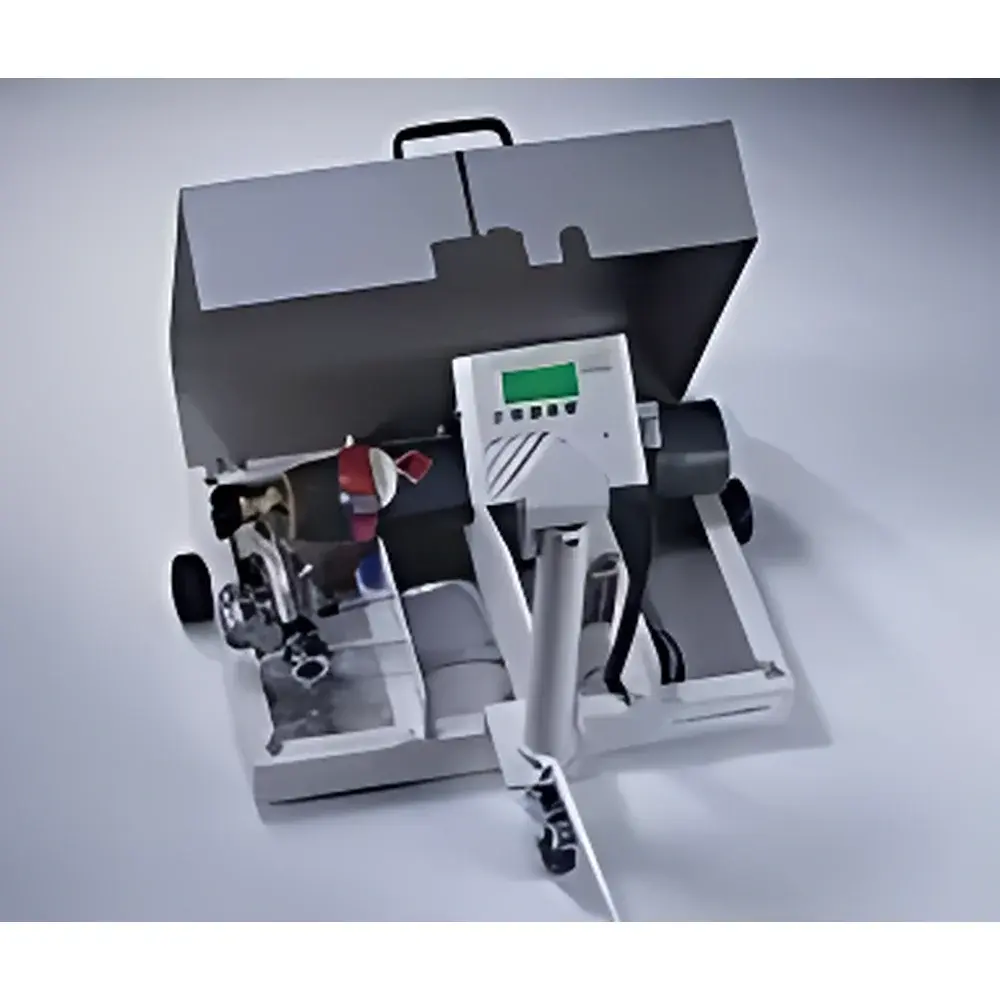
Berthold LB123 Multi-Function Radiation Survey Meter
| Brand | Berthold |
|---|---|
| Origin | Germany |
| Model | LB123 |
| Gamma Dose Rate Detector (LB1236) | Energy Range 30 keV–1.3 MeV, Measurement Range 50 nSv/h–10 mSv/h |
| Tritium Surface Contamination Probe (LB123T) | Windowless Flow-Through Proportional Counter, Active Area 15 cm × 1.5 cm, Sensitivity 1 cps per 2.2 Bq (point source), 0.1 Bq/cm² per cps (area source) |
| Neutron Dose Rate Probe | Energy Response Thermal neutrons–20 MeV, Measurement Range 30 nSv/h–100 mSv/h, Polyethylene Moderator with Carbon Content |
| Data Storage | Up to 250 measurements |
| Interface | RS232 serial port |
Overview
The Berthold LB123 is a modular, microprocessor-controlled radiation survey system engineered for comprehensive environmental and occupational radiation monitoring. Designed in accordance with IEC 60846-1:2014 and compliant with DIN 6818-1 for dose rate meters, the LB123 implements dual-channel pulse-height discrimination and real-time spectral analysis to distinguish between gamma, beta, alpha, and neutron radiation fields. Its core architecture integrates detector-specific high-voltage generation, preamplification, and pulse shaping within each external probe—eliminating signal degradation over cable runs and enabling plug-and-play interoperability across its ecosystem of certified probes. The instrument operates on a configurable measurement paradigm: users select mode (dose rate, surface contamination, or activity), define acquisition time, and initiate automated background subtraction followed by statistically weighted averaging. This ensures traceable, reproducible results under variable field conditions—critical for ALARA compliance and regulatory reporting.
Key Features
- Intelligent probe auto-recognition: System detects connected LB1236 (gamma), LB123T (tritium), LB123N (neutron), or optional floor/portal probes without manual configuration.
- Integrated high-voltage and signal conditioning: Each probe houses its own HV supply, low-noise preamplifier, and pulse discriminator—minimizing electromagnetic interference and optimizing signal-to-noise ratio.
- Real-time background correction: Measures ambient background prior to sample acquisition; subtracts dynamically during counting cycles using Poisson-weighted algorithms.
- Dual-mode operation: Supports both single-shot measurement and programmable repeat mode (up to 99 cycles) with automatic result logging and statistical uncertainty calculation.
- Onboard data management: Stores up to 250 complete measurement records—including timestamp, probe ID, geometry, raw counts, net count rate, uncertainty, and dose conversion factors.
- RS232 serial interface: Enables bidirectional communication with Windows-based PCs for firmware updates, calibration coefficient loading, and export of ASCII-formatted datasets compatible with LIMS and audit-ready reporting tools.
Sample Compatibility & Compliance
The LB123 supports direct measurement of diverse radiological hazards without sample preparation. Its LB123T tritium probe utilizes a windowless flow-through proportional counter optimized for low-energy beta emitters (e.g., H-3, C-14, S-35), achieving detection limits of ≤0.05 Bq/cm² for uniform surface contamination. The LB1236 gamma probe meets energy response requirements per ISO 4037-3 for photon dosimetry in mixed fields, while the polyethylene-moderated neutron probe satisfies ANSI N42.17A for thermal-to-fast neutron dose assessment. All probes are CE-marked and type-approved under German Strahlenschutzverordnung (StrlSchV) Annex 4. The system supports GLP/GMP-aligned workflows through user-accessible audit trails, password-protected calibration lockout, and immutable measurement metadata—facilitating FDA 21 CFR Part 11 readiness when paired with validated PC software.
Software & Data Management
Data transfer occurs via standard RS232 protocol at 9600 baud, supporting ASCII output in tab-delimited format (.txt) or structured XML schema. Optional Berthold Radiation Manager (BRM) software provides full instrument control, calibration curve management, uncertainty propagation modeling, and automated report generation per ISO/IEC 17025 requirements. BRM logs all operator actions—including parameter changes, calibration events, and probe swaps—with timestamps and user IDs. Exported datasets include full metrological traceability: reference standard IDs, calibration dates, uncertainty budgets, and environmental correction factors (temperature, pressure). Raw pulse-count histograms and energy spectra (where applicable) are retained for retrospective analysis.
Applications
- Nuclear facility perimeter monitoring and decommissioning surveys
- Radioactive waste characterization and drum assay verification
- Medical isotope handling areas (PET, radiotherapy, nuclear medicine labs)
- Environmental remediation sites requiring alpha/beta/gamma/neutron differentiation
- Research reactor hot cell access control and personnel dosimetry validation
- Regulatory inspections under EURATOM Directive 2013/59 and national transposition laws
FAQ
Does the LB123 require annual recalibration?
Yes—calibration must be performed annually against accredited reference sources (e.g., 137Cs, 241Am-Be) by an ISO/IEC 17025-accredited laboratory. Certificate includes energy response verification across the full specified range.
Can the LB123T probe measure tritium in air samples?
No—the LB123T is designed exclusively for surface contamination screening. Airborne tritium requires dedicated ionization chamber or scintillation-based continuous monitors with integrated sampling pumps.
Is the neutron probe sensitive to gamma interference?
The LB123N incorporates pulse-shape discrimination and boron-loaded polyethylene moderation to suppress gamma-induced signals; typical gamma rejection ratio exceeds 104:1 at 1 mSv/h gamma fields.
What happens if the battery fails mid-measurement?
Non-volatile memory preserves all acquired data and configuration settings; power interruption does not corrupt stored records or erase calibration coefficients.
Are replacement probes supplied with individual calibration certificates?
Yes—each probe ships with a factory certificate traceable to PTB (Physikalisch-Technische Bundesanstalt), including date, reference standard ID, measured efficiency, and expanded uncertainty (k=2).







