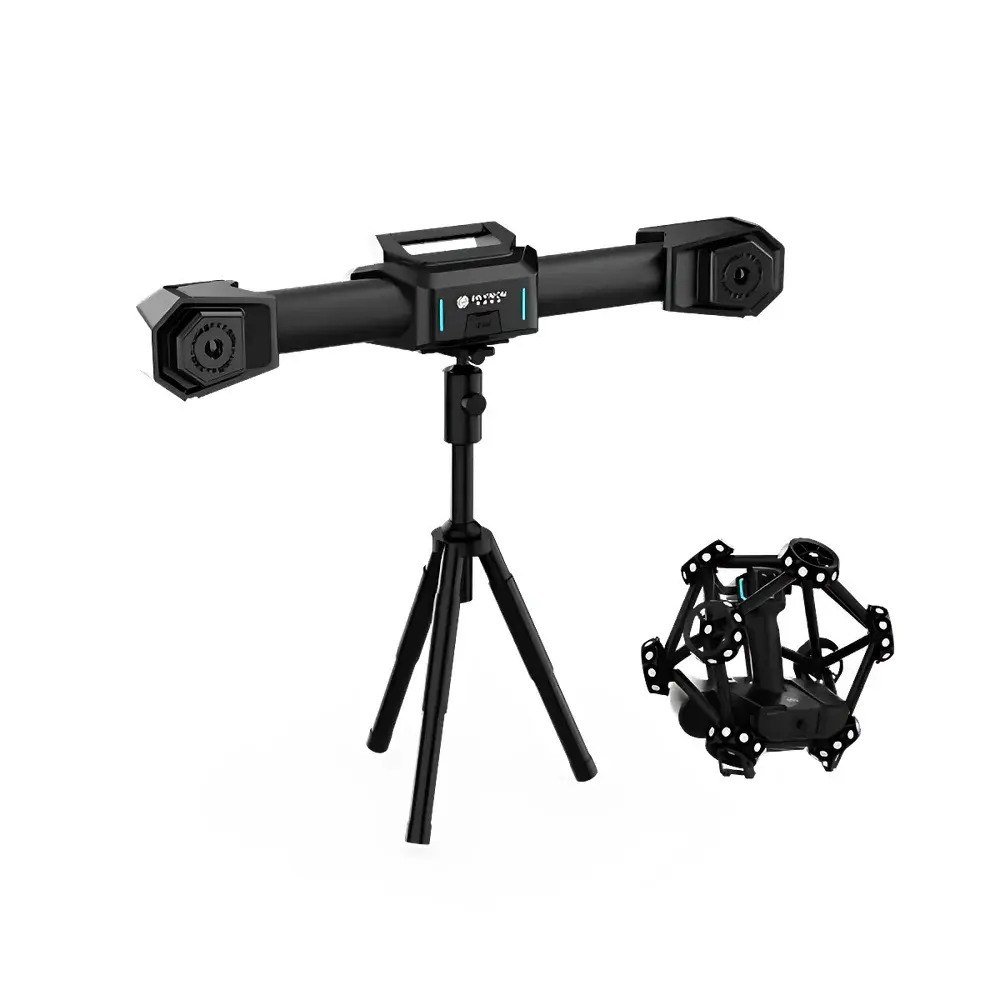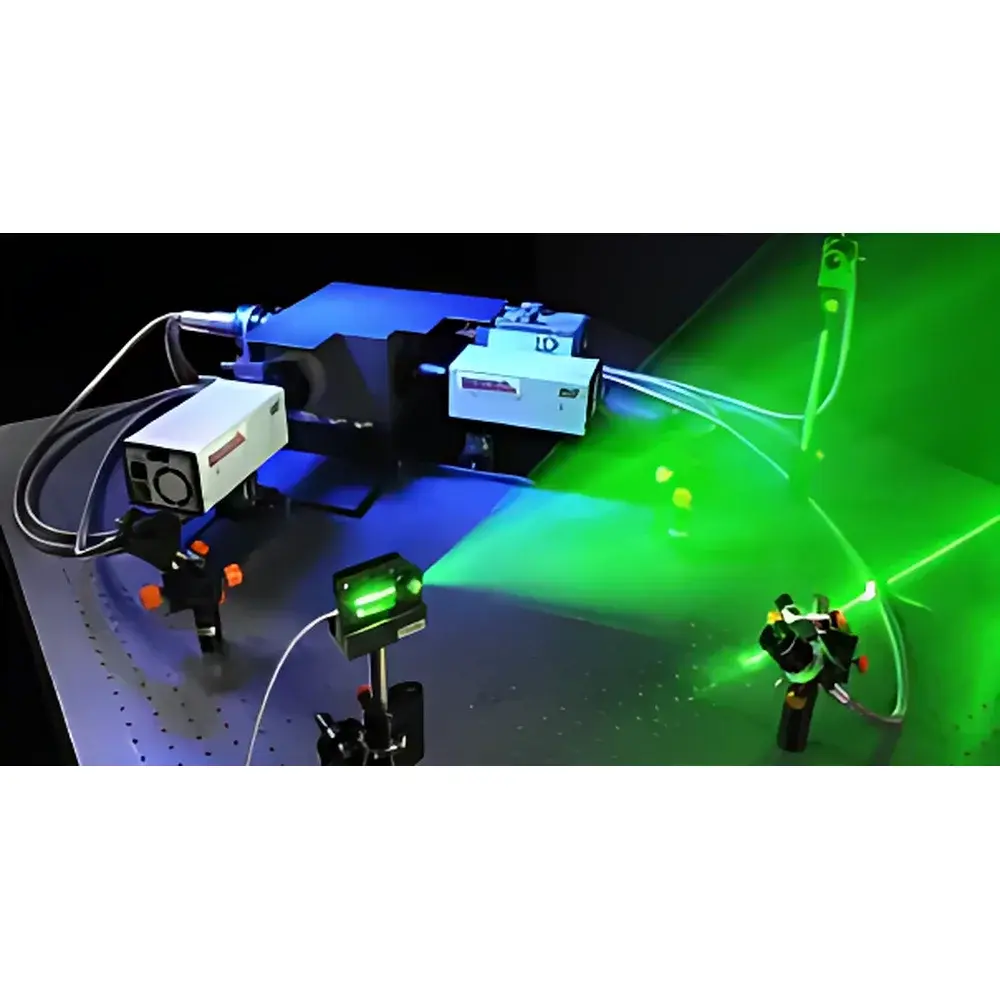
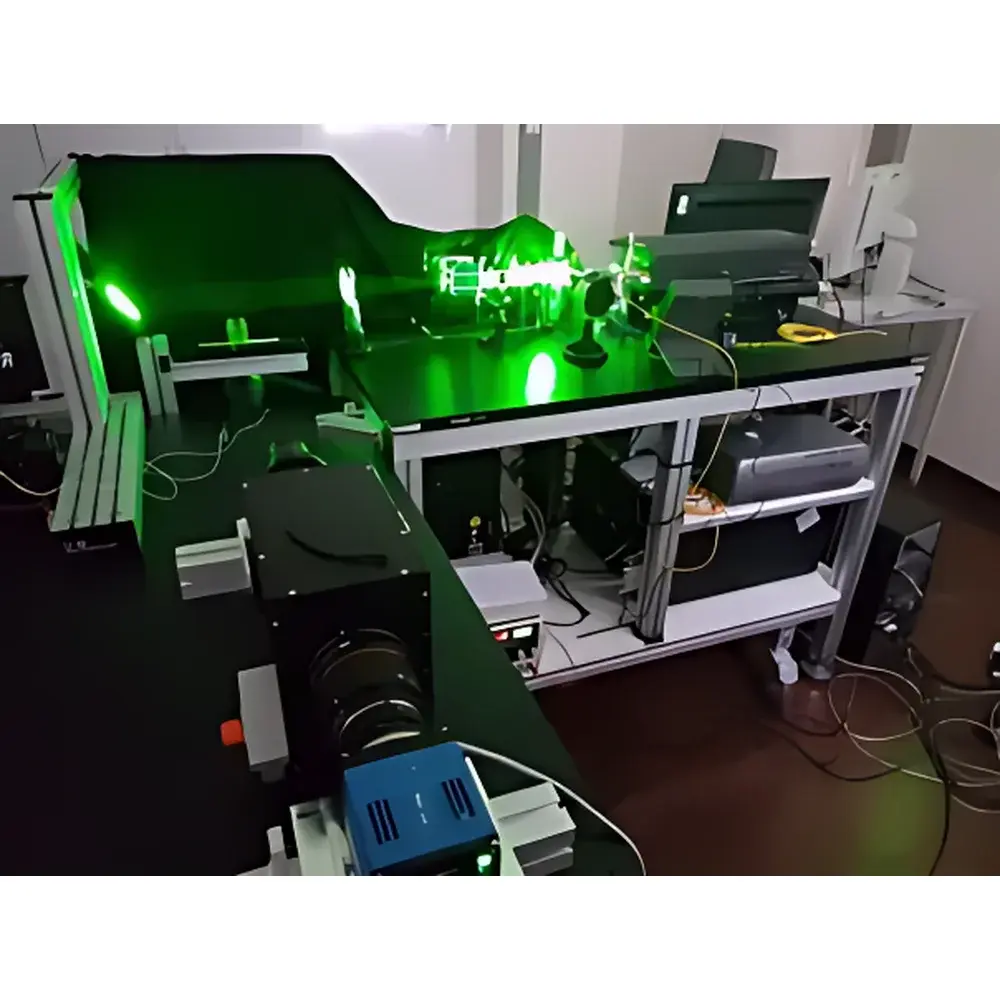
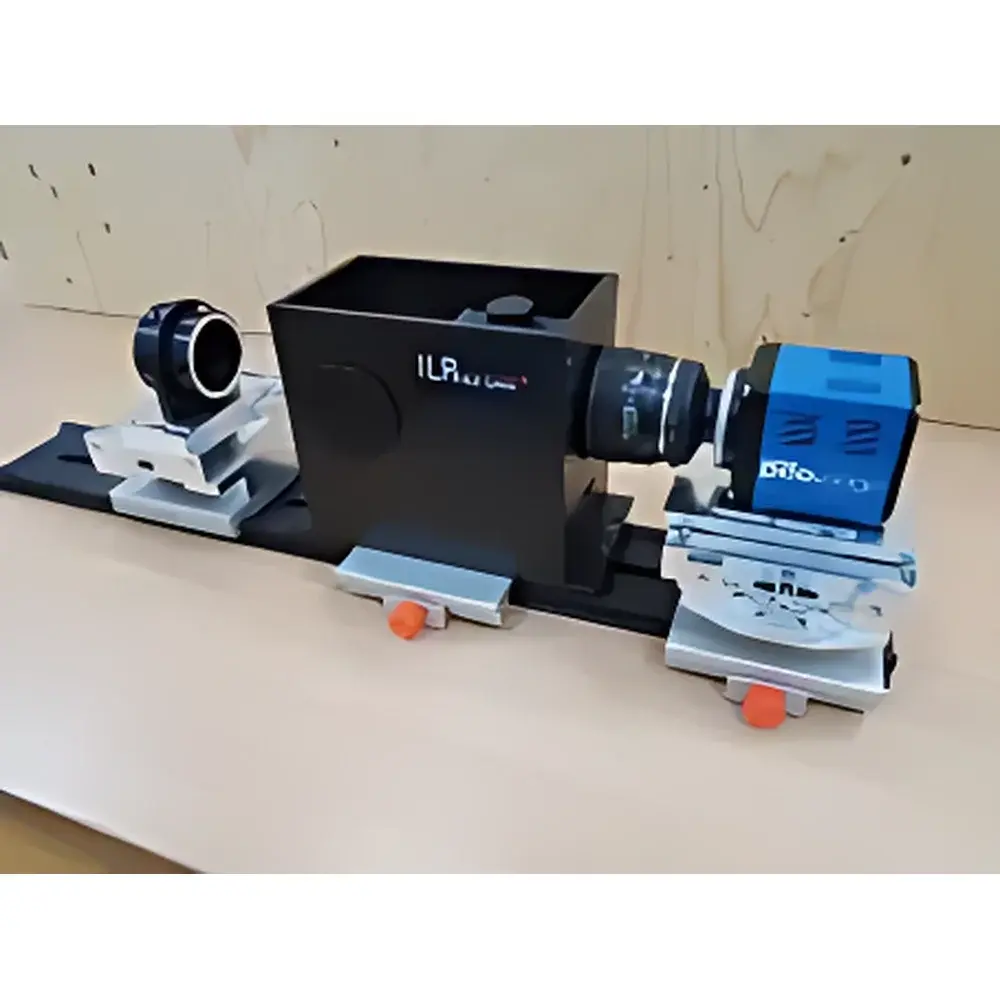
PIV View FRS Filtered Rayleigh Scattering System
| Brand | PIV View |
|---|---|
| Origin | Germany |
| Manufacturer Type | Authorized Distributor |
| Origin Category | Imported |
| Model | FRS |
| Price Range | USD 270,000 – 410,000 (based on EUR/USD exchange and landed cost) |
| Measurement Modality | Planar (2D/3D) |
| Repetition Rate | Low-Frequency (Single-Shot to ~10 Hz typical) |
| Velocity Range | 0–300 m/s |
| Velocity Uncertainty | ±0.8–1.4 m/s |
| Measurement Field of View | 120 mm × 120 mm |
| Temperature Range | 100–2000 K |
| Temperature Uncertainty | ±1% |
| Pressure Range | 0.1–20 bar |
| Pressure Uncertainty | ±3% |
| Particle-Free Operation | Yes |
| Upgrade Path | Compatible with Doppler Global Velocimetry (DGV) architecture |
Overview
The PIV View FRS Filtered Rayleigh Scattering System is a non-intrusive, planar optical diagnostic instrument engineered for simultaneous quantitative measurement of velocity, pressure, and temperature fields in gaseous flows. Unlike conventional particle-based velocimetry techniques such as standard Particle Image Velocimetry (PIV), the FRS system relies on spontaneous Rayleigh scattering from native gas molecules—eliminating the need for seeding particles and enabling measurements in environments where particle introduction is impractical or physically prohibited (e.g., high-pressure combustion chambers, clean-room propulsion testing, or reactive flows with condensation risk).
Filtered Rayleigh Scattering (FRS) exploits spectral filtering to isolate the narrowband elastic scattering signal (~0.01 nm linewidth) from molecular nitrogen and oxygen, while rejecting broadband Mie scattering from walls, dust, soot, or large particulates, as well as ambient light and laser-induced fluorescence. This spectral discrimination—achieved via high-finesse Fabry–Pérot etalons and stabilized single-longitudinal-mode pulsed lasers—enables robust operation in technically demanding, “dirty” experimental environments including wind tunnels with wall reflections, engine test rigs, and high-pressure combustors. Developed jointly by the German Aerospace Center (DLR) and ILA GmbH, the commercial FRS platform represents the first industrially mature implementation of this principle, validated against CARS (Coherent Anti-Stokes Raman Spectroscopy) with agreement within 1% across overlapping temperature and pressure regimes.
Key Features
- True particle-free, planar measurement of instantaneous velocity, static pressure, and static temperature fields in unseeded gases
- Integrated spectral filtering architecture suppressing wall scatter, Mie contamination, and ambient background—enabling operation in real-world test facilities
- High-stability, narrow-linewidth pulsed laser source (typically Nd:YAG, frequency-doubled, with active wavelength tuning for velocity extraction)
- Scientific-grade intensified CCD or sCMOS camera with precise gating synchronization (sub-ns jitter) and high quantum efficiency in the visible range
- Calibration traceable to NIST-traceable gas standards and DLR reference datasets; uncertainty budgets rigorously documented per ISO/IEC 17025 principles
- Modular optical layout supporting flexible field-of-view adaptation (standard 120 mm × 120 mm, scalable via relay optics or fiber-coupled delivery)
- Native compatibility with Doppler Global Velocimetry (DGV) upgrade path for higher temporal resolution and multi-component velocity decomposition
Sample Compatibility & Compliance
The FRS system is designed exclusively for gaseous media—air, nitrogen, oxygen, hydrogen, hydrocarbon mixtures, and combustion products—under thermodynamic conditions ranging from sub-atmospheric to 40 bar (DLR Cologne high-pressure combustor validation). It is not applicable to liquids or dense aerosols. All optical components comply with EN 60825-1:2014 (laser safety) and are CE-marked. Data acquisition and processing workflows support audit-ready documentation required under GLP and GMP frameworks. While not FDA-regulated, the system’s calibration traceability, metadata logging, and version-controlled software align with 21 CFR Part 11 expectations for electronic records in regulated R&D environments.
Software & Data Management
The proprietary FRS Control & Analysis Suite provides end-to-end workflow management: laser synchronization, camera triggering, spectral filter alignment, image acquisition, and physics-based post-processing. Raw images undergo spectral deconvolution, thermodynamic inversion (using known gas composition and spectroscopic databases), and vector field reconstruction via cross-correlation or direct spectral fitting. Export formats include HDF5 (with embedded metadata), TIFF stacks, and CSV-compatible matrices compatible with MATLAB, Python (NumPy/H5Py), and commercial CFD post-processors (Tecplot, FieldView). All processing steps are logged with timestamps, user IDs, and parameter sets—ensuring full reproducibility and compliance with ISO 5725 repeatability/reproducibility requirements.
Applications
- Aerospace propulsion: In-situ mapping of velocity, pressure, and temperature in turbine blade passages, afterburners, and scramjet isolators
- Combustion science: Time-resolved analysis of flame stabilization, extinction limits, and thermoacoustic coupling in pressurized burners (validated up to 40 bar at DLR Cologne)
- Wind tunnel aerodynamics: Boundary layer characterization, separation detection, and shock–boundary layer interaction studies without seeding artifacts
- Energy systems: Flow diagnostics in oxy-fuel and hydrogen-fueled combustors, where particle seeding alters chemistry or deposits on optics
- Fundamental fluid dynamics: Validation of high-fidelity LES and DNS simulations with fully resolved thermodynamic state variables
FAQ
Is FRS suitable for liquid-phase flow measurements?
No. FRS relies on molecular Rayleigh scattering intensity and spectral profile, which are orders of magnitude weaker in liquids and obscured by strong Mie contributions. The system is strictly intended for transparent, low-density gases.
What is the minimum resolvable velocity gradient in a 120 mm × 120 mm field?
Spatial resolution is governed by pixel density and optical magnification; typical configurations achieve ~100 µm/pixel, permitting gradient estimation down to ~10⁴ s⁻¹ under optimal signal-to-noise conditions.
Can FRS operate in real-time mode?
No. Due to the requirement for multiple wavelength-tuned laser exposures per velocity component and spectral acquisition, FRS is inherently a low-repetition-rate, single-shot or quasi-stationary diagnostic. Frame rates are typically ≤10 Hz.
Does the system require external calibration gases during operation?
No. Pre-operational calibration uses reference gas cells (N₂, O₂, air) at known T/P; subsequent measurements rely on absolute spectral line shape modeling—not empirical lookup tables—minimizing drift sensitivity.
How is laser safety managed in integrated test cells?
The system includes interlocked beam enclosures, Class 1 certified optical housings, and remote shutter control compliant with IEC 60825-1. Full safety documentation and risk assessments are provided for facility integration.